

You think you know pain? You think you know who runs the show down in the Labyrinth? If you’ve only watched the movies, you probably think Pinhead is the CEO of Suffering, the top dog of the Order of the Gash. It’s an easy mistake to make. With the pins, the leather, and that booming voice that sounds like gravel in a blender, he certainly acts like the boss.
But here’s the cold, hard truth: Pinhead is middle management.
Powerful? Absolutely. Iconic? Without a doubt. But in the grand, infinite bureaucracy of Hell, the “Hell Priest” answers to powers far older, stranger, and more terrifying than himself. If you’re ready to see such sights, let’s peel back the flesh of the Hellraiser hierarchy and see who actually holds the leash.
1. The Absolute God: Leviathan

If Pinhead is the Pope, Leviathan is God.
In Hellbound: Hellraiser II, we get our first look at the true ruler of the Labyrinth. Leviathan isn’t a demon in the traditional “horns and tail” sense. It is a massive, floating, geometric shape—specifically a rhomboid or elongated diamond—hovering at the center of the Labyrinth.
- The Law of Order: Leviathan is the Lord of the Labyrinth and the god of flesh, hunger, and desire. But unlike the chaotic Christian Devil, Leviathan is obsessed with Order. It views human flesh as chaotic and messy, seeking to bring “peace” through the extreme discipline of pain.
- Black Light: It emits a beam of black light that can transform humans into Cenobites, stripping away their humanity and memories.
- Power Level: Pinhead obeys Leviathan without question (usually). In the films, when the Channard Cenobite goes on a rampage, it is Leviathan that facilitates the power struggles. Pinhead is merely a servant, a “pontiff” preaching the gospel of his silent, geometric god.
2. The Challenger: Lucifer (The Scarlet Gospels)

Here is where things get messy—and interesting. The film universe and the literary universe (the books written by creator Clive Barker) have a major split.
In Barker’s 2015 novel The Scarlet Gospels, we learn that the Cenobites’ realm is indeed a part of the biblical Hell, and there is a figure who outranks everyone: Lucifer.
- The Fallen One: In this canon, Lucifer has been missing or dormant for eons, leaving the bureaucracy to run itself.
- Pinhead’s Ambition: The plot revolves around Pinhead (referred to strictly as the Hell Priest, as he hates the nickname “Pinhead”) gathering all the magic in the world to challenge Lucifer and take the throne of Hell for himself.
- The Outcome: Spoiler alert—it doesn’t go well for the Priest. Lucifer is on a completely different level of existence. While Pinhead is a powerful mage and demon, Lucifer is a fallen archangel. The gap in power is insurmountable.
Verdict: If you are reading the books, Lucifer is the ultimate top dog. In the movies, it’s Leviathan.
3. The Bureaucrat: The Auditor (Hellraiser: Judgment)
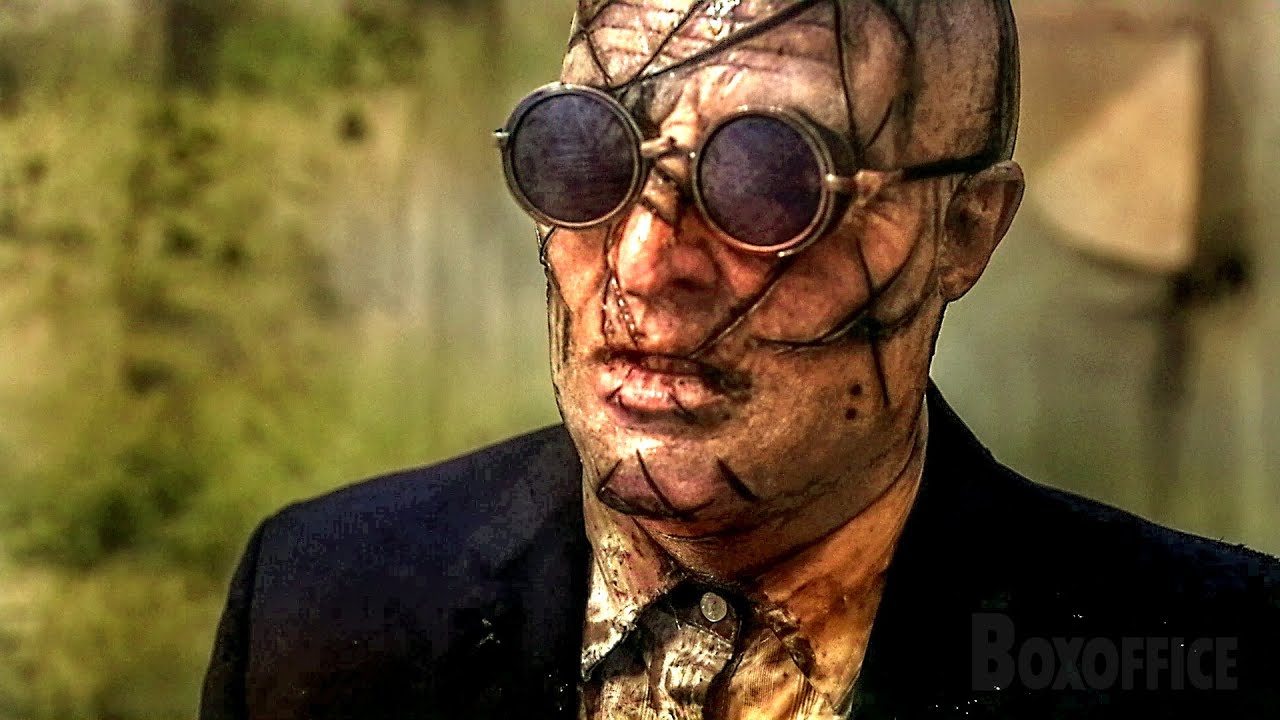
Introduced in the polarizing Hellraiser: Judgment (2018), The Auditor throws a wrench into the standard hierarchy. He isn’t a Cenobite in the traditional sense; he belongs to the Stygian Inquisition.
While Cenobites are like religious zealots spreading the gospel of pain, the Inquisition is the IRS of Hell. They process sinners. The Auditor types up your sins on a typewriter that uses your blood as ink.
- Does he outrank Pinhead? Not exactly, but he doesn’t answer to him either. They operate in different departments. Pinhead shows the Auditor a level of professional respect (and perhaps mild annoyance) that he rarely shows anyone else.
- The Assessor & The Jury: These grotesque figures work with the Auditor to determine a soul’s guilt before Pinhead is even called in to do the “clean up.”
4. The Royal Blood: Angelique (Hellraiser: Bloodline)
![Hellraiser 4 : Bloodline (1996) Angelique's Deleted Scene [Workprint]](https://www.gsnsp.com/wp-content/cache/flying-press/ed2e0070d835c42e209883ceb2f46582.jpg)
Before the Cenobites became an organized religion of mutilated monks, there was Angelique. Introduced in Hellraiser: Bloodline, she is a Princess of Hell.

- Demonic Nobility: Unlike Pinhead, who was once the human Captain Elliot Spencer, Angelique was never human. She is an ancient demon entity.
- Old vs. New: She represents the chaotic, old-school Hell of temptation and manipulation, whereas Pinhead represents the modern, cold, “ordered” Hell of physical suffering.
- The Rank: Technically, as a Princess, she holds a higher status by lineage. However, in the movie, she is eventually forced to submit to the “new order” of Leviathan and is transformed into a Cenobite. So, while she has royal blood, the system eventually crushed her into a subordinate role.
5. The Comic Twist: Kirsty Cotton (The New Hell Priestess)

You remember Kirsty Cotton, the “Final Girl” from the first two movies? The one who constantly outsmarted the Cenobites? Well, in the BOOM! Studios comics (which Clive Barker co-wrote and approved), she pulls the ultimate power move.
- The Trade: Pinhead, tired of his eternal existence, offers Kirsty a deal. He wants to become human again (returning to be Elliot Spencer). In exchange, someone must take his place.
- Hell Priestess: Kirsty accepts. She becomes the new leader of the Cenobites—the Hell Priestess. She wears the pins, she wields the chains, and she commands the Gash.
- The Hierarchy Shift: For a time in the canon, Kirsty Cotton outranked everyone except Leviathan itself. She even maintained a shred of her humanity, trying to target only the “guilty” rather than innocents, creating a fascinating internal conflict within the Order.
6. The Engineer: Beast or Master?
This character is confusing because they are totally different in the book versus the movie.
- In the Movie: The Engineer is that grotesque, scuttling creature in the corridors of the Labyrinth that chases Kirsty. It looks like a skinless, amalgamation of body parts. Scary? Yes. High ranking? No. It’s basically a guard dog.
- In the Book (The Hellbound Heart): The Engineer is described much more vaguely but implies a distinct, high-ranking status, possibly even the head of the Order before the film solidified Pinhead as the leader. In the novella, the “Engineer” is the one who crafts the jewels and bells of the Cenobites, acting as a sort of armorer or specialist.
Where Does “Audrey” Fit In?
A lot of fans search for a character named “Audrey“ in relation to Pinhead. If you’ve been scouring the web for her, you might be hitting a dead end. This is likely a confusion with Angelique (the Princess) or perhaps The Auditor. There is no high-ranking Cenobite named Audrey in the official film or book canon. If you’re thinking of a powerful female rival, it’s definitely Angelique or the Female Cenobite (Deep Throat) you’re looking for.
The Final Hierarchy Recap
- Lucifer (The Scarlet Gospels – Supreme Ruler)
- Leviathan (Movie Canon – God of the Labyrinth)
- The Hell Priest / Priestess (Pinhead / Kirsty Cotton – CEO/Leader)
- The Auditor (Head of Administration/Inquisition – Equal footing department)
- Princess Angelique (Nobility forced into service)
- The Gash (Chatterer, Butterball, Female Cenobite – Foot Soldiers)
- The Engineer (Movie – Guard Dog)
So, who outranks Pinhead? Only God himself (Leviathan/Lucifer). Everyone else is just waiting for their turn in the chair.
FAQs
Is Pinhead actually Satan (The Devil)?
No, and this is the biggest misconception in the franchise. Pinhead is not Satan. In the movie canon, he is a Hell Priest—a high-ranking servant in the Order of the Gash. He worships a deity known as Leviathan, the God of Flesh, Hunger, and Desire. However, in Clive Barker’s novel The Scarlet Gospels, Pinhead actually confronts the real Lucifer, and let’s just say… the meeting confirms that Pinhead is definitely not the top dog.
Who is the strongest Cenobite in Hellraiser?
If we are talking strictly about Cenobites (excluding gods like Leviathan), the title usually goes to Pinhead (The Hell Priest) due to his mastery of chains, magic, and sheer willpower. However, in Hellbound: Hellraiser II, the Channard Cenobite (Dr. Channard) physically overpowered Pinhead and his entire gash because he was directly fueled by Leviathan’s black light. Channard was a tank, but he lacked Pinhead’s discipline.

What is the puzzle box actually called?
While most fans call it “The Puzzle Box,” its formal name is the Lament Configuration. It is a key—a gateway between our dimension and the Labyrinth. It was created by a French toymaker named Philip LeMarchand (in the movies) or a figure simply known as the Toymaker. Solving it doesn’t just open a door; it rings a bell in Hell that alerts the Cenobites to your location.
Did Kirsty Cotton ever become a Cenobite?
Yes, but you won’t find this twist on Netflix. In the BOOM! Studios comic series, which is considered canon by Clive Barker, Kirsty Cotton strikes a deal to take Pinhead’s place so he can return to humanity. She becomes the new Hell Priestess. Unlike Pinhead, who was cold and detached, Kirsty initially tried to use her power to punish only the wicked, creating a fascinating new dynamic in Hell’s hierarchy.
What is the difference between the Auditor and a Cenobite?
Think of it as different departments in the same terrifying corporate office. Cenobites (Order of the Gash) are religious zealots and explorers of sensation. They are the “priests.” The Auditor (from Hellraiser: Judgment) belongs to the Stygian Inquisition. They are the “accountants” and judges. The Inquisition processes the sin to determine guilt; the Cenobites provide the suffering. They are separate factions under the same umbrella of Hell.
Who is the God in Hellraiser?
In the film universe, the God is Leviathan, the giant, floating geometric shape seen in Hellbound. It is an entity of pure order that loathes the chaotic nature of human flesh. In the literary universe (The Scarlet Gospels), the hierarchy expands to include Judeo-Christian figures, placing a fallen Lucifer above everyone, including the Cenobites.
Ready to Open the Box?
Understanding the hierarchy of the Cenobites changes how you watch Hellraiser. It’s not just a slasher movie; it’s a dark fantasy about bureaucracy, religion, and order. Pinhead might be the face on the poster, but he’s just the middleman delivering the message. Whether it’s the geometric tyranny of Leviathan or the administrative dread of The Auditor, there is always a bigger fish in the Labyrinth.
Ready to tear your soul apart? If you want to dive deeper, grab a copy of The Scarlet Gospels or hunt down the BOOM! Studios trade paperbacks. The sights they have to show you are worth the read. don’t forget to share this post with your friends.

