

Ever wonder how a guy’s obsession with lizards turns into a billion-dollar federal crime case? HBO’s new docuseries answers exactly that. Here’s the real story behind every dealer, sting operation, and near-extinct species featured in Monsters of God — no spoiler-vague summaries, just the actual facts.
What is Monsters of God, and why is everyone talking about it?
Monsters of God is a 2026 documentary series directed and executive produced by Eric Goode, based on Bryan Christy‘s nonfiction book The Lizard King: The True Crimes and Passions of the World’s Greatest Reptile Smugglers. If Goode’s name sounds familiar, that’s because he’s the same director behind Tiger King and Chimp Crazy — so yes, you can expect the same “truth is stranger than fiction” energy. The series premiered at SXSW in March 2026, where it won the Audience Award, before landing on HBO on August 6, 2026.
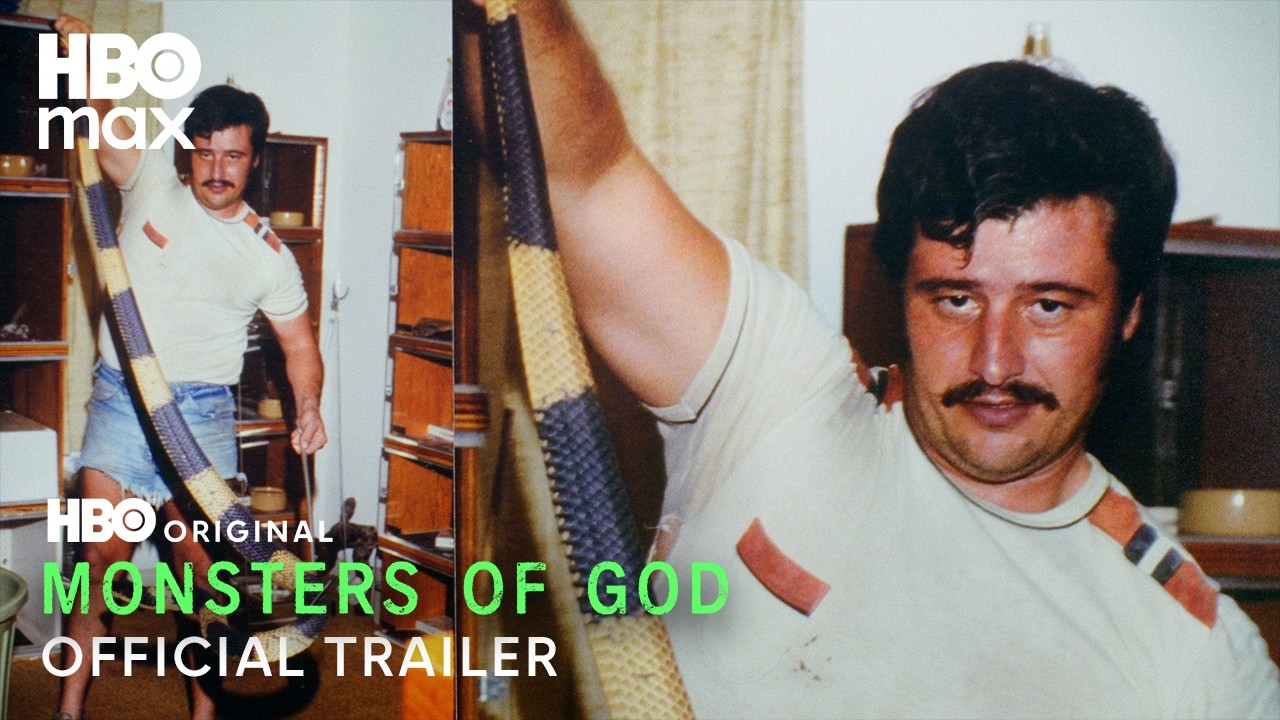
The premise, in plain terms: it’s a five-part docuseries following traffickers, obsessive collectors, and federal agents caught in a decades-long crime ring that’s pushing rare species to the edge of extinction. This isn’t some vague “animals are cool” nature doc. It’s a crime story — with real prison sentences, real DEA involvement, and real near-death consequences for the animals caught in the middle.
Worth noting upfront, since it matters for anyone squeamish: this series does show harm to animals. If that’s a hard limit for you, know that going in.
Meet the rival dealers who kicked off the whole reptile gold rush
Episode one, titled “The Fever,” opens with a feud that basically created the modern reptile black market. At the center of the series are rival reptile dealers Tommy Crutchfield and Hank Molt, whose decades-long rivalry mirrors the rise of the illegal exotic animal trade — the two started as friendly acquaintances before becoming bitter competitors chasing rare and endangered species.
Molt wasn’t some random hobbyist, either. He ran the Philadelphia Reptile Exchange and, according to Goode, was getting rarest-of-the-rare reptiles that had never before entered the United States — animals no American zoo had ever even seen. This mattered because of timing. Zoos in the early ’70s were in a genuine arms race, each wanting the flashiest reptile house on the block. Molt became a legal target as a result — becoming one of the first people actually sentenced to prison for a wildlife crime, back when wildlife violations typically got a slap on the wrist instead.

Crutchfield, for his part, wasn’t some background player either. Before turning to reptiles he was a carpet salesman, and by 1981 he’d become the first person to purchase and document a specific rare species — building a reputation that made him one of the largest commercial reptile dealers in the country.
The Florida connection: how reptiles got tangled up with cocaine
Episode two, “Operation Cobra,” is where things stop being “just” about lizards. Florida reptile dealer Ray Van Nostrand enters the story and drags the trade business into the dark underworld of Miami drug smuggling and gun running, through his connection to a known “cocaine cowboy,” Mario Tabraue. This is where the DEA gets involved — not just Fish and Wildlife.
Tabraue is a genuinely wild real-world figure. He’s a cocaine kingpin and exotic animal collector who’s been compared to Tony Montana from Scarface, and he previously appeared in Tiger King as well. The Florida connection wasn’t a coincidence, either. Ray Van Nostrand, who moved to Florida in the 1970s, was directly in business with Tabraue, and would smuggle reptiles and drugs into Florida within the same shipments.
This is the part of the show that tends to surprise casual viewers most. You go in expecting a story about weird pet obsessives, and you leave realizing wildlife trafficking sits right next to narcotics and arms trafficking on a lot of organized crime supply chains. That’s not a TV exaggeration — it’s a documented pattern in real federal cases.
Strictly Reptiles: a “legit” business built on a smuggling legacy
Episode three, “Smuggler’s Inn,” follows the next generation. Ray’s son Mike Van Nostrand took over the business under a new, legitimate-sounding name — Strictly Reptiles — but was eventually tempted back into smuggling when his father re-entered the picture, this time with international dealer Anson Wong in the mix.
Strictly Reptiles wasn’t some fringe operation, by the way. It became one of the largest reptile import and wholesale companies in the country, and over roughly a decade of building it, Van Nostrand bought reptiles from more than a dozen people who were later charged with smuggling. That detail alone says a lot about how blurry the line was between “legal wildlife trade” and “black market” in this industry during the ’80s and ’90s.
And here’s a fact that might surprise you: this family’s legal troubles didn’t stay in the past. In a case running from 2017 to 2019, Michael Van Nostrand and Strictly Reptiles were caught running a scheme to smuggle roughly 3,500 illegally-harvested Florida turtles out of the country to buyers in China and Japan, falsely marking export paperwork to claim the turtles were captive-bred rather than wild-caught. He was sentenced to seven months, plus a $100,000 fine paid into the federal Lacey Act Reward Fund. So no, this isn’t ancient history. Wildlife smuggling investigations are still actively happening right now.
Operation Chameleon: the federal sting that finally cracked the network
This is the big one — the case most true-crime fans will recognize by name. Episode four is literally titled “Operation Chameleon,” and it’s based on one of the most significant wildlife trafficking prosecutions in U.S. history.
Here’s how the real case broke down, straight from Justice Department records. In fall 1997, a Florida federal grand jury indicted six individuals, including Tommy Crutchfield, on charges of conspiracy, smuggling, money laundering, and violations of the Lacey Act — a federal wildlife protection statute. The ring’s alleged mastermind was based overseas: the operation ran largely under the direction of Keng Liang “Anson” Wong, a Malaysian citizen who used an import/export business to smuggle over 300 reptiles worth nearly half a million dollars into the U.S., relying on human couriers, falsified FedEx shipping documents, and hiding illegal animals inside legal shipments.
The scale of this thing was genuinely massive for a wildlife case. Operation Chameleon was run by the U.S. Fish and Wildlife Service’s Office of Law Enforcement, involved six participating countries including the U.S., Mexico, and Belize, and ultimately resulted in more than 26 arrests. The trial leaned heavily on undercover recordings and documentation gathered by federal agents who posed as buyers, revealing how Wong disguised shipments as “captive-bred” specimens to dodge international trade laws.
Crutchfield’s own sentencing is documented directly by the DOJ: he pleaded guilty in January 1999 to seven felony counts covering conspiracy, smuggling, and Lacey Act violations, and was sentenced to 30 months in prison for smuggling rare reptiles from Madagascar — on top of a prior prison term for smuggling endangered Fiji Island Iguanas back in 1995. The DOJ’s own statement at the time didn’t mince words: then-Assistant Attorney General Lois Schiffer said trafficking in rare species threatens the environment and that the government would take whatever steps necessary to stop the black market, at home and abroad.
The “Pablo Escobar of animal trafficking”
Episode five, “Head of the Snake,” zeroes in on Wong himself — and this is where the story goes properly international. Wong earned the nickname “the Pablo Escobar of animal trafficking,” running a complex smuggling network out of Malaysia and taking advantage of the country’s loose wildlife protection laws and officials willing to look the other way.
Getting him into a U.S. courtroom wasn’t quick. Wong fought extradition from Mexico for two years before finally being transferred to the United States in 2000, where on June 7, 2001, he was sentenced to 71 months in prison and fined $60,000 — plus a three-year ban on selling animals to anyone in the U.S. after his release. DOJ records from the extradition itself confirm the scope: between 1995 and 1998, Wong smuggled roughly 300 protected animals into the U.S. by hiding them in FedEx packages, airline baggage, and other shipments.
Legal loopholes explained
If you’re wondering how this industry keeps regenerating despite decades of busts, the show’s framing device is genuinely useful: laws written for one era get outpaced by new tricks. Monsters of God traces how the reptile trade evolved specifically to skirt the Endangered Species Act of 1973, growing into a secretive, high-stakes world of backroom deals and fanatical private collectors.
The Fiji iguana loophole from Crutchfield’s earlier case is a good example of this pattern. Traffickers didn’t need to outsmart the law forever — just long enough to move product before enforcement caught up, then adapt to whatever new rule came next. Genetically modified “designer” reptiles, as Crutchfield’s post-prison chapter shows, became the next frontier once straightforward smuggling got too risky. Same demand, new workaround. That’s basically the whole cat-and-mouse cycle in one sentence.
Quick FAQ
Is Monsters of God based on a true story?
Yes, entirely. It’s a documentary, not a dramatization, built around real federal court cases, real DOJ prosecutions, and on-camera interviews with the actual people involved.
What book is the series based on?
Bryan Christy’s 2008 nonfiction book, The Lizard King: The True Crimes and Passions of the World’s Greatest Reptile Smugglers.
Who is Anson Wong?
A Malaysian wildlife trafficker convicted in the real Operation Chameleon case, sentenced in 2001 to nearly six years in prison for smuggling hundreds of protected reptiles into the U.S.
Does the Van Nostrand family’s legal trouble continue past what’s shown in the series?
Yes — Michael Van Nostrand and Strictly Reptiles faced a separate federal case as recently as 2019 involving smuggled Florida turtles.
How many episodes does Monsters of God have? Five episodes, airing weekly on HBO and HBO Max starting August 6, 2026.
Bottom line? Every “outlandish” character in this docuseries — the carpet salesman turned reptile kingpin, the cocaine cowboy with a snake collection, the Malaysian trafficker nicknamed after Pablo Escobar — is a real person with a real federal court record. Wildlife crime rarely gets Hollywood-level attention. This time, it earned it honestly.

