

Room 1046: The 1935 Kansas City Hotel Murder Nobody Solved
A man walked into a Kansas City hotel with no luggage, no real name, and no idea what was waiting for him. Two days later, he was found on the bathroom floor, beaten half to death. Almost 90 years have passed, and nobody has ever been charged.
Who was “Roland T. Owen”?
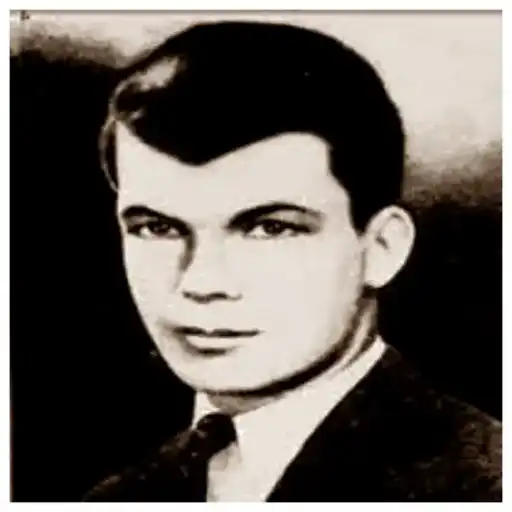
On January 2, 1935, a well-dressed young man checked into the Hotel President in downtown Kansas City. He signed the register as Roland T. Owen of Los Angeles and paid cash for one night. His only belongings were a comb, a hairbrush, and a tube of toothpaste, all stuffed in his coat pocket. No suitcase. No coat rack full of clothes. Nothing.
He asked for a room several floors up, away from the street, and got Room 1046. On the way there, he mentioned to bellboy Randolph Propst that he’d almost stayed at the fancier Muehlebach Hotel the night before, but backed out because five dollars a night felt steep.
Staff noticed two things about him right away: a cauliflower ear, and a wedge-shaped scar above his left temple that he combed his hair over to hide. Wrestler, maybe. Or a boxer. That was everyone’s best guess.
Three days that didn’t add up
What happened next reads less like a crime and more like a fever dream — small, strange moments that meant nothing on their own but built into something genuinely unsettling.
- Day one: A maid named Mary Soptic came to clean and found the shades drawn tight, with just one small lamp lighting the room. Owen let her in, but told her not to lock the door — he said a friend was coming. She later told police he seemed nervous. Maybe even scared.
- That evening: She returned with towels and spotted a note on the desk. It read: “Don, I will be back in fifteen minutes. Wait.”
- Day two, morning: The door was locked from the outside, meaning Owen must have stepped out and had someone lock it behind him. When the maid let herself in with a passkey, she found him sitting alone, silent, staring into the dark. The phone rang. He picked it up and said, “No, Don, I don’t want to eat. I am not hungry. I just had breakfast.” Then he turned around and started grilling her — questions about the hotel, her job, her routine. He brought up the Muehlebach’s prices again, unprompted.
- Day two, afternoon: She heard two male voices arguing behind the locked door. She knocked to offer towels. A voice she didn’t recognize told her to get lost.
- That night, next door: A different guest in Room 1048 lay awake listening to a man and a woman arguing violently through the wall. At one point she heard a scuffle, then a strange gasping sound she assumed was snoring. She thought about calling the front desk. She didn’t.
- Down in the lobby: The elevator operator, Charles Blocher, noticed unusual traffic to the tenth floor that night — a woman he recognized as a regular sex worker looking for a man who never showed, then later a mystery couple riding up and down between roughly midnight and 4 a.m. Neither was ever identified.
- On the street, around 11 p.m.: A city worker driving downtown spotted a man running down the sidewalk wearing only pants and an undershirt — in January. The man flagged him down thinking he was a cab, apologized when he realized his mistake, and muttered that he’d “kill” someone the next day. He had a fresh wound on his arm. Weeks later, that same man identified the body of “Roland Owen” at a funeral home. He’d been looking at the man who died in Room 1046 that whole time.
The bloody morning of january 4
Around 7 a.m., the hotel switchboard noticed the phone in 1046 was off the hook. It stayed that way for hours. A bellboy knocked. A muffled voice told him to come in — except the door was locked, and the voice then told him to turn on the lights, which made no sense to anyone standing outside a room they couldn’t enter. He gave up and left.
Ninety minutes later, another bellboy tried. He got in this time and found Owen lying naked on the bed. Figuring he had a drunk guest on his hands, he propped the phone back up and walked out without checking on him further.
By 11 a.m., the operator noticed the phone off the hook again. This time, Randolph Propst went back and finally saw the full picture: Owen crouched naked on the floor, clutching his own bloody head. Blood was smeared across the walls and the bathroom. The room looked less like a hotel suite and more like a crime scene from a much darker story.
Police later pieced together the damage — a fractured skull, stab wounds, bruising around the neck consistent with strangulation. And the room itself had been stripped: no clothing anywhere, the standard soap and towels gone, no rope, no weapon. All that remained was a necktie label, an unsmoked cigarette, four bloody fingerprints on a lampshade, and a woman’s hairpin.
Owen was rushed to the hospital. Asked what happened, he only managed, “I fell against the bathtub.” He slipped into a coma and died that night.
A body nobody could name
Los Angeles police had zero record of anyone named Roland T. Owen. Detectives dug up two more aliases he’d used at other Kansas City hotels in the days before — Eugene K. Scott at the Muehlebach, and an unidentified name at the St. Regis, both times with a mystery companion who was never traced. A wrestling promoter later claimed the same man had signed up for matches under yet another name: Cecil Werner.
Four names. Zero real answers. By early March, with no next of kin located, the city started preparing to bury him in an unmarked pauper’s grave.
“Love forever, Louise”
Then something odd happened — odd even for this case. An anonymous caller phoned the funeral home and asked them to hold off on the burial. Money would be coming, the caller said, enough for a real funeral. The caller insisted “Roland T. Owen” really was his name, that he’d gotten “into a jam,” and that police were chasing the wrong lead entirely.

The cash arrived by mail days later, again with no name attached. Owen was finally buried at Memorial Park Cemetery, with a small handful of detectives as the only mourners. Not long after, someone paid a local florist for roses to be placed on the grave, along with a card that read: “Love Forever — Louise.”
To this day, nobody knows who Louise was.
A mother finally recognizes her son
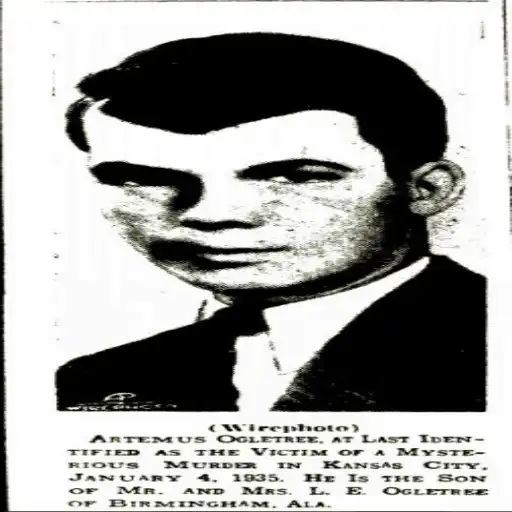
The case went cold for nearly two years — until late 1936, when a woman in Birmingham, Alabama came across a magazine account of the unsolved murder. Something about the description matched her missing brother, Artemus Ogletree, who’d left home in April 1934 to “see the country” and never really came back.
Their mother, Ruby, had received three typed letters from him that spring — strange, because Artemus didn’t know how to type. The last one claimed he was sailing for Europe. Later still, a man calling himself “Jordan” phoned to say Artemus had saved his life in Egypt and married a wealthy woman in Cairo.
When Ruby was finally shown a photo of “Roland Owen,” she recognized her son instantly. (Interestingly, reports on his exact age at death still don’t agree — some put him at 17, others as old as 25, a small but telling sign of just how tangled this case’s paper trail really was.)
The Questions nobody’s ever answered
Even with a name attached to the body, the actual mystery never budged an inch:
- Who was “Don” — the person Owen spoke to on the phone and left that note for?
- Who was “Louise,” and why did she care enough to pay for a stranger’s funeral?
- Why was a teenager cycling through four fake identities in a matter of months?
- Who was the man Owen threatened to “kill” the night before he died?
- Was “Jordan” a real friend, or just one more invented character meant to close the book on an open case?
The 2003 phone call that went nowhere
Kansas City detectives briefly reopened the case in 1937 after noticing similarities to a murder in New York. It led nowhere. Then, sometime around 2003 or 2004, a Kansas City Public Library reference librarian named John Horner — who’d spent years researching the case — got a call from someone out of state. The caller said they’d recently gone through the belongings of a person who’d just died and found a box of old newspaper clippings about the murder. Inside that box, they added, was something — an item that had actually been mentioned in the original 1935 news coverage.
They wouldn’t say what it was. They never called back.
Why this case still gets under people’s skin
What makes Room 1046 so unnerving isn’t really the violence — it’s the details that refuse to make sense. A man sitting alone in the dark for no reason. A bellboy told to “turn on the lights” in a room he hadn’t even entered yet. A door that locks itself from the outside between visits. One Kansas City detective at the time reportedly called it close to the perfect crime — not because of some brilliant scheme, but because there was simply never enough left behind to point anywhere.
Nearly a century later, that’s still true. And that’s exactly why true crime fans keep coming back to it.
Quick answers
Was the Room 1046 murder ever solved?
No. Nearly 90 years later, no one has ever been charged.
Who was the actual victim?
Artemus Ogletree, a teenager from Birmingham, Alabama, who left home in 1934 to travel and never returned.
Where did it happen?
The Hotel President in Kansas City, Missouri — the building still stands today, now operating under a different hotel brand.
Does Room 1046 still exist?
Yes, though the hotel has been renovated several times since 1935.
References
- Murder of Artemus Ogletree — Wikipedia
- Inside the “Owen Case” File — Kansas City Magazine
- The Case of Room 1046 Remains Unsolved 90 Years Later — A&E

