

David Glen Lewis: The Missing Texas Judge Found Dead 1,600 Miles Away
A Texas attorney walked out of his office one January afternoon and was never seen at home again. His body turned up the next night on a dark road in Washington State — nearly 1,600 miles from Amarillo, in a place he had no reason to visit. It took investigators eleven years just to figure out who he even was.
Who was David Glen Lewis?
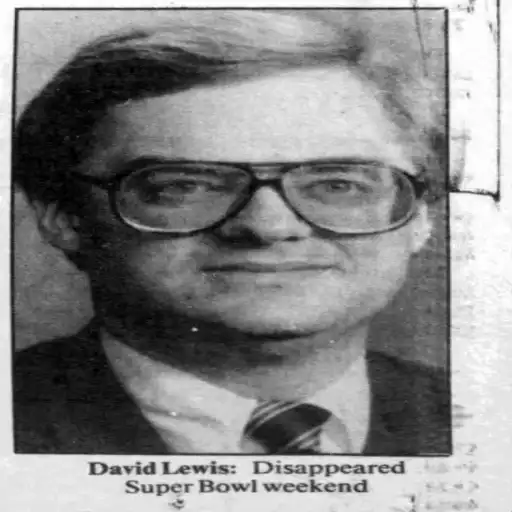
David Glen Lewis was 39, a well-liked Amarillo attorney and former court-at-law judge with a reputation for being kind, generous, and deeply religious. He taught a government class part-time at Amarillo College. Friends described him as steady — the kind of guy who did his laundry, kept his files organized, and didn’t run off without telling anyone. That reputation is exactly what makes this case so hard to shake.
On the last weekend of January 1993, his wife Karen and their young daughter went to Dallas for a shopping trip. When they got home, the house looked completely normal. Too normal, actually. David’s wedding ring and watch sat on the kitchen counter. The VCR was set to record the upcoming Super Bowl. Two fresh turkey sandwiches waited in the fridge, and a load of laundry sat in the dryer.
Everything was there — except David.
Mystery 1: why did he disappear from Amarillo?
Investigators managed to piece together a rough timeline of his final days in Texas, and honestly, the details only get stranger the closer you look:
- January 28: Lewis left his law office around noon, telling coworkers he felt sick and was heading home. That afternoon, his credit card was used for gas. That night, he still showed up to teach his class at Amarillo College — hardly the behavior of someone too ill to function.
- January 29: A friend spotted him rushing through the Amarillo airport. No luggage. No explanation.
- January 30: Someone deposited $5,000 into the Lewis’s joint bank account. A neighbor noticed his car parked outside the house, like nothing was wrong.
- January 31: A plane ticket was purchased in his name for a flight from Dallas to Amarillo. Karen and her daughter came home to an empty house that same day.
- February 1: A sheriff’s deputy reported seeing a man resembling Lewis near the Potter County Courts Building downtown. A cab driver later said he’d driven someone matching Lewis’s description from a hotel to the Dallas/Fort Worth airport — the man seemed nervous, paid in cash, and didn’t say much. Another plane ticket, this one from Los Angeles to Dallas, was bought under his name that day.
- February 2: Police found his Ford Explorer parked outside the courthouse. His house keys and car keys were tucked under the floor mat. His checkbook, credit cards, and driver’s license — items he normally kept in the car — were all still inside.
Nothing was missing from the house. No struggle, no forced entry, no clear sign of foul play. So Amarillo police reached the obvious conclusion: David Lewis had walked away on his own.
Karen never bought it. She insisted her husband would never leave without taking basic essentials, and definitely not without calling. He’d told her, cryptically, that his life was in danger — though he refused to say why. She later connected this to a malpractice lawsuit filed against his old law firm, one where Lewis reportedly had damaging information about his former partners and was scheduled to testify. His case files related to that lawsuit vanished around the same time he did.
Was he running from something? Was he taken? Police shelved the case for lack of new leads, and it sat cold for over a decade.
Mystery 2: A nameless body 1,600 miles away
Here’s where the story splits into two separate mysteries that nobody realized were connected — for eleven years.
On the night of February 1, 1993 — the very same window David was last seen alive in Texas — a man was struck and killed by a hit-and-run driver on State Route 24, just outside the tiny town of Moxee, Washington, east of Yakima. He was walking, seemingly uninjured, right down the middle of a dark, rural two-lane highway around 10:30 p.m. Two separate motorists later told investigators they’d noticed the strange sight, turned their cars around to warn other drivers, and returned within a minute or two to find him already struck. A car resembling a Chevrolet Camaro was reportedly seen leaving.
The man had no ID. His autopsy showed no alcohol or drugs. He was wearing military-style camouflage fatigues and heavy work boots — clothing nobody could later trace to any specific person, let alone match to a missing-persons file. Yakima authorities had nothing to go on. The case went cold, and the man was buried as an unidentified John Doe.
Somewhere in Amarillo, a family kept waiting for a call that never came.
The detective who solved it with google
For a decade, nobody connected the disappearance in Texas to the Moxee unidentified man in Washington — two states, no shared border, no obvious link. That changed in 2003, when Washington State Patrol Detective Pat Ditter read a newspaper series on flaws in how missing-persons cases were tracked. Something about it stuck with him.
Ditter decided to try something almost embarrassingly simple: he started plugging physical descriptions from about a dozen unsolved local John and Jane Doe cases into Google.

Within a week, one hit stopped him cold. A missing-persons photo on the Texas Department of Public Safety site and the Doe Network showed a man who looked remarkably like his Moxee John Doe. There was just one problem — the man in the photo, David Glen Lewis, wore a distinctive pair of glasses. The John Doe hadn’t been wearing any when he was found.
Ditter didn’t let it go. He pulled the original evidence inventory from the 1993 crash scene, and there it was: eyeglasses, logged among the recovered items, tucked inside the preserved clothing the victim had died in. He compared them to photos of Lewis’s glasses.
They matched.
DNA confirms what google found first
Ditter contacted Amarillo police and arranged for DNA testing — a boot recovered from the crash scene, along with a tissue sample preserved since 1993, was sent for comparison against a DNA sample from Lewis’s mother, Esther.
In October 2004 — eleven years after David Glen Lewis walked out of his law office — the results came back. It was a match. The unidentified man killed on a dark Washington highway and the missing Texas attorney were the same person. His family learned the news the very next day.
For a moment, it felt like the mystery was finally solved. It wasn’t. It had only changed shape.
What still doesn’t add up
Confirming who died didn’t explain how or why he ended up there. Some of these questions are, frankly, unanswerable at this point:
- How did he cover 1,600 miles in roughly 24 hours? Amarillo to Moxee is a brutal, 24-plus-hour drive even without stops. Flying was possible — this was 1993, before photo ID was required for domestic travel — but no flight records connecting him to Washington were ever found.
- Whose fatigues and boots was he wearing? Karen was adamant her husband never owned military-style clothing. So who put him in it, or where did he get it?
- Was the plane-ticket trail real, or a decoy? The tickets bought in his name ran Dallas–Amarillo and Los Angeles–Dallas — neither one points toward Washington State at all.
- Why walk down the middle of a pitch-black highway at night? Witnesses described him as uninjured and seemingly unbothered, right up until he wasn’t.
- Was the hit-and-run really an accident? Or was it something far more deliberate, on a road where nobody had any reason to expect him?
- Who deposited the $5,000, and what was it for?
- Did the malpractice lawsuit against his old firm have anything to do with any of this? His missing case files were never recovered.
Investigators lean toward two competing theories — a voluntary disappearance gone tragically wrong, or a kidnapping tied to whatever he knew about his former partners. Neither theory explains all of the evidence. That’s the uncomfortable truth about this case: every piece of proof seems to answer one question while opening three more.
What sets the Lewis case apart from most cold cases isn’t just the distance or the mystery — it’s how it finally cracked. Ditter didn’t have some breakthrough forensic tool. He had a search engine, a stubborn streak, and about a dozen browser tabs. In an era before facial recognition software and nationwide DNA databases were standard tools for cold-case units, one detective’s willingness to just Google it did what over a decade of formal investigation couldn’t.
That’s the detail true-crime fans keep coming back to. Somewhere out there, right now, there are probably other unidentified John and Jane Does whose names are sitting in a database, one search query away from being found.
Quick answers
Was David Glen Lewis ever found alive?
No. He died the same weekend he disappeared, though his identity wasn’t confirmed for 11 years.
Where was the David Glen Lewis Moxee case solved?
A Washington State Patrol detective identified him in 2004 through online research and a DNA match, more than a decade after his 1993 death.
Is the David Glen Lewis case solved?
Only partly. Investigators know who he was and roughly when he died — they still don’t know why he was in Washington, whose clothes he was wearing, or who was driving the car that hit him.
Was foul play ever confirmed?
No. The driver was never identified, and it remains unclear whether the hit-and-run was accidental or intentional.
References
- Death of David Glenn Lewis — Wikipedia
- Search engine helps police identify hit-and-run victim — The Spokesman-Review
- Google Helps Solve John Doe Case — CBS News
- 1993 hit-run victim is finally identified — Doe Network

