

You spent five seasons watching a mild-mannered high school chemistry teacher morph into a ruthless drug kingpin. Then, the screen cut to black on a bloodied Walter White lying flat on a meth lab floor. Breaking Bad knocked its finale out of the park. Fans generally agree that “Felina” is a masterpiece of television writing. But the layers surrounding Walt’s demise still spark intense debate online over a decade later. Did he redeem himself? Was his death a victory? Why did he have to die right then and there?
At a glance
- The Cause: Walter White died from a ricochet gunshot wound to the abdomen, inadvertently caused by his own remote-controlled M60 machine gun.
- The Confession: Walt finally admitted to Skyler that he built his meth empire for his own ego, not for his family.
- The Rescue: He went to the neo-Nazi compound intending to kill everyone (including Jesse Pinkman), but changed his mind and saved Jesse upon seeing his slavery.
- The True Love: Walt died surrounded by stainless steel vats in a meth lab, stroking the equipment. The show implies chemistry and power were his true passions.
How did walter white actually die?
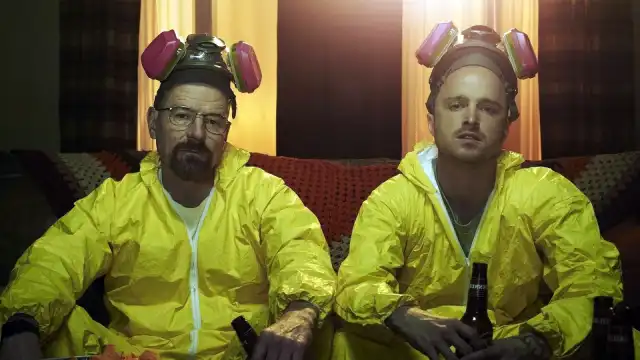
If you blinked during the chaotic shootout at Jack Welker’s compound, you might have missed exactly how the fatal blow landed. Walt didn’t die from his terminal lung cancer. Jack’s white supremacist gang didn’t shoot him either.
He killed himself — by total accident.
When Walt tackles Jesse to the floor, he presses a key fob that activates an automated M60 machine gun hidden in the trunk of his car outside. The weapon sprays the clubhouse with a relentless barrage of heavy artillery, tearing Jack’s crew to shreds. The bullets rip through the walls. One of those massive rounds fragments upon impact. A jagged piece of shrapnel ricochets and strikes Walt in the lower right abdomen.
Walt doesn’t realize it instantly. Adrenaline masks the searing pain. Only after Walt shoots Jack in the head and watches Jesse strangle Todd does reality set in. Jesse refuses to shoot his former partner, choosing freedom instead. Our anti-hero is left completely alone. He wanders into Todd’s pristine meth lab, leaves a bloody handprint on a steel tank, and collapses. He bleeds out just as the police swarm the compound.
The Death of the Heisenberg ego
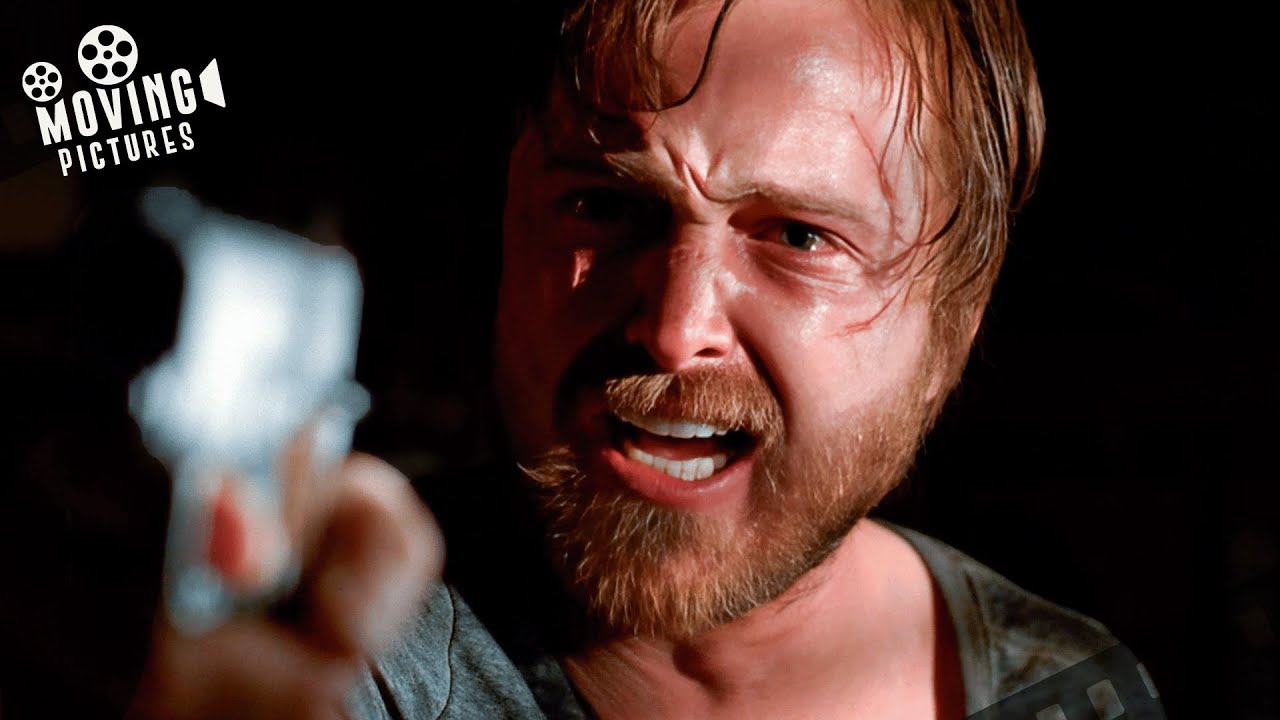
Why did Walt even go to that compound? For a long time, the audience believed he was there on a heroic rescue mission. We assumed he was going to save his former student.
That completely misses the point of Walt’s mental state in “Felina.”
Before heading to the shootout, Walt visits his estranged wife, Skyler. For five grueling seasons, his mantra was a broken record: “I did it for my family.” He used his wife and kids as a shield to justify murder, poisoning, and drug trafficking. In the finale, the Heisenberg mask finally slips off. Standing in Skyler’s dim kitchen, he looks her in the eye and delivers the most honest line of the entire series.
“I did it for me. I liked it. I was good at it. And I was really… I was alive.”
Walt shed the illusion of the noble provider. Stripped of his money, his family’s love, and his health, his massive ego evaporated. According to fans on Reddit who heavily analyze his character arc, the man in the finale is neither the pathetic Walter White from season one nor the cartoonish supervillain Heisenberg. He is a ghost tying up loose ends. He forces Gretchen and Elliott to launder his remaining $9 million for his son, Walt Jr. Next, Skyler receives the GPS coordinates to Hank’s body so she can cut a plea deal. Walt acts purely on pragmatism. He accepts his damnation, which paradoxically frees him to execute a flawless final plan.
The M60 Machine gun and Jesse pinkman
Vince Gilligan, the genius creator of the series, admitted in interviews that writing the finale was terrifying. In a revealing chat with The Guardian, Gilligan confessed that the writers didn’t initially know who the machine gun was for. They introduced the weapon in a flash-forward at the start of season five before figuring out the plot.
When Walt drives to Jack’s compound, saving Jesse is not on his to-do list.
Walt believes Jesse partnered with Uncle Jack to cook the signature blue meth. He feels entirely betrayed. The plan is to trigger the trunk gun and kill absolutely everyone inside, including Jesse Pinkman. The pivot happens when Jack drags Jesse into the room in chains. Walt sees a broken, traumatized kid covered in scars. Instinct immediately takes over.
Gilligan compared this moment to the classic John Wayne western, The Searchers. John Wayne spends the whole movie hunting down his kidnapped niece intending to kill her, but sweeps her into his arms at the last second. Walt lunges at Jesse, knocking him below the line of fire. It isn’t a full redemption arc. Walt destroyed Jesse’s life in the first place. Giving him a chance to speed away in an El Camino is merely the smallest drop of mercy a dying monster could offer.
“My Baby blue”: The Symbolism of the final scene
You cannot discuss Walter White’s death without talking about the music. As Walt collapses on the lab floor, Badfinger’s 1971 hit “Baby Blue” echoes through the speakers.
“Guess I got what I deserved… The special love I have for you, my baby blue.”
Music supervisors initially pushed back on Vince Gilligan’s choice, but the showrunner insisted. Why? Because the song explicitly spells out the core tragedy of Walter White. The “baby blue” isn’t a woman. It is his signature high-purity methamphetamine.
Walt doesn’t die looking at a photo of his wife. You won’t see him clinging to a final memory of his daughter. Instead, he passes away while stroking a gas mask and a stainless steel chemical vat. To put it in Lord of the Rings terms, Walt died next to his “Precious.” The meth lab represents the only place on earth where he felt like a god. It was his greatest achievement and his ultimate undoing.
Even the episode title, “Felina,” drips with thematic meaning. It is an anagram for “Finale.” Internet theorists also love pointing out that it breaks down into Fe (Iron), Li (Lithium), and Na (Sodium) — blood, meth, and tears. The title also references the Marty Robbins song “El Paso,” which plays earlier in the episode. That song tells the story of a wanted man who knows he will be killed if he returns to his true love (a woman named Felina), but he rides back anyway. Walt’s true love was the criminal underworld. He returned to it knowing he would catch a bullet.
Did walt find redemption?
Critics fiercely debate whether the ending was too neat. Did Walt get off too easy? He managed to secure his family’s financial future, avenge his brother-in-law Hank, and take out a gang of Nazis.
Emily Nussbaum of The New Yorker famously criticized the finale. She argued that the ending was so perfectly tailored to Walt’s desires that it felt like a dying fantasy. According to her theory, Walt froze to death in the snow-covered Volvo in New Hampshire, and the entire final episode was a fever dream.
Vince Gilligan definitively shot that theory down. The events of “Felina” are entirely real within the universe (which was later confirmed by the sequel film El Camino).
However, Gilligan doesn’t view the ending as a total victory for Walt. Yes, the character goes out on his own terms. He evades handcuffs and prison. Yet, the disgraced kingpin dies completely alone, despised by everyone he claimed to love. His son would rather see him dead. His wife remains terrified of him. The money he leaves behind is tainted with blood.
Walt achieves a tactical victory, but he suffers a complete moral defeat.
As Alastair’s Adversaria brilliantly noted in a 2013 essay, this is a man who wants to establish his doom on his own terms. Walt experiences regret, but never true repentance. He would rather die as the ruin of the great Heisenberg than as a withered, pathetic cancer patient in a hospital bed.
Why he had to bleed out in the lab
Could Walt have survived? The writers briefly tossed around ideas of him shooting his way out or using the machine gun to commit suicide. They scrapped those concepts because they didn’t feel authentic to the character.
A police shootout felt too much like a cheesy action movie. Suicide felt like a cowardly exit for a man driven by monstrous pride.
Dying by a freak ricochet from his own infernal machine serves as the perfect cosmic justice. Walt built weapons — both chemical and literal — that destroyed communities. It is beautifully ironic that a fragment of his own destructive brilliance delivers the fatal blow.
Vince Gilligan revealed in a Reddit AMA that writing Walt’s death actually brought him to tears. He wasn’t crying because Walt was a good guy. The showrunner cried because it meant saying goodbye to a deeply complex seven-year creative journey.
Ultimately, Walter White’s death remains a masterclass in television writing. It balances action, profound psychological closure, and poetic justice. Walt didn’t die a hero. He wasn’t exactly a pure villain by the very end, either. The chemistry genius passed away as a broken man who finally stopped lying to himself.
What did you think of Walter White’s final moments? Did he get what he deserved, or did he get off too easy? Drop your theories in the comments below, and share this breakdown with your fellow Breaking Bad fans!

