

The Sopranos Ending: Unpacking David Chase’s Famous Cut to Black
On June 10, 2007, roughly 11.9 million people collectively thought their cable television packages had failed.
The screen went pitch black. The audio completely died. For eleven agonizing seconds of silence, viewers across America smacked their television sets, checked their cable boxes, and screamed at their family members. Then the rolling white credits materialized, and history was made.
Decades later, the finale of The Sopranos, titled “Made in America,” remains the most fiercely debated ending in the history of television. Did Tony Soprano get killed? Did he survive to face an upcoming court trial? Was creator David Chase simply playing a giant practical joke on his audience?
final scene at Holsten’s ice cream parlor requires looking beyond simple plot points. The answer is hidden right in plain sight, baked into the mathematical precision of the scene’s editing pattern and supported by decades of creative clues.
At a glance
- The POV Pattern Tells the Story: The final scene follows a strict, repeating visual rule. Bell rings —> Tony looks up —> camera cuts to what Tony sees. The final cut to black is Tony’s point of view after being shot.
- The “Never Hear It” Rules: The script heavily foreshadows a sudden, silent death. Multiple episodes in the final season explicitly establish that a mobster never hears the bullet that kills them.
- David Chase Confirmed the Truth: After years of playing coy, creator David Chase accidentally referred to the sequence as a “death scene” and later detailed his original plans to kill Tony.
- The Deeper Meaning Transcends Plot: Whether Tony dies at that exact second or weeks later, the true horror of the ending is his permanent prison of paranoia. He is trapped in a hell of his own making.
Masterclass in Editing: Decoding the Holsten’s Diner Scene
To understand what happened to Tony Soprano, you have to watch the final scene not just as a story, but as a film exercise. David Chase directed the finale with a highly specific, rigid formula. Once you see the pattern, it becomes impossible to ignore.
The scene takes place inside Holsten’s, a cozy, brightly lit diner. Journey’s hit song “Don’t Stop Believin'” plays from a tiny jukebox on the table. The tension builds continuously, but Tony himself looks completely calm.
The editing follows an exact sequence of shots. Let’s break down how Chase establishes this rhythm:
- The Door Bell Rings: We hear the chime of the front door opening.
- Tony’s Reaction: The camera cuts instantly to a close-up of Tony’s face looking upward toward the door.
- The Point of View (POV) Shot: The camera cuts to exactly what Tony sees from his seat.
This sequence loops repeatedly. The bell rings, Tony looks up, and we see his POV as Carmela walks into the diner. The bell rings again, Tony looks up, and we see his POV as A.J. walks in along with a suspicious man wearing a Members Only jacket.
Then comes the climax. Meadow spends agonizing minutes parallel parking outside. She finally runs toward the restaurant. The door opens. The bell rings.
Tony looks up.
The camera should instantly cut to Tony’s point of view of Meadow walking through the door. Instead, the screen cuts to total darkness and absolute silence.
The black screen is Tony’s point of view.
He isn’t looking at an empty room. He isn’t looking at a black wall. He no longer exists. The Members Only man, who had walked into the bathroom minutes earlier, emerged from Tony’s blind spot and fired a bullet directly into the side of his head. The visual feed of Tony’s life simply stopped.
Structural Clues: “You Probably Don’t Even Hear It”
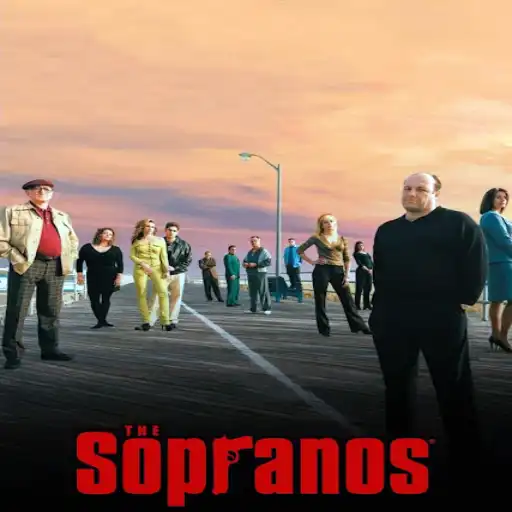
David Chase did not just throw this editing trick at us out of nowhere. He spent the entire final season explicitly teaching the audience how to read the ending. The show drops heavy thematic breadcrumbs that point directly toward a sudden, unannounced execution.
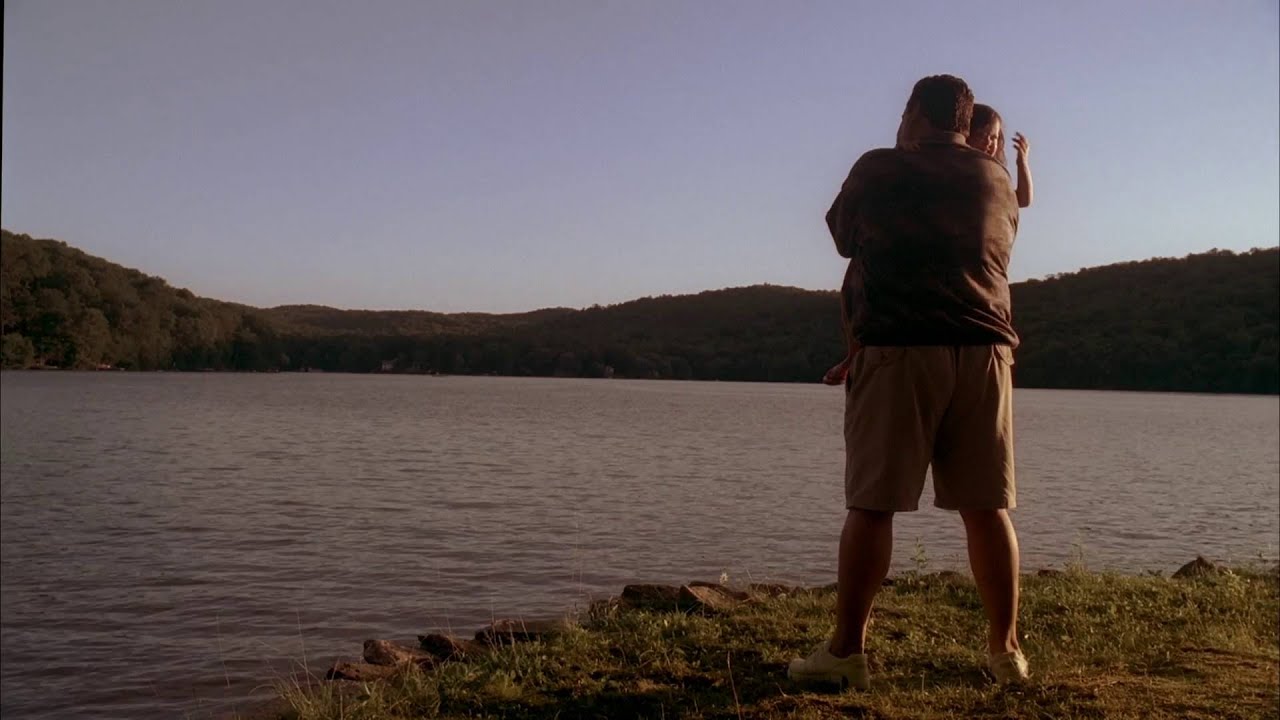
The most famous piece of foreshadowing happens in the episode “The Blue Comet.” Tony and his brother-in-law, Bobby Bacala, are sitting quietly on a fishing boat in the middle of a peaceful lake. They start talking about the grim realities of their criminal professions.
“You probably don’t even hear it when it happens, right?” Bobby muses, staring out at the water.
That specific line is so critical that Chase brings it back as an audio flashback later in the season. The show wanted that concept burned directly into your brain.
   Bobby's Warning (Boat Scene)         Silvio's Dinner (Sound Dips)
                │                                    │
                ▼                                    ▼
       [The Mob Mortality Rule: You never hear the shot that kills you]
                                │
                                ▼
                    Holsten's Diner (The Cut)
We see this rule play out earlier through Silvio Dante. While Silvio is eating dinner with hit target Jerry Torciano, a gunman suddenly approaches their table and opens fire. Silvio is completely disoriented. The audio tracks warp, the sound cuts out, and Silvio can barely process the violence happening right next to him until the hit is completely finished.
Bullets travel much faster than the speed of sound. If someone walks up behind you in a diner and shoots you in the brain, your nervous system cannot process the auditory data before consciousness ends. You would never hear the gunshot. You would never see the flash. One second you are listening to classic rock and waiting for your daughter, and the next second, there is absolutely nothing.
David Chase’s Admissions: Breaking the Silence
For over a decade, David Chase fiercely guarded the ambiguity of the finale. He routinely scolded reporters who demanded a simple “yes or no” answer regarding Tony’s fate. He argued that focusing entirely on whether Tony lived or died missed the artistic point of the series.
However, as the years rolled on, the creator began to drop his guard. The wall of secrecy finally crumbled completely during a series of long-form interviews.
In the book The Sopranos Sessions, authors Matt Zoller Seitz and Allan Sepinwall asked Chase about the ending. During the conversation, Chase suffered a monumental slip of the tongue.
Chase: “I think I had this notion—I was driving on Ocean Park Boulevard near the airport and I saw a little restaurant. It was kind of like a shack that served breakfast. And for some reason I thought, ‘Tony should get it in a place like that.’ Why? I don’t know.”
Interviewer: “You said ‘Tony should get it in a place like that.’ You mean die?”
Chase: “Fuck you guys.”
The room erupted in laughter, but the cat was officially out of the bag.
Chase expanded on this truth further during a comprehensive 2021 interview with The Hollywood Reporter. He explained that his original concept for the finale involved Tony driving into New York for a meeting with Johnny Sack. Tony would drive through the Lincoln Tunnel, the screen would cut to black, and the audience would understand he was killed on his way to the meeting.
He eventually changed his mind because he wanted something less predictable than a standard mob summit execution. He wanted the death to happen in an ordinary, mundane setting. The core intent, however, never shifted. Both versions were designed as a definitive end to Tony Soprano’s story.
The late 2024 HBO documentary Wise Guy: David Chase and The Sopranos, directed by Alex Gibney, offered even more context. Chase revealed that the pacing and sudden structural drop of the finale was heavily inspired by Stanley Kubrick’s cinematic masterpiece 2001: A Space Odyssey. He wanted a cosmic, abrupt shift in perspective that completely unmoored the audience from the reality they had grown comfortable watching.
Existential Meaning: Why the Murder Doesn’t Totally Matter
If Tony dies, why didn’t David Chase just show the hitman pulling the trigger? Why go through all the trouble of an elaborate editing trick?
Because showing a bloody body slumped over a bowl of onion rings would have reduced The Sopranos to a generic gangster flick. The show was always a deeply philosophical exploration of modern American anxiety, depression, and existential dread. The cut to black accomplishes something far more profound than a standard death scene ever could.
The Prison of Eternal Paranoia
Imagine for a moment that the hitman missed, or that the Members Only guy was simply an ordinary guy who really needed to use the diner restroom. Imagine Tony finishes his onion rings, pays the bill, walks out into the cool night air, and goes home safe with his family.
Does he actually win? Is that a happy ending?
Absolutely not. If Tony survives that specific Thursday night at Holsten’s, his life remains an ongoing, living nightmare. He is facing a massive, unavoidable federal indictment. His closest friends are either dead, paralyzed, or turning state’s evidence to save themselves.
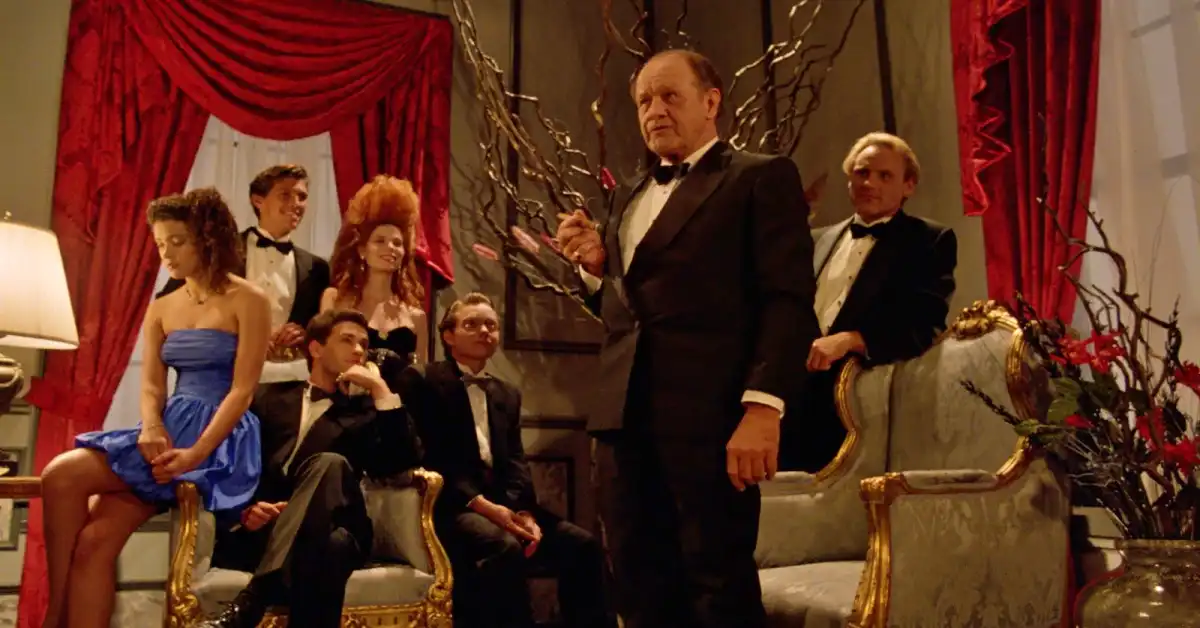
Every time Tony enters a public space for the rest of his life, he will experience the exact same agonizing tension we felt during that final scene. Every single time a door bell chimes, he will jump. Every time a stranger walks past his shoulder toward a bathroom, his stomach will drop.
He is trapped inside a permanent prison of his own making. The ending forces the audience to experience that precise, suffocating paranoia firsthand. We are the ones scanning the room, watching the customers, and waiting for the hammer to drop. That terrifying anxiety is Tony’s permanent reality until the day his life finally ends.
The Viewer Gets Whacked
There is another fascinating psychological interpretation that makes the rounds among film scholars. The cut to black isn’t just killing Tony Soprano.
It is killing us.
For six seasons, the audience acted as silent voyeurs in Tony’s world. We sat in on his private therapy sessions with Dr. Melfi. We hung out in the back room of the Bada Bing. We sat at his kitchen counter while he poured orange juice. We became deeply complicit in his crimes, routing for a brutal sociopath simply because he was charming, funny, and played by the brilliant James Gandolfini.
By violently cutting the feed with zero warning, David Chase forcibly ejects us from the universe. He pulls the plug on our voyeurism. The world of New Jersey organized crime continues to spin, but our window into it has been permanently shattered.
Cultural Legacy
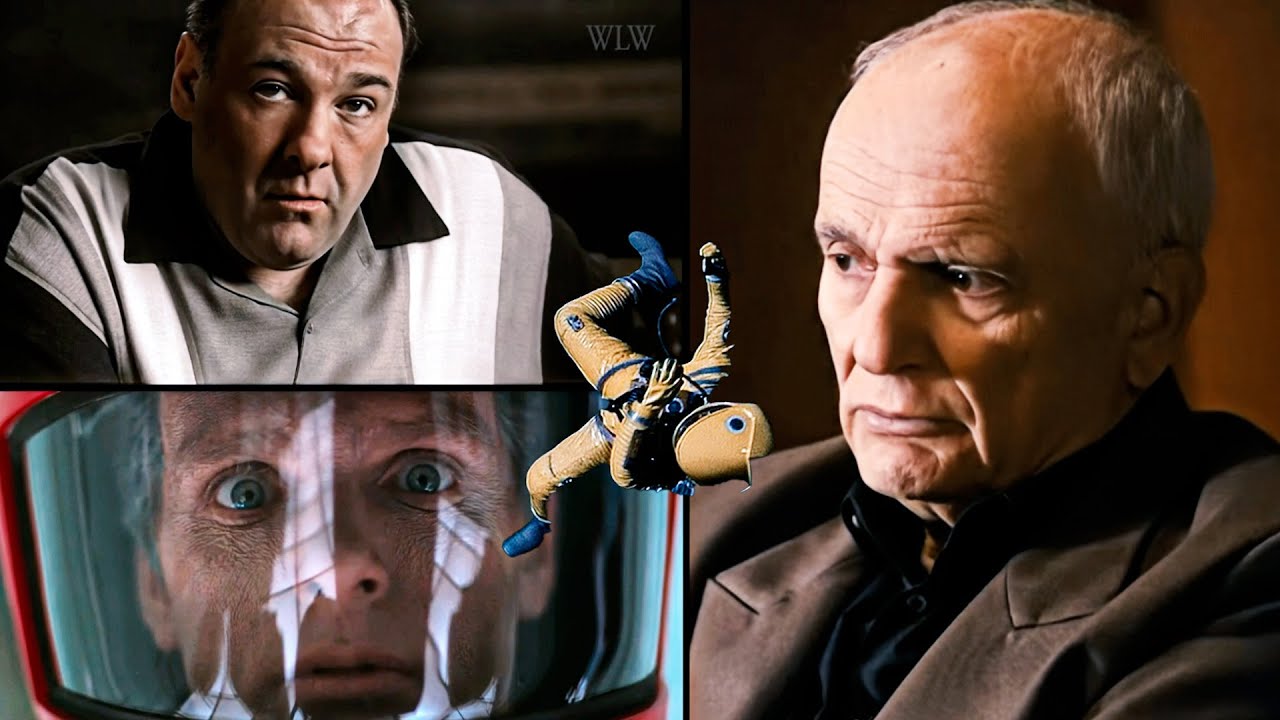
Check out this detailed look at The Sopranos Ending Analysis to see the scene’s cinematic influences explained in full.
The beauty of The Sopranos ending is that it refuses to give the audience cheap closure. It demands active participation. It trusts the viewer to hold two conflicting ideas in their mind simultaneously: the literal reality that Tony was assassinated by a hitman, and the philosophical truth that his spiritual death occurred long before he ever stepped foot inside that diner.
It remains a flawless piece of avant-garde filmmaking delivered straight to a mass television audience. It challenged the rules of how stories are supposed to end. By leaving us in the dark, the show ensured that we would keep talking, debating, and analyzing Tony Soprano’s fate for decades to come.
What Is Your Take?
Do you believe the POV pattern proves Tony died right then and there, or do you prefer to think his story continues on somewhere out in the dark? Did the sudden cut to black leave you satisfied, or do you still feel cheated by the lack of a traditional resolution?
Let’s hear your theories in the comments section below! If you love deep dives into classic television history, character breakdowns, and behind-the-scenes secrets, make sure to bookmark our site and subscribe to our entertainment newsletter for weekly analyses.

