

Wings, Folds, and a 300-Million-Year-Old Explosion: The Story of How Insects Conquered the Skies
Watch a bee deftly navigate a flower garden. See a dragonfly hover like a combat drone. Hear a cicada buzz in the summer heat. We’re surrounded by an aerial empire that has dominated the planet for hundreds of millions of years.
Insects were the first animals to master flight. Full stop. They took to the skies more than 150 million years before pterosaurs and long before the first bird. But how did they pull off this incredible evolutionary feat? Where did the wings even come from?
The origin of insect flight is one of biology’s great, partially solved mysteries. The story isn’t just about wings sprouting from an insect’s back. It’s a gritty three-act play: the radical innovation of the wing, the game-changing invention of the wing fold, and the subsequent global takeover that followed.
dive into the functional timeline of how insects became the undisputed rulers of the air.
Act I: The Wing Origin Debate – Where Did the First Wings Come From?
Picture the world about 400 million years ago, in the Devonian period. The continents are weird, the plants are just starting to look like proper trees, and insects are six-legged crawlers. Flight is not a thing.
Then you jump forward to the Carboniferous period, and the fossil record suddenly shows insects with fully formed, functional wings. There are no clear “half-wing” fossils. This gap is the heart of the debate and has led to two main ideas.

Theory 1: The Paranotal Lobe Theory (The “Top-Down” Idea)
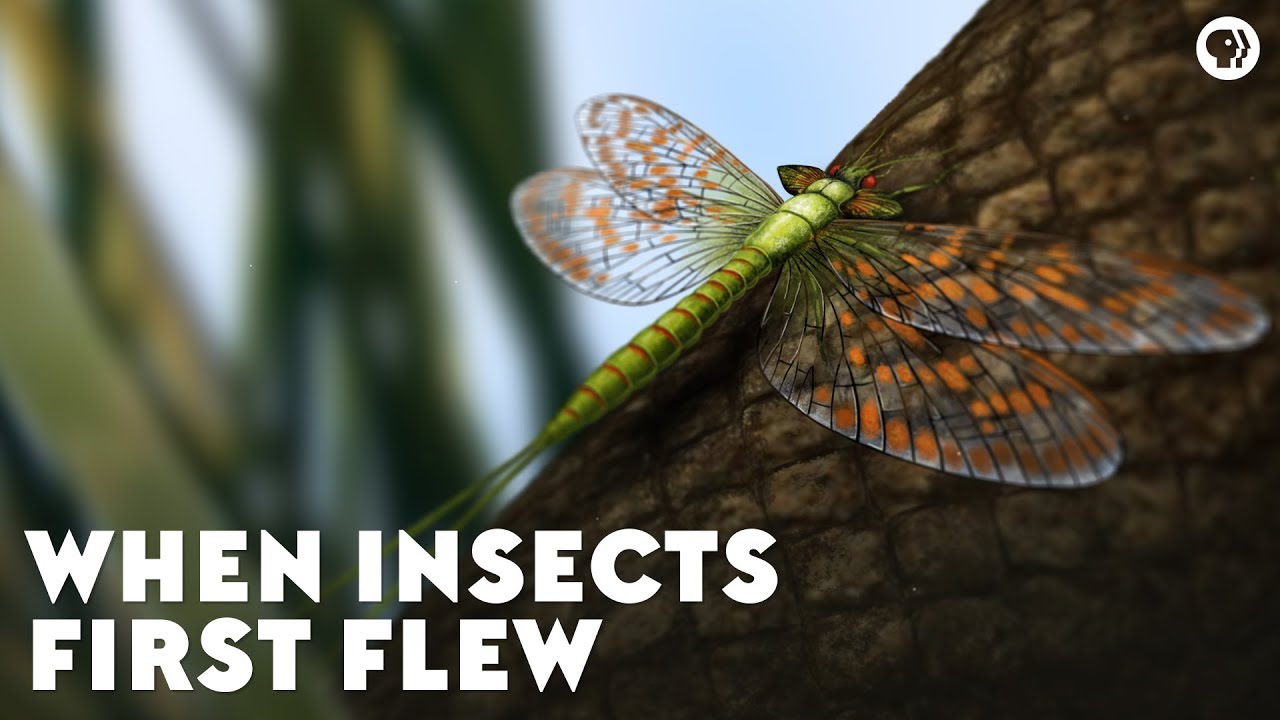
The old-school textbook theory suggests that wings evolved from rigid, flat extensions sticking out from the top of an insect’s thorax—its back. These are called paranotal lobes.
- What were they for initially? Definitely not flight. Imagine them as tiny solar panels for thermoregulation, or maybe stabilizers for a clumsy jumper. Some scientists even proposed they were used in mating displays.
- The Analogy: Think of a fixed spoiler on a race car. It provides a little stability, but it isn’t an active, moving part. The idea is that these lobes slowly got bigger, developed a hinge, and eventually got hooked up to muscles.
- The Problem: It’s hard to explain the jump from a stiff, unmoving flap to a powered, articulated wing. Where did the hinge and muscles come from? It’s a bit of a mechanical leap of faith.
Theory 2: The Epicoxal Theory (The “Bottom-Up” Idea)
This is where the modern evidence is pointing, and frankly, it’s a much cooler story. This theory proposes that wings are actually a radical modification of a pre-existing, mobile appendage from the base of the leg. Many insect ancestors were aquatic, and these little appendages might have started as gills or small fins.
- What were they for initially? In aquatic insect nymphs (the baby stage), these “proto-wings” might have functioned as gills. Another slick idea is that they were used for “surface skimming,” where an insect on the water could use these little paddles to catch the wind and zip across the surface.
- The Analogy: This is like taking a car’s mudflap—which is already a separate, flexible part—and hooking it up to a motor. The path from a small, mobile appendage to a larger, powered wing is much clearer.
- The “Smoking Gun”: Modern genetics. Scientists have discovered that the same genes that control the development of an insect’s legs are also active in wing development. This powerful genetic link, detailed in research published in journals like Science, suggests a “dual origin” where wings are a fusion of an ancestral leg segment and the body wall.
While the debate isn’t 100% slammed shut, the genetic and developmental evidence strongly favors the bottom-up idea. Wings didn’t just pop out of the back; they were repurposed from the legs.
Act II: The Fold – Neoptera and the Invention of Hiding Your Wings

The first winged insects, known as Paleoptera (“old wings”), had a major design flaw. Their wings were fixed in an open position, sticking straight out to the sides. The modern descendants of these pioneers are dragonflies and damselflies.
What’s the big deal? Imagine trying to live your life with two open umbrellas permanently attached to your shoulders.
This created some serious functional limitations:
- You can’t hide. Forget about crawling under a leaf or burrowing into a log. You’re exposed.
- You’re clumsy. Navigating dense vegetation or even just walking around is a nightmare.
- You’re a huge target. You are literally a bigger, more obvious meal for any predator.
Then, around 330 million years ago, a group of insects evolved one of the most important innovations in animal history: a complex joint and muscle system that allowed them to fold their wings flat over their abdomen.

This was a revolution. These insects were the Neoptera (“new wings”), and this single invention blew the doors open for their evolution.
- Access to New Worlds: Suddenly, insects could crawl into cracks, hide under bark, burrow in soil, and disappear into leaf litter. This opened up an almost infinite number of new homes and food sources.
- Better Defense: A folded insect is a smaller, less obvious target. It allowed for the evolution of better camouflage and the ability to simply vanish from a predator’s view.
- Improved Agility: They became far more effective at moving on the ground.
This simple mechanical trick was the dividing line. Today, the Neoptera—beetles, flies, butterflies, wasps, you name it—make up over 99% of all winged insect species. That’s not a coincidence. It’s a testament to the power of the fold.
Act III: The Carboniferous Radiation – Putting It All Together
Now, let’s set the final scene. The Carboniferous Period, roughly 359 to 299 million years ago. The Earth was a different planet. It was a humid, swampy world covered in vast, lush forests of giant ferns and scale trees.
Crucially, the atmosphere was supercharged with oxygen—around 35%, compared to our 21% today.
You have three ingredients for an evolutionary explosion:
- Flight: The ability to escape ground predators, find new food, and travel huge distances.
- Wing Folding: The ability to exploit thousands of new niches on the ground and in vegetation.
- A High-Oxygen World: This rich atmosphere fueled higher metabolisms and, famously, allowed insects to get huge.
The result was the Carboniferous Radiation, an explosive diversification of insects unlike anything seen before. This is when the blueprints for most modern insect groups were laid down. The combination of flight and folding allowed them to conquer every conceivable habitat. They were the undisputed kings of the ecosystem.

This era gave us titans like the Meganeura, a griffinfly that looked like a dragonfly but had the wingspan of a modern hawk. The high oxygen levels made their primitive respiratory system (a network of tubes called tracheae) incredibly efficient, enabling such massive sizes.
This wasn’t just a few new species. This was the birth of an empire, built on the back of two key innovations and a supercharged environment.
A Functional Timeline: From Nubs to Aerial Dominance
Let’s boil it down to a simple, skimmable timeline.
- ~400 MYA (Devonian Period): Wingless insects are crawling around. Ancestral “proto-wings” likely exist as small, mobile leg segments used for skimming or as gills.
- ~350 MYA (Early Carboniferous): True, powered flight is a reality. The Paleoptera (fixed-wing insects) appear, mastering the air but remaining clumsy on land.
- ~330 MYA (Mid-Carboniferous): The Neopteran Revolution. The evolution of the wing-folding mechanism provides a massive strategic advantage, opening up a world of new terrestrial habitats.
- ~320-300 MYA (Late Carboniferous): The Great Insect Radiation. Fueled by flight, folding, and high oxygen, Neopteran insects diversify into a staggering array of forms, establishing the lineages that dominate the planet today.
The Legacy of a 300-Million-Year-Old Blueprint
The story of insect flight is the story of their success. The origin of the wing itself—likely a brilliant repurposing of a leg segment—got them off the ground. But it was the simple, elegant genius of the wing fold that allowed them to truly inherit the Earth.
This ancient blueprint is why insects are the most diverse group of animals on the planet. The ability to fly, and then the critical ability to stop flying and hide, allowed them to outmaneuver competitors, evade predators, and exploit resources no other animal could.
The next time you watch a beetle scurry for cover or a bee land precisely on a flower, remember you’re witnessing the legacy of a 300-million-year-old revolution. They don’t just live in our world; their ancestors built an empire on mastering both the air and the ground beneath it.
What part of insect evolution blows your mind the most? The idea of wings coming from legs, or the simple genius of a wing fold? Drop your thoughts in the comments below!

