

Table of Contents
You Think You Know Space? 5 Celestial Phenomena That Prove We’ve Seen Nothing Yet.
We all know the basics. The fiery ball of the Sun. The steadfast glow of the planets. The beautiful, ghostly clouds of a nebula. We learn about them in school, we see them in documentaries, and they’re beautiful. They make the universe feel knowable, almost comfortable.
I’m here to tell you that’s a lie. A comfortable, beautiful lie.
The real universe, the one that exists in the unimaginable blackness between those familiar points of light, is a carnival of horrors and wonders that defies imagination. It’s a place of terrifying violence, profound emptiness, and creative forces so powerful they make a supernova look like a firecracker.
As someone who has spent countless nights staring through a telescope, I’ve learned that the most amazing things are not the ones you can easily see. They’re the things you have to know are there. Let’s pull back the curtain on the tourist-friendly version of space. Let’s get weird.
1. Kilonovas: The Universe’s Gold Factories
What happens when two dead stars collide?
I’m not talking about regular stars. I’m talking about neutron stars—the collapsed, city-sized corpses of giant stars, so dense that a single teaspoon of their material would weigh a billion tonnes. Now, imagine two of these cosmic monsters, locked in a death spiral for millions of years, finally smashing into each other at nearly the speed of light.
The result is a kilonova. It’s an explosion a thousand times brighter than a standard nova. But that’s not the amazing part.
Why it’s Mind-Blowing: In that single, cataclysmic moment of collision, the universe forges gold. And platinum. And uranium, iodine, and most of the other heaviest elements. The extreme temperatures and pressures are the only conditions in the cosmos where these elements can be created.

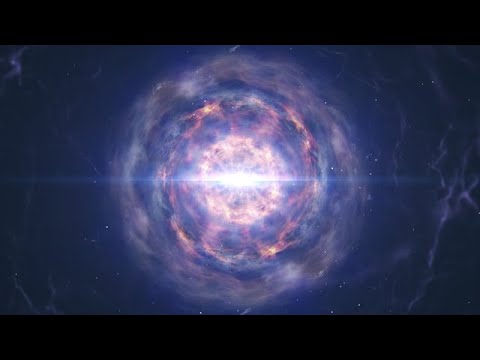
Look at your wedding ring. Look at any piece of gold jewelry. That metal was not born in the heart of a star like carbon or oxygen. According to NASA’s research on an event called GW170817, that gold was forged in the unimaginable violence of a kilonova, billions of years ago, and then flung across space to eventually become part of the dust cloud that formed our Earth.
You are wearing the ghost of a cosmic car crash.
2. Magnetars: The Most Terrifying Magnets in the Cosmos
A magnetar is also a type of neutron star, but it’s a rare, twisted cousin. It is, without exaggeration, the most magnetic object we know of in the entire universe. And the numbers involved are just stupid.
A fridge magnet has a field of about 0.01 tesla. A powerful MRI machine? Maybe 3 tesla. A magnetar’s magnetic field is around 100 billion tesla. That’s a one with fourteen zeroes. A quadrillion times stronger than Earth’s.
Why it’s Mind-Blowing: It’s hard to even describe this level of power with analogies.
- A magnetar could wipe the data from every credit card on Earth from halfway to the Moon.
- If you were within 1,000 kilometers of one, its magnetic field would distort your atoms and tear you apart. You would cease to exist.
- Sometimes, their magnetic fields get so stressed that the star’s crust cracks. This is called a “starquake.” A starquake on magnetar SGR 1806-20 in 2004 released more energy in a tenth of a second than our Sun has emitted in the last 100,000 years.
These things are raw, untamable power. They are monsters hiding in the dark, and we are very, very lucky they are all very, very far away.
3. The Boötes Void: The Great Cosmic Emptiness
We think of space as being full of stuff—galaxies, stars, dust. But what if it wasn’t? What if there were just… nothing?
Meet the Boötes Void. It is a colossal, spherically shaped region of space with an almost unbelievable lack of anything in it. Discovered in 1981, it’s about 330 million light-years in diameter. For perspective, our own Milky Way galaxy is only about 100,000 light-years across.

Why it’s Mind-Blowing: The sheer scale of this emptiness is a challenge to our models of how the universe formed. Based on the average distribution of matter, this region should contain thousands of galaxies. It contains about 60.
Let me put it another way. If our Milky Way galaxy were located in the center of the Boötes Void, we would have thought we were completely alone in the universe until the 1960s, when our telescope technology finally would have been good enough to spot the nearest neighboring galaxy on the other side of the void.
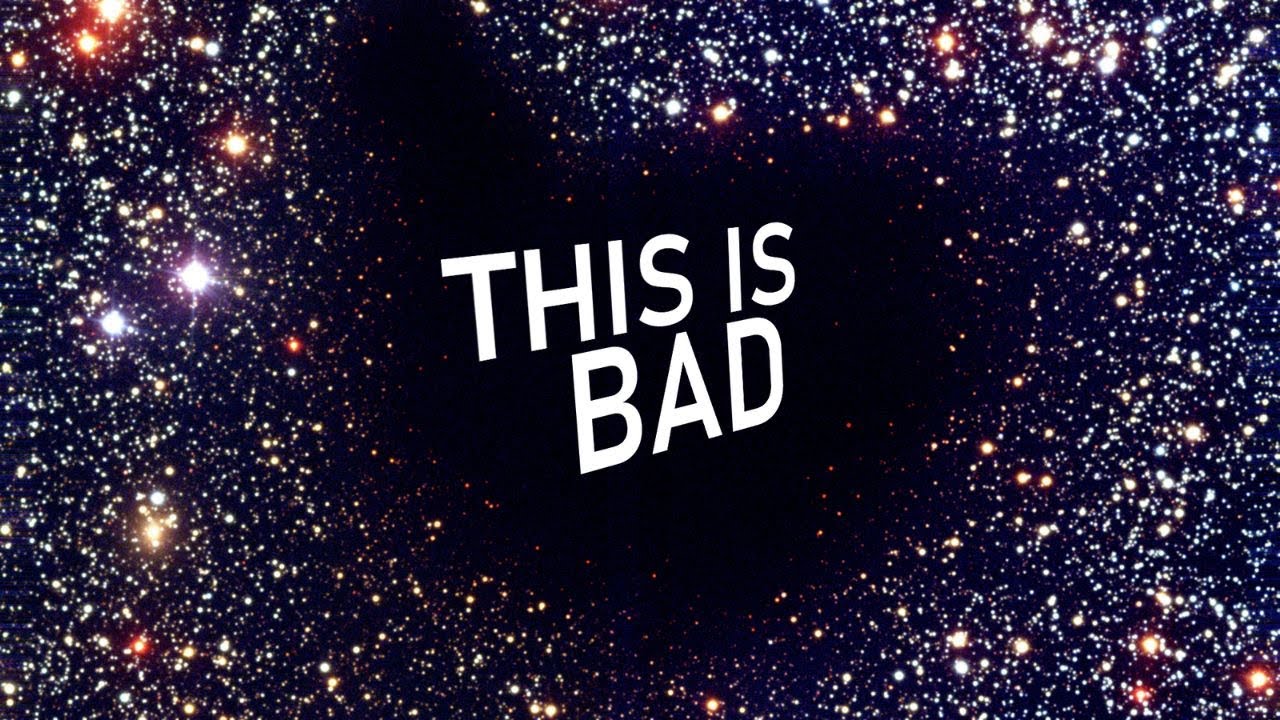
It is a profound statement about nothingness. A silent, dark ocean where there should be bustling cosmic cities. It is the universe showing us that emptiness can be just as awe-inspiring as creation.
4. Tholins: The Sticky, Organic Haze on Distant Worlds
This one is a bit different. It’s not a violent explosion or a giant object. It’s… goo.
Tholins are complex organic molecules that form when ultraviolet light from the Sun zaps simple compounds like methane and ethane. The result is a reddish-brown, sticky substance. Think of it as a kind of cosmic tar.
Why it’s Mind-Blowing: NASA’s Cassini mission and other probes have found this stuff all over the outer solar system. It’s what gives Pluto its reddish color. It’s what makes up the thick, hazy atmosphere of Saturn’s moon, Titan. It’s everywhere out there in the cold and the dark.
Here’s the kicker: when you expose tholins to liquid water, they can form amino acids. Amino acids are the fundamental building blocks of proteins. They are essential for life as we know it.
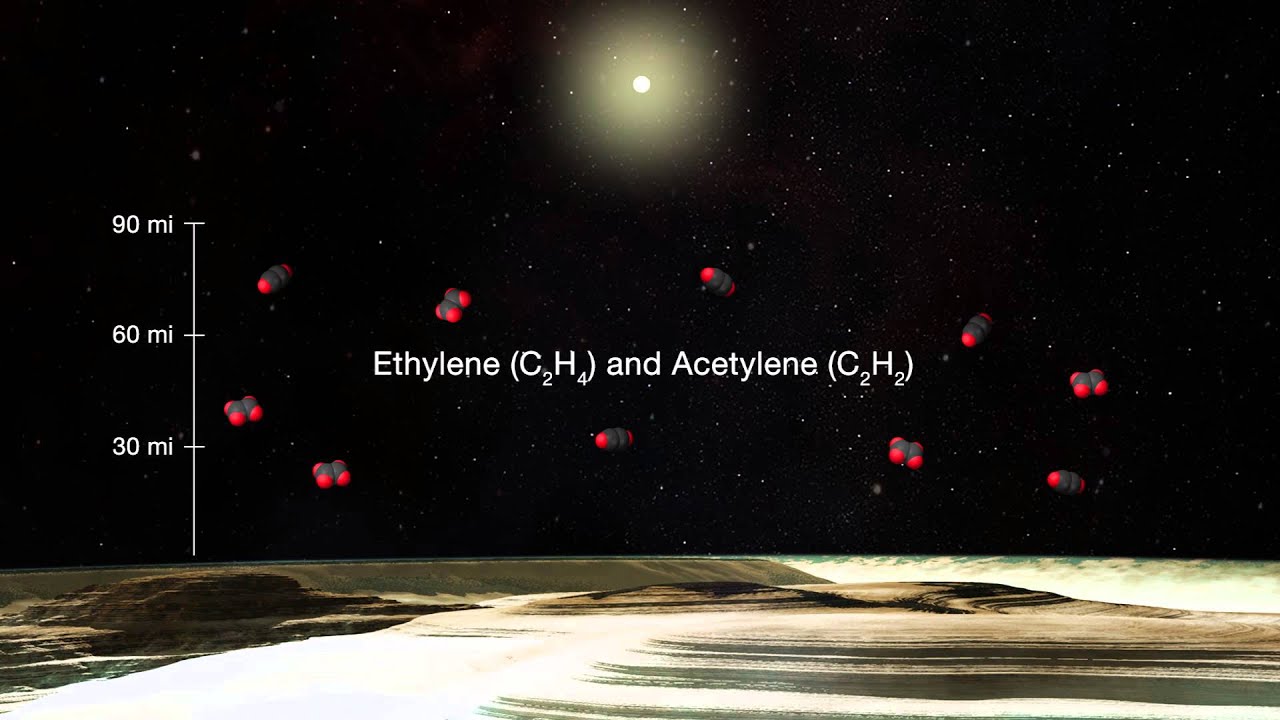
This means that the “primordial soup” that may have led to life on Earth might not be unique. A similar process could be happening right now, or waiting to happen, on frozen worlds across our solar system and beyond. The first step towards life might be a layer of sticky, reddish-brown gunk.

5. Hypervelocity Stars: Getting Kicked Out of the Galaxy
Stars are bound by gravity. They orbit the center of their galaxy in a predictable, stately dance that takes hundreds of millions of years.
Except for the ones that get kicked out.
Astronomers have discovered hypervelocity stars—stars screaming through space at over 500 kilometers per second. That’s fast enough to escape the gravitational pull of the entire Milky Way. They are on a one-way trip into the lonely, black void between galaxies.
Why it’s Mind-Blowing: How does a star get that kind of cosmic eviction notice? The leading theory is a story of gravitational violence on an epic scale. Imagine a binary star system—two stars orbiting each other—that wanders too close to Sagittarius A*, the supermassive black hole at the center of our galaxy.
As the pair gets close, the black hole’s immense gravity captures one of the stars, pulling it into a doomed orbit or consuming it entirely. The second star, its partner now gone, gets whipped around in a “gravitational slingshot” and flung away at an incredible speed.
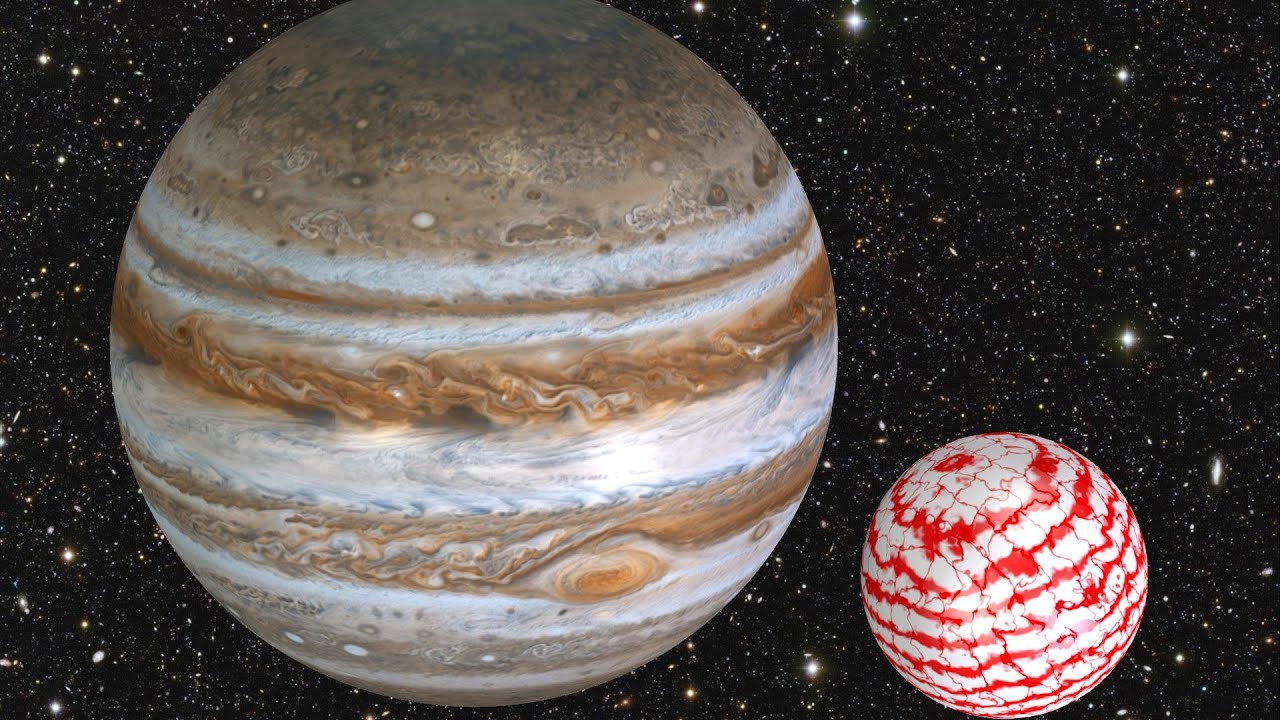
It’s a lonely star, doomed to spend eternity traveling through the intergalactic darkness, a testament to a violent encounter at the heart of our galaxy.
These are the kinds of things that keep me up at night. Not out of fear, but out of sheer, unadulterated awe. The universe isn’t just the pretty lights we see. It’s a dynamic, terrifying, and endlessly creative place. And the best part? We’re just getting started.
Your Turn
Which of these cosmic oddities blows your mind the most? And what other weird corners of the universe fascinate you? Share your thoughts in the comments!

