

Table of Contents
Vampires in Victorian Literature: Forging the Modern Myth
Let’s be real. When you picture a vampire, what do you see?
Is it a suave, captivating aristocrat with a dark secret? A seductive predator hiding in the shadows? Someone with a hypnotic gaze, dressed to the nines, who is both terrifying and tragically alluring?
Yeah, that guy. That’s the one.
Now, what if I told you that entire image—the cape, the castle, the charisma, the raw sexual danger—wasn’t cooked up in some ancient Transylvanian crypt? It was forged in the anxious, repressed, and rapidly changing world of 19th-century Britain.
The modern vampire isn’t a creature of folklore. It’s a creature of literature.
I’ve spent more nights than I can count lost in the yellowed pages of gothic novels, tracing the threads from forgotten stories to blockbuster movies. It’s a fascinating journey. Forget the sparkly, misunderstood heartthrobs for a minute. Let’s dig into the dirt and see where the real vampire came from.
This is the No-nonsense story of how Victorian anxieties created the monster that still haunts our dreams.
Chronology of Vampires
A Timeline of Vampire History
Ancient Origins
5000 BC
The emergence of Vampirism is noted in the Mediterranean Basin.
2000 BC
The Tomb of the Vampire is erected in Giza, Egypt.
140 AD
Reign of Longinus, Rome’s Vampire Emperor.
Medieval Folklore
1047
First appearance of the word “upir” (an early form of “vampire”) in a document referring to a Russian prince as “Upir Lichy,” or wicked vampire.
1428/29
Vlad Dracula, also known as Vlad the Impaler, is born.
1484
The Malleus Maleficarium (the witch hunter’s bible) is written, discussing how to hunt and destroy vampires.
1610
Erzsebet (Elizabeth) Bathory is arrested for killing hundreds of girls and bathing in their blood.
The Age of Hysteria
1672 – 1772
A century of vampire hysteria sweeps across Europe, with major waves in Istra, East Prussia, Hungary, Austrian Serbia, Wallachia, and Russia.
1734
The word “vampyre” officially enters the English language.
The Gothic Revival
1819
John Polidori’s “The Vampyre,” the first complete vampire story in English, is published.
1847
Bram Stoker, the author of Dracula, is born.
1897
Bram Stoker’s “Dracula” is published in England, defining the modern vampire archetype.
The Modern Age
1931
The film “Dracula,” starring Bela Lugosi, is released, cementing the vampire’s image in popular culture.
1976
Anne Rice publishes “Interview with the Vampire,” launching The Vampire Chronicles and revitalizing the genre with a more sympathetic, introspective vampire.
1994
The film version of “Interview with the Vampire” opens, starring Tom Cruise and Brad Pitt.
1998 – Present
The vampire genre continues to thrive with films like “Blade” and numerous book series, solidifying the vampire as a permanent and adaptable figure in modern mythology.
Before the Count: The Grimy, Grotesque Vampire of Folklore
First, we need to get one thing clear: the original vampire was not sexy. Not even a little bit.
The vampire of Eastern European folklore, the creature that terrified villagers for centuries, was a far cry from Dracula. As detailed by folklorists like Jan L. Perkowski in his studies of Slavic myths, the original vampire, or vrykolakas or upir, was a shambling, reanimated corpse.
Imagine this:
- It was often a recently deceased peasant, not an ancient nobleman.
- It was described as bloated, foul-smelling, and ruddy or dark-skinned from drinking blood.
- It didn’t seduce you; it showed up at your house, called out the names of family members, and brought plague and misfortune.
Its primary activities were spreading disease and being a general nuisance to its former village. It was a grotesque, mindless monster. So how did we get from that to the seductive Count?
It started with a ghost story competition on a dark and stormy night.
The Game Changer: Lord Ruthven, the First Aristocratic Bloodsucker
The year is 1816. Lord Byron, Percy Bysshe Shelley, Mary Shelley, and a doctor named John Polidori are stuck inside a villa by Lake Geneva. To pass the time, they challenge each other to write a ghost story. Mary Shelley begins writing Frankenstein.
And Polidori, Byron’s physician, writes a little story called “The Vampyre.” Published in 1819, it completely changed the game.
He created Lord Ruthven, the first vampire in English literature. And Ruthven was nothing like the folkloric ghouls. He was:
- Aristocratic and charming: He moved effortlessly through London’s high society.
- A seductive predator: He targeted and ruined innocent young women.
- Calculating and intelligent: He was a monster hiding in plain sight.
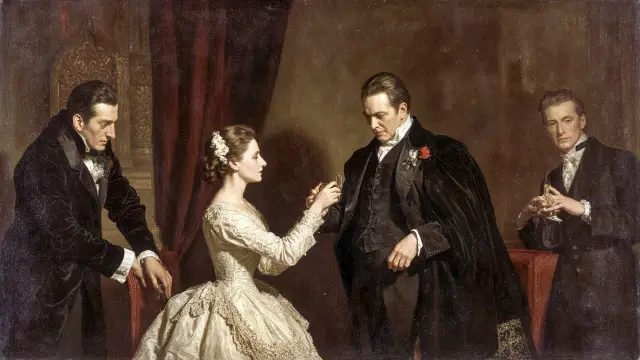
For the first time, the vampire wasn’t just a monster you could smell coming. It was the handsome, mysterious stranger your parents warned you about. The danger was no longer in the graveyard; it was in the ballroom. Polidori had created a new archetype, and Victorian authors were about to run with it.
The Seductive Predator: Sheridan Le Fanu’s Carmilla
Decades before Dracula set foot in London, another vampire was already perfecting the art of seduction. Her name was Carmilla.
Published in 1872, Joseph Sheridan Le Fanu’s novella Carmilla is one of the most important—and criminally underrated—pieces of vampire fiction ever written. It gave us so many tropes we now consider standard:
- The Female Vampire: Carmilla is a beautiful, languid, and deeply predatory noblewoman. She preys on a lonely young woman named Laura, becoming her obsessive friend and companion.
- The Erotic Bite: Le Fanu makes it explicitly clear that the vampire’s bite is an act of ecstasy and desire. The connection between Carmilla and her victims is intensely intimate and filled with barely-veiled lesbian subtext that would have been shocking to Victorian readers.
- The Sympathetic Monster: Unlike a mindless ghoul, Carmilla has a personality. She’s lonely and expresses a kind of twisted love for her victims, even as she drains them of their life. You feel her monstrosity, but also her tragedy.
Carmilla walked so Dracula could run. It established the vampire as a creature of forbidden desire and psychological horror. But why were these stories so popular? What was going on in the Victorian mind?
The Victorian Anxieties That Fed the Vampire Myth
The vampire became the perfect monster for the 19th century because it was a walking, talking embodiment of everything that terrified them. It was a metaphor powerful enough to contain their deepest fears.
Fear #1: Science vs. Superstition
The Victorian era was the age of Darwin, of industrial revolution, of rapid scientific progress. Germ theory was beginning to explain disease. The world was becoming rational, knowable, and demystified.
And that scared the hell out of people.
The vampire was a supernatural dagger to the heart of this new scientific certainty. It’s a creature that defies biology and physics. And how do you fight it? Not with a microscope, but with a crucifix. Not with medicine, but with a wooden stake and holy water.
Characters like Dr. Abraham Van Helsing in Dracula are fascinating because they bridge this gap. Van Helsing is a man of science—a doctor and a professor—but he’s also the one who insists they must turn to ancient faith and folklore to defeat the Count. The vampire represented a terrifying “what if” in a world that thought it had all the answers.
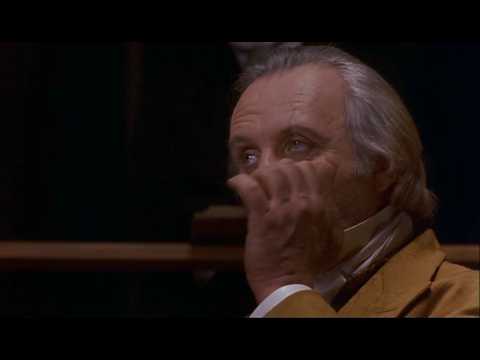
Fear #2: The “New Woman” and Sexual Repression
Victorian society was notoriously prudish, with sexuality buttoned-up and repressed, especially for women. The ideal woman was the “Angel in the House”—pious, pure, and submissive.
Then came the “New Woman,” a feminist ideal of an educated, independent woman who challenged these rigid roles.
The vampire is a direct assault on all of this. It is a creature of pure, unbridled libido.
- The Bite: It’s an act of penetration, an exchange of fluids, a moment of forbidden intimacy that leaves its mark.
- The Transformation: Look at Lucy Westenra in Dracula. Before she is bitten, she’s a proper Victorian lady. After, she becomes a voluptuous, sexually aggressive predator who preys on children. She is “liberated” into monstrosity. The men’s quest to destroy her is a quest to destroy this dangerous female sexuality and restore patriarchal order.

The vampire gave Victorian authors a way to write about sex, desire, and deviance in a way they never could directly. As the British Library notes in its analysis of gothic fiction, monsters often reveal the hidden desires of a society.
Fear #3: Fear of the Foreigner (Xenophobia)
Britain in the late 19th century was the center of a global empire. But with that power came a deep-seated paranoia about “reverse colonization”—the fear that the “inferior” cultures they had colonized would come back to England and corrupt it from within.
Who is Count Dracula?
He is a mysterious, wealthy nobleman from the “primitive” East who buys property in the heart of London. He represents a foreign contagion, literally infecting the blood of English women and threatening to turn the modern, civilized city into his own personal feeding ground. He is the ultimate illegal alien, a manifestation of the era’s intense xenophobia.
Enter Dracula: Bram Stoker’s Perfect Storm
Bram Stoker’s Dracula, published in 1897, isn’t a work of staggering originality. Its genius lies in its synthesis.
Stoker took all the pieces that came before him and assembled them into the perfect monster for his time.
- He took the high-society predator from Polidori’s Lord Ruthven.
- He took the seductive, erotic horror from Le Fanu’s Carmilla.
- He infused the story with all the pressing Victorian anxieties about science, sex, and foreigners.
Dracula is the ultimate Victorian vampire because he is the ultimate Victorian fear. He is a charismatic, ancient, and powerful threat to England’s scientific progress, its sexual purity, and its national identity.
Why the Victorian Vampire Still Bites
We are no longer Victorians, so why is this version of the vampire still the default? Why has it endured for over a century while the bloated peasant vampire of folklore has been forgotten?
Because the anxieties it represents are timeless.
The vampire is a blank slate for our fears. In the 1980s, during the AIDS epidemic, the vampire’s bite became a metaphor for incurable disease. In our globalized world, it can still represent the fear of the “other.” In stories that explore power dynamics, it becomes a symbol of the predatory elite.
The Victorian writers didn’t just create a monster. They created a near-perfect metaphor. A dark, captivating figure that could be endlessly reinvented to reflect the fears of any era. And that is why, long after the gaslights have gone out, the shadow of the Victorian vampire still looms so large.
What do you think?
What’s your favorite work of vampire fiction, and what deep-seated fears do you think it taps into? Let me know in the comments!

