

Famous Stigmatists: 5 People Who Bore the Wounds of Christ (Miracle or Hoax?)
Is it a miracle, a medical anomaly, or the ultimate influencer stunt?
If you saw a video on TikTok today of a guy bleeding from his hands without a cut, you’d probably scroll past thinking it’s a filter. But for centuries, this phenomenon known as stigmata has baffled scientists, terrified skeptics, and inspired millions of believers.
We’re talking about people who allegedly bear the actual physical wounds of Jesus Christ. The holes in the hands. The spear mark in the side. The scars from the crown of thorns.
Some say it’s divine proof. Others call it “Psychogenic Purpura” (a fancy way of saying your brain is so stressed it makes you bleed). And yes, some people think it’s just straight-up fraud.
Whether you’re a history buff, a spiritual seeker, or just here for the spooky mystery, we’ve dug into the archives to find the truth. Here are the 5 most famous people in history who bled like Jesus and the science (or lack thereof) behind them.
1. Padre Pio: The Heavyweight Champion of Mystics

Who was he?
If you’ve been on “Catholic TikTok” or seen that 2022 movie with Shia LaBeouf, you know Padre Pio. This Italian Capuchin friar (1887–1968) is arguably the most famous stigmatist of the modern era.
The Phenomenon:
For 50 years yes, five decades Pio had open wounds on his hands, feet, and side. They never healed, but they never got infected either. Witnesses claimed the blood didn’t smell like iron or rot; it smelled like flowers (roses or violets), a phenomenon called the “Odor of Sanctity.” He wore fingerless gloves to hide the marks, which only made him more mysterious.

Miracle or Hoax?
- The Skeptic’s Angle: In the 1920s, a Vatican physician named Agostino Gemelli called Pio a “self-mutilating psychopath.” The biggest bombshell? A pharmacist once testified that Pio secretly ordered carbolic acid a chemical that could burn skin and create wounds.
- The Believer’s Defense: Pio’s wounds disappeared completely without a scar moments after he died. Medical experts argue that acid burns don’t just vanish; they leave nasty scar tissue. Plus, how do you fake a wound for 50 years without dying of sepsis?
High. His “spiritual warfare” stories (fighting demons in his cell) are basically real-life horror movies.
2. St. Francis of Assisi: The Original
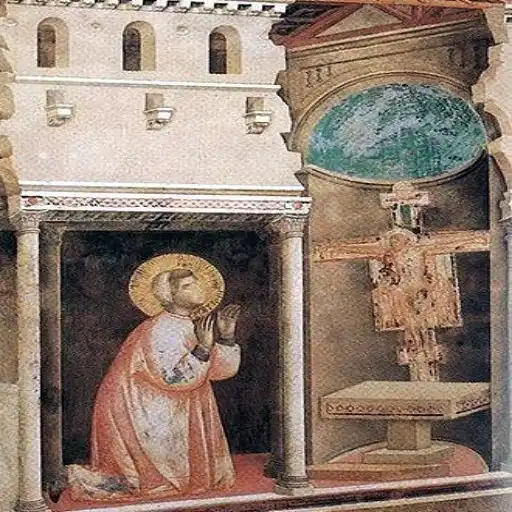
Who was he?
The guy who preached to birds and tamed wolves. St. Francis (1181–1226) is the “OG” stigmatist. Before him, nobody had really recorded this happening.
The Phenomenon:
In 1224, while praying on a mountain, Francis saw a vision of a burning angel. Boom pain. When it ended, he had nails in his hands and feet. But here’s the twist: early accounts say the “nails” weren’t metal they were fleshy growths that looked like nails, hard and black, protruding from his skin.
Miracle or Hoax?
- The Skeptic’s Angle: Francis was known for extreme fasting and living in rough conditions. Some historians think he might have had leprosy or malaria, which can cause skin lesions.
- The Believer’s Defense: The specific placement and the “nail-like” structure of the flesh don’t match any known disease. Also, the timing right after a vision is hard for science to explain away as a random symptom.
Fun Fact: Francis is the reason why some crucifixes show Jesus with nails in the wrists rather than the palms. Francis knew anatomy; palms would rip open under the weight of a body.
3. St. Catherine of Siena: The Invisible Woman

Who was she?
A 14th-century powerhouse who told Popes what to do. Catherine (1347–1380) was intense. She lived on almost no food and slept on a wooden board.
The Phenomenon:
This is where it gets wild. Catherine asked God not to let the wounds show because she didn’t want the attention. According to her biography, she felt the pain of the nails and the spear, but there was no blood. She lived with the sensation of being pierced, but her skin remained unbroken.

Miracle or Hoax?
- The Skeptic’s Angle: “Invisible pain” sounds a lot like psychosomatic illness. If there’s no physical wound, it’s easy to dismiss it as all in her head (or nerve damage from her extreme fasting).
- The Believer’s Defense: Witnesses saw her body physically contort in agony during prayer, matching the positions of crucifixion, without any external cause.
Why it ranks: It introduces the concept that stigmata might be a mystical experience rather than just a physical one.
4. Therese Neumann: The Nazi-Era Enigma

Who was she?
A German peasant girl (1898–1962) who became a celebrity during the rise of Hitler.
The Phenomenon:
Therese didn’t just bleed from her hands; she bled from her eyes (haemolacria). But the crazier claim? She allegedly didn’t eat any solid food for 35 years, surviving only on the Holy Eucharist (communion wafers).
Miracle or Hoax?
- The Skeptic’s Angle: During World War II, people were skeptical. Doctors wanted to observe her 24/7 to prove she wasn’t sneaking snacks, but her family often refused long-term hospital stays, claiming it would kill her. The “bleeding tears” can sometimes be explained by extreme stress or hormonal imbalances.
- The Believer’s Defense: The Nazis actually hated her. They knew her “miracles” were distracting people from their propaganda. If she was a fraud, the Gestapo would have loved to expose her but they never could.
5. St. Gemma Galgani: The “Daughter of Passion”

Who was she?
An Italian mystic (1878–1903) who died young at 25. She’s often called the “Gem of Christ.”
The Phenomenon:
Gemma’s stigmata were violent. Blood would spurt from her wrists and ribs, soaking her clothes, then suddenly stop. Her wounds would often heal completely by the next day, leaving no scabs, only to reopen the following week.

Miracle or Hoax?
- The Skeptic’s Angle: Gemma suffered from spinal tuberculosis. Her physical health was already wrecking her body. Some psychologists suggest she suffered from hysteria (a diagnosis used a lot back then) which caused Psychogenic Purpura where emotional stress causes blood vessels to burst under the skin.
- The Believer’s Defense: The wounds followed a strict schedule (Thursday night to Friday afternoon). Tuberculosis doesn’t own a calendar. Plus, her spiritual writings are considered some of the deepest in the Church, suggesting a sound mind, not a crazy one.
The Science Corner: Can Your Brain Make You Bleed?
So, is there a scientific explanation for this? Maybe.
It’s called Gardner-Diamond Syndrome (or Psychogenic Purpura).
Here’s the breakdown:
- The Theory: Rare cases show that extreme emotional stress or trauma can cause a person’s immune system to attack their own red blood cells.
- The Result: Painful bruising and spontaneous bleeding through the skin.
- The Catch: This explains the bleeding, but it doesn’t explain the patterns. Why perfectly round holes in the hands? Why symbols or crosses? That’s where science throws up its hands and says, “We don’t know.”
Remembering
You might be thinking, “Why do I care about medieval monks bleeding?”
Look at your “For You” page. Whether it’s “manifesting,” “shifting,” or the “End Times” trends on TikTok, people are obsessed with the idea that mind leads matter. Stigmata is the ultimate version of that. It’s the physical proof that what you believe can literally change your biology.
Whether you think these 5 people were holy vessels or masters of the mind, they proved one thing: The human body is capable of stranger things than we can imagine.
What do you think? Divine miracle or the power of the human brain? Drop a comment below!
Disclaimer: This article is for educational and entertainment purposes. We aren’t doctors or theologians. If you start bleeding spontaneously, please go to the ER, not a monastery.

