

It’s the smell that hits you first, isn’t it? That intoxicating blend of baking dough, bubbling mozzarella, and caramelized tomato sauce that triggers an immediate, primal reaction in your brain. Whether you’re a thin-crust purist, a deep-dish defender, or someone who controversially enjoys pineapple (we’re not judging… much), February 9th is your day.
Welcome to National Pizza Day, the annual celebration of the world’s most versatile comfort food. But before you dial up your local delivery spot or fire up the Ooni, have you ever wondered how a poor man’s street food from Naples conquered the entire planet?
Grab a slice, pull up a chair, and let’s dive into the cheesy, saucy, and surprisingly scientific history of pizza.
Street Food for the Hustlers
Long before it was a Friday night staple, pizza was the ultimate survival food. If you walked the streets of 18th-century Naples, Italy, you wouldn’t see fancy restaurants serving artisanal pies. Instead, you’d see the Lazzaroni the working-class poor rushing around with flatbreads folded in their pockets.
These early pizzas were simple, cheap, and convenient. We’re talking garlic, lard, and salt. Maybe some basil if you were feeling fancy. Tomatoes? They were actually considered poisonous by many Europeans at the time! However, the Neapolitans were hungry enough to take the risk, and voila the tomato-topped flatbread was born.
The Royal Seal of Approval
Here is the story everyone loves to tell, and while some historians side-eye it, it’s too good to skip.
In 1889, King Umberto I and Queen Margherita visited Naples. They were tired of their fancy French diets and wanted to try “peasant food.” A local pizzaiolo named Raffaele Esposito was summoned to cook for them.
He whipped up three pizzas, but the Queen’s favorite was a patriotic creation featuring:
- Red Tomato Sauce
- White Mozzarella Cheese
- Green Fresh Basil
It looked just like the Italian flag. The Queen loved it, Esposito named it the Pizza Margherita, and suddenly, pizza wasn’t just for the poor anymore. It had the royal stamp of approval.
From Little Italy to Global Domination
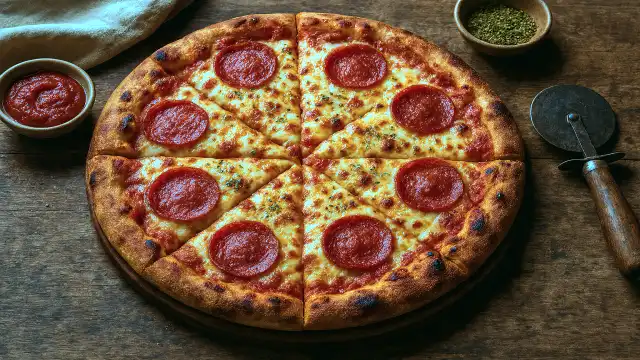
So, how did pizza get from the backstreets of Naples to literally every corner of the United States?
You can thank the massive wave of Italian immigrants who arrived in the late 19th and early 20th centuries. They brought their starters (dough yeast, not appetizers) and their family recipes.
Gennaro Lombardi is the name to know here. In 1905, he opened what is widely recognized as the first licensed pizzeria in America, right on Spring Street in New York City. Lombardi’s is still there today, by the way. Originally, they sold whole pies for five cents, but since most people couldn’t afford that, they sold individual slices wrapped in paper tied with string.
The WWII Boost
Here’s a plot twist: Pizza didn’t truly go “mainstream” across America until the 1940s. During World War II, American soldiers stationed in Italy got a taste of the local cuisine. When they came home, they didn’t want hot dogs; they wanted that “tomato pie” they had overseas.
Consequently, pizzerias started popping up everywhere, not just in Italian neighborhoods. The introduction of the gas-fired pizza oven meant you didn’t need a coal pit to bake a pie, making it easier for anyone to open a shop.
Why We are Addicted (Literally)
Ever notice how you can’t eat just one slice? That’s not a lack of willpower; it’s chemistry.
There are two major scientific players that make pizza irresistible to the human brain:
1. The Maillard Reaction
This is the holy grail of cooking. When the amino acids (proteins) and sugars in the dough and cheese are hit with high heat (usually above 284°F), they brown. This browning creates hundreds of complex flavor compounds. It’s why a pale crust tastes like cardboard, but a golden-brown crust tastes like heaven.
2. Glutamate (The Umami Bomb)
Pizza is basically a vehicle for glutamate, a compound that tells your brain, “This is savory and delicious.”
- Tomatoes: Rich in glutamate.
- Cheese: Packed with glutamate.
- Pepperoni/Meat: Even more glutamate.
When you combine them, you get a “flavor synergy” that lights up the pleasure centers of your brain. In short, pizza is scientifically engineered to make you happy.
Weird and Wonderful Toppings
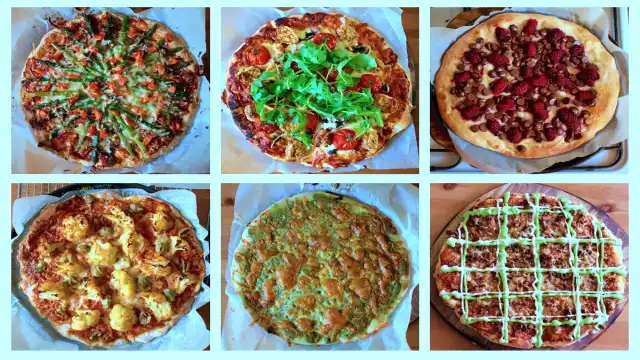
If you think pineapple is the wildest thing you can put on a pizza, you need to grab your passport. The world has taken the Italian concept and remixed it in ways that range from delicious to… questionable.
Sweden: The Banana Curry Pizza
This is not a drill. In Sweden, a very popular topping combination is bananas, curry powder, peanuts, and chicken. It sounds like a chaotic potluck dinner, but the Swedes swear by the sweet-savory balance.
Japan: The Mayo Jaga
Japan has mastered the art of “umami on steroids.” One of their favorites is the Mayo Jaga, which features potatoes, hot mayonnaise, and corn. Sometimes they swap the tomato sauce for a squid ink base, turning the whole pie black.
Brazil: The Salad Bar Approach
In Brazil, pizzerias don’t hold back. It is common to find green peas, quail eggs, carrots, and even raisins on a pizza. They treat the crust like a plate and the toppings like a full buffet dinner.
Russia: The Mockba
Want a cold slice? In Russia, the “Mockba” is a popular pizza topped with sardines, tuna, mackerel, salmon, and onions. It is essentially a fish platter on dough, and it’s often served cool or at room temperature.
Australia: The Coat of Arms
Down Under, you can order a pizza topped with the animals on their coat of arms: kangaroo and emu. It’s usually paired with bush peppers and native spices. Talk about eating local!
Pizza by the Numbers (2024-2025 Edition)
To truly understand the scale of our obsession, we need to look at the stats. They are staggering.

- 3 Billion: The number of pizzas sold in the U.S. every year.
- 350 Slices: The amount of pizza Americans eat every single second.
- 11.4 kg (25 lbs): The amount of pizza the average person in Norway eats per year. Yes, shockingly, Norway consumes more pizza per capita than the U.S. or Italy!
- $49 Billion: The approximate value of the U.S. pizza market alone.
- Pepperoni: Still the king of toppings in America, appearing on roughly 36% of all orders.
How to Celebrate National Pizza Day 2026
Ok, you know the history, you know the science, and you know that someone in Sweden is currently eating a banana pizza. How should you celebrate this February 9th?
1. The “Support Local” Move
Skip the big chains (Domino’s and Pizza Hut will be fine). Find a local mom-and-pop shop in your town. Order their signature pie. These are the places keeping the spirit of Gennaro Lombardi alive.
2. The DIY Pizza Challenge
Making pizza at home is easier than you think, and it’s a great activity for kids.
- Pro Tip: Your home oven doesn’t get as hot as a professional deck oven. To hack this, buy a pizza stone or steel. Preheat it at your oven’s max temperature (usually 500°F or 550°F) for at least 45 minutes before baking. This mimics the intense heat needed for that Maillard reaction we talked about.
3. The Blind Taste Test
Order plain cheese slices from three different spots. Blindfold your family or friends. Have them rate the sauce, the crust, and the “cheese pull.” You might be surprised which one actually tastes the best when you strip away the branding.
The Verdict
Pizza is more than just dough, sauce, and cheese. It is a global language. It’s the food we order when we’re moving into a new house, the food we share at office parties, and the comfort meal we crave after a long week.
From the streets of 18th-century Naples to the high-tech delivery apps of 2026, pizza has evolved, adapted, and conquered.
So, this February 9th, don’t just eat. Savor. Appreciate the history in that fold. And maybe, just maybe, be brave enough to try a little curry powder on your slice. (Or not. We won’t blame you.)
Now, go get a slice!
References:
- Pizza Today: 2024 Industry Trends Report
- Fortune Business Insights: Global Pizza Market Size & Growth
- Smithsonian Magazine: The History of the Pizza Margherita
- Colorado State University: The Science of Why Pizza Tastes Good
- EatFirst: Unusual Pizza Toppings Around the World

