

What is a Will-o’-the-Wisp? The Science of Swamp Gas & Ignis Fatuus
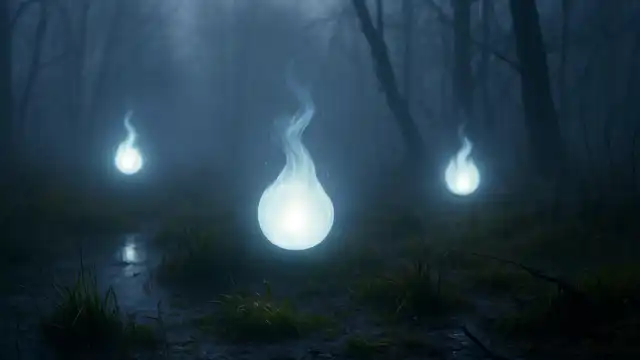
You know the scene. You’re walking near a marsh at night. The fog is thick, the air smells like old wet socks, and suddenly—flicker.
A pale blue light hovers in the distance. It bobs and weaves, almost like a lantern held by an invisible hand. You step toward it. It retreats. You follow. And before you know it, you’re waist-deep in muck, lost in the middle of nowhere.
If you’re a gamer, you probably know Will-o’-the-wisps as cute little collectibles in Ori or a nuisance in The Witcher. But for centuries, these lights were the stuff of absolute nightmares. They weren’t XP boosts; they were death traps.
So, what are they actually? Are we looking at ghosts, fairies, or just a burp of chemistry?
Let’s dig into the dark folklore and the surprisingly complex science behind the Ignis Fatuus—the Foolish Fire.
The Legend: Before Jack-o’-Lanterns Were Pumpkins
Before we get to the chemistry class, we have to talk about Stingy Jack.
Most people don’t realize that your Halloween pumpkin is actually a nod to the Will-o’-the-wisp. In 18th-century Irish folklore, there was a man named Stingy Jack who was, frankly, a terrible person. He was so deceptive that he managed to trick the Devil twice.
When Jack finally died, God wouldn’t let him into Heaven (too sinful), and the Devil wouldn’t let him into Hell (because Jack had tricked him).

- The Result? Jack was stuck on Earth forever.
- The Gear: The Devil tossed him a single burning coal from Hell to light his way.
- The Lantern: Jack carved out a hollow turnip (yes, a turnip) to hold the coal.
He became “Jack of the Lantern,” or Jack-o’-lantern. People believed the flickering lights in the swamps were Jack’s wandering soul. To scare him away, they carved their own scary faces into turnips. When the tradition came to America, pumpkins were cheaper and bigger, so the turnip got fired.
It’s Not Just Jack: Global Ghost Lights
If you think this is just a European thing, think again. Almost every culture has a “stay away from the light” story.
- United Kingdom: They call them Hinkypunks (one-legged spirits) or Corpse Candles.
- Australia: The terrifying Min Min lights in the outback that follow cars.
- Mexico: Brujas (witches) transforming into fireballs to suck the blood of children.
- Thailand: The Naga Fireballs rising from the Mekong River.
The story is always the same: Don’t follow the light.
The Science: What Causes Will-o’-the-Wisps?
Ok, folklore is fun, but can science explain a floating blue flame that doesn’t burn anything?
Actually, yes. And it’s arguably cooler than the ghost stories.
For years, skeptics screamed “Swamp Gas!” like a Scooby-Doo villain, but the chemistry is specific. The scientific name is Ignis Fatuus (Latin for “Foolish Fire”), and it boils down to three main theories.
1. The “Burping Swamp” Theory (Oxidation)
This is the leading explanation. Swamps are massive graveyards for plants. As vegetation rots underwater, it gets broken down by bacteria in an oxygen-free (anaerobic) environment.
This decay produces gases. You know Methane (CH4), but the real MVP here is Phosphine (PH3) and Diphosphane (P2H4).
- The reaction: Phosphine is nasty stuff. Unlike methane, which needs a spark to light up, diphosphane can spontaneously ignite when it hits oxygen.
- The effect: As these gas bubbles pop at the surface, they mix with air and—POOF. You get a low-temperature, bluish flame.
- Why it moves: The flame isn’t “running” from you. When you walk toward it, your movement pushes air forward, blowing the light gas away. When you walk back, the vacuum pulls it toward you. It literally follows your airflow.
2. The “Microlightning” Discovery (New Research)
Science doesn’t sleep. A recent study by chemists at Stanford University proposed a new twist. They found that the interface between gas bubbles and water can generate electric charges.
Think of it like static electricity. When these methane bubbles rise, they can create tiny sparks or “microlightning” inside the bubble. If the spark is strong enough, it ignites the methane. This explains why the lights flicker so erratically—it’s a series of tiny, electrical ignitions.
3. Cold Fire vs. Foxfire
Sometimes, the light isn’t fire at all. It might be Bioluminescence.
- Honey Fungus: Certain fungi (like Armillaria) glow green in the dark to attract insects. This is often called “Foxfire.”
- The difference: Foxfire stays on the wood (it doesn’t float). If you see a light bobbing at head-height, it’s likely gas, not a mushroom.
Why Don’t We See Them Anymore?
If these things are real, why hasn’t your cousin captured one on TikTok yet?
Two reasons: Drainage and Light Pollution.
- Habitat Loss: Humans have drained massive amounts of swamplands and fens for farming and housing. Less swamp equals less rotting vegetation, which means less phosphine gas.
- Bright Nights: Ignis Fatuus is dim. In the 1700s, the world was pitch black at night. Today, streetlights and city glow wash out these faint chemical reactions. You can’t see a candle next to a spotlight.
However, they are still spotted in remote areas like the Hessdalen Valley in Norway, where scientists have set up cameras to track unexplained glowing orbs that defy simple explanation.
So, Is It Safe?
If you do see a Will-o’-the-wisp, the light itself won’t hurt you. It’s “cold fire”—a chemical reaction that produces light with very little heat.
But the danger is real.
The danger isn’t the ghost; it’s the geography. If you are staring at a Will-o’-the-wisp, you are standing next to a bog, quicksand, or a deep marsh in the pitch dark. The light lures you off the path, and the swamp finishes the job.
The Verdict
The Will-o’-the-wisp sits right on that razor’s edge between myth and reality.

- To the poet: It is a lost soul denied peace.
- To the chemist: It is the oxidation of diphosphane.
- To the traveler: It is a warning.
Next time you see a flicker in the woods, go ahead and appreciate the complex organic chemistry. Just do it from a distance.
Frequently Asked Questions About Will-o’-the-Wisps
1. Are Will-o’-the-Wisps real or just a myth?
Yes, Will-o’-the-Wisps are a real scientific phenomenon, though the ghost stories attached to them are folklore. Scientifically known as Ignis Fatuus (Foolish Fire), these mysterious lights are caused by the oxidation of gases like phosphine and methane produced by decaying organic matter in swamps. While they aren’t spirits, the atmospheric lights that inspired the legends are very real.
2. What is the scientific explanation for swamp lights?
The most widely accepted theory is chemiluminescence. When organic matter (dead plants) rots in deep mud, it releases gases. One of these, diphosphane, can spontaneously ignite when it hits oxygen in the air. This creates a low-temperature, pale blue flame that appears to hover above the water. Other explanations include bioluminescent fungi (foxfire) or piezoelectric charges (microlightning) from geological stress.
3. Why do Will-o’-the-Wisps appear to move away when you approach?
This is physics, not magic. Will-o’-the-wisps are essentially clouds of burning gas. When a person walks toward them, the air displaced by their movement creates a cushion of wind that pushes the lightweight gas away. Conversely, if you run away, the vacuum created behind you can pull the light along, making it seem like the “ghost” is chasing you.
4. Is there a connection between Will-o’-the-Wisps and Jack-o’-Lanterns?
Absolutely. The modern pumpkin tradition comes from the Irish legend of Stingy Jack. According to folklore, Jack was a trickster doomed to wander Earth with only a burning coal inside a hollowed-out turnip to light his way. This “Jack of the Lantern” became associated with the swamp lights. Irish immigrants in America later switched from turnips to pumpkins because they were larger and easier to carve.
5. Are Will-o’-the-Wisps dangerous to humans?
The light itself cannot hurt you—it is a “cold fire” with very little heat. However, following them is extremely dangerous. Historically, these lights hover over treacherous terrain like bogs, marshes, and quicksand. Travelers captivated by the light would often stray off safe paths and drown in the muck. This is why folklore labels them as “deadly lures” or evil spirits.
6. Where can I see a Will-o’-the-Wisp today?
While light pollution and swamp drainage have made sightings rare, you can still see similar phenomena in remote, dark locations. Famous spots include:
The Hessdalen Lights in Norway.
The Marfa Lights in Texas, USA.
The Min Min Lights in the Australian outback.
The Naga Fireballs along the Mekong River in Thailand.
Seen a weird light in the woods? Or do you have a local ghost story about “corpse candles”? Drop a comment below—I’d love to hear if these things are still out there!
Sources:
- https://en.wikipedia.org/wiki/Min_Min_light
- https://en.wikipedia.org/wiki/Will-o%27-the-wisp
- http://www.psychogeophysics.org/wiki/doku.php?id=will-o_-the-wisp

