

The 8 Most Haunted Places in Ireland: Scariest Castles and Ghost Stories
Pack your bags and grab a heavy-duty flashlight. We are heading to the Emerald Isle.
When most people picture Ireland, they imagine rolling green hills, lively pubs, and perfectly poured pints of Guinness. You think of friendly locals and breathtaking cliffs. But there is a much darker side to this beautiful country. Beneath the cobblestones and crumbling castle ruins lies a bloody, terrifying history.
Are you brave enough to step inside a medieval dungeon where skeletons were piled high? What about a lonely mountain lodge built directly over an ancient tomb?
Ireland’s history is heavily soaked in rebellion, famine, and brutal betrayals. That intense emotional residue didn’t just fade away with time. It left behind some of the most active paranormal hotspots on the planet. If you are a dark tourism fan or a road tripper hunting for genuine chills, forget the cheesy Halloween attractions. These historic locations feature verified, brutal pasts that will make your blood run completely cold.
Let’s take a terrifying ride through the 8 most haunted places in Ireland.
Key takeaways
- The World’s Most Haunted Castle: Leap Castle houses an aggressive “Elemental” spirit and features a terrifying oubliette filled with human bones.
- The Devil’s Card Game: Loftus Hall’s legendary haunting began when a stranger with cloven hooves knocked on the door during a violent storm in 1775.
- A Tragic Bride: Charles Fort in County Cork is haunted by the famous White Lady of Kinsale, a grieving bride who jumped to her death.
- Prison Horrors: Both Kilmainham Gaol and Wicklow Gaol trap the tortured souls of executed Irish rebels, tragic famine victims, and mistreated children.
1. Leap Castle (County Offaly)
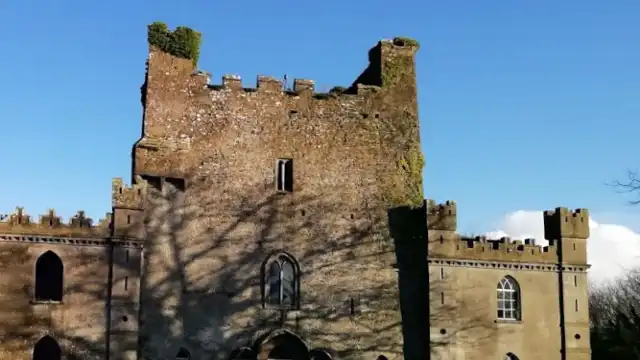
We have to start with the heavy hitter. Leap Castle isn’t just the most haunted building in Ireland. Paranormal investigators routinely call it the most haunted castle in the entire world.
Built around 1250, this fortress was the violent stronghold of the ruthless O’Carroll clan. Brothers literally killed each other over power here. The most infamous room inside is the Bloody Chapel. During a bitter family feud, an O’Carroll burst into the chapel while his own brother, a priest, was holding mass. He plunged a sword into his brother’s back, leaving him to bleed out across the holy altar.
But wait, it gets much worse.
During castle renovations in the 1920s, unsuspecting workers discovered a hidden trapdoor right behind the chapel wall. It opened into an oubliette — a dark, narrow dungeon drop lined with sharp wooden spikes. The clan would push unsuspecting guests through the floor to die a slow, agonizing death in the pitch black. It took workers three entire cartloads to remove all the human bones found at the bottom. They even found a pocket watch from the 1840s mixed in with the skeletons.
Today, current owner Seán Ryan lives in the castle. While he peacefully plays traditional Irish music in the halls, the spirits remain active. Visitors frequently report seeing phantom monks, two ghostly little girls named Emily and Charlotte, and an aggressive, foul-smelling spirit known simply as the Elemental.
2. Loftus Hall (County Wexford)
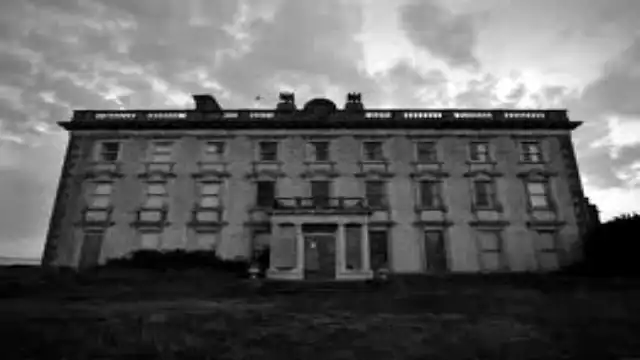
Sitting completely alone on the bleak, wind-whipped Hook Peninsula, Loftus Hall looks like a movie set for a gothic horror film. Its most famous ghost story dates back to a violent winter storm in 1775.
The Tottenham family lived there at the time. A mysterious, soaking-wet stranger on horseback knocked on the door seeking shelter from the rain. The family took him in. Over the next few days, the handsome stranger charmed everyone, especially the young Anne Tottenham.
One night, while playing a game of cards, Anne dropped a card on the floor. She bent down under the table to grab it. Instead of a man’s leather boots, she saw cloven hooves.
The stranger was the Devil himself.
Realizing his cover was blown, the creature allegedly shot through the ceiling in a massive ball of fire, leaving a hole that could never be properly repaired. Anne went completely insane from the shock. Her family locked her away in the Tapestry Room to hide her shame. She sat staring out the window across the sea until the day she died. Her muscles actually seized up, forcing the family to bury her in the exact sitting position she died in.
Visitors still report seeing a young woman staring out that exact same window. Creepily, when the mansion was renovated years later, the skeletal remains of an infant were found hidden inside the walls of that very room.
3. Kilmainham Gaol (Dublin)
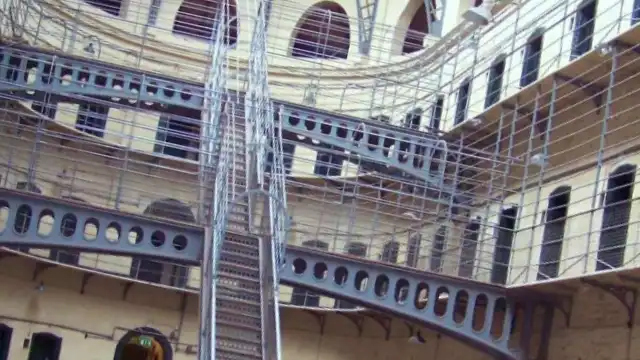
Not all ghosts live in castles. Some never get to leave prison.
Opened in 1796, Kilmainham Gaol is a massive, cold stone fortress sitting right in Dublin. It held thousands of men, women, and even young children during the Great Famine. People purposely stole food just so they would be arrested, hoping the prison would feed them. The youngest recorded prisoner was a terrified seven-year-old boy.
Kilmainham is also the infamous site where the leaders of the 1916 Easter Rising were brutally executed by British firing squads. Rebel leader James Connolly was so badly injured from fighting that he couldn’t even stand up. Soldiers actually strapped him to a chair in the Stonebreakers Yard just to shoot him.
The immense suffering here soaked directly into the limestone walls. When the prison was being restored into a museum in the 1960s, the governor lived on-site and constantly saw the chapel lights turning on by themselves. One painter was violently shoved across the dungeon by an unseen force, pinning him against the wall. Today, tourists regularly report feeling sudden freezing drafts and hearing the heavy boots of invisible guards marching down the empty, echoing corridors.
4. The Hell Fire Club (County Dublin)
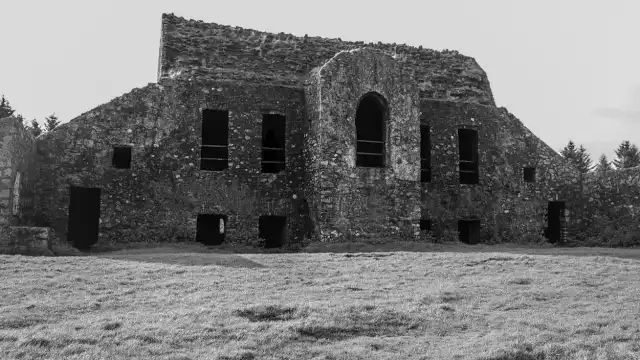
Do you want to hike to a cursed location? Head up Montpelier Hill in the Dublin Mountains.
In 1725, one of the wealthiest politicians in Ireland, William “Speaker” Conolly, built a hunting lodge at the very top of the mountain. He made a massive, unforgivable mistake. To get building materials, his workers destroyed an ancient Neolithic passage tomb and used the sacred burial stones for his fireplace.
Shortly after the lodge was finished, a massive storm blew the heavy slate roof completely off the building. Locals instantly knew the site was cursed by angry ancient spirits.
Later, a group of wealthy, corrupt elites known as the Hell Fire Club took over the ruins. Led by Richard Parsons, the club supposedly practiced dark magic, drank heavily, and worshipped Satan. They drank scaldheen — a nasty mix of whiskey and melted butter — and always left one chair empty at the table for the Devil. Rumors swirled about black cats being sacrificed on the altar. One legend even claims a brave local priest hiked up the mountain, found them sacrificing a cat, and performed a live exorcism that tore a demon right out of the animal.

If you visit the burned-out shell of the lodge today, expect a heavy, oppressive atmosphere. Many hikers flat-out refuse to go anywhere near the ruins after the sun sets.
5. Wicklow Gaol (County Wicklow)
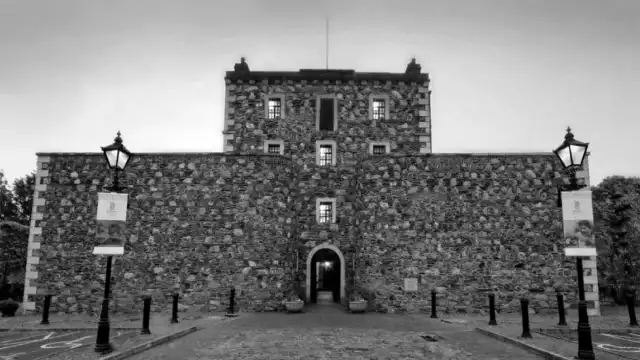
They literally called it “The Gates of Hell.”
During the 1798 Rebellion and the subsequent Great Famine, Wicklow Gaol was packed with desperate, starving citizens. Disease ran rampant through the dark cells. Guards were so terrified of catching typhus that they often refused to enter the cell blocks. They left dead bodies to rot inside the tiny rooms with living prisoners.
With a history that dark, the paranormal activity is absolutely off the charts.
Wicklow Gaol is considered a prime hotspot for serious ghost hunters. Visitors frequently spot a strange, sickly green mist hovering near the ground floor. A woman wearing a black velvet cloak silently glides past the iron bars. Even more heartbreaking, the faint sounds of children crying echo from the old schoolroom area. Modern tourists walking the upper decks often feel an intense, suffocating sense of dread. It is a deeply unsettling place that perfectly captures the tragedy of 18th-century Irish justice.
6. Charleville Castle (County Offaly)
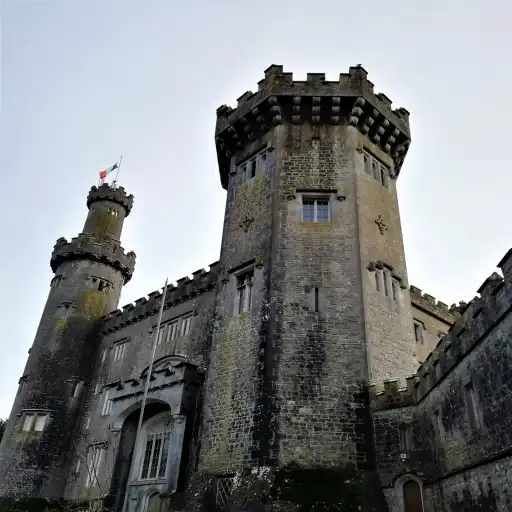
Charleville Castle gives off major gothic vibes. Built in 1798 within an ancient oak forest, this sprawling fortress hides a very active, surprisingly playful spirit.
Meet Harriet. She was the eight-year-old daughter of the third Earl of Charleville. In April 1861, she was happily sliding down the grand wooden banister of the main staircase. She lost her balance, fell to the hard stone floor below, and died instantly.
Harriet never really left. Instead of being a terrifying specter, she genuinely loves playing hide-and-seek. People constantly hear a little girl singing, giggling, and running through the empty upper floors. Photographers often capture strange mists and the faint outline of a child with golden ringlets wearing a blue dress.
Watch out for the King Oak tree outside, too.
This massive tree is nearly 900 years old. Legend says it holds a magical bond with the castle’s founding Bury family. If a branch ever fell from the King Oak, a member of the family would mysteriously die shortly after. Considering ancient druids once practiced strange rituals in these exact woods, it might be more than just a spooky coincidence.
7. Malahide Castle (County Dublin)
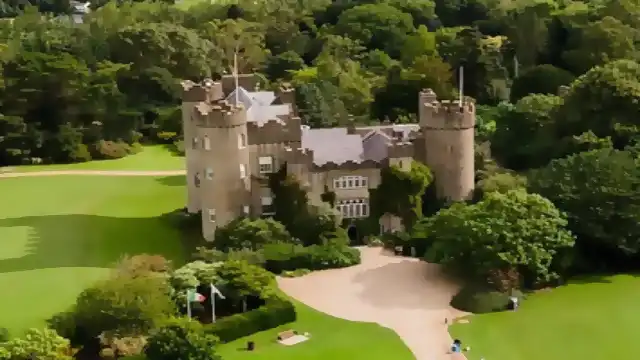
Malahide Castle has been standing strong for over 800 years. The Talbot family lived here for nearly eight centuries, surviving battles, kings, and political upheaval. That is a massive amount of time to collect ghosts. In fact, Malahide confidently claims to have five distinct resident spirits.
The absolute crowd favorite is Puck.

Puck was a jester and watchman who lived in the castle during the 16th century. He was a little person who fell desperately in love with a noblewoman named Lady Elenora Fitzgerald, who was being held prisoner by Henry VIII. Sadly, his love story ended violently. On a snowy December night, Puck was found outside the castle walls, stabbed directly through the heart, still wearing his jester suit and bells.
Before he died, he swore a blood oath to haunt the grounds forever. He kept his promise. Tourists regularly claim Puck photobombs their selfies, his wrinkled face appearing in the background of digital photos.
You might also bump into Lord Galtrim. He was killed in battle on the morning of his wedding day. Now, he roams the castle halls at night, clutching his spear wound and groaning in pain, deeply heartbroken that his bride married his rival immediately after his funeral.
8. Charles Fort (County Cork)
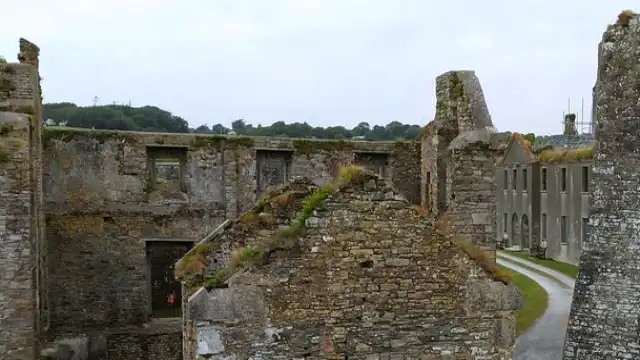
Let’s head down to the southern coast for our final, tragic stop. Charles Fort in Kinsale is a massive star-shaped military fortress built in 1601. It is also the home of the famous White Lady of Kinsale.
Her real name was Wilful Warrender. She lived at the fort with her father, who was the strict commanding colonel. Wilful fell in love with a young soldier named Trevor Ashurst, and they were married right inside the fortress walls.
On their wedding night, Trevor took over sentry duty for a fellow soldier who went to fetch flowers for the bride. Tragically, Trevor fell asleep on the job. Wilful’s father was doing his nightly rounds. He found a guard sleeping on duty, instantly lost his temper, drew his gun, and shot the man through the heart. He didn’t realize until he checked the body that he had just murdered his brand-new son-in-law.
When Wilful discovered her husband’s bleeding body, she completely lost her mind with grief. She threw herself off the towering fort walls into the crashing ocean below. Her father, realizing he ruined everything, shot himself later that same night.
Today, soldiers and tourists alike report seeing a glowing woman in a white wedding dress wandering the stone battlements. She is forever searching for her lost love, serving as a heartbreaking reminder of Ireland’s ghostly past.
Ready to Go Ghost Hunting?
Ireland is much more than a glossy travel postcard. It is a living, breathing history book where some of the darkest chapters refuse to stay closed.
From the skeletal spikes of Leap Castle to the photobombing jester at Malahide, these ancient sites demand respect. They remind us that history isn’t just dates on a page. History is made of real people who loved, fought, and suffered. Sometimes, their energy sticks around long after their bodies are gone.
If you plan on visiting any of these terrifying spots, keep an open mind. Stay close to your tour guide. Keep your camera ready. You might just capture something you can never fully explain.
Have you ever experienced anything paranormal while traveling abroad? Which of these haunted Irish ruins would you dare to visit first? Drop your thoughts in the comments below, and don’t forget to share this guide with your bravest travel buddy!

