

Imagine being sentenced to hang by your own 9 year old child. It sounds like a dark movie script. Yet, this exact nightmare happened in 1612. Why did a little girl send her family to the gallows? If you’re a true crime fan or history buff, buckle up. We are diving into the fascinating, tragic, and entirely true story of the Pendle Witch Trials.
The Political Backdrop
Before looking at the witches themselves, we need to understand the world they lived in. Consequently, 17th-century England was an absolute powder keg. King James I sat on the throne. Furthermore, he was obsessed with two things: hunting Catholics and burning witches.
In fact, he even wrote a book about it called Daemonologie. Meanwhile, Lancashire was a rugged, isolated county in the “wild north.” It remained highly Catholic decades after the rest of the country turned Protestant. As a result, London officials viewed the locals with intense suspicion.
King James I
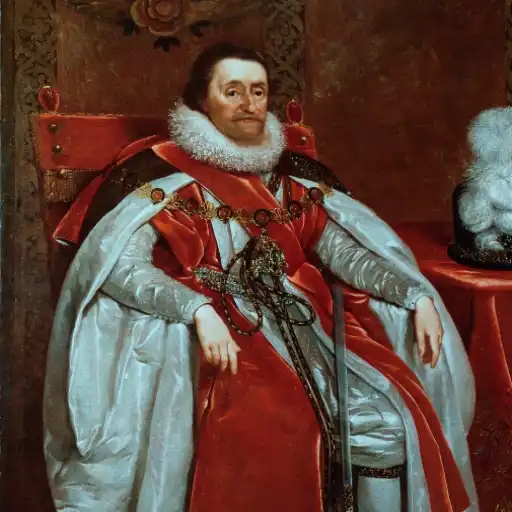
Let’s take a closer look at the King. James I was deeply paranoid. Years earlier, he experienced a severe storm while sailing from Denmark. Naturally, he didn’t blame the weather. Instead, he blamed witches.
This terrifying sea voyage convinced him that dark forces were actively trying to assassinate him. Consequently, he passed a strict new Witchcraft Act in 1604. The law made “conjuring spirits” a capital offense, even if no one was actually harmed. Because of the King’s extreme views, ambitious local politicians knew that hunting witches was the fastest way to earn a royal promotion.
The Spark That Lit the Fire
Everything began on a cold spring day: March 21, 1612. A 17 year old girl named Alizon Device was walking along a road near Pendle Hill. Suddenly, she met a peddler named John Law. She asked him for some metal pins. However, he refused to give her any.
Because of this rejection, Alizon allegedly muttered a dark curse under her breath. Immediately, John Law collapsed. Today, medical experts recognize his physical symptoms as a massive stroke. But back then? The superstitious locals called it pure witchcraft.
Old Demdike vs. Old Chattox
Interestingly, Alizon did not deny the charges. Instead, she fully confessed. She truly believed she had dark powers. Why? Because her grandmother, Elizabeth Southerns (known as Old Demdike), had been a local “cunning woman” for fifty years. For generations, the Demdike family made a meager living through begging, extortion, and folk healing.
At the same time, they had bitter rivals. Another elderly woman, Anne Whittle (known as Old Chattox), ran a competing family business. Naturally, terrible bad blood existed between these two matriarchs. Therefore, when the authorities started asking questions, the rival families quickly turned on each other.

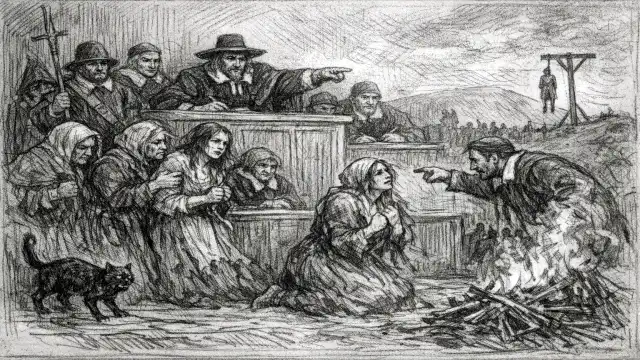
Roger Nowell
Local magistrate Roger Nowell saw a golden opportunity. Specifically, he wanted to climb the social ladder. What better way to impress a witch hunting King than by busting a massive local coven? Consequently, Nowell began interrogating the uneducated peasants.
Soon, Alizon Device threw her own grandmother under the bus. Additionally, she accused Old Chattox of murder. The wild accusations spiraled out of control. As a result, Nowell locked up four prime suspects in the dark dungeons of Lancaster Castle.
The Infamous Good Friday Sabbat at Malkin Tower
Let’s talk about Malkin Tower. According to legend, it was the dark epicenter of Lancashire witchcraft. In reality, it was just a poor, rundown cottage. On April 10, 1612, a group of neighbors gathered there. What really happened there? Most likely, they were hungry and scared. Alizon’s brother, James Device, had stolen a sheep, and they roasted it to share a rare feast.
Unfortunately, Nowell twisted this rural dinner party into a sinister conspiracy. He claimed it was a demonic witches’ sabbat. Specifically, he alleged the attendees plotted to murder the jailer and blow up Lancaster Castle. Instantly, a local squabble became a national security threat. Thus, he arrested eight more people.
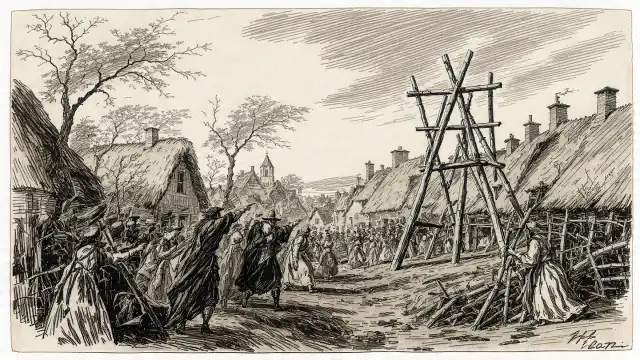
The Lancaster Assizes
Fast forward to the hot summer of 1612. Judges Sir James Altham and Sir Edward Bromley arrived in Lancaster to preside over the Assizes. Make no mistake, these men were not looking for truth. Instead, they wanted swift convictions.
In those days, defendants had no defense lawyers. Furthermore, they could not call favorable witnesses. The accused stood before the jury, filthy and terrified. Even worse, the judges accepted rural gossip as absolute truth. For instance, if a cow died mysteriously five years ago, it was presented as concrete evidence of dark magic.
A Child’s Deadly Words
No moment in English legal history is quite as shocking as the testimony of little Jennet Device. At just 9 years old, she became the prosecution’s ultimate weapon. Prior to this era, young children were legally deemed unreliable witnesses. However, King James’s Daemonologie specifically argued that regular rules must be abandoned in witchcraft cases.
When Jennet entered the courtroom, her mother Elizabeth lost her mind. She screamed and cursed at her daughter. Consequently, the guards forcibly removed the frantic mother. Left alone, the young girl calmly climbed onto a table. With eerie precision, she listed the names of those who attended the Malkin Tower meeting.
She condemned her mother. Without hesitation, she betrayed her brother. Finally, she doomed her own sister. Why did she do it? Historians suspect she was intensely coached by Nowell. Perhaps she was offered a better life, free from her impoverished family. Whatever the reason, her words were a death sentence.
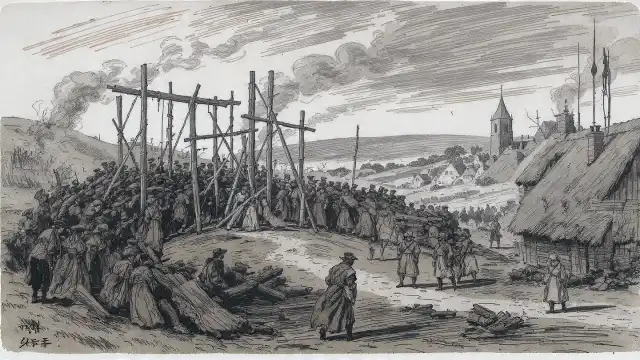
The Hangings at Gallows Hill
Ultimately, the jury found ten people guilty. The victims included members of both the Demdike and Chattox families, along with several unfortunate neighbors. One notable victim was Alice Nutter. Unlike the others, she was a wealthy, respectable widow. Even so, her money could not save her from the hysteria.

Old Demdike died in the filthy prison before the trials ended. On August 20, 1612, the remaining ten condemned souls were taken to Gallows Hill. A massive crowd gathered to watch. One by one, they were hanged by the neck until dead. Only one accused woman, Alice Grey, was found not guilty.
Thomas Potts’ Book
How do we know so many exact details about this centuries old case? We owe our knowledge to a man named Thomas Potts. He was the official clerk of the court. The trial judges personally ordered him to write a full account of the proceedings. In 1613, he published The Wonderfull Discoverie of Witches in the Countie of Lancaster.
To be completely clear, this book was pure propaganda. Potts omitted any details that made the judges look biased. Conversely, he emphasized every demonic detail to make the “witches” look terrifying. Furthermore, he dedicated the text to the nobleman who caught Guy Fawkes. By doing this, Potts directly linked the Pendle witches to political terrorism. Despite its massive bias, the book remains our most vital historical document regarding English witch hunts.
The Dark Irony of 1634
History has a remarkably cruel sense of humor. Twenty two years later, a new witch panic erupted in Lancashire. In 1634, a 10 year old boy named Edmund Robinson accused several local women of witchcraft.
In a twist of profound irony, one of the women he pointed his finger at was an adult Jennet Device. The very legal loophole she helped create was now being used against her. Although she was eventually cleared when the boy admitted he lied, the damage was done. Because she couldn’t afford to pay her jailer’s fees, Jennet likely died in the dark, damp cells of Lancaster Castle. The hunter had truly become the hunted.
Modern Impact
Today, the Pendle witch trials are big business in Lancashire. The area around Pendle Hill is steeped in dark tourism. For example, visitors can ride the popular “Witch Way” bus. Additionally, a beautiful, haunting statue of Alice Nutter stands near the village of Roughlee, erected in 2012 for the 400th anniversary.
But beyond the gift shops, there is a serious cultural shift. According to scholars from HistoryExtra, modern society has transformed these women from “folk devils” into folk heroes. They are no longer seen as evil sorceresses. Instead, we view them as tragic victims of a patriarchal, paranoid society.
The Fight for a Royal Pardon
Interestingly, the fight for justice didn’t end in the 17th century. In recent decades, modern activists have actively tried to clear the names of the Pendle witches. Specifically, in 1998, a petition was presented to the UK Home Secretary. Supporters pleaded for an official pardon. Sadly, the government decided that the convictions should legally stand.
Ten years later, in 2008, another major petition circulated. Despite massive public support, the British government refused to budge. Thus, officially, the Lancashire victims remain guilty in the eyes of the law.
10 Key Facts and Statistics You Didn’t Know
To quickly summarize this massive historical event, here are the vital stats you need to remember:
- Total Executions: 10 people were hanged on August 20, 1612.
- Total Accused: 12 individuals from the Pendle area faced charges.
- The Ages: Victims ranged from teenagers (Alizon Device) to octogenarians (Demdike and Chattox).
- The Child Witness: Jennet Device was just 9 years old when she condemned her family.
- Death Toll Percentage: The Pendle executions account for a staggering 2% of all witch executions in English history.
- Location: Tried at Lancaster Assizes (Lancaster Castle), England.
- The Source Material: The Wonderfull Discoverie of Witches remains the primary source for historians.
- The True Cause: Most “curses” were likely natural deaths, poor hygiene, or strokes (like John Law’s collapse).
- Legal Precedent: This trial successfully established the use of child testimony in capital cases.
- Punishments: Margaret Pearson wasn’t executed; instead, she was sentenced to stand in the pillory for a lesser crime.
Warning From History
The Pendle Witch Trials of 1612 remain one of the darkest chapters in English history. They didn’t burn witches at the stake in England they hanged them. And the weight of those ropes still echoes across Pendle Hill today.
Ultimately, this isn’t a story about magic. It is a story about poverty, power, and panic. It shows us exactly how a simple dispute over some metal pins escalated into state sponsored murder. Above all, it warns us to fiercely question mass hysteria, no matter what century we live in.
Frequently Asked Questions
Is Malkin Tower from the Pendle witch trials still standing today?
No physical trace of Malkin Tower exists today, because authorities likely demolished it immediately after the 1612 executions to prevent occult gatherings. However, amateur historians strongly suspect the forgotten ruins remain secretly buried somewhere near the modern village of Blacko.
How did 9-year-old Jennet Device accidentally trigger the Salem witch trials?
English magistrates used Jennet’s court appearance to create a terrifying legal precedent that legally allowed child testimony in capital witchcraft cases. Consequently, American judges explicitly referenced this exact Lancashire ruling to justify weaponizing child accusers in Salem 80 years later.
Why couldn’t wealthy widow Alice Nutter buy her way out of the hangings?
Unlike the starving Demdike family, Alice Nutter was a wealthy Catholic who likely attended the Malkin Tower gathering for a prohibited religious mass rather than a demonic ritual. Therefore, the ambitious local magistrate happily exploited the supernatural hysteria to eliminate a political rival and seize her valuable land.
What actually caused John Law’s sudden collapse after Alizon Device cursed him?
Modern neurologists reviewing the surviving 1612 court documents overwhelmingly agree the stressed peddler suffered a catastrophic stroke. His documented facial paralysis and sudden loss of mobility perfectly describe acute cardiovascular failure, absolutely not a teenage girl’s dark hex.
Are the Lancashire witches officially pardoned by the British government today?
Despite massive modern campaigns and formal petitions in 1998 and 2008, the UK government stubbornly refuses to formally pardon the Lancashire victims. Therefore, from a strict legal standpoint, those ten people hanged at Gallows Hill remain officially guilty of dark sorcery today.
Ready to dive deeper into history’s darkest mysteries? Share this article with your fellow true crime and history buffs, and let us know in the comments: Do you think 9 year old Jennet Device was manipulated by the magistrate, or did she know exactly what she was doing?
Sources help:
- https://en.wikipedia.org/wiki/Pendle_witches
- https://en.wikipedia.org/wiki/The_Wonderfull_Discoverie_of_Witches_in_the_Countie_of_Lancaster
- https://www.gutenberg.org/ebooks/18253
- https://publicdomainreview.org/collection/potts-s-discovery-of-witches-in-the-county-of-lancaster-1845/
- https://www.lancastercastle.com/history-heritage/further-articles/the-pendle-witches/

