

Phantom Time Hypothesis: Is It Actually the Year 1728?
Wait, What Year Is It?
Check your phone. Does it say 2026? Of course it does. But what if I told you that date is a lie? Imagine, for a second, that we are actually living in the year 1729.
It sounds insane, right? Like the plot of a bad sci-fi movie. Yet, this is the core of the Phantom Time Hypothesis. This controversial theory suggests that a massive chunk of human history—specifically the years AD 614 to 911—never happened.
Poof. Gone. According to this wild idea, the Early Middle Ages were completely fabricated. No Charlemagne and Viking raids. No rise of major empires. Just a 297-year gap filled with forged documents and fake artifacts.
So, why would anyone believe this? And more importantly, could it actually be true? Let’s break it down, piece by weird piece.
The Mastermind: Heribert Illig
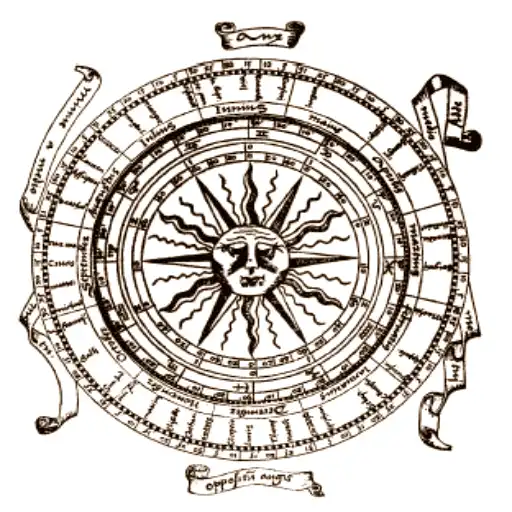
First off, let’s meet the guy who started this fire. In the 1990s, a German historian named Heribert Illig looked at the timeline of the Middle Ages and said, “Something smells fishy.”
Illig wasn’t just guessing. He claimed to have found mathematical proof that our calendar is broken. His main argument revolves around the introduction of the Gregorian calendar in 1582.
Here is the gist:
- In 1582, Pope Gregory XIII reformed the calendar to fix a drift in the solar year, the old Julian calendar was “leaking” time—about 11 minutes per year, to get things back on track with the seasons, the Pope’s astronomers skipped 10 days.
But here is the catch.
Illig ran the numbers. He calculated that from the time of Julius Caesar (45 BC) to 1582, the calendar should have drifted by 13 days, not 10.
Where did those missing three days go?
Illig’s conclusion was simple but explosive: They didn’t exist. He argued that roughly 300 years had been added to the calendar artificially. Therefore, the calendar reformers didn’t need to correct for those years because they never happened.

The Conspiracy: A Pope, An Emperor, and a Lie
Okay, so the math is weird. But why would anyone fake three centuries?
Illig points the finger at three powerful men:
- Holy Roman Emperor Otto III
- Pope Sylvester II
- Byzantine Emperor Constantine VII
The theory goes like this. Otto III really, really wanted to rule during the year AD 1000.
Why? Because 1000 is a cool, round number. It sounds powerful. It fits perfectly with Christian “Millennialism”—the belief that the end of the world or a new golden age would begin 1,000 years after Christ’s birth.
The problem? Otto lived in the 700s (according to Illig’s “real” timeline).
So, he and the Pope allegedly cooked the books. They rewrote history, invented a bunch of ancestors, and fast-forwarded the clock. To fill the gap, they created fictional heroes. The biggest one? Charlemagne.
That’s right. The Phantom Time Hypothesis claims that Charlemagne—the Father of Europe, the legendary King of the Franks—is a fictional character. A medieval superhero invented to make the fake timeline look legit.
The “Evidence” (Or Lack Thereof)
Illig didn’t stop at the calendar math. He pointed to other “clues” that the Early Middle Ages were a sham.
- Archaeological Gaps: Illig argued that architecture from this period is surprisingly scarce. He claimed that Romanesque buildings from the 10th century look suspiciously like Roman buildings from the 7th century, implying no time had passed between them.
- Document Forgery: It is a known fact that the Catholic Church forged some documents in the Middle Ages. Illig took this and sprinted with it, suggesting they forged all of them for 300 years.
If you squint hard enough, it almost makes sense. Almost.
The Reality Check: Science Fights Back
Before you start rewriting your checks to “1729,” let’s look at the hard evidence. While Illig’s theory is fun, actual science tears it to shreds.
1. The Sky Don’t Lie
Astronomers are the ultimate timekeepers. We have records of solar eclipses and comets going back thousands of years.
For example, the Roman writer Pliny the Elder recorded an eclipse in AD 59. Chinese astronomers recorded eclipses during the Tang Dynasty (which supposedly happened during the “Phantom Time”).

If we removed 300 years from history, our modern calculations for past eclipses would be totally out of whack. We would look for an eclipse in France and find it in the middle of the Atlantic Ocean. But we don’t. The math works perfectly only if those 300 years existed.
2. Tree Rings (Dendrochronology)
Trees are nature’s hard drives. Every year, they grow a new ring. By overlapping the ring patterns of living trees with dead wood from old buildings, scientists have built an unbroken timeline stretching back over 10,000 years.
If 300 years were missing, there would be a massive, unexplainable gap in the tree ring data. There isn’t. The wood confirms the history.
3. The Whole World Isn’t Europe
This is the biggest nail in the coffin. Illig’s theory is extremely Eurocentric.
Even if the Pope could fake European history, what about everyone else?
- China: The Tang Dynasty (AD 618–907) kept meticulous records. Did they fake their entire Golden Age just to help a German Emperor look cool?
- The Islamic World: This period saw the rise of Islam and the expansion of the Caliphates. Are we supposed to believe the Prophet Muhammad and the architectural wonder of the Great Mosque of Córdoba are fiction?
Unless Otto III had a Zoom call with the Emperor of China and the Caliph of Baghdad to coordinate the lie, the theory falls apart.
Why Do We Love This Stuff?
If the evidence is so bad, why is the Phantom Time Hypothesis still popular in 2026?
Because it’s fun.
We love the idea that “experts” are wrong. It appeals to our inner rebel. Plus, history is messy. The “Dark Ages” really are dark in terms of written records. There are gaps. There are forgeries. Illig took those real uncertainties and spun a fantastic yarn.
It reminds us to question what we are told. That is a good instinct! But in this case, the answer isn’t a conspiracy. It’s just… time.
The Verdict
Did 300 years of history never happen? No.
Charlemagne was real. The Tang Dynasty was real. The eclipses happened right on schedule. You are definitely living in the 21st century (sorry about the bills).

However, the Phantom Time Hypothesis is a fascinating exercise in critical thinking. It forces us to ask: How do we know what we know?
So, keep questioning. Keep reading. Just don’t forget to put the correct date on your homework.
Quick Summary for Skimmers
- The Theory: Heribert Illig claims the years AD 614–911 were faked.
- The Motive: Emperor Otto III wanted to rule in the year 1000.
- The “Proof”: Discrepancies in the Gregorian calendar reform and a lack of archaeological artifacts.
- The Debunking:
- Astronomy: Ancient eclipses match current mathematical models perfectly.
- Trees: Dendrochronology shows a continuous timeline of over 10,000 years.
- Global History: China and the Islamic world have detailed records for this period that cannot be faked by European rulers.
FAQs
1. What is the Phantom Time Hypothesis?
The Phantom Time Hypothesis is the claim that around 300 years of early medieval history (roughly AD 614–911) were fabricated or mistakenly added to the calendar, meaning they never actually happened.
2. Why do some people believe 300 years of history are missing?
Supporters argue that inconsistencies in calendars, architecture, and historical documentation suggest certain centuries were artificially inserted. Critics say these inconsistencies are misinterpretations of historical evidence.
3. Who created the Phantom Time Hypothesis?
The idea was introduced by German historian Heribert Illig in the 1990s. He suggested that medieval rulers may have manipulated calendars for political or religious reasons.
4. Did Otto III really create extra years?
The hypothesis claims Emperor Otto III altered the calendar to place himself in the year 1000 for symbolic power. Historians overwhelmingly reject this idea.
5. Are we really living in the year 1728 instead of today’s date?
No. This is a viral interpretation of the theory often seen on social media. The mainstream historical, astronomical, and archaeological record shows that the missing 300 years never existed.
6. What evidence disproves the Phantom Time Hypothesis?
Astronomical observations like eclipses match documented dates.
Archaeology shows continuous development across the “missing” years.
Documents from different regions align with each other.
7. Why is this theory so popular online?
It blends conspiracy, mystery, medieval history, and the idea that “something big is being hidden.” These elements make it go viral on TikTok, YouTube, and Instagram.
8. Is the Phantom Time Hypothesis considered pseudoscience?
Yes. Almost all historians and archaeologists classify it as pseudohistory, though it remains a fascinating topic for discussion.
9. What would it mean if the hypothesis were true?
It would shift our entire dating system and rewrite medieval history. This dramatic “what if” is why the theory attracts attention even though scholars reject it.
Enjoyed this dive into history’s weirdest conspiracy? Share this article with a friend who loves a good mystery—or just needs an excuse for being late!

