

The Lansing Eleven: The Daring Memorial Day Prison Break of 1933
It’s May 30, 1933. The Great Depression is grinding America’s bones into dust. In the dusty, sweltering heat of Lansing, Kansas, the air is thick with more than just humidity it’s heavy with tension. Inside the high walls of the Kansas State Penitentiary, a baseball game is underway.
It’s Memorial Day. Even for men serving hard time for murder, kidnapping, and robbery, this is a day of rest. A day to forget the bars.
Or so the guards thought.
While the crack of the bat echoed off the limestone walls, a plan months in the making was about to unfold. This wasn’t just a prison break; it was a Hollywood script written in real blood. Eleven of the Southwest’s most dangerous men were about to trade their uniforms for freedom, sparking a manhunt that would terrify the nation.
The Setup: A Trojan Horse in a Bale of Twine
You might be asking, how on earth do eleven convicts get their hands on enough firepower to take over a fortress?
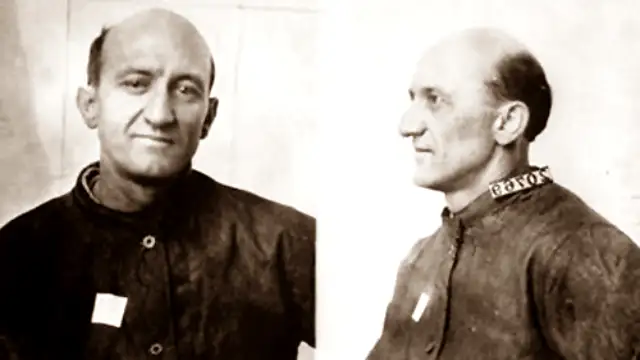
The answer lies in the prison’s own industry. The facility manufactured whisk brooms and twine, requiring raw materials to be shipped in regularly. Enter Frank “Jelly” Nash. A notorious bank robber and friend to the inmates, Nash wasn’t just a criminal; he was a logistics expert for the underworld.
According to Federal Bureau of Investigation (FBI) historical files, Nash orchestrated the smuggling of four .38 caliber automatic pistols. These weren’t tossed over a wall; they were hidden inside a bale of sisal-the fiber used to make twine.
Imagine the nerves. One inspection, one loose thread, and it’s over. However, the plan worked seamlessly. The guns made it inside, bypassing security and landing straight into the hands of the prison’s most feared residents.
The Key Players
Before the first shot was fired, you need to know who was holding the triggers. This wasn’t a disorganized mob; it was a hierarchy of violence.
- Harvey Bailey: Known as “The Dean of American Bank Robbers.” He was a professional. In 1922, he stole $200,000 from the Denver Mint. In 1931, he took the Lincoln National Bank for $1,000,000. Bailey was a thief, not a killer. He wanted money and freedom.
- Wilbur “The Tri-State Terror” Underhill: If Bailey was the brain, Underhill was the psychotic muscle. Serving life for robbery and three murders, Underhill was a loose cannon who reportedly enjoyed the act of killing.
- The Support Crew: “Big Bob” Brady, Jim Clark, and others who had nothing left to lose.
The Bottom of the Sixth: Play Ball?
The timing was impeccable. It was the sixth inning. The prison team was locked in a 2-2 tie. The guards were engrossed in the game. Warden Kirk Prather, a man who likely thought his day would end with a distinct lack of drama, was watching from the sidelines.
Suddenly, the umpire’s call didn’t matter anymore.
At a signal, the group of desperadoes made their move. They didn’t sneak away; they went on the offensive. Drawing the smuggled .38s, Bailey and Underhill rushed the warden. In seconds, Warden Prather and guards John Sherman and L.A. Laws were staring down the barrels of automatic weapons.
The Tower Takeover
Chaos erupted. The prison’s wildcat whistle screamed across the town of Lansing, signaling a break. But, the convicts were one step ahead.
Using the warden and guards as human shields, they marched toward the guard tower in center field. Now, think about the guard in that tower. He has a rifle. He could shoot. However, shooting meant killing the warden.
Underhill and Bailey gave him a choice: Give up the keys and the guns, or the warden dies.
The guard capitulated. He lowered the weapons and the keys. The convicts unlocked the tower, climbed up, and then faced the massive drop to the outside world. They didn’t jump. Instead, they utilized an extension ladder they had confiscated from the twine shop—another piece of their workplace used against their captors.
Blood on the Asphalt
Once over the wall, the “Lansing Eleven” were loose. Every man for himself? Not yet. A core group consisting of Bailey, Underhill, Brady, and Clark stuck together, dragging their hostages with them.
They needed wheels. Fast.
They set their sights on the car of W.W. Woodson, the prison farm superintendent. It wasn’t a clean getaway, though. As they commandeered the vehicle, a local vigilante took a potshot at the fleeing felons. The bullet found its mark, slamming into Harvey Bailey’s leg.
Despite the injury, Bailey kept his cool. Underhill, true to his nature, wanted to execute the hostages right there on the road. Why leave witnesses?
This is where the difference between a thief and a psycho becomes clear.
Bailey, clutching his shattered knee, forbade it. He wasn’t going to have murder on his hands if he could help it. In a bizarre twist of “honor among thieves,” they drove the hostages to the state line, released them, and get this gave them $5 for bus fare back to Lansing.

“I rob banks, I don’t kill people unless I have to.” – Attributed to the mindset of Harvey Bailey.
Into the Cookson Hills: The Manhunt Begins
The gang vanished into the dense, unforgiving woods of Oklahoma’s Cookson Hills. This area was a notorious hideout for bandits of the era, including Pretty Boy Floyd. The terrain was rugged, perfect for men who didn’t want to be found.
Nevertheless, they couldn’t stay hidden forever. They needed supplies. They needed money. And for men like Underhill, they needed action.
The Murder of Otto Durkee
The “Robin Hood” act of giving the warden bus fare didn’t last long. On the night of May 31, 1933, the reality of their escape turned deadly.
In Arkansas City, Kansas, police officer Otto Durkee, a World War I hero, spotted a suspicious car. The men were trying to steal a spare tire a mundane crime for such high-profile fugitives. Durkee approached.
He never had a chance.
Gunfire erupted. Durkee fell, mortally wounded. He left behind a widow and two children. The killing of Officer Durkee shifted the public mood. These weren’t lovable rogues fighting the banks; they were cop killers. The full weight of the law, including the FBI’s “G-Men,” began to bear down on them.
The Violent End of the Road
The summer of 1933 was a “Tour de Terror” for the Southwest. The gang embarked on a crime wave of robbery and kidnapping. But, the law always wins eventually. One by one, the Lansing Eleven were picked off.
1. The Capture of “The Dean”
Harvey Bailey didn’t stay with Underhill. He knew Underhill was a liability. Bailey headed to Texas. He was eventually tracked down to a farm in Paradise, Texas.
Ironically, the FBI wasn’t even looking for him. They were hunting for Machine Gun Kelly, the man behind the Urschel kidnapping. When they raided the farm, they found a man calmly eating fried chicken on the porch. It was Bailey. He was washed up, tired, and ready to go back to the rock.
2. The End of the Terror
Wilbur Underhill’s story ended much more violently.
In December 1933, Underhill was hiding out in Shawnee, Oklahoma. He had recently married yes, while on the run and was staying in a honeymoon cottage. Unfortunately for him, he had foolishly used his real name to rent the place.
Federal agents, state troopers, and local police surrounded the cottage. They didn’t knock. They poured lead into the building.
Underhill, shot dozens of times, somehow managed to crawl out and run a few blocks before collapsing in a furniture store. He died shortly after, arguably the toughest, meanest outlaw of the era finally put down.
3. The Rest of the Pack
Jim Clark and “Big Bob” Brady were captured near Tucumcari, New Mexico. The gang was dismantled. The 1933 breakout remains one of the most audacious in American penal history.
The Legacy of the Lansing Breakout
Why does this story matter today?
It marks the end of an era. By 1934, the “Public Enemy” era was dying. The FBI was gaining power, better weapons, and jurisdiction to cross state lines. The escape of the Lansing Eleven was one of the final, massive embarrassments that forced the modernization of American policing.
Key Takeaways:
- Security Failures: Using prison labor materials (sisal bales) to smuggle weapons is a classic failure of internal controls.
- The Human Element: Bailey’s refusal to kill the hostages likely saved his life later during sentencing; he was seen as redeemable compared to Underhill.
- The Cost: The death of Officer Otto Durkee serves as a grim reminder that these “adventures” had real, tragic human costs.
Frequently Asked Questions (FAQ)
Q: Did Frank Nash ever join the escapees?
A: No. Frank Nash was a free man at the time, helping from the outside. However, mere weeks later, on June 17, 1933, he was killed in the Kansas City Massacre when his friends tried to free him from FBI custody.
Q: What happened to the hostages?
A: Warden Prather and the guards were physically unharmed. They were released near the Oklahoma border with cash for their return trip.
Q: Is the Lansing prison still there?
A: Yes, the Lansing Correctional Facility (formerly Kansas State Penitentiary) is still a functional prison, though the original buildings have undergone massive changes.
Enjoyed this dive into 1930s crime history?
Don’t let the story end here. Share this article with your fellow history buffs or drop a comment below: Who was the smarter criminal, Bailey or Underhill?
References:

