

Scream: The Gainesville Ripper (Danny Rolling) Confession
You think you know the story. A masked killer, a ringing phone, a small town gripped by panic. But before Ghostface ever asked, “What’s your favorite scary movie?”, a real monster was already stalking the shadows of Gainesville, Florida.
His name was Danny Rolling, but the world would come to know him as the Gainesville Ripper.
In August 1990, Rolling unleashed a four-day nightmare that didn’t just terrorize a college campus—it froze the entire nation. Unlike the movies, there were no script rewrites, no stunt doubles, and definitely no happy endings. This is the raw, unedited truth behind the man who inspired a horror franchise, his chilling “Gemini” confession, and the dark psychological abyss that fueled his rage.
The Confession: “Gemini” Made Me Do It
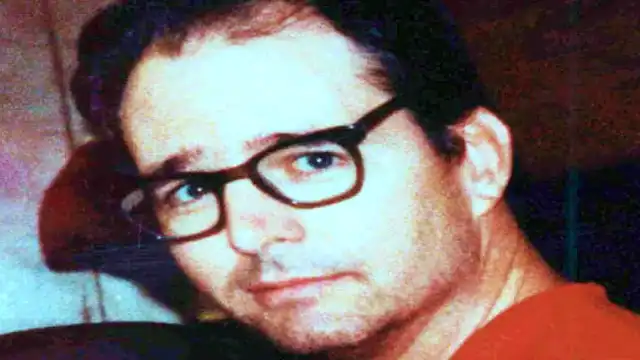
Let’s cut straight to the bone. Why did he do it?
When police finally cornered Rolling, he didn’t just admit to the crimes; he spun a tale so bizarre it sounded like it was ripped from a supernatural thriller. Rolling claimed he wasn’t acting alone. But his accomplice wasn’t a person. It was an entity.
He called it “Gemini.”
According to court transcripts and his confession to fellow inmate Bobby Lewis, Rolling believed he was possessed by an alternate personality. He told investigators, “It is Danny that is a voyeur, it is Danny that robs, it’s Danny that rapes, but it is Gemini that kills.”
Sound familiar? It should. Rolling had watched The Exorcist III just days before the rampage, a film featuring a “Gemini Killer.” Was this a genuine psychological split or a convenient script for a man desperate for notoriety?
Dr. Harry Krop, a forensic psychologist who evaluated Rolling, peeled back the layers of this defense. He described Rolling as having a “bottomless pit of anger”—not a demon, but a man broken by severe childhood abuse and a desperate need to be a “superstar” criminal like Ted Bundy. The “Gemini” persona was likely a dramatic shield, a way to distance “Danny” from the butchery his hands committed.
The Tape That Sealed His Fate
Rolling didn’t just whisper his secrets in the dark. He left a literal paper trail. After his arrest for an unrelated robbery, authorities found a cassette tape in his campsite. On it, Rolling recorded himself singing songs and apologizing to his family, but he also left cryptic messages that hinted at his dark urges.
He later confessed to a triple homicide in his hometown of Shreveport, Louisiana, committed in November 1989—a year before Gainesville. The victims were the Grissom family: William, his daughter Julie, and his 8-year-old grandson, Sean. This admission proved that Gainesville wasn’t a sudden snap; it was the escalation of a long-simmering bloodlust.

The 4 Days of Terror: A Timeline
In late August 1990, the University of Florida was buzzing with the excitement of a new semester. That excitement curdled into dread overnight.
- August 24, 1990: Rolling breaks into the apartment of freshmen Sonja Larson (18) and Christina Powell (17). He binds, rapes, and stabs them. The brutality is calculated; he poses their bodies to shock whoever finds them.
- August 25, 1990: The nightmare escalates. Rolling targets Christa Hoyt (18), a Santa Fe Community College student. He waits for her to come home. The details here are the most gruesome of all—he decapitates her, placing her head on a bookshelf. It was a scene of pure, theatrical evil designed to terrorize the police.
- August 27, 1990: Despite a massive police presence, Rolling strikes again. He kills roommates Tracy Paules (23) and Manuel Taboada (23). Manny, a former high school football player, puts up a fierce fight, but Rolling overpowers him. Tracy is found posed like the earlier victims.
Gainesville went into lockdown. Students slept in groups, baseball bats in hand. The “media frenzy” that followed became the specific spark for a young screenwriter named Kevin Williamson.
Fact vs. Fiction: The Scream Connection

Let’s clear up a massive misconception. Danny Rolling is not Ghostface.
Kevin Williamson, the creator of Scream, wasn’t inspired by the specific details of Rolling’s kills. He didn’t base the movie on a duo of killers or a specific revenge plot.
Here is the real origin:
Williamson was house-sitting in Los Angeles, watching a news special about the Gainesville murders. He was struck by the sheer panic of the community and the terrifying realization that a killer could slip through an unlocked window. During a commercial break, he noticed a window in the house he was staying in was open.
Click.
That moment of vulnerability—the fear of a stranger inside your safe space—is what birthed the opening scene of Scream. The “media circus” surrounding Gainesville also heavily influenced the character of Gale Weathers and the movie’s commentary on how tragedy becomes entertainment.
So, while Rolling didn’t wear a mask or call his victims to play trivia, the atmosphere of fear he created is the DNA of the Scream franchise.
Psychological Profile: Nature or Nurture?
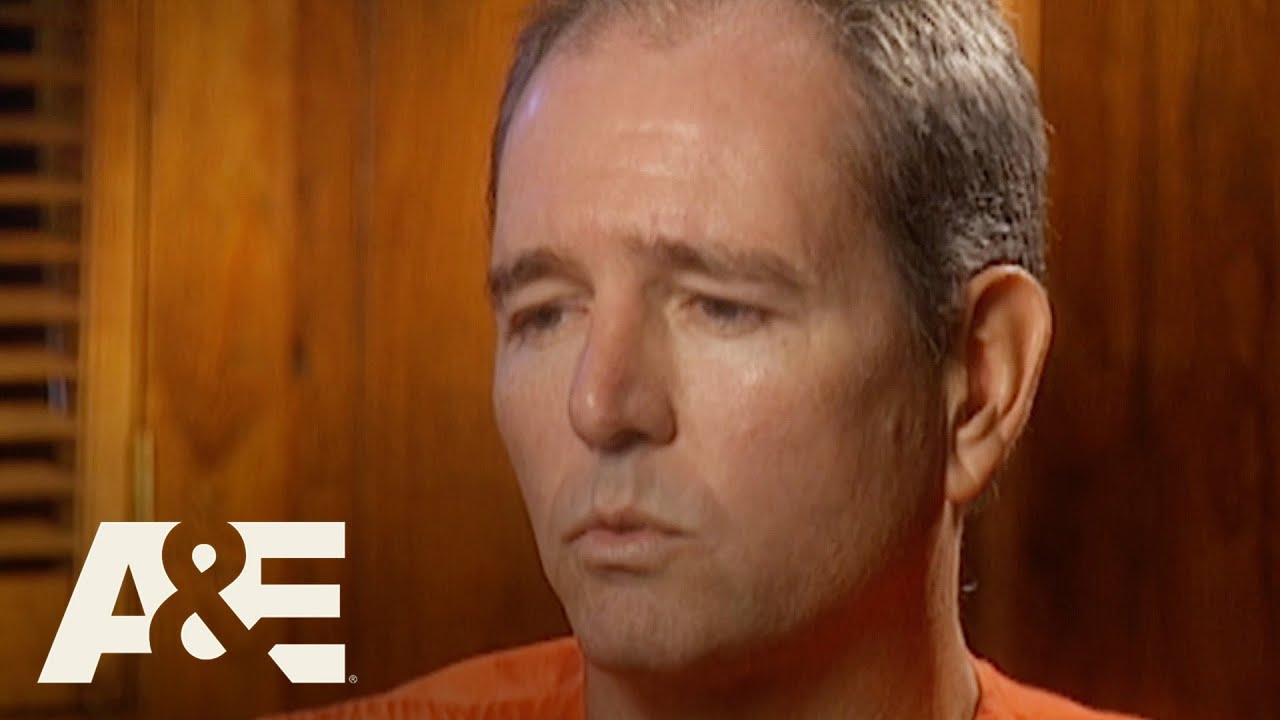
Was Danny Rolling born a monster, or was he made?
It’s a question that haunts every true crime fanatic. Rolling’s childhood was a textbook case of trauma. His father, a police officer, was physically and verbally abusive, often beating Danny and telling him he was unwanted.
Dr. Harry Krop testified that this abuse created a “reservoir of rage.” Rolling was diagnosed with:
- Antisocial Personality Disorder
- Borderline Personality Disorder
- Paraphilia (sexual voyeurism)
Rolling was a “failed” man in his own eyes. He had failed at marriage, failed at holding a job, and failed to gain the respect of his father. Killing became his way of taking control. By posing the bodies, he was forcing the world to look at him, to acknowledge his “work.”
He wanted to be famous. In a twisted irony, his desire for stardom led him to the electric chair, but it also immortalized him as a pop-culture footnote.
The End of the Line
Justice was slow, but it arrived. Danny Rolling was executed by lethal injection on October 25, 2006, at Florida State Prison.
Did he beg for forgiveness? Did he offer solace to the families whose lives he shattered? No.
For his final words, Rolling sang a gospel hymn he had written.
“None greater than thee, O Lord, none greater than thee.”
He sang it calmly, his eyes fixed on the ceiling, ignoring the witnesses who watched through the glass. It was a final performance from a man who treated life—and death—as his own personal stage.
Frequently Asked Questions (FAQs)
Q: Did Danny Rolling really have a split personality?
A: Most experts, including the prosecution’s psychiatrists, believed the “Gemini” personality was a fabrication. Rolling was diagnosed with severe personality disorders, but he was found legally sane and aware of his actions. He likely adopted the persona from the movie Exorcist III.
Q: How was Danny Rolling caught?
A: He was actually arrested for an unrelated robbery of a Winn-Dixie grocery store in Ocala, Florida, shortly after the murders. It wasn’t until later that DNA evidence and his tools (screwdriver, tape) linked him to the Gainesville crime scenes.
Q: Did Danny Rolling know his victims?
A: No. The victims were crimes of opportunity. He targeted them because they were available and vulnerable (often finding unlocked doors or sliding glass windows), fitting his “hunter” profile.
Q: Is the Scream movie accurate to the real story?
A: Scream is fiction. It captures the fear and media frenzy of the Gainesville murders but changes the killer’s identity, motive, and methods completely. There were no “Ghostface” masks or phone calls in the real case.
Q: What happened to Danny Rolling’s family?
A: Rolling had a tumultuous relationship with his family. He actually attempted to murder his abusive father in May 1990, shooting him in the face (his father survived, losing an eye). This event likely triggered the cross-country flight that ended in Gainesville.
The terrifying reality of the Gainesville Ripper isn’t just a story about a killer; it’s a reminder of how quickly safety can evaporate. Please Share this post.
Sources help: wikipedia

