

4 Haunted Illinois Prisons: Where Ghosts of Executed Prisoners Remain
Is justice ever truly final? In the limestone corridors of Illinois’ most notorious penitentiaries, the answer seems to be a cold, whispered no.
When the heavy iron doors slam shut, they don’t just lock people in—they keep the past from getting out. Illinois has a dark, jagged history of incarceration, from the Civil War-era dungeons of Old Joliet to the modern concrete fortress of Stateville. While the state abolished the death penalty in 2011, the energy of those who walked the “Last Mile” hasn’t dissipated. It lingers. It watches.
If you’re looking for a jump scare in a rubber mask, go to a haunted house. But if you want to know what it feels like when the air drops ten degrees and the hair on your arms stands up because someone is breathing right behind you? Step inside the real haunted prisons of Illinois.
1. Old Joliet Prison: The Limestone Coffin
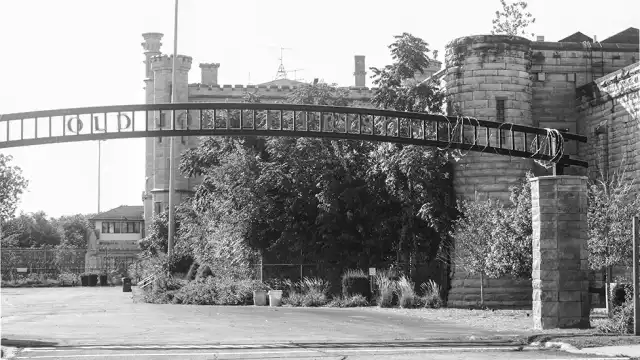
Location: Joliet, IL
Status: Closed (2002), Open for Tours
Famous Inmates: John Wayne Gacy, Richard Speck, Baby Face Nelson
Built in 1858 with yellow limestone quarried by the very men it would enslave, Old Joliet Prison looks like a medieval fortress dropped into the Midwest. For over 140 years, it was a warehouse for misery. Overcrowding was standard; sanitation was a luxury. It’s no wonder the walls seem to vibrate with trauma.
The Singing Ghost of “Monkey Hill”
One of the strangest and most enduring legends in Illinois history isn’t about a scream, but a song.
In the summer of 1932, the city of Joliet was gripped by a bizarre frenzy. Residents living near the prison’s “Old Convict Cemetery” (locally dubbed “Monkey Hill”) began reporting the distinct sound of a man singing hymns late at night. The voice wasn’t raspy or pained—it was beautiful, ethereal, and loud enough to draw crowds.
Newspapers from the time reported that thousands of people—yes, thousands—flocked to the cemetery gates night after night, armed with lawn chairs and curiosity, hoping to hear the “Singing Ghost.”
Who was he?
Skeptics at the time claimed it was a “trusty” inmate named William Lalon Chrysler, singing to keep himself company while manning the quarry pumps. But locals didn’t buy it. The singing often came from areas where no guard or inmate was stationed. Many believed it was the spirit of a wrongfully executed man, singing his way to the salvation the state denied him. To this day, visitors to the overgrown plots report faint, melodic humming that seems to have no source.
The Phantom of the Warden’s Wife
Not all ghosts at Joliet are inmates. In 1915, the warden’s wife, Odette Allen, was brutally murdered in her bedroom at the warden’s residence. The crime was pinned on a “trusty” inmate named “Chicken Joe” Campbell, though doubts about his guilt have swirled for a century.
Odette loved the prison. She was known to be kind to the inmates, a maternal figure in a world of hard men. Today, tour guides and visitors report seeing a woman in period clothing lingering in the second-floor windows of the Administration Building. Unlike the angry shadows in the cell blocks, her presence is described as sorrowful. Is she still watching over her “boys,” or is she waiting for the justice that never came?

The Dismembered Prisoner of Segregation
If you want to find the darkest energy in Joliet, head to the North Segregation building. This was solitary confinement. This was Death Row.
There is a persistent story about a prisoner here who was not just killed, but dismembered by fellow inmates during a chaotic riot. His body parts were allegedly scattered throughout the segregation unit.
Paranormal investigators frequently report:
- The feeling of being touched or pushed by unseen hands.
- Shadow figures darting between the cells.
- Electronic Voice Phenomena (EVP) capturing growls, screams, and the chilling phrase, “Get out.”
“The air in North Segregation is heavy. It feels like walking through water. You’re not alone in there, and you know it immediately.” — Former Tour Guide
2. The Old Cook County Jail: Hangman’s Ground
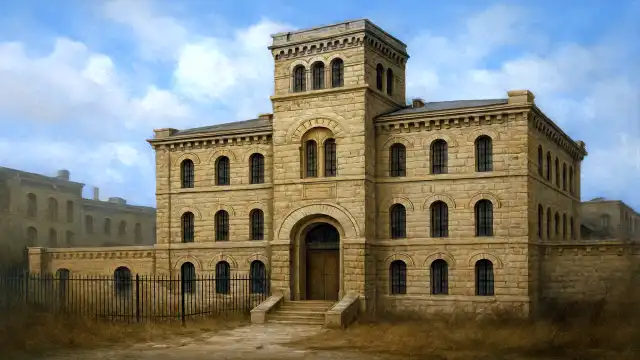
Location: Chicago, IL (Illinois & Dearborn Streets)
Status: Demolished (Now a Firehouse)
Famous Execution: The Haymarket Anarchists
Before it was a trendy neighborhood in River North, the corner of Illinois and Dearborn was the site of the Old Cook County Jail. This is where the gallows stood. Between 1870 and 1929, nearly 90 men were hanged here.
The Singing Killer: Carl Wanderer
Joliet isn’t the only place with a musical phantom. In 1921, a man named Carl Wanderer was hanged for the murder of his wife and a “ragged stranger” he had hired to stage a robbery. Wanderer was a narcissist and a sociopath to the end. As he stood on the gallows, hood over his head, he didn’t beg for mercy. He sang.
He belted out a popular tune of the day, “Old Pal, Why Don’t You Answer Me?” right before the trapdoor swung open.
Today, the site is occupied by a fire station (Engine Co. 42). Firefighters—tough, no-nonsense professionals—have reported hearing a man singing old-timey tunes in the bunkroom and locker areas. Some have even reported hearing the distinct thud of a trapdoor dropping, followed by the creak of a rope, echoing in the quiet hours of the night.
“Terrible” Tommy O’Connor
Tommy O’Connor was a gangster sentenced to hang in 1921. But mere days before his date with the noose, he pulled off a daring escape and vanished. He was never caught. The gallows meant for him were kept erected for 50 years, waiting for his return.
He never came back… at least, not while he was alive. Legend says that after O’Connor died (wherever he was hiding), his spirit returned to the place he was supposed to die. Shadowy figures wearing 1920s attire have been spotted near the old alleyway, perhaps checking to see if the gallows are finally gone.

3. Stateville Correctional Center: The 10-Foot Arm

Location: Crest Hill, IL
Status: Active Prison (Set for closure/rebuild)
Famous Inmates: John Wayne Gacy (Executed here), Richard Speck (Died here)
Stateville is often confused with the “Statesville Haunted Prison,” a commercial haunted house that ran for years nearby. Make no mistake: the real Stateville is far scarier.
This is a maximum-security facility that housed the worst of the worst. It’s where John Wayne Gacy took his last breath via lethal injection in 1994. It’s where Richard Speck died of a heart attack in 1991.
The Guard’s Tale
Correctional officers are trained to be observant and rational. They don’t scare easily. But on a Reddit forum for correctional officers, one guard shared a bone-chilling account that verifies the “Roundhouse” isn’t just haunted by memories.
Working the night shift—the “graveyard” watch—the officer was doing rounds on a tier. He glanced at Cell #12. He saw a hand reaching out through the bars.
- Fact Check: Cell #12 was empty.
Thinking it was an inmate playing tricks, he walked closer. The arm didn’t just reach out; it extended. The officer described it stretching unnaturally, “like it was 10 feet long,” reaching all the way to the security phone on the wall.
He froze. The arm slowly retracted back into the dark cell.
When he called it into the control center, his sergeant didn’t laugh. He simply asked, “You saw the arm, didn’t you?”
It turns out, “The Arm” is a known entity among the staff—a residue of the bizarre and twisted energy locked inside the roundhouse panopticon.
4. Franklin County Jail: The Gangster’s Last Smile
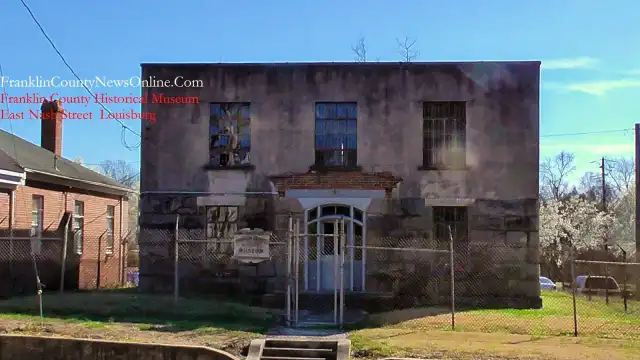
Location: Benton, IL
Status: Museum
Famous Inmate: Charlie Birger
Down in Southern Illinois, the ghost story is personal. The Franklin County Jail is home to the legend of Charlie Birger, the last man to be publicly hanged in Illinois.
Birger was a charismatic gangster, a bootlegger who waged war against the Ku Klux Klan. He was a local anti-hero, but after ordering the murder of a mayor, his luck ran out.
“It’s a Beautiful World”
On April 19, 1928, Birger stood on the gallows—which are still there today, by the way. He looked out at the crowd, smiled, and said his famous last words: “It’s a beautiful world.” Then he dropped.
He never really left.
- The sightings: Visitors to the museum (the old jail) often see a full-bodied apparition of a man in a dapper 1920s suit standing near the gallows replica.
- The voices: Paranormal teams have captured crystal-clear audio of a man’s voice laughing or humming.
- The Jailer’s House: The attached sheriff’s residence is a hotspot. There’s a recording of a woman’s voice—believed to be the jailer’s wife—politely greeting visitors with a “Hello?” in the empty kitchen.
Birger died smiling, and it seems his spirit is still enjoying the “beautiful world” from the other side of the veil.
Why Do They Stay?
Why do these prisons remain active hotspots for the paranormal? It comes down to unfinished business.
Executions are violent, sudden, and unnatural. Inmates like Carl Wanderer or the nameless souls at Joliet often died with intense emotions—rage, fear, denial. That kind of energy acts like a recording, burning itself into the limestone and steel.
When you walk through these places, you aren’t just visiting a museum. You are stepping inside a battery that has been charging on human misery for over a century.
Are You Brave Enough?
Most of these locations offer tours. Old Joliet Prison runs flashlight tours that will test your nerve. The Franklin County Jail Museum lets you stand right where Charlie Birger dropped.
But a warning: When you stare into the darkness of a cell block, don’t look too long. You might not like what looks back.
Have you ever visited a haunted prison? Did you feel the “heaviness” in the air? Drop a comment below or share this article with your brave friends!
Sources: wikipedia.org, reddit.com

