

The Bunyip and the Beast: Did Ancient Diprotodons Inspire the Legend?
Imagine standing on the edge of a murky billabong in southeastern Australia. The sun dips below the horizon, painting the sky in bruised purples and charcoals. Suddenly, a booming roar shatters the silence. The water ripples violently. Something huge is moving down there.
If you were a European settler in the 1800s, you’d probably grab your musket and whisper one word: Bunyip.
But if you are a scientist today, you might look at that same dark water and wonder if you’re chasing a ghost-not of a spirit, but of a biological tank that went extinct 44,000 years ago.
Welcome to one of the most fascinating intersections of cryptozoology, paleontology, and Indigenous history: The theory that the Australian Bunyip is actually a cultural memory of the Diprotodon optatum.
What Exactly is a Bunyip?
Before we dig up fossils, let’s talk about the monster.
The word “Bunyip” traces its roots to the Wemba-Wemba language of Victoria, roughly translating to “devil” or “evil spirit.” But don’t let the translation fool you. In Aboriginal Dreaming stories, the Bunyip isn’t just a Godzilla-style kaiju destroying villages for kicks. It is a complex spiritual figure. A guardian.
It protects the waterways. It punishes those who take too many fish or disrespect the land.
The Many Faces of Fear
Ask five different tribes what a Bunyip looks like, and you’ll get five different sketches.
- The Dog-Face: Some describe it as having a round, dog-like head and dark fur.
- The Long-Neck: Others paint a picture of a creature with a long, swan-like neck and a horse’s tail.
- The Tusks: A recurring detail? Tusks. Walrus-like fangs that jut out from the bottom jaw.
Early settlers were terrified. They found strange, booming noises in the swamps inexplicable. But while the Europeans were loading their guns, the Aboriginal people were preserving a story that might just be the oldest zoological record on Earth.
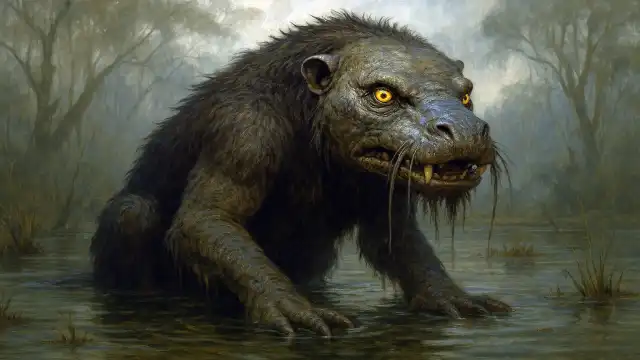
Diprotodon Optatum
Enter the Diprotodon.
If you think a wombat is cute, imagine one the size of a rhinoceros. That’s the Diprotodon. It was the largest marsupial to ever walk the planet. We are talking about a beast that weighed up to 2,700 kilograms (nearly 6,000 lbs) and stood nearly two meters tall at the shoulder.
It roamed the Australian continent during the Pleistocene epoch, grazing on shrubs and wallowing in shallow lakes to cool off.
Here is where the biology gets interesting:
- The Habitat: They loved water holes, swamps, and billabongs—the exact address of the Bunyip.
- The Teeth: Diprotodon skulls feature two massive, forward-projecting incisors. To an observer, these would look remarkably like tusks.
- The Look: It had dark, shaggy fur and a bulky, lumbering gait.
Does that sound familiar? It should.
The Theory
The core theory is simple but mind-bending: Aboriginal Australians lived alongside the Diprotodon for at least 20,000 years.
Humans arrived in Australia roughly 65,000 years ago. The Diprotodon didn’t check out until about 44,000 years ago. That is two hundred centuries of co-existence. Two hundred centuries of hunting, observing, and fearing these massive animals.
When the megafauna finally went extinct—likely due to a mix of climate change and human hunting—did the memory of them die too? Or did it morph?
The “Folk Memory” Mechanism
Critics used to laugh at the idea that a story could last 40,000 years. “It’s just a game of telephone,” they’d say. “The story would change too much.”
But they were wrong.
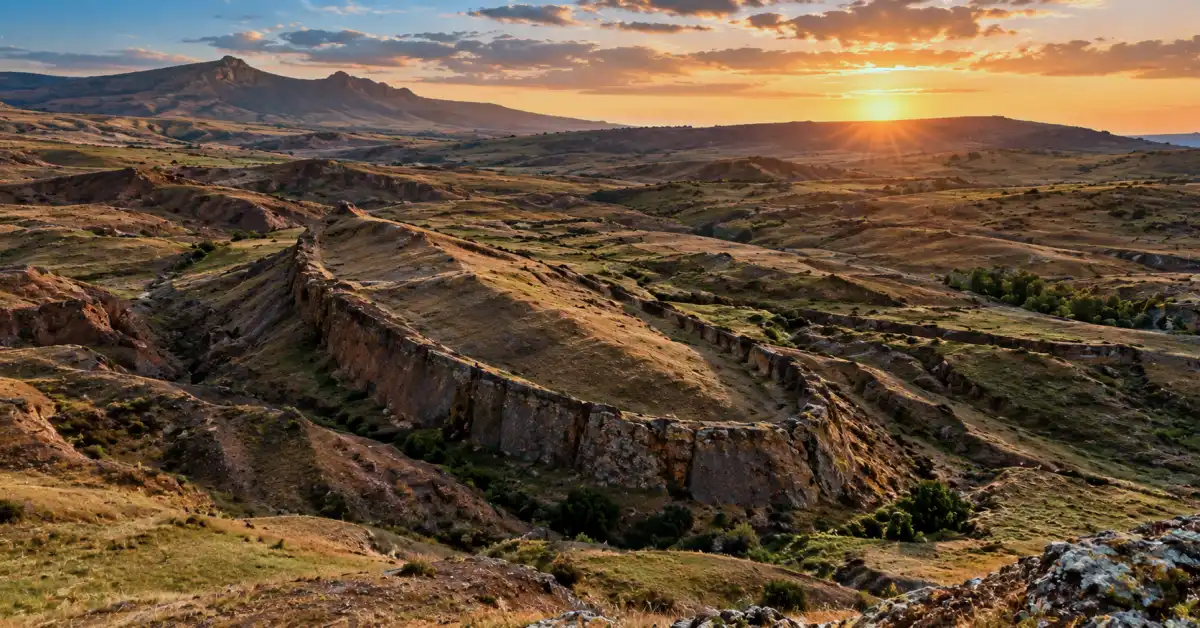
Recent research by geographer Professor Patrick Nunn has blown the lid off this assumption. Nunn proved that Aboriginal oral traditions accurately describe geological events, like the rising of sea levels, that happened over 7,000 to 10,000 years ago. In Tasmania, stories describe the formation of the Bass Strait—an event that dates back 12,000 years.
If a culture can preserve the memory of a coastline shifting for ten millennia, is it so huge a leap to think they could remember the monsters that used to live in the river?
Connecting the Dots: Bones or Beasts?
However, we have to be realistic. There is a massive gap between 44,000 years ago (extinction) and the 1800s (written records). That is a long time for a memory to hold specifically onto the Diprotodon.
So, there are two ways this theory plays out:
- Direct Transmission: The stories are a direct, unbroken line of “Don’t go near the water, the Big Tusker is there,” passed down from grandmother to grandchild for 2,000 generations.
- The Fossil Observation: Aboriginal people, who are expert trackers and observers of the land, found the massive, mysterious bones of Diprotodon eroding out of creek banks. Recognizing them as belonging to a giant animal, they wove them into existing spiritual narratives.
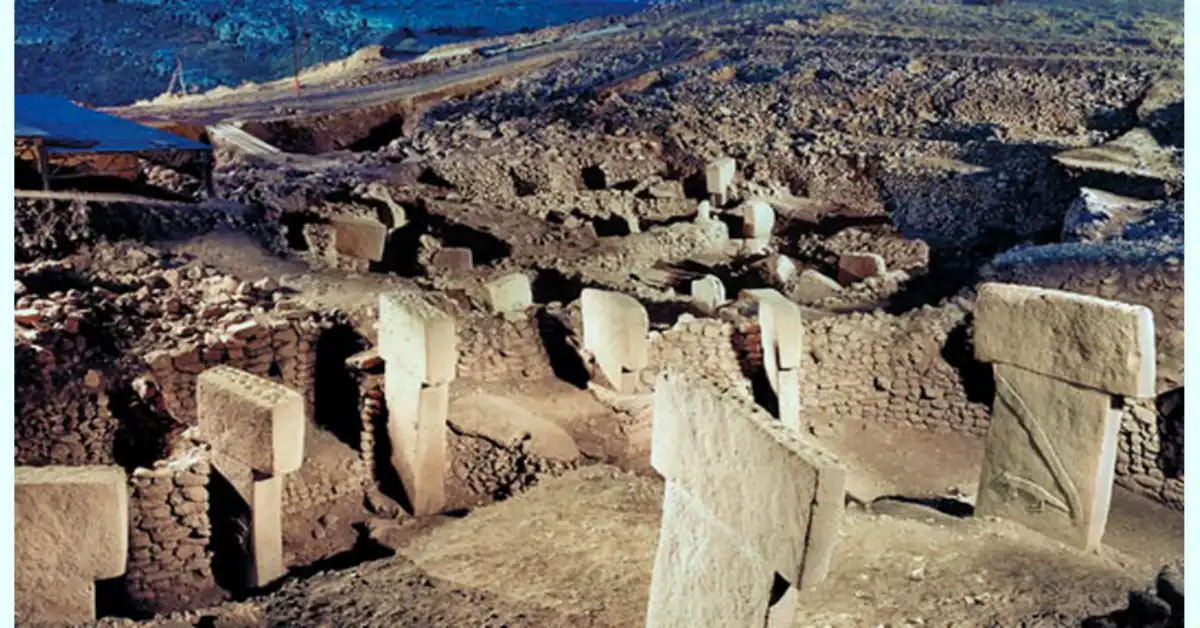
The second option is highly probable. In the 1830s, the Wellington Caves were found packed with megafauna fossils. Aboriginal elders were shown these bones. Their reaction? They didn’t say, “What is that?” They said, “That is the Bunyip.”
This suggests that even if they hadn’t seen a live one in millennia, the physical evidence of the Diprotodon was already integrated into their worldview.
The Skeptic’s Corner: Is it just a Seal?
We can’t talk about the Bunyip without addressing the elephant seal in the room. Literally.
In 1933, geologist Charles Fenner proposed a rival theory that holds a lot of water. He suggested that Bunyips were actually seals—specifically Southern Elephant Seals or Leopard Seals—that had swum upriver.
- The Evidence: Seals have been found hundreds of kilometers inland in the Murray-Darling river system.
- The Sound: A seal’s roar is booming and terrifying, matching the Bunyip’s call.
- The Look: Round head? Check. Dog-like face? Check. Smooth, wet body? Check.
It is entirely possible that “Bunyip” is a catch-all term. Perhaps the ancient memory of the Diprotodon provided the template (the size, the tusks), and rare encounters with wayward seals kept the legend alive and terrifyingly fresh.
So, why do we care if a swamp monster was a wombat or a seal?
Because it forces us to rethink history. For a long time, Western science dismissed Indigenous oral history as “myth.” Fairytales. Fiction. But the Diprotodon theory suggests that these stories are actually data. They are records of a world we missed by a few thousand years.
The Bunyip isn’t just a spooky campfire story. It is a potential bridge to the Pleistocene. It’s a reminder that humans have been watching, naming, and remembering the creatures of this earth far longer than we have been writing about them in textbooks.
Verdict?
Was the Bunyip a Diprotodon?
Physically: It’s a near-perfect match.
Historically: The timeline allows it.
Culturally: It fits the role of a cautionary guardian.
Next time you hear a strange splash in a quiet Australian creek, don’t just think of crocodiles. Think of the rhino-sized wombat that once ruled these waters, and the people who refused to let its memory die.
Quick Facts: Bunyip vs. Diprotodon
| Feature | The Bunyip (Legend) | The Diprotodon (Science) |
| Habitat | Swamps, billabongs, creeks | Open forests, woodlands, shallow lakes |
| Size | Varies (Calf to Rhino size) | Approx. 3 meters long, 2 meters tall |
| Key Trait | Tusks, booming roar | Two large incisors, likely vocal |
| Diet | Humans/Crayfish (Myth) | Shrubs, Saltbush (Herbivore) |
| Status | Mythological / Cryptid | Extinct ~44,000 years ago |
Frequently Asked Questions
Is the Bunyip a real animal or just a myth?
While the Bunyip is classified as a mythological spirit from Aboriginal Dreaming stories, many scientists believe it is based on a real, biological animal. The leading theory suggests the legend is a “cultural memory” of the Diprotodon, a massive marsupial that went extinct around 44,000 years ago. However, modern sightings are often attributed to wayward seals or large birds like the cassowary.
How does the Diprotodon explain the Bunyip legend?
The physical similarities between the legendary Bunyip and the fossilized Diprotodon optatum are striking. Both are described as dwelling in swamps or billabongs and having dark fur. Most importantly, the Diprotodon had two large, forward-facing incisors, which perfectly match the “tusks” described in Indigenous oral history. This suggests Aboriginal Australians preserved the memory of this beast for thousands of years after it vanished.
Did Aboriginal Australians actually live with dinosaurs?
Not dinosaurs, but megafauna. Humans arrived in Australia roughly 65,000 years ago, while the megafauna (like the giant kangaroo Procoptodon and the Diprotodon) didn’t go extinct until about 44,000 years ago. This means Indigenous people co-existed with, hunted, and feared these massive creatures for at least 20,000 years, giving them ample time to weave the beasts into their spiritual lore.
Could the Bunyip be a seal?
Yes, this is the strongest theory for “modern” sightings. Southern Elephant Seals and Leopard Seals have been recorded swimming hundreds of kilometers inland via the Murray-Darling river system. A seal rising from a calm river with a dog-like face and a booming, terrifying roar fits the description of a Bunyip encounter almost perfectly, baffling early European settlers who had never seen a seal in a swamp.
What was the size of a Diprotodon?
The Diprotodon optatum was a biological tank. It is the largest marsupial known to science, weighing up to 2,700 kilograms (6,000 lbs) and standing about 1.8 to 2 meters tall at the shoulder. Imagine a creature with the body of a rhinoceros and the face of a giant, shaggy wombat.
Why are Aboriginal stories important to paleontology?
Aboriginal oral traditions are increasingly recognized by science as accurate records of geological and zoological history. Known as ethno-paleontology, this field studies how ancient legends track real events—such as rising sea levels or the existence of extinct animals—proving that these stories are not just fairytales, but reliable data preserved over tens of thousands of years.
Do you think the Bunyip is a memory of the past or something else entirely? Dive deeper into Australian history and check out the Australian Museum’s archives on megafauna. If you enjoyed this, share this article with a friend who loves a good mystery!
Sources:
- https://australian.museum/learn/australia-over-time/extinct-animals/diprotodon-optatum/
- https://en.wikipedia.org/wiki/Bunyip
- https://e360.yale.edu/digest/australian_mammal_extinctions_tied_to_human_hunting_not_climate_change
- https://www.unisc.edu.au/about/unisc-news/news-archive/2023/august/tasmanian-aboriginal-oral-traditions-among-the-oldest-recorded-narratives-in-the-world

