

Remember the first time you watched 10 Cloverfield Lane? You probably went in expecting a monster movie it’s in the name, right? But instead of a shaky-cam rampage through New York City, we got locked in a basement with John Goodman. And honestly? It was terrifying.
Directed by Dan Trachtenberg, this 2016 gem tricked us all. It masqueraded as a claustrophobic chamber piece before pulling the rug out in the final act. The sudden genre shift left audiences divided. Some cheered the explosive finale; others felt betrayed by the sudden sci-fi twist.
But looking back, the duality of the monsters is exactly the point. On one side, you have Howard Stambler, the “savior” who is actually a captor. On the other, the Aliens, a literal biomechanical nightmare falling from the sky.
So, who is the true villain here? Let’s break down the cage match between the monster inside the bunker and the monsters waiting outside.
The Bunker Monster: Howard Stambler
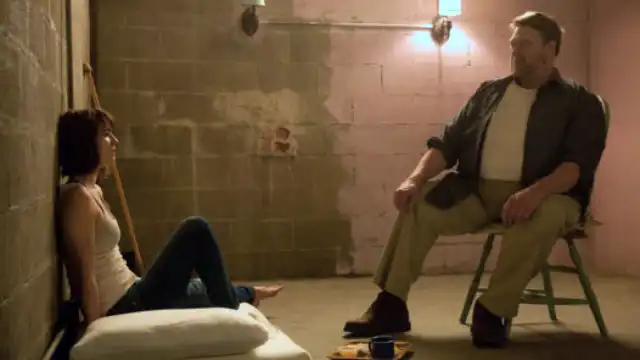
John Goodman deserves an Oscar for this role. As Howard, he isn’t just a villain; he is a walking, breathing panic attack.
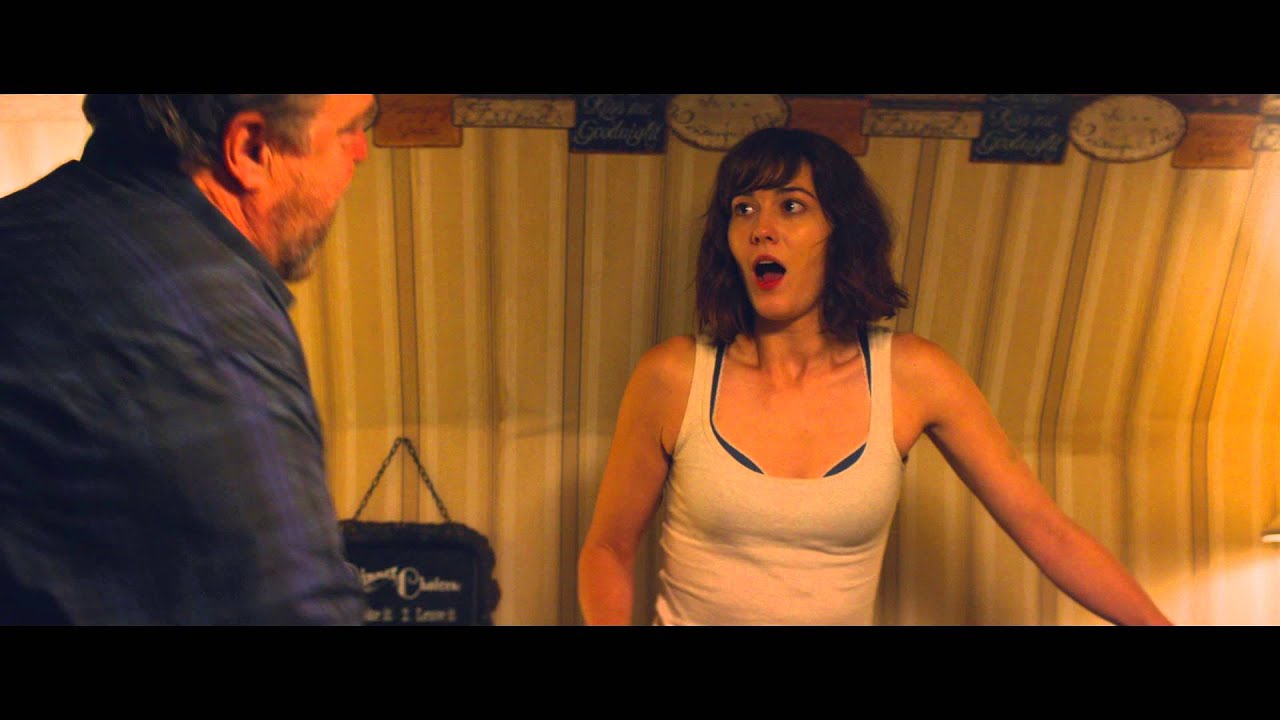
The terror of Howard lies in his ambiguity. When Michelle (Mary Elizabeth Winstead) wakes up chained to a pipe, Howard tells her he saved her life. He claims the air outside is toxic. He claims everyone is dead. And for a good chunk of the movie, you almost believe him.
The Terror of Control
Howard represents the psychological monster. He doesn’t need claws or lasers; he uses gaslighting and intimidation. He fits the classic profile of a domestic abuser. He demands gratitude (“I saved your life!”), he isolates his victims, and he flies into violent rages when his control is challenged.
The scariest moment isn’t an alien spaceship roaring; it’s Howard sitting at the dinner table, casually suggesting Michelle learn to cook. It’s the silence. The heavy breathing. The way he looms in a doorway.
The “Savior” Complex
What makes Howard so complex is that he technically told the truth. There was an attack. The air was dangerous (sort of). But does being right make him a hero? Absolutely not.
He murdered Emmett. He likely killed the missing girl, Megan. He keeps Michelle not to protect her, but to possess her. He is the Devil You Know—a monster born of human paranoia and obsession.
The Aliens at the End: The Biomechanical Threat
Then comes the escape. Michelle creates a makeshift hazmat suit (duct tape for the win!), douses Howard in acid, and crawls through the vents. She bursts outside, expecting to choke on toxic air.
She breathes. The birds are singing. For a split second, you think, “Howard was lying about everything.”
And then the spaceship shows up.
The Genre Shift
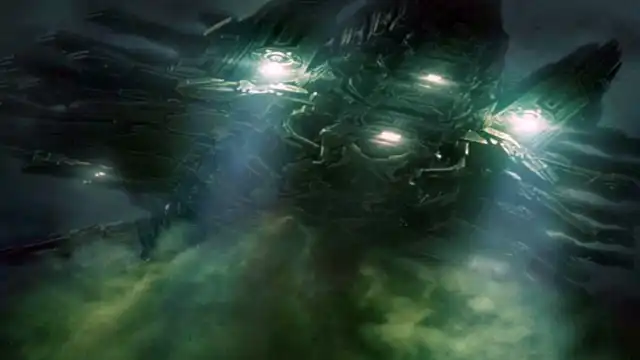
This is where the movie pivots hard. We go from a Hitchcockian thriller to War of the Worlds in about five seconds. The aliens in 10 Cloverfield Lane are distinct from the lanky beast in the original Cloverfield. These are tactical invaders. They use biomechanical ships—living machines that hunt with precision.
They deploy toxic gas (green crop-duster style) and use armored hounds to flush out survivors. This isn’t a mindless rampage; it’s an extermination.
Why The Ending Works (Even If You Hated It)
A lot of critics called this ending “tacked on.” But look closer. The aliens represent the Devil You Don’t Know.
If Michelle had escaped the bunker and just driven away, the movie would be about survival. By throwing aliens at her, the movie becomes about fighting.
Throughout the film, we learn that Michelle’s instinct is to run. She ran from her fiancé. She tried to run from the bunker. But when she sees that alien ship, she stops running. She crafts a Molotov cocktail out of a bottle of whiskey and a lighter, and she takes that thing down.
The aliens are the external test of her internal growth. She defeated the domestic monster (Howard); now she has to prove she can face the existential one.
Comparison: Psychological vs. Physical Horror
Which monster is scarier? It depends on what keeps you up at night.
| Feature | The Bunker Monster (Howard) | The Aliens |
| Weapon | Gaslighting, gun, acid | Toxic gas, tentacles, tech |
| Fear Type | Claustrophobia, helplessness | Existential dread, annihilation |
| Motivation | Control, obsession | Colonization, harvest |
| Vulnerability | Human emotion, ego | Explosives, fire |
Howard is the scarier character. You can hide from an alien. You can’t hide from a man who watches you sleep and holds the key to the only door. Howard is realistic; we see “Howards” in the news every day. He is grounded in a reality that makes your skin crawl.
The Aliens are the bigger threat. Howard can kill a few people; the aliens are wiping out humanity. They raise the stakes from a personal tragedy to a global apocalypse.
The Verdict: Why We Needed Both
10 Cloverfield Lane isn’t just a sequel in name. It captures the essence of the franchise: human drama in sci-fi circumstances.
If the movie ended with Michelle simply driving away, it would have been a great thriller. But by including the aliens, it validates Howard’s paranoia while condemning his actions. It tells us that just because the world is ending doesn’t mean you have to tolerate a monster in your living room.
The film forces Michelle to choose. The final shot shows her driving toward Houston—toward the fight—rather than fleeing to safety in Baton Rouge. She traded one hell for another, but this time, she’s holding the steering wheel.
What Do You Think?
Was the sudden shift to sci-fi a stroke of genius or a shark-jump moment for you? Did John Goodman’s terrifying performance overshadow the CGI finale?
Frequently Asked Questions (FAQ) about 10 Cloverfield Lane
Was Howard Stambler actually right in 10 Cloverfield Lane?
Technically, yes, but that doesn’t make him the hero. Howard (John Goodman) was correct about the alien invasion and the toxic air (to an extent). However, his “savior” narrative was a lie to cover up his predatory nature. He murdered Emmett and kidnapped Michelle not just to save them, but to control them. As the director Dan Trachtenberg notes, the film explores the idea that “just because you’re paranoid doesn’t mean they aren’t after you.” Howard was right about the world ending, but he was still a monster.
What is the difference between the monster in Cloverfield and 10 Cloverfield Lane?
They are completely different entities. The monster in the 2008 Cloverfield (dubbed “Clover”) is a massive, biological deep-sea creature—essentially a scared baby lashing out. In contrast, the threats in 10 Cloverfield Lane are advanced biomechanical aliens. They utilize technology, ships, and weaponized gas to hunt humans. J.J. Abrams describes the films as “blood relatives” within an anthology, meaning they share a universe or tone, but the monsters likely come from different sources or dimensions (a theory expanded on in The Cloverfield Paradox).
Does Michelle survive at the end of 10 Cloverfield Lane?
Yes, Michelle survives. After destroying the alien ship with a makeshift Molotov cocktail, she gets into a car and drives away. In the final moments, she hears a radio broadcast seeking help in Houston. Instead of driving toward safety in Baton Rouge, she turns the car toward Houston, choosing to join the resistance and fight back. This signifies her character arc: she stops running from problems and starts facing them head-on.
Did Howard kill the girl in the picture (Megan)?
The evidence overwhelmingly suggests yes. Howard claims the girl in the photo is his daughter, Megan. However, Michelle discovers Megan’s earrings in the bunker—jewelry that matches the girl in the photo. Furthermore, the “Help” scratched into the inside of the airlock window implies a previous victim was trapped there. While the movie never shows the murder, the subtext confirms Howard kidnapped and likely killed the girl he claimed was his daughter, revealing his history as a predator.
Is 10 Cloverfield Lane a sequel to Cloverfield?
No, it is not a direct narrative sequel. You do not need to watch the 2008 Cloverfield to understand this movie. Think of the Cloverfield franchise like The Twilight Zone or Black Mirror—an anthology series connected by themes of sci-fi horror and mysterious “mystery box” elements. While The Cloverfield Paradox attempts to tie the timelines together via a multiverse theory, 10 Cloverfield Lane stands on its own as a contained psychological thriller.
Why did the genre shift so suddenly at the end?
The shift from psychological thriller to sci-fi action was intentional to test the protagonist, Michelle. Throughout the film, her struggle is against a domestic oppressor (Howard). By introducing the aliens at the end, the film forces her to apply the resilience she learned in the bunker to a larger, existential threat. It serves as a metaphor: surviving abuse often prepares victims to handle “monsters” in the outside world that others might not be able to face.
Tell us in the comments below! And if you haven’t rewatched this thriller lately, fire up your streaming service tonight. Just… maybe check the locks on your doors first.

