

Ancestor Worship During Lunar New Year: Cultural Rituals and Foods
Imagine a dinner party where the guests of honor are invisible, yet they get the best seats in the house. The air smells like sandalwood incense, and the table is groaning under the weight of roast duck, steamed fish, and bright orange tangerines. This isn’t a scene from a ghost story. It is the heart and soul of the Lunar New Year.
While the fireworks and dragon dances get all the attention on Instagram, the real magic happens quietly at home. It happens at the family altar.
For millions of families across Asia and the diaspora around the world the New Year doesn’t officially start until they have paid their respects to the ancestors. But why? Is it fear? Is it religion? Actually, it’s mostly about love.
If you have ever wondered why people burn paper money or offer whole chickens to their great-grandparents, pull up a chair. We are going to break down the rituals, the food, and the “why” behind this ancient tradition in a way that is easy to digest.
The Big Idea: It’s Not About “Worship”
First, let’s clear up a common misunderstanding. The term “Ancestor Worship” can be a bit misleading for Westerners. In many Asian cultures, specifically those influenced by Confucianism (like China, Vietnam, and Korea), it isn’t about worshipping the dead like gods. You don’t pray to Grandma for a miracle; you pray for her peace and ask for her blessing.
It boils down to Filial Piety (paying respect to your parents and elders).
Think of it this way: Your parents took care of you when you were a helpless baby. Therefore, you take care of them when they get old. And, crucially, you continue to take care of them even after they pass away.
The belief is that the spirit world and the living world are connected. If your ancestors are well-fed and happy in the afterlife, they will look out for you. If they are hungry or neglected? Well, your year might be full of bad luck.
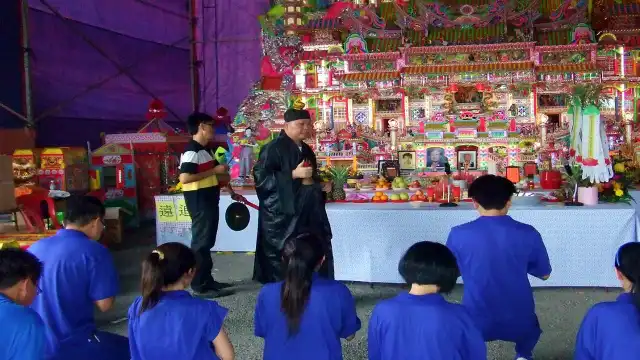
Setting the Stage: The Altar
Before the feast begins, the stage must be set. Most traditional households have an altar. This could be an elaborate wooden cabinet in the living room or a modest shelf in a high corner.
During the Lunar New Year, specifically on New Year’s Eve, this space becomes the focal point of the household.
The Cleanup
Just like you wouldn’t invite guests to a messy house, you don’t invite ancestors to a dirty altar.
- Dusting: The statues and photos are carefully wiped down with a clean cloth.
- Fresh Flowers: Old flowers are tossed out. Fresh ones usually chrysanthemums or lucky bamboo—are brought in to symbolize life and renewal.
- Red Decorations: Red papercuts or banners are added for good luck and to scare away bad spirits (like the legendary beast Nian).
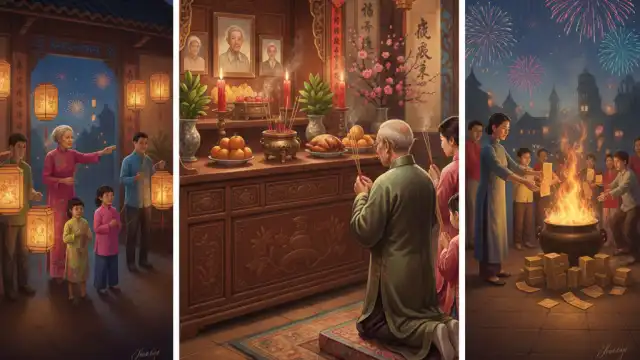
The Rituals: How to Invite the Spirits
The ceremony usually happens right before the family’s big Reunion Dinner. Here is the typical flow of events, though it varies from family to family.
1. Lighting the Way
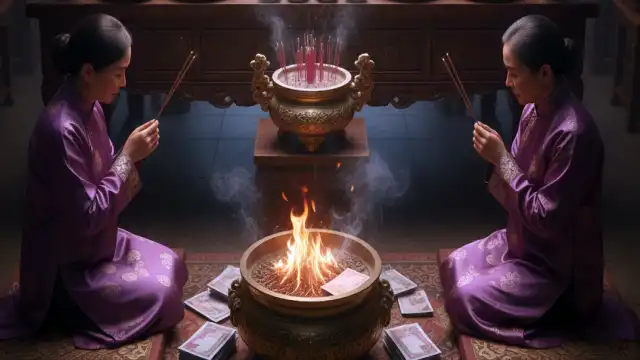
You can’t just yell for the spirits to come down. You need a signal. This is done by lighting incense sticks (joss sticks).
- The head of the household usually goes first.
- They hold the incense with both hands, bow three times, and place the sticks in a holder filled with ash or rice.
- Why? The smoke is believed to bridge the gap between heaven and earth. It carries your invitation up to the spirits.
2. The Offering (The Invitation)
Once the smoke is rising, family members take turns bowing. This is often called the Kowtow (kneeling and touching the head to the floor), though a simple standing bow is common in modern families.
- You whisper your name (so they know who you are).
- You give them an update on the family (“Little Timmy got an A in math!”).
- You ask for health and prosperity for the coming year.
3. Burning the “Money”
This is the part that fascinates most outsiders. Families will burn Joss Paper, also known as “Spirit Money” or “Hell Bank Notes.”
- These look like toy money, sometimes printed with incredibly high denominations (like $10,000,000).
- The Logic: By burning the paper, you transform it from a physical object into a spiritual one. It travels to the afterlife so your ancestors have spending money.
- Modern Twist: Nowadays, you can buy paper versions of iPhones, luxury cars, and even credit cards to burn. The ancestors need to stay trendy, right?
The Menu: Food for the Dead
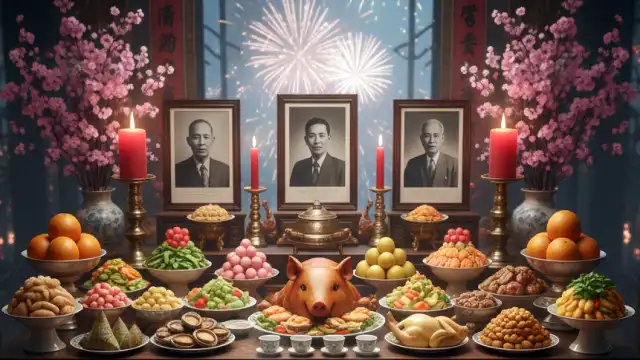
Now, let’s talk food. You cannot serve just anything to the ancestors. Every dish on the altar has a symbolic meaning. This is “pun-based” cooking at its finest eating things because their names sound like “wealth” or “luck” in the native language.
Here are the heavy hitters you will see on the table.
1. The Whole Chicken
You will often see a boiled or steamed chicken, sitting with its head and feet still attached.
- Meaning: This symbolizes unity and “wholeness.”
- Why the head? Serving a cut-up chicken suggests severing family ties. That is a huge taboo during the New Year. The bird must be complete to ensure the family stays together.
2. The Whole Fish
Next to the chicken, there is usually a whole fish.
- Meaning: In Mandarin, the word for fish (Yu) sounds exactly like the word for Surplus or Abundance.
- The Rule: You offer the fish, but you often don’t eat all of it on New Year’s Eve. You leave some leftovers. This symbolizes that you want your wealth to “overflow” into the next year.
3. Fruits of Fortune
You won’t find pears here (the word for pear sounds like “separation”—bad luck!). Instead, you will see:
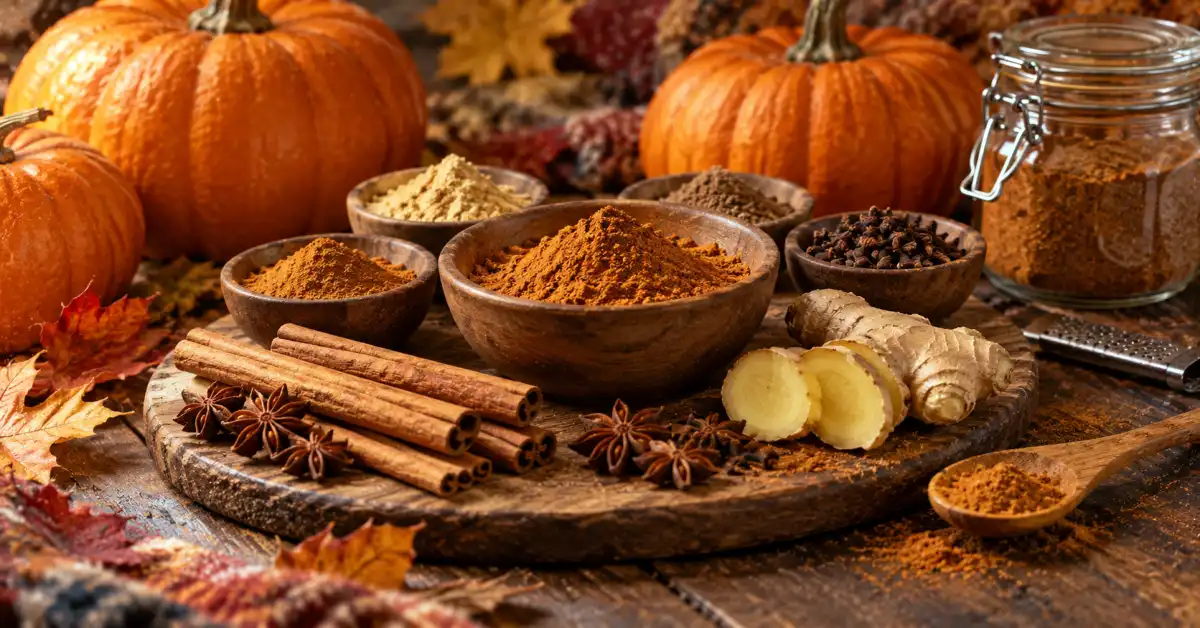
- Mandarin Oranges/Tangerines: Their color looks like gold, and the name sounds like “luck.”
- Pomelos: These giant citrus fruits symbolize family unity and having children.
4. Rice Cakes (Nian Gao)
This sticky, sweet cake is a must-have.
- Meaning: Nian Gao sounds like “Year High.” Eating it is a wish to raise yourself higher in the coming year whether that means a promotion at work, better grades, or literally growing taller if you are a kid.
5. Alcohol and Tea
Three small cups of rice wine or tea are placed in front of the photos. Before the living family drinks, they pour a little of the liquid onto the ground as a libation for the earth and the spirits.
Wait, Who Eats the Food?
This is the most common question kids ask. “Do the ghosts actually eat the chicken?”
The answer is: Spiritually, yes. Physically, no.
The belief is that the ancestors consume the essence or the aroma of the food. After the incense has burned down (signaling the spirits are done eating), the food is taken off the altar.
Then, the living family eats it.
This is actually the most important part. By eating the food that the ancestors have “blessed,” you are physically connecting your body to theirs. It is the ultimate act of family dining.
Regional Twists: It’s Not Just China
While these traditions are rooted in Chinese culture, neighboring countries have their own beautiful versions.
- Vietnam (Tet): The altar is huge during Tet. Families offer Banh Chung, a square sticky rice cake wrapped in banana leaves, filled with pork and mung beans. It represents the earth and gratitude to ancestors.
- Korea (Seollal): The ritual is called Charye. The food is laid out in a very specific geographic order (e.g., red fruits on the east, white on the west). They act as a compass for the spirits.
- Singapore/Malaysia: Here, the “Lo Hei” or Yusheng toss happens. It’s a raw fish salad that families toss high in the air with chopsticks, shouting auspicious phrases. While more for the living, the initial offering often goes to the altar first.
Why This Matters Today
Present, the world is digital and fast-paced. You might think these old rituals would die out. Yet, they are stronger than ever.
Why? Because in a world of text messages and Zoom calls, Ancestor Worship is tactile. It smells like smoke; it tastes like roast pork; it requires you to slow down and kneel.
It teaches us gratitude. It reminds us that we didn’t just pop out of nowhere. We are the latest chapter in a very long story.
So, this Lunar New Year, if you see a family burning paper in a metal bin on the sidewalk, or if you smell that distinct incense wafting from a neighbor’s window, know that a reunion is happening. It’s a party that spans two worlds, bridging the gap between the living and the dead with a little bit of magic and a lot of delicious food.
Do you have a family tradition that honors those who came before you?
Whether it is lighting a candle, visiting a grave, or cooking Grandma’s secret recipe, these acts keep history alive.
For more deep dives into cultural history, check out resources from UNESCO’s Intangible Cultural Heritage list or browse historical archives on Google Scholar to see how these traditions have evolved over centuries.
Quick Facts: Lunar New Year Altar Etiquette
- Don’t use white flowers (white is the color of mourning/funerals, but usually fresh flowers for New Year should be colorful). Clarification: White chrysanthemums are for funerals; on New Year, go for red, yellow, or pink.
- Do keep the incense burning throughout the dinner.
- Don’t wear black to the offering (wear red or bright colors).
- Do make sure the rice bowls for the ancestors are full no half-empty bowls!
Frequently Asked Questions
Can you eat the food offered to ancestors?
Absolutely. In fact, you are supposed to. Once the incense sticks have burned down—signaling that the spirits have finished their meal—the food is considered blessed. Eating it is a way to physically internalize the good fortune and protection of your ancestors. It’s not just leftovers; it’s a shared meal between the living and the dead that strengthens family bonds.
Why do people burn “fake money” (Joss Paper) during Lunar New Year?
Think of it as a wire transfer to the afterlife. Joss paper, or “spirit money,” is burned to ensure ancestors have financial comfort in the spirit world. The fire transforms the physical paper into a spiritual currency. In Present, you might even see people burning paper versions of modern luxuries like 5G smartphones, credit cards, or sports cars, ensuring Grandma stays up-to-date with the latest tech in heaven.
Is ancestor worship considered a religion?
Not exactly. While it involves rituals, ancestor worship is more of a cultural practice rooted in Confucianism and Filial Piety rather than a religion like Christianity or Buddhism. It is about paying respect and remembering lineage, not worshipping the dead as deities. Many people who practice ancestor veneration also identify as Buddhist, Taoist, or even Christian, viewing the rituals as a gesture of love rather than idolatry.
What fruits should you NEVER offer to ancestors?
Steer clear of pears. In Mandarin, the word for “pear” (li) sounds exactly like the word for “separation.” Offering them is considered bad luck because it symbolizes the family falling apart. You should also avoid thorny fruits (like durian) on the altar. Instead, stick to round, golden fruits like mandarin oranges, kumquats, and pomelos, which symbolize wholeness and wealth.
How do you set up a basic ancestor altar for Lunar New Year?
You don’t need a grand temple; a small table or shelf works perfectly. Place photos of the deceased in the center or slightly elevated. Set out an incense burner (a bowl with uncooked rice works well to hold the sticks) in front of the photos. Arrange the food offerings (whole chicken, fruits, tea) in front of the incense. Always ensure the setup is clean, and face the altar toward a window or door if possible, to welcome the spirits in.
What is the significance of the “whole chicken” dish?
A chicken served with its head and feet attached represents unity and a good beginning and end to the year. In Chinese culture, serving a cut-up bird suggests “severing” ties, which is a major taboo during the New Year. The whole bird ensures the family stays together and complete for the next 12 months.

