

Let’s talk about the one question that unites every human who has ever lived: What happens when we die?
It’s the ultimate mystery. The grand what if. It’s the subject of our oldest myths, our most sacred texts, and our 3 AM existential spirals. Does the light just… go out? Is it a “game over, thanks for playing” screen? Or is it something else?
For millennia, humanity has refused to accept a simple nothing. We’ve woven an incredible, complex theories about what comes next. From spiritual report cards to warrior paradises, the ideas are as diverse as we are.
We’re going to put aside dogma and just explore the fascineting, mystical, and sometimes bizarre maps our ancestors and our neighbors have created for the undiscovered country.
No judgment. Just curiosity.
The Two Big Ideas: A Cycle or a Destination?
When you boil it all down, most of the world’s beliefs fall into two massive categories:
- The Round Trip (Reincarnation): The idea that you are on a cosmic Ferris wheel. You live, you die, and you come back (as a human, an animal, or something else) to learn more lessons. This is a central theme in many Eastern religions.
- The One-Way Ticket (Eternal Life): The idea that you live your one life, and based on your actions and faith, you are “judged” and sent to a permanent, final destination. This could be a paradise, a pit, or something in between. This is the foundation of most Abrahamic religions.
It’s the ultimate do-over vs. one-shot debate. And the details are where things get really interesting.
The Round Trip: Reincarnation and the Path to Release
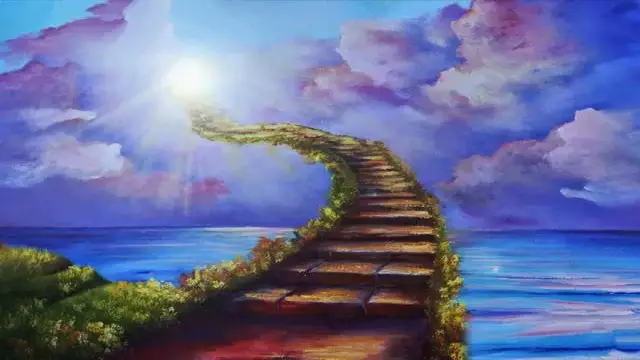
For billions of people, life isn’t a single sprint; it’s a marathon of many lifetimes.
Hinduism: The Wheel of Samsara
In Hinduism, the concept is built on a few key pillars:
- Atman: This is your true self. Your eternal, unchanging soul. Think of it as the divine spark of light inside you.
- Samsara: This is the “wandering,” the endless cycle of birth, death, and rebirth. Your Atman is the passenger, but the body is the vehicle, and it keeps changing.
- Karma: This is the engine of Samsara. It’s the universal law of cause and effect. Good actions in this life? You get a better ride next time (maybe as a wise scholar). Bad actions? You might come back as, well… let’s just say you don’t want to find out. It’s not “punishment”—it’s a consequence.
- Moksha: This is the goal. It’s not to be reborn as a king. The goal is to get off the ride. Through spiritual knowledge, good deeds, and devotion, you can break the cycle of Samsara. Your Atman stops reincarnating and finally achieves liberation, reuniting with the divine.
Buddhism: The Goal of “Blowing Out”
Buddhism started in the same cultural pot as Hinduism, so it shares the Samsara and Karma part. But it has one massive, mind-bending difference.
The concept of Anatman, or “non-self.”
Where Hinduism says you have an eternal, unchanging soul (Atman), Buddhism says… you don’t.
Instead, “you” are a temporary collection of feelings, thoughts, and habits. Think of your consciousness like a flame. When you die, your “flame” of karma—your unresolved desires and actions is used to light a new candle. That new person isn’t “you,” but they are a direct result of you.
So what’s the goal? If there’s no soul to liberate, what are you doing?
You’re aiming for Nirvana. This word literally means “to extinguish” or “to blow out.” It’s the extinguishing of the flame of desire, hatred, and ignorance. It’s not a place (like heaven), but a state of perfect peace and an end to all suffering. It’s the final, blissful stop to the cycle of rebirth.
The One-Way Ticket: Judgment and the Final Destination
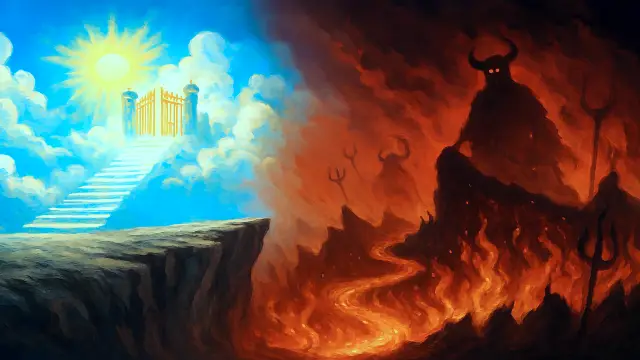
For billions more, this life is a one-shot deal. It’s a test. And after the test, you get your grade.
Christianity: Heaven, Hell, and the Waiting Room
In Christianity, the deal is simple: your one life on Earth determines your eternal fate.
- Heaven: This isn’t just clouds and harps (though that’s the popular image). Theologically, it’s the “Beatific Vision”—the ultimate, perfect, and fulfilling state of being in the full presence of God. It’s not a place of boring praise; it’s described as the ultimate end of all human longing for truth, goodness, and love.
- Hell: The opposite. If heaven is total union with God (who is love), hell is the total, eternal separation from God. It’s a state of self-chosen isolation and definitive misery. The “lake of fire” imagery is often interpreted as a metaphor for the profound, agonizing pain of this separation.
- Purgatory (A Catholic Concept): What if you’re… mostly good? You love God, but you’re still attached to some bad habits. You’re not “hell-bound,” but you’re not “perfect-union-ready” either. Purgatory is seen as a state of purification, a spiritual “scrub-down” where souls are cleansed of their remaining imperfections before they can enter the perfection of heaven.
Islam: The Gardens and the Fire
Islam also has a clear, linear view: life, death, resurrection on the Day of Judgment, and an eternal destination.
- Jannah (Paradise): This is described in the Quran with beautiful, vivid, and physical imagery. It’s not a vague spiritual state; it’s a paradise. It’s a garden with rivers of milk, honey, and wine. Believers are reunited with their loved ones, wear silk, and experience no pain, sorrow, or hardship. It is the ultimate reward of peace and pleasure from Allah.
- Jahannam (Hell): This is the place of punishment for those who reject God and do evil. Like Jannah, it’s described in powerful, physical terms: a place of scorching fire, boiling water, and torment.
The key is that this life is a test, and the Day of Judgment is the final exam.
Judaism: The Emphasis on This World
This is one of the most misunderstood. Modern pop culture lumps Judaism in with Christianity and Islam, but its views on the afterlife are very different.
Why? Because traditional Judaism is intensely focused on this life. The main goal is to live ethically, follow God’s commandments, and repair the world (Tikkun Olam) right here, right now.
The afterlife is… hazy. And that’s on purpose.
- Sheol: In early parts of the Hebrew Bible, this is the main concept. It’s not “hell.” It’s a dark, quiet, shadowy place—a bit like the “grave” itself—where all the dead (good and bad) go. It’s a place of stillness, not one of reward or punishment.
- Olam Ha-Ba (The World to Come): Later, a belief in a future “World to Come” developed. This is the era when the Messiah will come, the dead will be resurrected, and the world will be perfected.
- Gehinnom: This sounds like hell, but it’s not. It’s more like the Christian concept of Purgatory. It’s a place where a soul is purified of its sins, a process that is said to take no more than 12 months. It’s a temporary spiritual cleanse, not an eternal damnaion.
The Ancient Blueprints: Afterlives That Shaped Our World
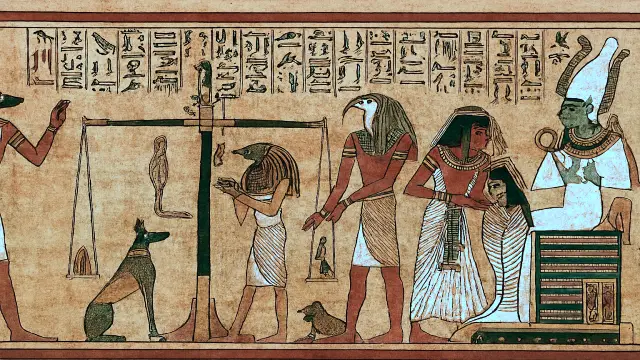
Where did these ideas come from? Let’s look at some of the “beta tests.”
Ancient Egypt: The Ultimate How-To Guide
The Egyptians were obsessed with the afterlife. They didn’t just hope for it; they engineered it.
- The Journey: They believed that after death, you had to make a perilous journey through the underworld, known as Duat.
- The Book of the Dead: This wasn’t a “holy book.” It was a cheat sheet. It was a scroll of magic spells, hymns, and passwords to help you navigate the dangers of the Duat and overcome the demons you’d meet.
- The Final Exam: The main event was the “Weighing of the Heart.” Your heart (which they believed was the seat of your intelligence and morality) was placed on a scale, balanced against the Feather of Ma’at (truth and justice).
- If your heart was light (free of sin), you passed and were granted eternal life in the Field of Reeds (a perfect, beautiful version of Egypt).
- If your heart was heavy… well. It was fed to Ammit, the “Devourer of the Dead”—a terrifying hybrid of a crocodile, lion, and hippo. And you were annihilated. Forever.
Norse Mythology: You Have to Earn Your Seat
For the Vikings, a “good” death was everything. Their afterlife was stratified, not by faith, but by how you died.
- Valhalla: This is the most famous one. This is Odin’s “Hall of the Slain.” If you died bravely in battle, the Valkyries (Odin’s female spirit-warriors) would swoop down and carry your spirit here. What do you do? You feast, you drink, you fight all day, get resurrected at night, and do it all again, all in preparation for Ragnarök (the final, world-ending battle).
- Fólkvangr: This is the other warrior afterlife, and it’s often forgotten. Ruled by the goddess Freyja, half of those slain in battle went here. It was just as prestigious as Valhalla.
- Hel: What if you didn’t die in battle? What if you died of… sickness? Or old age? Then you went to Hel. This wasn’t a fiery hell (note the one ‘l’); it was a cold, misty, gloomy place, ruled by the goddess of the same name. It wasn’t a punishment, but it was definitely a downgrade.
The “Modern Mystics”: Spiritualism and Ancestors
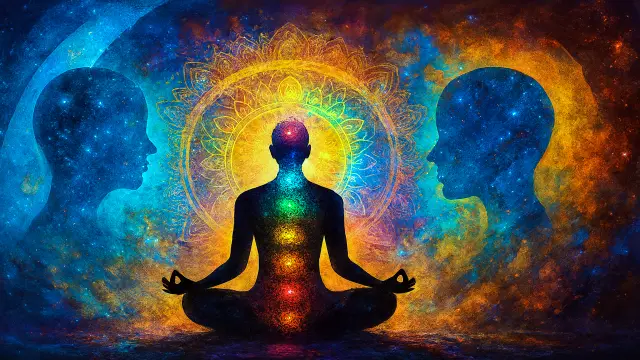
What about beliefs outside of organized religion?
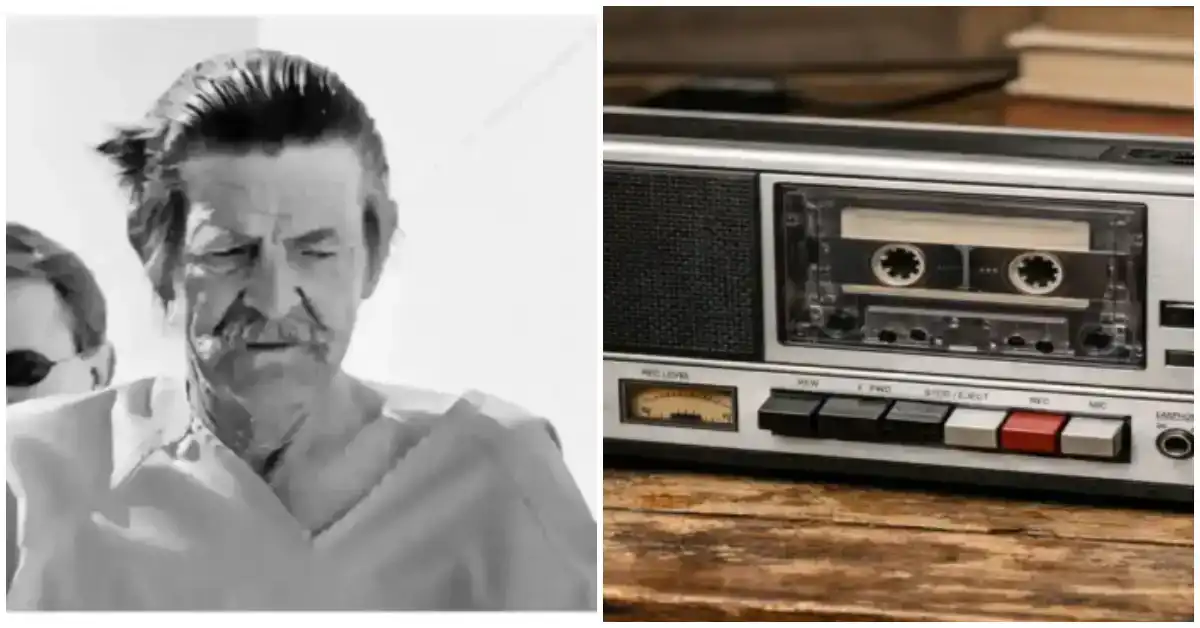
Spiritualism: Death is Just an Open Door
This belief system, which boomed in the 19th and 20th centuries, has a simple premise: the dead are still here, and you can talk to them.
Spiritualists believe that when you die, your “spirit” simply moves to the “Spirit World,” a realm that surrounds and interpenetrates our own. Death isn’t an end; it’s a transition.
- Through a medium (a person sensitive to spirits), you can get messages from your “dead” relatives.
- The goal isn’t just to say “hi.” It’s to prove the continuity of life, to show that love is eternal, and to get spiritual guidance from those who are “one step ahead.”
African Traditional Religions: The Ancestors Are Watching
In many traditional African religions, the line between the living and the dead is extremely thin. The most important belief is Ancestor Veneration.
- When a person dies, they don’t just “go to heaven.” They become an ancestor.
- Ancestors are not gods, but they are powerful spiritual intermediaries. They are still part of the family, and it’s the living’s job to honor them, remember them, and ask them for guidance.
- If you honor your ancestors, they will protect you and bless you. If you forget them… they might cause you some problems (a “spiritual nudge” to remind you). The afterlife, in this sense, is an active, ongoing relationship with the living.
So, What’s the Takeaway?
Looking at this incredible map, one thing becomes clear: We are a species that hopes.
We are a species that looks at the void and paints it with our biggest fears, our greatest desires, and our most profound sense of justice.
Maybe the afterlife is a garden. Maybe it’s a classroom. Maybe it’s a feast hall, or a court of judgment, or a simple, quiet fade to black. Maybe, as some traditions suggest, it’s a state of being we simply cannot comprehend from here.
We don’t have the “answer.” But the questions… the questions are what make us human.
Call to Action
This is just a tiny snapshot of a massive, global conversation. Which of these beliefs resonates with you the most? Is there a local legend or a family story about “what comes next” that I missed?
Drop your thoughts and theories in the comments below!

