

You’re deep in the woods maybe the Pacific Northwest, maybe the Appalachians. The sun is dipping. The forest is going from cathedral-quiet to spooky-quiet. And then you see it: a single, massive, man-like footprint in the mud. It’s way too big to be human. It’s too… weird to be a bear.
Your brain freezes. Every ghost story and campfire tale you’ve ever heard comes flooding back.
For most of us, this is just a fun, spooky “what if.” But for a dedicated few—including some very serious scientists—the mystery of Bigfoot, or Sasquatch, is a legitimate puzzle. It’s a puzzle built not on “what ifs,” but on a mountain of strange, tangible, and deeply controversial evidence.
The question isn’t just, Is Bigfoot real? The real question is, “What’s the deal with the evidence?”
We’re not here to “sell” you on a monster. here to do what any good friend would: look at the receipts. We’re going to dive into the most compelling, baffling, and hotly-debated evidence—the footprints, the film, and the DNA—and separate the fact from the fluff.
The Footprint in the Mud: More Than Just a “Big Foot”
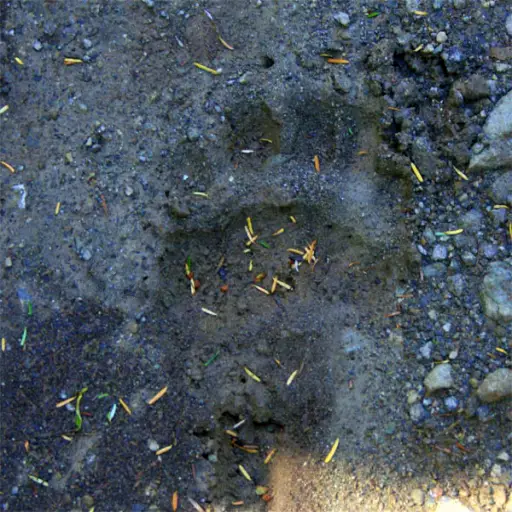
This is where it all starts. The creature is literally named after its evidence.
If this was just about one or two blurry tracks, we could all go home. But it’s not. We’re talking about thousands of casts, collected over 70 years, sitting in a database.
The foremost expert on this database is Dr. Jeff Meldrum, a professor of anatomy and anthropology at Idaho State University. This isn’t a “ghost hunter.” This is a Ph.D. in biological anthropology, a specialist in primate foot morphology, who says we cannot ignore this data.
Meldrum’s argument isn’t just “wow, that’s big.” His argument is that these tracks show anatomical features that hoaxers—especially in the 1960s or 70s—simply would not know how to fake.
What are we talking about?
- The Midtarsal Break: This is the big one. Your foot is a rigid, spring-loaded arch, designed to propel you forward. An ape’s foot is different. It has a “break” in the middle, a flexible joint (the midtarsal break) that allows it to grip and move over uneven terrain. Many of the alleged Bigfoot tracks show this exact, non-human flexibility.
- Dermal Ridges: Look at your fingertips. See the little swirls? Those are dermal ridges. They cover our hands and feet. In the 1970s, a series of casts from Bossburg, Washington (the “Cripplefoot” tracks), showed not just a footprint, but what appeared to be dermal ridges and sweat pores in the skin. Skeptics say these are just artifacts from the casting. Experts like Meldrum argue the patterns are too anatomically consistent, too complex, and too primate-like to be faked.
- The “Cripplefoot” Trackway: This wasn’t a single print. It was a trackway—a long line of tracks—from a single creature. The left foot was normal. The right foot was severely deformed, a classic clubfoot. For believers, this is the smoking gun. Why would a hoaxer go through the trouble of faking a disability? It suggests a real, living, injured animal.
The sheer consistency of these anatomical details across decades and hundreds of miles is the core of the footprint evidence. It’s easy to carve a big foot shape out of wood and stamp it in the mud. It’s insanely difficult to create a 17-inch, anatomically correct, flexible primate foot that leaves behind ridge detail.
The 59.5 Seconds That Won’t Die: The Patterson-Gimlin Film
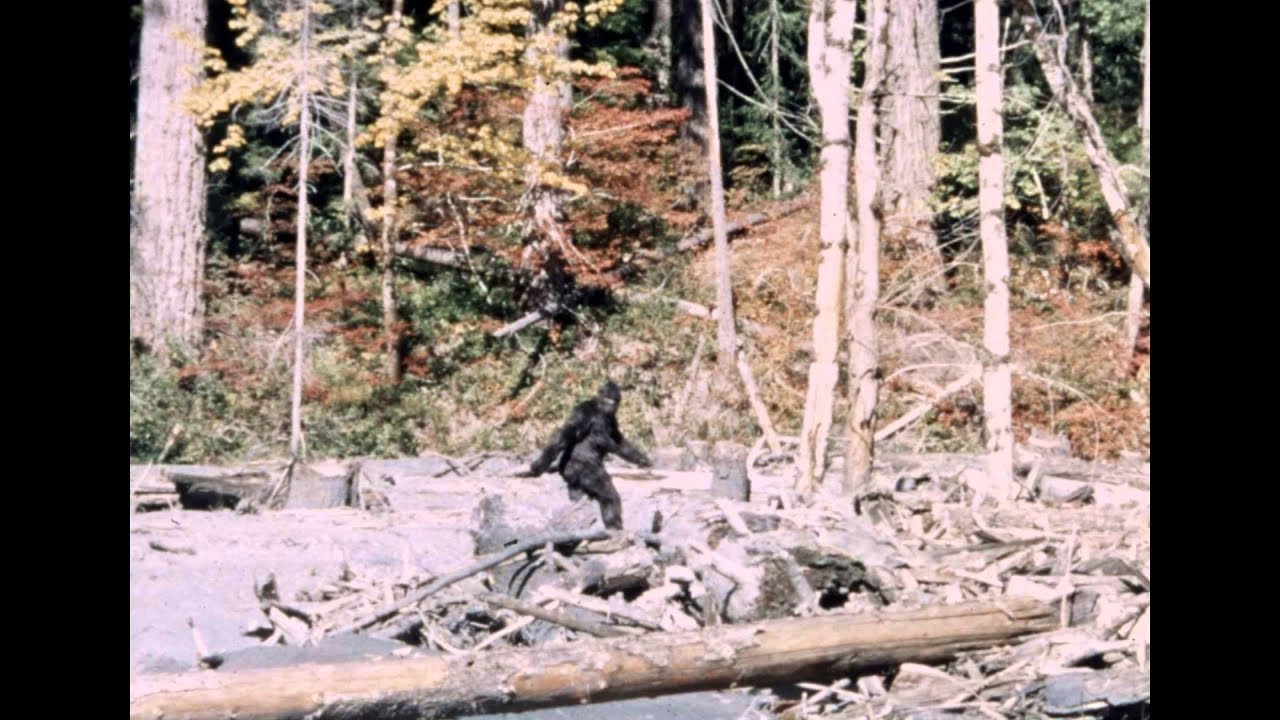
You’ve seen it. Even if you don’t know the name, you’ve seen it.
The Scene: October 20, 1967. Bluff Creek, California. Roger Patterson and Bob Gimlin, two rodeo guys, are riding on horseback. They come around a bend, and… there it is. A large, hairy, female creature (nicknamed “Patty”) walks across a sandbar. Patterson’s horse rears, he fumbles for his 16mm camera, and he captures 59.5 seconds of the most-debated footage in human history.
Why It’s “Obviously a Fake”
The skeptical argument is simple: It’s a dude in a suit.
That’s it. It has to be. In 2004, a man named Philip Morris claimed he made the “gorilla suit” for Patterson. This seems to close the case, right?
Not so fast.
- Morris’s story has been… inconsistent.
- The suit he “produced” as evidence looked nothing like the creature in the film.
- He claimed he was paid, but Patterson died broke, hounded by creditors.
- Bob Gimlin, who is still alive, has maintained his story for over 50 years. He has never changed it, never profited from it, and has passed lie detector tests.
Why It’s “Impossible to Fake”
This is where the anatomy nerds come back. Experts who have analyzed the film (like Dr. Meldrum and the late Dr. Grover Krantz) point to details that were not possible with 1967-era special effects.
- The “Compliant Gait”: “Patty” walks with her knees bent, a “compliant gait” seen in humans walking on rough terrain. But her foot slaps the ground flat, something humans don’t do.
- Visible Muscle Flexion: You can see muscles moving under the “fur.” As she walks, her thigh muscles (quadriceps) and calf muscles (gastrocnemius) visibly bunch and flex. This isn’t a suit hanging off a man; this is a body in motion.
- Non-Human Proportions: The creature’s arm-to-leg ratio and its sheer, un-padded width are off the charts for a human.
So, what is it? A 7-foot, 400-pound, custom-muscled suit that no Hollywood SFX artist could make in 1967? Or is it a guy in a fur coat?
It’s the ultimate Rorschach test. But here’s the kicker: No one has ever successfully, definitively debunked it.
Where’s the DNA? (And the Body?)
The footprints are weird. The film is baffling.
But now we hit the brick wall. The 21st century.
This is the ultimate skeptical trump card: “Show me the body!” or, more accurately, “Show me the DNA.”
If these creatures are real, they should be leaving behind hair, scat, and—when they die—bones. We should be tripping over them.
This is where the Bigfoot hypothesis gets really weak.
In 2014, Dr. Bryan Sykes, a leading human geneticist from the University of Oxford, published a massive, authoritative study in the Proceedings of the Royal Society B.
- The Mission: He and his team collected and analyzed 30+ hair samples from all over the world, all claiming to be “Bigfoot” or “Yeti.”
- The Results: A whole lot of… nothing.
- One sample was human.
- Several were bears (black and brown).
- Some were cows, horses, and wolves.
- Two “Yeti” samples from the Himalayas matched… an ancient polar bear from 40,000 years ago. (Which is almost as cool, to be honest).
- The Conclusion: Not a single sample came from an “unknown primate.”
This is a devastating blow. Every piece of “Bigfoot fur” that has been put under a serious, peer-reviewed microscope has turned out to be… a bear. Or a cow.
Believers argue that “absence of evidence is not evidence of absence.” Maybe the samples were bad. Maybe the real ones were never tested. But scientifically? The DNA just isn’t there.
And the body? Not a single bone, tooth, or skull has ever been authenticated by a museum or university as belonging to an unknown primate.
So, What Are People Seeing? The Science of Misidentification
If it’s not a giant, secret ape, what the hell is it?
Your brain is a wonderful, powerful, and easily fooled piece of hardware. The forest is a a chaotic, low-light, low-information environment. Your brain’s job is to take that messy data and force it into a pattern.
Most of the time, that pattern is a bear.
Specifically, a black bear with mange. Mange is a skin disease that causes an animal to lose its fur. The result is a lanky, pale, horrifyingly humanoid-looking creature. When a bear with mange stands up on its hind legs (which they do all the time), your brain doesn’t see “sick bear.” Your brain screams…
…Skinwalker! Monster! Sasquatch!

Other common culprits:
- A normal black bear just walking on its hind legs.
- A moose moving through dark timber.
- A simple hoax. (Let’s not forget the 2008 “Bigfoot in a freezer” hoax, which turned out to be a rubber gorilla suit).
- Folklore & Psychology: Humans need this mystery. The “Wild Man” is one of our oldest archetypes. He’s in The Epic of Gilgamesh. He’s Grendel. He’s the “what if” that lives in the dark part of our own minds. Maybe we don’t want the world to be fully mapped, known, and boring.
The Verdict: Why We Won’t Stop Looking
So, where does this leave us?
We’re in a strange place. We have a set of compelling anthropological evidence (the footprints) that suggests a real, unclassified primate. And we have a set of crushing biological evidence (the DNA) that says no such thing exists.
Dr. Meldrum’s work is real. The footprints are weird. The film is baffling.
Dr. Sykes’s work is also real. The DNA is a no-show.
The mystery of Bigfoot isn’t just “is it real?” The mystery is “why is the evidence so contradictory?”
Maybe the answer isn’t a simple “yes” or “no.” Maybe the legend of Bigfoot is a complex tapestry woven from a dozen different sources: indigenous folklore, real misidentifications, elaborate hoaxes, and… maybe… just maybe… a few genuine, unexplained encounters.
The search continues, not because people are crazy, but because the unknown is a magnet. We are primates who love a puzzle. And this is the biggest, hairiest puzzle in North America.
Call to Action
Now it’s your turn. After looking at the evidence, where do you land?
Are the footprints and the film too compelling to ignore? Or is the lack of a body and DNA the final word?
What’s your theory? Let me know in the comments below.

