

How Polidori’s The Vampyre Was Mistakenly Attributed to Byron: Documents Explained
Imagine writing the story that invented the modern vampire the suave, aristocratic predator we know today only to have the world scream, “Nice job, Lord Byron!”
That’s exactly what happened to Dr. John William Polidori in 1819.
If you think today’s copyright battles are messy, wait until you see the literary wreckage left behind by the “Year Without a Summer.” This wasn’t just a mix-up; it was a calculated cash grab involving a shady publisher, a lost manuscript, and a “fake news” letter that fooled all of Europe.
Most people know the 1816 ghost story contest at Villa Diodati gave us Frankenstein. But it also birthed The Vampyre, a tale that Polidori wrote but Byron (accidentally) stole.
We’re going to dig into the specific documents the letters, the magazine clippings, and the diaries to prove once and for all how “Poor Polidori” got ghosted by his own ghost story.
What Happened at Villa Diodati?
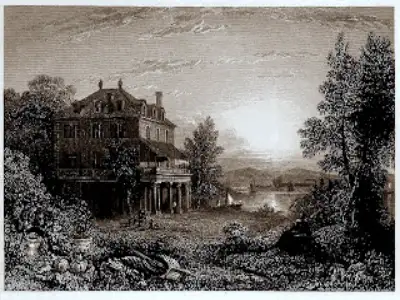
To understand the theft, you have to understand the crime scene.
It’s June 1816. Lake Geneva, Switzerland. The weather is apocalyptic literally. The eruption of Mount Tambora has choked the sky with ash, turning summer into a wet, dark gloom. Holed up in the Villa Diodati are five of the most intense people in literary history:
- Lord Byron: The rock star poet, fleeing scandal in England.
- Percy Bysshe Shelley: The radical poet.
- Mary Godwin (later Shelley): The genius teenager.
- Claire Clairmont: Mary’s stepsister and Byron’s current fling.
- John William Polidori: Byron’s 20-year-old personal physician.
Bored and hopped up on laudanum and ghost stories, Byron issues a challenge: “We will each write a ghost story.”
We know Mary Shelley won that round with Frankenstein. But Byron wrote a snippet too—a short, unfinished script known today as A Fragment. It featured a character named Augustus Darvell, a mysterious aristocrat who dies in Turkey and makes his friend swear an oath of secrecy.
Byron got bored and ditched the story. Polidori, however, didn’t.
Who Was Polidori?
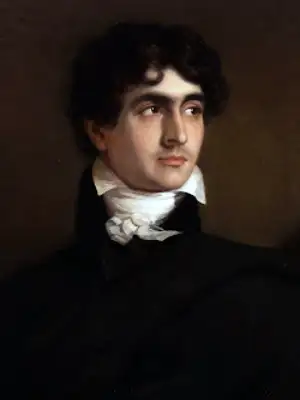
John Polidori wasn’t just a hanger-on; he was the youngest medical doctor to ever graduate from Edinburgh University (at age 19!). But he was also insecure, hot-headed, and desperately wanted to be a writer.
His relationship with Byron was toxic. Byron mocked him relentlessly, calling him “Poor Polidori.” At one point, after Polidori sprained his ankle jumping from a wall (trying to impress Byron), the poet quipped about his inability to “jump” in life.
Polidori was arguably the first victim of a “vampire”—Byron himself. The poet drained Polidori’s confidence and energy. So, when Polidori took Byron’s discarded Fragment and rewrote it, he turned the vampire into a villain named Lord Ruthven.
The Insight: Lord Ruthven wasn’t just a monster; he was Byron. Cold, aristocratic, destructive to women, and socially magnetic. Polidori was writing a revenge fantasy.
The “Lost” Manuscript: How Did Colburn Get It?
Here is where the documentary evidence gets sticky. How did a story written in a Swiss villa end up on a London printing press three years later?
Polidori didn’t submit it. In fact, he had left the manuscript in Geneva.
According to historical records, when Polidori parted ways with Byron, he left his notebook with a friend in Cologny, Countess Catherine Bruce (often referred to as Countess Breuss). He likely thought nothing of it.
But the manuscript didn’t stay put. Evidence suggests the Countess passed it to a Madame Gatelier (sometimes cited as Madame Brelaz), who then forwarded it to London. The recipient? Henry Colburn, the publisher of New Monthly Magazine.
Colburn was the 19th-century equivalent of a clickbait merchant. He saw a story about a “Lord Ruthven” (a name already associated with Byron thanks to Lady Caroline Lamb’s novel Glenarvon), written in a style that mocked the aristocracy.
Colburn didn’t care about facts. He cared about sales. He saw a chance to sell a “new Byron tale” to a public hungry for the poet’s scandalous output.
The Scandal of April 1, 1819
On April 1, 1819—an ironic date for a literary hoax the New Monthly Magazine hit the stands. The cover proudly announced:
“The Vampyre: A Tale by Lord Byron”
To make the lie stick, Colburn included a forged “Letter from Geneva” as a preface. This document described the Villa Diodati ghost story contest in detail, blurring the lines between reality and fiction to convince readers that what followed was Byron’s own work.
The reaction was instant. The public devoured it. Goethe, the German literary titan, even called it Byron’s “best work” (ouch, Polidori).
Polidori, now back in London and trying to build a medical practice, was stunned. He walked into a shop, picked up the magazine, and saw his own story attributed to the man who had bullied him.
Letter from Geneva
The “Extract of a Letter from Geneva” was the “smoking gun” of the hoax—a masterclass in literary forgery. It wasn’t just a cover letter; it was a carefully constructed mixture of gossip, real events, and outright lies designed to make the false attribution to Byron airtight.
Below is an analysis of the document Henry Colburn attached to the story to trick the world.
The “Fake News” Breakdown: Truth vs. Fabrication
The letter purports to be from an English traveler in Geneva writing home to a friend. In reality, it was likely stitched together by Colburn’s editorial team (or a confused associate of Polidori, Madame Gatelier) to serve as a marketing vehicle.
| The Text in the “Letter” | The Hidden Lie (Analysis) |
| “I breathe freely in the neighbourhood of this lake… the ground upon which I tread has been subdued from the earliest ages…” | The Hook: Establishes a romantic, credible setting. The writer positions themselves as a sophisticated traveler on the “Grand Tour,” just like the target audience. |
| “Lord Byron resided many months in this neighbourhood… I trod the floors with the same feelings of awe and respect…” | The Hype: This turns the document into a fan letter. It confirms the writer is obsessed with Byron, priming the reader to treat any “found” document as a holy relic. |
| “He used almost every day to cross the lake by himself… often whilst the storms were raging…” | The Image: Builds the “Byronic Myth.” This paints Byron as a brooding, storm-loving loner—exactly the character trait of the vampire in the story that follows. |
| “It appears that one evening Lord B., Mr. P. B. Shelly… began relating ghost stories…” | The Kernel of Truth: This event did happen (June 1816). By including a real, verifiable event, Colburn made the lie that followed harder to spot. |
| “My friend, the lady above referred to, had in her possession the outline of each of these stories…” | The Pivot: Here is the deception. The letter claims a third-party “lady” (Countess Breuss) possessed the physical manuscripts. This creates a chain of custody that bypasses Polidori. |
| “I obtained them as a great favour, and herewith forward them to you… to peruse the ebauches [drafts] of so great a genius…” | The Lie: This is the money shot. The letter explicitly claims the enclosed story (The Vampyre) is the “draft of a genius” (Byron). It erases Polidori entirely, framing the story as a leaked manuscript from Byron himself. |
The “Slur” That Proves the Hustle
To make the letter feel like “insider gossip,” Colburn included a nasty rumor about Byron’s private life that was so scandalous he had to retract it in later editions.
- The Sentence: The letter originally claimed Byron was living with “two sisters as the partakers of his revels” (referring to Mary Shelley and Claire Clairmont).
- The Reality: This was a tabloid smear implying incest and an orgy. Polidori and Byron were furious.
- The Fix: When Polidori threatened legal action, Colburn not only paid him £30 but also deleted this sentence from future printings. The fact that Colburn was willing to print such a damaging lie proves he was prioritizing scandal over accuracy.
Why This Document Worked
Colburn understood “Parasocial Relationships” before the term existed.
- Authenticity: By framing it as a private letter (“Extract of a Letter”), it felt like a secret being shared, not a commercial product.
- Gossip: It fed the public’s hunger for details about Byron’s “wild exile” in Switzerland.
- Plausible Deniability: If caught, Colburn could blame the “anonymous letter writer” rather than admitting he forged the attribution himself.
This document is a reminder that “Fake News” isn’t a modern invention—in 1819, it was just called “smart publishing.”
“The Groundwork is Byron’s”: The Battle for Authorship
This is where we see the paper trail of the fight. Both men immediately fired off letters to kill the rumor, but for very different reasons.
1. Byron’s Denial (The Galignani Letter)
Byron was in Venice when he heard the news. He was furious—not because he wanted credit, but because he hated vampire stories. He wrote to the editor of Galignani’s Messenger on April 27, 1819:
“I am not the author of ‘The Vampyre’… I have a personal dislike to ‘Vampires’, and the little acquaintance I have with them would by no means induce me to divulge their secrets.”
He demanded a retraction. He even included a list of his actual works to prove he didn’t write “trash” like The Vampyre.
2. Polidori’s Defense
Polidori was in a tighter spot. If he claimed it was his, he looked like he was riding Byron’s coattails. If he said nothing, he lost his masterpiece.
He wrote a frantic letter to the Editor of the Courier on May 5, 1819. In it, he tried to thread a needle:
“Current misrepresentation… induces me to state that the groundwork is certainly Lord Byron’s, but the development is mine…”
He explained that Byron had written a fragment, but that The Vampyre as published was Polidori’s own flesh and blood. He admitted to using Byron’s idea, but insisted the execution was his.
3. The Threat to Sue
Polidori didn’t just write letters; he went to Colburn’s office. The dispute was vicious. Polidori threatened legal action. Colburn, realizing he might have pushed too far, agreed to pay Polidori £30 (a pittance compared to the sales) and promised to correct the name in the next edition.
But the damage was done. The book edition came out, and while it removed Byron’s name from the title page, it didn’t boldly plaster Polidori’s name there either. It just languished in ambiguity.
Why Was the Story Misattributed?
It wasn’t just an accident; it was marketing strategy.
Why did Colburn lie?

- Money: Byron was the biggest celebrity in the world. His name on a cover guaranteed sales. “Dr. Polidori” meant nothing to the buying public.
- The “Byronic” Protagonist: Lord Ruthven felt like a character Byron would write. He was a brooding, high-society villain—a “Byronic Hero” with fangs. It was an easy lie to sell because the text itself felt like a mirror of Byron’s soul.
- The Fragment Confusion: Because Byron did write a vampire fragment (which was eventually published at the end of his poem Mazeppa to clear his name), the existence of a “Byron vampire story” was a known rumor. Colburn just capitalized on the rumor before the facts could catch up.
Byron’s “A Fragment” (1816) vs. Polidori’s “The Vampyre” (1819)
Polidori admitted in his defense that the “groundwork” was Byron’s, but as you’ll see below, the “development” was entirely his own. Byron provided a sketch of a moody traveler dying in Turkey; Polidori took that sketch, gave it fangs, brought it to London society, and turned it into a complete narrative of psychological terror.
Here is the breakdown of what Byron started and what Polidori finished.
| Feature | Lord Byron’s “A Fragment” | Polidori’s “The Vampyre” |
| The Villain | Augustus Darvell: A wealthy, melancholy aristocrat with a mysterious past. He is wasting away from an unknown illness. | Lord Ruthven: A cold, dead-eyed aristocrat who drains the life (and money) of those around him. He is physically strong but pale. |
| The Narrator | Unnamed: A young man who idolizes Darvell and joins him on his travels. | Aubrey: A wealthy, naive orphan who travels with Ruthven, only to slowly realize his companion is a monster. |
| The Setting | Turkey (Smyrna & Ephesus): The story takes place in the “exotic East,” amidst ruins and cemeteries. | London, Rome, & Greece: Polidori moves the horror into the “Grand Tour” locations familiar to British high society. |
| The Death Scene | Darvell dies near a Turkish cemetery. A stork with a snake in its beak watches them. | Ruthven is shot by bandits in Greece. He dies while mocking Aubrey. |
| The Oath | Darvell makes the narrator swear to conceal his death and not reveal where he is buried. | Ruthven makes Aubrey swear not to mention his death “for a year and a day” to any living soul. |
| The Supernatural | Ambiguous: Darvell’s body turns black and decomposes instantly. It is implied he might return, but the text ends. | Explicit: Ruthven’s corpse is exposed to moonlight (at his request) and vanishes. He reappears in London, alive and well. |
| The Victim | None shown (the story is unfinished). | lanthe (Greek girl) & Miss Aubrey: Ruthven physically kills Ianthe and later seduces and kills Aubrey’s sister. |
| The Ending | Unfinished: The story cuts off mid-sentence after the burial. | Tragedy: Ruthven marries Aubrey’s sister before the oath expires. She dies, Ruthven escapes, and Aubrey goes mad. |
Why These Changes Matter
1. The Invention of the “Social Vampire”
Byron’s draft was a travelogue about a mysterious death. Polidori’s version was a social critique. By moving the setting from the Turkish ruins to London ballrooms, Polidori made the vampire terrifying because he looked like us. He wasn’t a ghoul in a graveyard; he was the guy charming your sister at a party.
2. The Name “Ruthven”
This was a direct shot at Byron. The name “Lord Ruthven” was originally used by Lady Caroline Lamb in her novel Glenarvon to caricature Byron as a heartless villain. By using that specific name, Polidori was signaling to every gossip in London: “This monster is Byron.”
3. The “Year and a Day” Oath
This was Polidori’s genius plot device. In Byron’s fragment, the oath is just about burial rights. In Polidori’s story, the oath becomes a psychological cage. Aubrey sees the vampire in London but cannot warn his sister because he is bound by his honor to keep the secret. That tension drives the whole second half of the book.
The Aftermath and Polidori’s Tragic End
The sad truth is that Polidori never truly won this battle during his life. The Vampyre went on to inspire plays, operas, and eventually Bram Stoker’s Dracula. It created the genre we love today.
But Polidori didn’t live to see his legacy. Crushed by the “plagiarist” accusations, struggling with gambling debts, and depressed by his failure to match Byron’s success, he died in August 1821, just two years after the scandal.
The official verdict was “natural causes,” but the documents tell a darker story. His family admitted privately that he had taken prussic acid (cyanide).
The coroner, likely trying to spare the family the shame of a suicide verdict (which was illegal and stigmatized at the time), buried the truth—much like Colburn buried Polidori’s name.
A Legacy Reclaimed
Today, we know the truth. The Vampyre is 100% John Polidori’s work. While he borrowed the “seed” from Byron, the flower—a poisonous, beautiful, aristocratic vampire—was his creation.
He took the man who bullied him and turned him into a monster that would haunt nightmares for centuries. In a way, that’s the ultimate revenge.
Next time you watch a movie with a charming, tuxedo-wearing vampire, don’t thank Bram Stoker or Lord Byron. Thank the frustrated doctor who just wanted to be heard.

