

You think you know history? Think again, most history classes skip the weird stuff. Theytell you about pyramids and marble statues, but they conveniently leave out the lake full of skeletons in India or the “vampire” woman pinned to the ground in Poland. The truth is, the ground beneath our feet is packed with secrets that don’t fit the neat little timeline we were taught in school.
Archaeology isn’t just about dusting off old pots. It’s about finding things that make scientists say, “Wait, how is that even possible?”
We’ve dug up 12 of the strangest, most mind-bending discoveries from around the world. We’re talking international heavy hitters with new, verified scientific updates, plus some obscure regional finds you’ve probably never heard of. let’s get your hands dirty.
1. Derinkuyu underground city find timeline
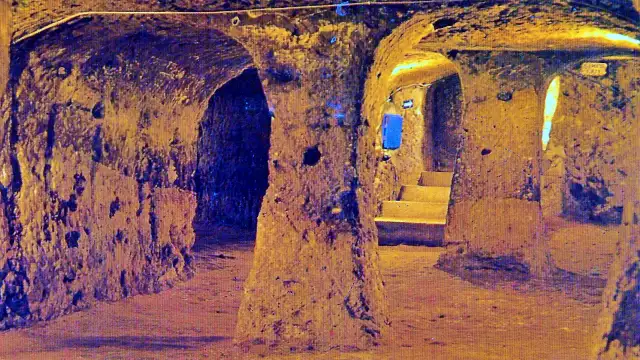
Imagine renovating your basement and knocking down a wall, only to find a tunnel leading to an entire lost city. That is literally what happened in Turkey in 1963. A man was chasing his chickens through a hole in his wall and stumbled upon Derinkuyu, an 18-story megacity carved straight into volcanic rock.
This wasn’t a root cellar. It was a bunker for 20,000 people.
While the discovery isn’t new, the scale of what we know is constantly changing. Recent surveys suggest this place goes even deeper than we thought. The engineering is baffling: it has massive 1,000-pound stone doors that only open from the inside (zombie apocalypse ready?) and ventilation shafts that reach 180 feet down.
The Weird Part: It wasn’t just a hole in the ground. It had wine presses, stables, and a school. It was a fully functioning society built to disappear instantly. Who were they hiding from? Romans? Arabs? Aliens? (Okay, probably Romans).
2. Roopkund skeleton lake discovery explained
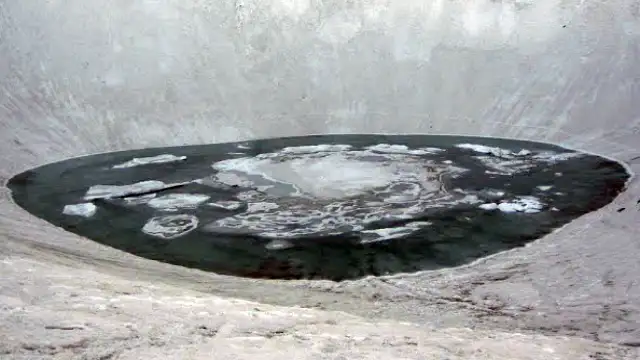
At 16,000 feet in the Himalayas, there is a frozen lake that melts for one month a year. When it does, it reveals hundreds of human skeletons floating in the water.
For decades, the theory was simple: a massive hailstorm killed a traveling group in the 9th century. A single bad day.
But in 2019, a massive DNA study blew that theory apart. The skeletons aren’t from one group. They aren’t even from the same millennium.
The DNA showed two distinct groups. Group A was related to South Asians from around 800 AD. But Group B? They were from the eastern Mediterranean—genetically similar to people from Crete and Greece—and they died there in the 1800s.
What was a group of Greeks doing hiking in the remote Himalayas 1,000 years after the first group died? Nobody knows. The lake wasn’t a massacre site; it was a graveyard that kept collecting victims for centuries.
3. Antikythera mechanism new model 2021
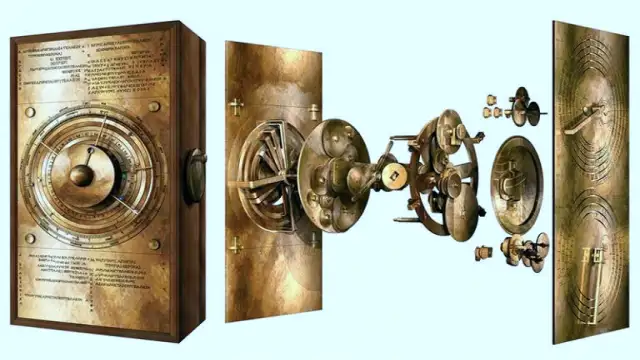
Divers found a lump of corroded bronze off the coast of Greece in 1901. It looked like junk. But once x-rayed, it turned out to be the most advanced piece of technology from the ancient world: the Antikythera Mechanism.
Think of it as the world’s first analog computer.
For a century, we knew it tracked the sun and moon. But the front gears were a crushed mess, leaving a huge gap in our understanding. In 2021, researchers at UCL (University College London) used 3D computer modeling to reconstruct the missing pieces.
They cracked the code. The device didn’t just track days; it tracked the complex cycles of Venus and Saturn with an accuracy that shouldn’t have existed for another 1,000 years. It’s like finding a jet engine in a tomb of horse-drawn chariots.
4. Vampire burial Pień Poland sickle padlock
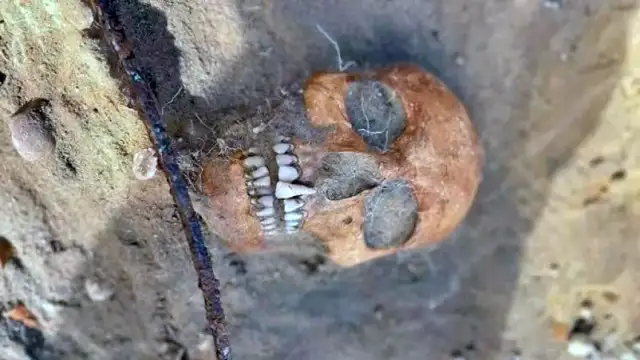
In 2022, archaeologists in the village of Pień, Poland, opened a 17th-century grave and found a scene straight out of a horror movie.
It was a woman. And her neighbors were terrified of her.
She was buried with a razor-sharp iron sickle placed across her throat. The logic was brutal: if she tried to sit up (i.e., rise from the dead), the blade would decapitate her. To be double-sure, they padlocked her big toe to keep her tethered to the earth.
This wasn’t a criminal execution. She was buried with a silk cap, meaning she was high status. This “vampire” burial shows how deep superstition ran in Eastern Europe. It wasn’t about hate; it was about fear. They respected her wealth, but they weren’t taking any chances with her soul.
5. Motala Sweden skulls on stakes Kanaljorden
Scandinavia is famous for Vikings, but thousands of years before they set sail, something darker was happening in Sweden.
At a site called Kanaljorden in Motala, excavators found a prehistoric lake bed filled with skulls. But they weren’t just tossed in. Two of the skulls had wooden stakes driven vertically through the cranium.
Dating back 8,000 years (the Mesolithic era), this “Tomb of Sunken Skulls” is unique. The skulls belonged to men, women, and even infants. Some show signs of healing from violent trauma before death, suggesting these were warriors or victims who survived battles only to be “mounted” later.
It’s the only known example of Mesolithic people putting heads on pikes. Was it a warning? A trophy rack? Or a way to honor the dead? We still don’t have the full picture.
6. Golden Man Issyk kurgan significance
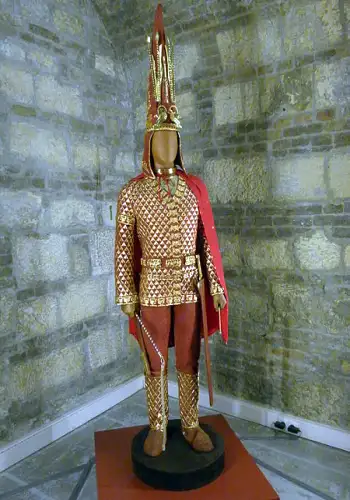
King Tut gets all the press, but let me introduce you to the “Golden Man” of Kazakhstan.
Discovered in 1969 (and still largely under-discussed in the West), this was an unlooted burial mound containing a Scythian warrior from the 4th century BC. And when I say “golden,” I mean it literally.
The skeleton was covered in 4,000 gold ornaments. He wore a tall, pointed hat adorned with gold arrows and snow leopards.
But here is the kicker: a small silver bowl found by his side contains an inscription that still hasn’t been deciphered. It’s evidence of a lost writing system used by nomadic tribes we used to think were illiterate barbarians. He wasn’t just a rich kid; he was part of a complex, literate civilization that history almost forgot.
7. Cochno Stone excavation 2016 outcome
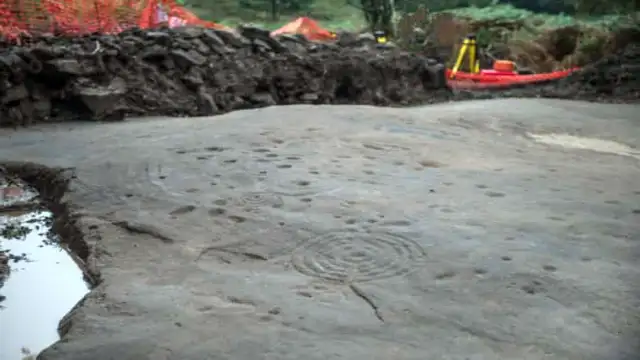
In the woods of West Dunbartonshire, Scotland, lies a stone slab that looks like a star map drawn by aliens.
The Cochno Stone is covered in over 90 “cup and ring” marks swirling geometric patterns carved 5,000 years ago. It is considered one of the finest examples of Bronze Age rock art in Europe.
So, why haven’t you seen it? Because for 50 years, it was buried under tons of soil.
In 1965, archaeologists buried the stone to protect it from vandals. It became a local urban legend. Finally, in 2016, a team uncovered it for a few weeks to 3D scan the surface before burying it again. The scans revealed that the markings are even more extensive than previously thought, including prehistoric graffiti. It remains hidden today, a secret masterpiece sleeping under the Scottish turf.
8. Sanxingdui new discoveries 2024 sacrifice pits
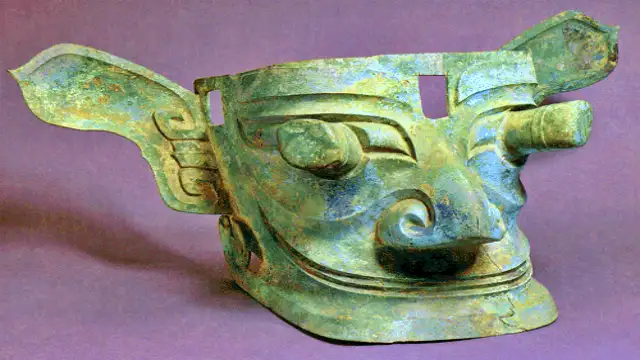
If you want to see artifacts that look “alien,” look at Sanxingdui in China.
Discovered by accident in the 1920s, this site produced massive bronze masks with bulging eyes and giant ears that look nothing like traditional Chinese art. For decades, scholars were stumped.
Fast forward to the 2020s: archaeologists found six new sacrificial pits. The recent haul is wild. They found a bronze altar, a gold mask, and traces of silk (which was huge news, proving these people wore luxury textiles 3,000 years ago).
The weirdest part? We still haven’t found a single written word from this culture. They built a massive civilization, cast complex bronzes that rival anything in the world, and then vanished without leaving a text message.
9. Uluburun shipwreck raw materials trade
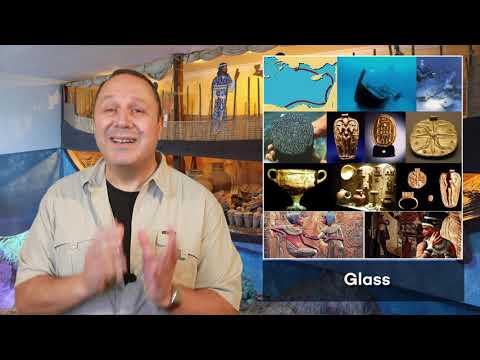
Shipwrecks are usually about treasure chests and cannons. The Uluburun wreck in Turkey is different. It’s a Bronze Age Walmart truck that crashed.
Sinking around 1300 BC, this ship was carrying everything. Its cargo included raw copper from Cyprus, tin from Afghanistan, ebony logs from Africa, ivory, amber from the Baltics, and glass ingots.
It proves that the ancient world was globally connected way before we thought. We aren’t talking about local trading; this was a supply chain spanning thousands of miles. The ship itself is a time capsule of the global economy right before the Bronze Age Collapse.
10. L’Anse aux Meadows solar storm dating 2021
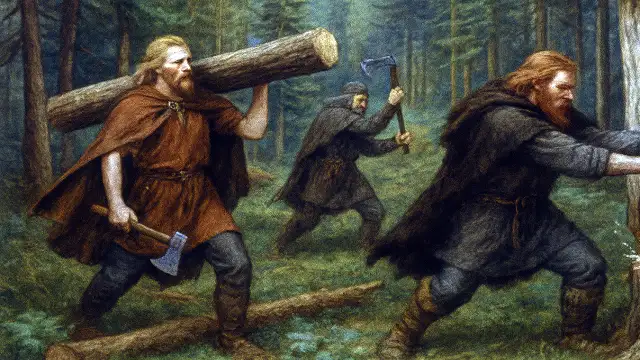
We all know Vikings beat Columbus to America. But for a long time, we had to guess when. Was it 900 AD? 1100 AD?
In 2021, science dropped a mic.
Researchers analyzed wood chips from the Viking settlement at L’Anse aux Meadows in Newfoundland. They looked for a specific spike in radiocarbon caused by a massive solar storm that hit Earth in 993 AD.
Because the Vikings cut the wood with metal tools (something the indigenous locals didn’t have), and the wood had exactly 28 growth rings after the solar storm mark, we can do the math. 993 + 28 = 1021 AD.
We now know the exact year Vikings were chopping trees in Canada. It’s the only precise calendar date we have for Europeans in the Americas before Columbus.
11. Screaming Mummy CT scan results 2024
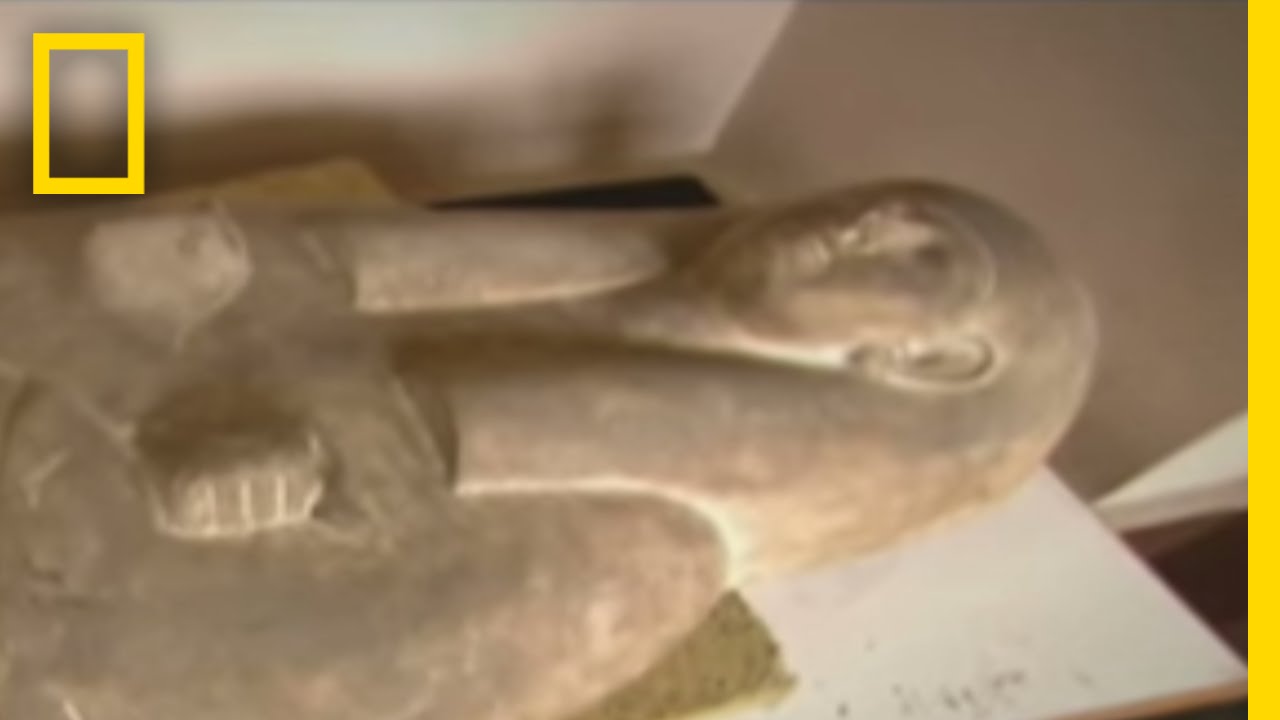
In 1935, archaeologists found a mummy in Luxor with her mouth locked in a terrifying, eternal scream. For years, the theory was that she had been sloppily mummified someone forgot to tie her jaw shut.
But a 2024 study using advanced CT scans flipped the script.
The scans revealed she was buried with her expensive wig and treated with luxury embalming materials. This wasn’t a cheap job. The researchers now believe she suffered a cadaveric spasm a rare form of muscle stiffening that happens at the moment of a violent, agonizing death.
She died in such extreme pain that her muscles locked in a scream, and the embalmers couldn’t pry her mouth closed, so they preserved her as she was. It’s a horrific snapshot of an ancient tragedy.
12. Monte Verde archaeological site significance
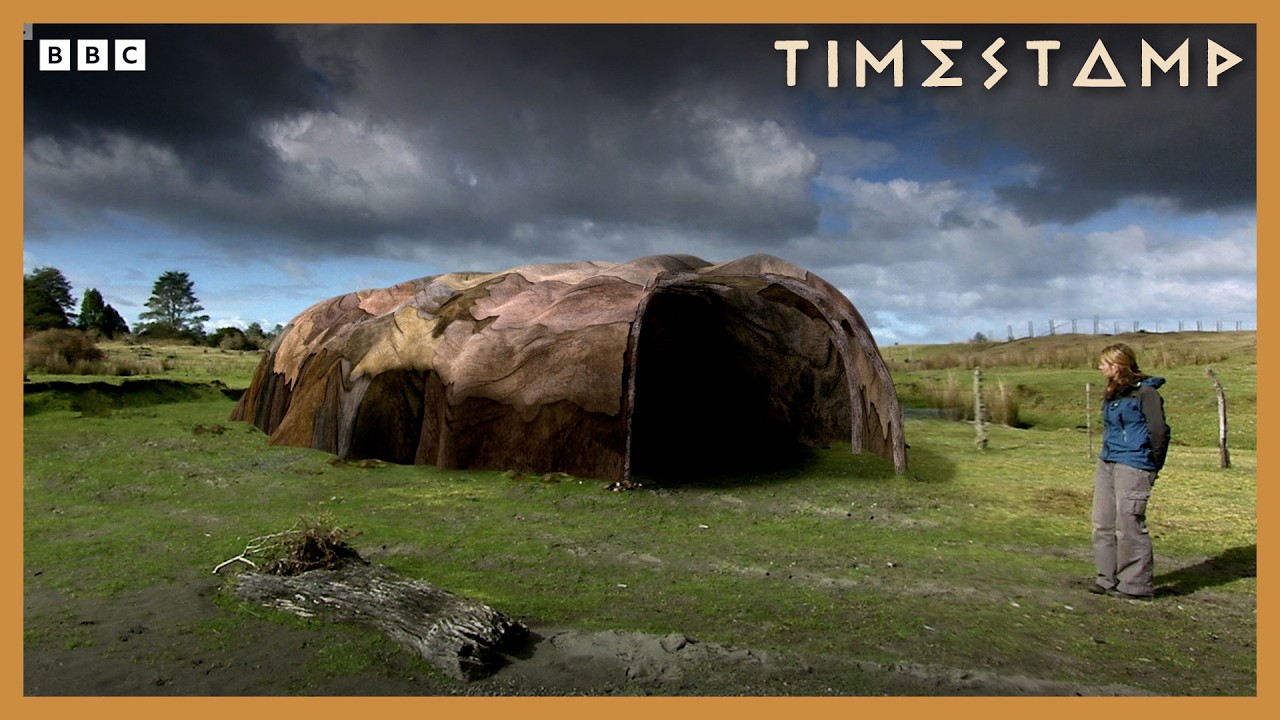
In school, you probably learned the “Clovis First” theory that humans crossed the Bering Strait land bridge about 13,000 years ago.
Monte Verde in Chile wrecked that theory.
Radiocarbon dating puts humans at this site around 14,500 years ago (maybe even earlier). That is 1,000 years before the ice corridor in North America was even open. How did they get all the way to southern Chile?
The best guess is they took boats down the Pacific coast, skipping the ice entirely. The site is incredibly well-preserved because it was covered in peat (a type of boggy soil). Archaeologists found footprints, tent stakes, and even chewed-up cuds of medicinal seaweed. It proves the first Americans weren’t just big game hunters; they were coastal explorers who knew their way around a pharmacy.
Dig Deeper
History is rewritten every time we put a shovel in the ground. These 12 finds prove that our ancestors were more complex, more connected, and yes sometimes scarier than we ever imagined.
Which discovery freaks you out the most? The screaming mummy or the lake of skeletons? Drop a comment below and let’s argue about history!

