

Why Washington Is Bigfoot Country
You’ve heard the stories. Hundreds of reports. Eyewitnesses claiming to have seen a tall, hairy figure in the foggy woods. That’s because the legend of Bigfoot also called Sasquatch feels especially at home in Washington.
A few reasons make the Evergreen State a natural hotspot:
- Dense, ancient forests that stretch for miles perfect for something or someone who prefers solitude.
- A history of Indigenous folklore referencing large, wild men roaming the woods (the term “Sasquatch” itself comes from Coast Salish languages).
- More reported sightings than in any other U.S. state.
So yeah if Bigfoot is real? Washington seems like a solid bet.
Top Counties & Regions for Bigfoot Reports
If you want to narrow down your map and maybe plan a forest trek, here are the counties and forest zones that consistently top the charts for Bigfoot sightings:
Key Counties with Frequent Sightings
According to data from the Bigfoot Field Researchers Organization (BFRO) and recent summaries:
| County | Approx. # of Reports (over decades) | Why It Stands Out |
|---|---|---|
| Pierce County | ~ 84 (highest in state) | Thick forest, rural zones, low light pollution good for sightings. |
| Skamania County | ~ 65 | Includes wilderness near Cascades, remote logging roads and trails. |
| Snohomish County | ~ 59 | Mixed forest/rural terrain; near wild zones but still accessible. |
| Lewis County | ~ 54 | Dense timberland, less trafficked forest roads. |
| King County | ~ 47 | Includes mountain foothills and remote forest patches. |
| Grays Harbor County | ~ 45 | Coastal-but-forested region, with lots of old-growth woods. |
Notable Forest Regions & Hotspots
- Skamania County / Gifford Pinchot National Forest: Locals reportedly got spooked enough in the late 1960s that the county passed an ordinance protecting the Sasquatch itself (yep, real law: no shooting the “giant hairy ape”).
- Ape Canyon (on the slopes of Mount St. Helens): Legendary site tied to a 1924 miner encounter involving “ape-men” reportedly hurling rocks. The story was debunked: yet Ape Canyon remains a Bigfoot icon.
- Yakima Indian Reservation / Cascades Foothills: Tribal legends + rugged foothill forest terrain make this area a frequent mention among alleged sightings.
- Okanogan County / around Winthrop, Washington: Remote stretches near Harts Pass & Slate Peak have modern Bigfoot claims.
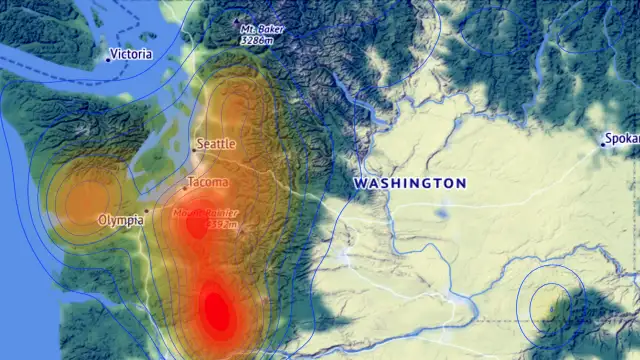
If you look at maps of BFRO data, these zones show consistent “heat” of Bigfoot-related reports making Washington a hotspot compared to much of the U.S.

Famous Reports, Legends & Wild Stories
- The 1924 miner tale at Ape Canyon: prospectors claimed to be bombarded with boulders by “ape-men.” U.S. Forest Service investigated and called it a probable hoax. Yet, the legend stuck and the name stuck to the canyon.
- In 1994, the late trail-patrolman and cryptozoologist Paul Freeman claimed to film a family of Bigfoots in the Blue Mountains (on the WA-OR border). Some believe the footage but it’s grainy and far from scientific proof.
- Modern-day claims: As recent as July 2025, BFRO records list a “knock encounter” in Jefferson County (Class B report) and other sightings across Chelan County.
- Folklore roots: Indigenous tribes of the Pacific Northwest, notably Coast Salish communities, have tales of wild men in the forest long before “Bigfoot” entered pop culture. Many use various names, describing tall, hairy beings.
These stories may be inconsistent. Some have no evidence. Others lack clarity. Still, they fuel ongoing fascination.
Science, Skepticism & Why Most Experts Doubt It
Let’s be straight. Believing is fine. But knowing is another thing.
- According to a 2025 overview from HowStuffWorks: despite thousands of reports, no physical evidence (bones, bodies, verified DNA) has held up. Hair samples once touted as Bigfoot turned out to be deer hair when analyzed by the FBI.
- Ecologically for a breeding population of 7–10 ft tall, large primates you need food, territory, group size. Forests in Washington are vast, but sustaining a monster population without trace is extremely unlikely.
- Experts argue many sightings can be linked to misidentification (bears, elk, shadows). Eyewitness reports vary wildly. Tracks have often been shown to be hoaxed (like in the case of Bossburg, Washington where “cripple-foot” prints appeared in 1969).
So while the folklore is rich and the woods are deep scientists treat Bigfoot as myth until more concrete proof emerges.
What’s a Bigfoot Seeker to Do, If You Want to Explore Responsibly
If you’re curious (or even skeptical) but want to check out these forests yourself here’s how to do it sensibly.
1. Pick your location wisely:
- Try counties with high sighting counts (Pierce, Skamania, Snohomish, Lewis, Grays Harbor).
- Consider forested zones like Gifford Pinchot National Forest, areas around Mount St. Helens, or near Okanogan & Yakima remote, wild, and less trafficked.
2. Go prepared:
- Bring proper gear: maps, good boots, a flashlight, bear safety kit, and lots of common sense.
- Respect local rules remember Skamania once passed a “no-shooting Sasquatch” law. That’s mostly symbolic, but it underscores the seriousness people once saw in protecting these lands.
3. Treat reports with healthy skepticism:
- Many “sightings” could be anything from common wildlife to atmospheric illusions.
- Don’t expect clarity. Most documented evidence is anecdotal.
4. See it as a forest adventure, Bigfoot is just a bonus:
- Washington’s old-growth forests, mountain ranges, rivers, and wildlife are worth exploring even if you never spot a legendary cryptid.
Why the Bigfoot Legend Persists (Even Without Proof)
You might wonder: if no proof exists, why does Bigfoot still get so much attention?
- Folklore and culture. For Indigenous tribes of the Pacific Northwest, stories about wild men predate modern cryptid hunting. For many, such tales are part of heritage, a mixture of respect, fear, and wonder.
- Mystery and hope. Humans are wired for stories. The unknown fascinates us. With dense forests, deep shadows, and minimal light pollution, remote Washington nights make good canvases for the imagination.
- Community and sharing. Groups like BFRO compile reports. People camp, hike, listen, share legends. That turns individual stories into collective folklore.
- Tourism & adventure culture. For some, Bigfoot hunts are more about adventure than belief. Forest trails, remote cabins, night hikes — it’s a drama, a thrill ride.
In short: the legend persists because people want it maybe as a story, maybe as a possibility. And until someone brings home a skeleton (don’t hold your breath), the woods stay alive with whispers.
So… Is There a Real Map?
Yes – it’s not official, but several data-driven or community-driven maps exist.
- The BFRO Database logs reported sightings across the U.S., including detailed entries for Washington, with date, county, type of report (sighting, sound, track, etc.).
- Independent researchers and cryptozoology fans have used GIS tools to build “sighting-heat maps,” which show higher density clusters in the counties listed above.
- Many regional park or forest guides now include “Bigfoot-watcher tips,” viewing certain areas like legends mixed with landscape.
So yes if you want to walk with a map, a camera, and a little bit of hope, the data’s out there.
Myth, Mystery or Maybe Something More?
Here’s the honest take:
- No verified body, no DNA, no fossils. Science leans hard no.
- But there are thousands of reports scattered over decades. Communities built around sharing them. Forests with enough darkness to hide someone (or something).
- Maybe Bigfoot is just a mix of misidentified animals, folklore, and human imagination. Maybe there really is a cryptid hitching a ride through Washington’s old-growth. Or maybe just maybe people are telling stories because stories matter.
Either way exploring these woods can teach you something. About nature & culture. About why we believe what we believe.
If You’re Game, Respect the Wild
If you ever plan to go treat the forest with respect. Follow responsible hiking rules. Bring safety gear. Keep expectations moderate.
Don’t expect a headline. But be open enough to maybe catch something weird. Maybe you’ll hear a knock. Maybe you’ll see a shadow. Or maybe you’ll just see old trees, moss, and the quiet wind through pines.
That’s fine. Because sometimes, the woods are their own reward.
Want to find a Bigfoot in Washington? Check out the BFRO online map and pick a county to explore then plan a trip (safely). And if you’ve got a spooky story from a dark trail, share it…,

