

It’s 1992. We’ve been to the moon. We’ve mapped the ocean floor. We figure we know what’s out there.
Then, scientists walking through a remote village in Vietnam spot a pair of strange, long, gently curving horns mounted on a wall. They are horns they have never seen before. From any animal.
That was the moment the world “discovered” the Saola.
It was the first large mammal new to science in over 50 years. The discovery sent shockwaves through the scientific community. It was like finding a unicorn.
In fact, that s what they call it: The Asian Unicorn. Not because it has one horn (it has two), but because it is so mysterious, so rare, and so ghostly that it might as well be a creature of myth.
Fast forward 30-something years. We’ve barely met this incrideble animal, and we’re already about to lose it. Forever.
The Saola is the rarest large mammal on planet Earth. It is teetering on the absolute edge of extinction. Its story is a desperate, last-ditch race against time, a “Hail Mary” pass to save a creature that is more secret than science.
So, what is this living mystery, and what is the audacious, high-stakes plan to pull it back from the void?
What Is the Asian Unicorn?

The Saola (Pseudoryx nghetinhensis) is not a magical horse.
It’s a bovid, which is the scientific family that includes cattle, goats, and antelope. Think of it as a wild, forest-dwelling cow with the grace of a deer.
It’s a beautiful, striking animal:
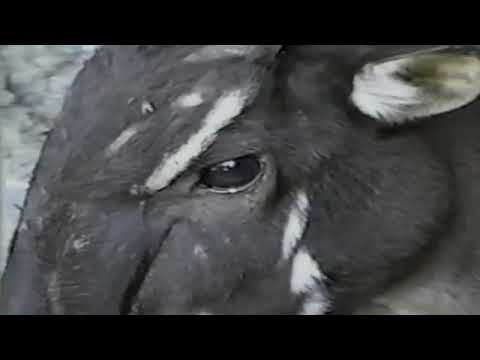
- The Horns: Its most famous feature. Both males and females have a pair of magnificent horns, nearly 20 inches (50 cm) long, that are almost perfectly straight with a gentle backward curve.
- The Look: It has a chocolate-brown coat with stunning, sharp white markings on its face, like a mask.
- The Size: It’s hefty. A Saola stands about 33 inches (85 cm) at the shoulder and can weigh up to 220 pounds (100 kg). This isn’t some tiny forest creature; it’s a major animal.
The Saola’s “secret” is its home. It exists in only one place on our planet: the dense, wet, remote forests of the Annamite Mountains, the border-spine between Vietnam and Laos. It’s an incredibly rugged, “lost world” kind of place, which is how a large mammal could hide from science until 1992.
The Ghost of the Annamites: A Creature on the Brink
Here’s the part where your stomach drops.
We call the Saola a “ghost” for a reason. In the 30+ years since its discovery, no biologist has ever seen one in the wild. Not once.
Everything we know comes from three things:

- The original horns and remains from 1992.
- A handful of Saola (around 20) captured by villagers, all of which died in captivity.
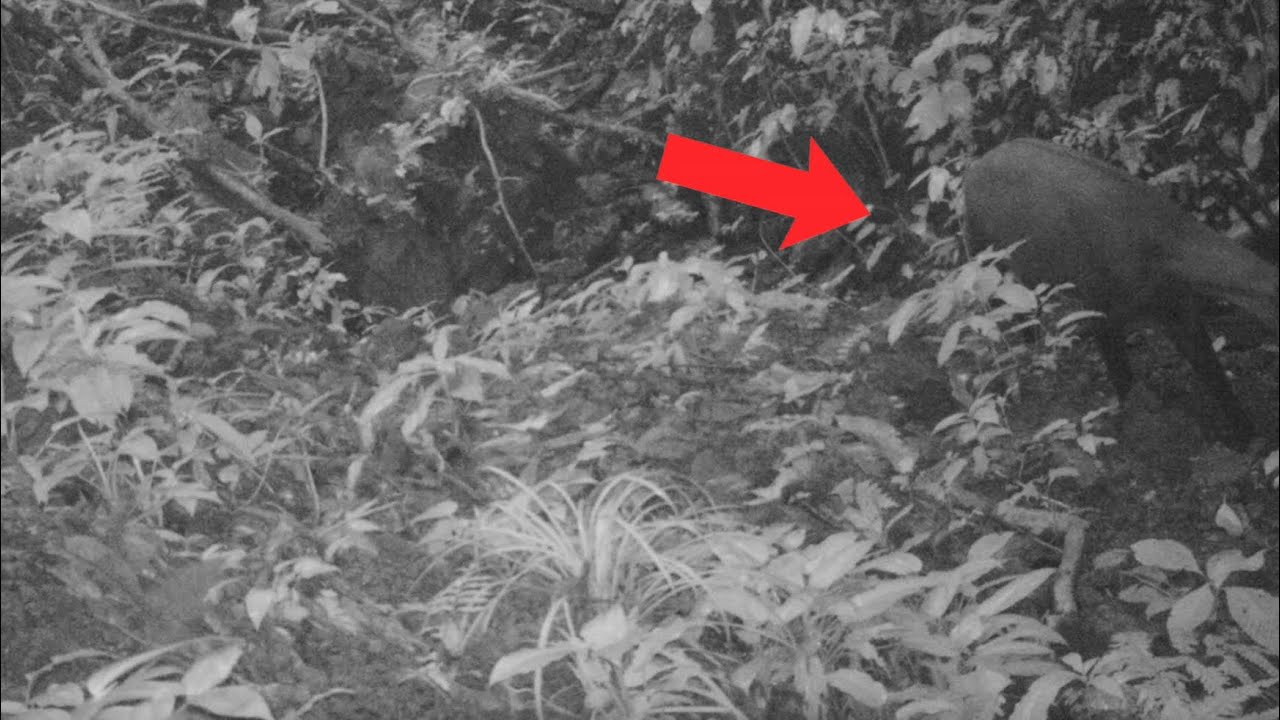
- A few grainy, black-and-white images from camera traps.
The last confirmed photo of a Saola was taken by a camera trap in Vietnam in 2013.
Think about that. It has been over a decade since we even proved one was still alive.
The IUCN Red List (the official global authority on the status of species) classifies the Saola as Critically Endangered. This is the absolute last step before “Extinct in the Wild.”
How many are left? The honest answer is terrifying: nobody knows.
The official estimate is “fewer than 100.” But most experts, like those in the IUCN’s Saola Working Group (SWG), believe the number is far, far lower. We might be talking about a few dozen. Maybe fewer.
Why the Saola is Disappearing
Here is the single most tragic fact about the Saola’s decline.
It’s not being hunted to extinction by poachers who want its head. It’s not being specifically targeted at all.
The Saola is dying as collateral damage.
The number one threat is indiscriminate snaring. The Annamite forests are carpeted with hundreds of thousands—no, millions—of cheap wire snares. Poachers set these “walls of death” to catch other animals, like wild boar, civets, and deer, to sell to the illegal wildlife meat trade.
The Saola, walking through its own forest home, steps into one of these snares. The wire pulls tight, and the shyest, most reclusive animal on Earth dies a slow, agonizing, and completely unintended death.
It’s like trying to protect a priceless work of art in a building that is being systematically demolished.
This, combined with habitat loss from logging and agriculture, has created a death trap. The Saola simply can’t survive the “background noise” of human activity.
The Great Paradox: Why Can’t We Just Save It?
This is the part of the movie where the hero says, “Get them all to a zoo! Put them in a protected area!”
Right?
Here’s the problem. The Saola’s greatest strength its reclusive, shy, wild nature—is also its greatest weakness.
We can’t keep them alive.
The 20-or-so Saola that were captured by villagers and brought into captivity all died. Some lived only a few days. The longest-surviving one lasted a few months.
They are for lack of a better word, creatures of pure wildness. appear to die from the stress of being handled by humans. They get sick, they refuse to eat, and they just… give up.
This has created the single greatest conservation dilemma I have ever heard of:
- To save the Saola from the snares, we must find and capture the last ones.
- But to capture the Saola is to kill it.
It’s a perfect, tragic catch-22. For years, this paradox completely paralyzed conservation efforts. Do you risk killing the last few in a “Noah’s Ark” attempt, or do you let them die, unseen, in the forest snares?
The clock has ticked down. Now, there is only one choice left.
The Audacious Plan to Save the Saola

With the Saola population now critically low, the old “protect the forest” model isn’t enough. It’s too late. The snares are too many, and the Saola are too few.
So, the world’s leading conservationists, led by the Saola Foundation and the IUCN Saola Working Group, have activated a “Hail Mary” pass.
It is a desperate, all-or-nothing bet. And it’s already in motion.
Step 1: The Snare Removal
This is the ground war. Right now, as you read this, WWF-Vietnam and other organizations fund brave local rangers who patrol the forests are the heroes of this story. They walk miles a day, pulling out snares. They have removed hundreds of thousands of them. But it’s an impossible job, like trying to empty the ocean with a bucket.
Step 2: The Search
You can’t save an animal you can’t find. The new plan involves the most intense, high-tech animal search in history.
- eDNA (Environmental DNA): Scientists are testing water from streams and even the blood inside leeches (yes, leeches) to find traces of Saola DNA. This tells them where the last Saola are hiding.
- Camera Traps: Hundreds of camera traps are being deployed in the areas that eDNA flags as “hot.”
- Trained Dogs: Specialist dogs are being trained to sniff out Saola tracks or droppings.
Step 3: The Ark (The Captive Breeding Program)
This is the endgame.
A world-class, state-of-the-art Saola Breeding Centre has been built at Vietnam’s Bach Ma National Park. It’s a massive, multi-million dollar facility, designed with one goal: to not be stressful. It has huge, forested enclosures. It’s quiet. It’s isolated.
The plan is this:
- The search teams will find the last remaining Saola maybe 10, maybe 20 individuals.
- A team of expert vets and trackers will capture them, using new, gentler methods.
- They will be transported, with extreme care, to the Bach Ma center.
- There, protected from snares and stress, they will (hopefully) finally breed.
It is the only way. It is a terrifying, high-stakes gamble. If they get it wrong, they could accidentally wipe out the very species they’re trying to save. But if they do nothing, the Saola is gone anyway.
They have to try.
Why Should We Care About One Shy Animal?
It’s a fair question. With so many problems in the world, why pour millions into saving one shy, forest-dwelling cow in Vietnam?
Because the Saola is a Flagship Species.
That’s a conservation term for an animal that acts as an “umbrella.” To save the Saola, you must save its entire home: the Annamite Mountains.
By funding the fight for the Saola, you are also funding the protection of:
- The Annamite Striped Rabbit (another weird, rare animal).
- Countless species of birds, insects, and plants, many found nowhere else.
- One of the last, great “biodiversity hotspots” on the planet.
But more than that, the Saola is a symbol. We broke it. We discovered a magnificent, large mammal, and in 30 short years, we have silently, almost casually, snuffed out its existence as an afterthought in our quest for something else.
Losing the Saola isn’t just sad. It’s an indictment. It proves we are “a bull in a china shop”—too clumsy and too destructive to share a planet with anything fragile and wild.
A Ghost We Can Still Save
The Saola is a test. Can 21st-century humanity, with all its technology, its money, and its science, save a creature that wants only one thing: to be left alone?
The window is closing. The Saola is down to its last few individuals, in its last hidden valleys. The snaring crisis is out of control.
But for the first time, there is a plan. A real, funded, high-stakes plan. The search is on. The “Ark” is built.
The Asian Unicorn is still out there, a ghost in the trees, waiting. We just have to prove we’re worthy of saving it.
Call to Action
This isn’t a battle that can be won by awareness alone. It’s a ground war that needs resources. The fight for the Saola is being led by a dedicated, expert group of people who have given their lives to this.
You can support them directly.
The Saola Foundation is the leading organization whose entire mission is to fund and implement this “Hail Mary” plan. Donating to them funds the search teams, the tech, and the breeding center.
You can also support the on-the-ground snare removal work of the WWF-Vietnam in the Annamite Mountains.
Don’t just “spread the word.” The Saola needs heroes, not just fans.

