

Incubus vs. Succubus: Myths, Differences & the Sleep Paralysis Link (Explained)
Ever woken up dead of night, unable to move a muscle, with the terrifying sensation that someone or something is sitting on your chest? You try to scream, but no sound comes out. You’re panic-stricken, staring at a shadowy figure in the corner or, worse, hovering right above you.
If this sounds like the opening scene of a horror movie, you’re not alone. For centuries, this bone-chilling experience has been blamed on two infamous entities: the Incubus and the Succubus.
But before you call an exorcist, let’s take a deep breath. While these legends are ancient, modern science has a name for this phenomenon that’s just as fascinating (and way less supernatural): Sleep Paralysis.
In this guide, we’re going to strip away the Hollywood hype and robotic textbook definitions. We’ll dive deep into the mythology, the gender differences between these demons, and the weirdly specific brain science that explains why millions of people from medieval monks to TikTokers in 2026 see the exact same monsters.
What Actually Are Incubus and Succubus Demons?
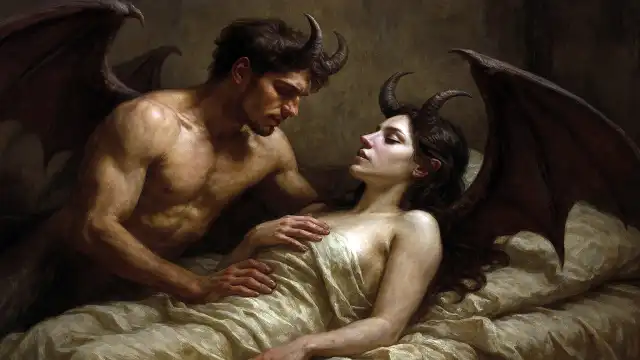
Let’s keep it simple. In folklore, these aren’t just random ghosts; they are sexual predators of the spirit world, The core difference lies in their gender and their modus operandi (method of operation).
The Incubus (The Male Night Demon)
- Latin Origin: Incubare (“to lie upon”).
- Target: Historically said to prey on sleeping women.
- The Myth: An Incubus is a male demon who visits women in their sleep to engage in non-consensual sexual activity. In medieval times, they were often blamed for unexplained pregnancies. (Yes, really. If a nun or unmarried woman wound up pregnant, the “Incubus did it” was a legitimate legal defense).
- Appearance: Often described as heavy, oppressive, and grotesque sometimes shapeshifting into an attractive man to deceive the victim.
The Succubus (The Female Night Demon)
- Latin Origin: Succubare (“to lie under”).
- Target: Historically said to prey on sleeping men.
- The Myth: The Succubus takes the form of a stunningly beautiful woman (or sometimes a crone) to seduce men in their dreams. The goal? To steal their “vitality” (often interpreted as semen) to sustain herself.
- The Danger: Legend has it that repeated visits from a Succubus would drain a man of his life force, leading to exhaustion or even death. This was a convenient way for ancestors to explain why someone might pass away in their sleep or suffer from wasting diseases.
Key Difference: An Incubus lies on top to oppress (pressure), while a Succubus lies beneath to seduce.

The Science: Why Your Brain Invents “Demons”

So if these demons are myths, why do they feel so real? Why do people still report feeling assaulted by shadows?
The answer lies in a glitch between your brain and your body called Sleep Paralysis.
The “Brain-Body” Disconnect
When you enter REM (Rapid Eye Movement) sleep the stage where vivid dreaming happens your brain cleverly paralyzes your muscles. This is a safety mechanism called REM Atonia. It stops you from acting out your dreams (so you don’t punch your partner while fighting dragons).
Here’s the glitch: Sometimes, your brain wakes up before the paralysis wears off.
- You are conscious. You can see your room.
- You are paralyzed. Your body is still in “dream mode.”
- You are hallucinating. Because your brain is panicked and confused, it projects dream imagery into the real world.
The “Intruder” Hallucination
When you realize you can’t move, your amygdala (the fear center of the brain) goes into overdrive. It screams, “Danger! I’m trapped!” To make sense of this threat, your mind hallucinates an attacker.
- Pressure on the chest: This is caused by shallow breathing during REM. Your conscious mind interprets this lack of air as a demon sitting on you.
- Shadow Figures: Your brain tries to process visual data in a dark room and misinterprets shadows as “The Hat Man” or distinct figures.
Rhetorical Question: Isn’t it wild that a biological safety switch is responsible for thousands of years of demon lore?
Incubus vs. Succubus vs. The “Old Hag”
Depending on where you live, your “sleep demon” might wear a different mask. The core experience is the same (paralysis + fear), but the “skin” changes based on culture.
| Region/Culture | Entity Name | Characteristics |
| Europe (Medieval) | Incubus/Succubus | Sexual nature; linked to sin and guilt. |
| Newfoundland | The Old Hag | A witch who sits on your chest (no sexual component, just crushing weight). |
| Japan | Kanashibari | “Bound by metal.” A vengeful spirit that binds you. |
| Brazil | Pisadeira | A crone with long fingernails who stomps on your chest if you sleep on a full stomach. |
| Turkey | Karabasan | A spirit that holds you down and strangles you. |
Transition: You might notice a pattern here almost every culture interprets the chest pressure as a heavy, supernatural creature.
Is It Spiritual or Medical?
This is where things get tricky. Even with medical explanations, the experience can feel profoundly spiritual.
- The Skeptic’s View: It is strictly hypnagogic (falling asleep) or hypnopompic (waking up) hallucinations. It’s a neurological misfire, nothing more.
- The Spiritual View: Many believe that during this “in-between” state, the veil between worlds is thin, allowing negative entities to feed on your fear energy.
- The Middle Ground: Psychological stress, trauma, and sleep deprivation are known triggers. Whether you view it as a demon or a neuron misfire, the fear is valid and real.
How to Stop Sleep Paralysis (Practical Tips)
If you’re tired of waking up terrified, you don’t need garlic or holy water (though, hey, whatever works for you). You need sleep hygiene.
Here are 5 proven ways to reduce the frequency of attacks:
- Don’t Sleep on Your Back: This is the #1 trigger. The “supine” position makes the airway more likely to collapse (mild apnea), which triggers the “suffocation” panic that the brain interprets as a chest-sitting demon.
- Fix Your Sleep Schedule: Irregular sleep disrupts REM cycles. Going to bed at the same time helps synchronize your brain and body.
- Wiggle Your Toes: The moment you feel paralysis setting in, focus all your mental energy on moving one small body part, like a toe or finger. This can break the paralysis loop.
- Reduce Stimulants: Cut out the caffeine and alcohol before bed. They fracture your sleep architecture (fancy talk for “messing up your REM”).
- Acknowledge It: When it happens, tell yourself, “This is sleep paralysis. I am safe. It will pass in 30 seconds.” Reducing the fear response can actually make the hallucinations fade faster.
Frequently Asked Questions
Can an Incubus or Succubus actually hurt me?
Physically? No. The paralysis itself is harmless, and the “demon” is a hallucination. However, the experience can cause significant anxiety and fear of sleeping, which leads to sleep deprivation and that is bad for your health.

Why is sleep paralysis often sexual?
REM sleep is associated with physical arousal (erections in men, clitoral engorgement in women) due to blood flow changes. When you wake up paralyzed, your brain tries to explain this physical sensation combined with the “intruder” hallucination, often resulting in a confusing, sexualized nightmare scenario.
Is sleep paralysis a sign of mental illness?
Not usually. It happens to about 8% of the general population. However, it is more common in people with Narcolepsy, PTSD, or high anxiety levels.
You Are In Control
Whether you call it an Incubus, a Succubus, or just a firing neuron, the experience is undeniably terrifying. But knowledge is power. Understanding that this monster is a creation of your own incredible (and slightly glitchy) brain takes away its weapon: the unknown.
Next time you see the shadows move, remember: You aren’t being haunted. You’re just waking up a little too fast.
Have you ever woken up unable to move? Share your “sleep demon” experience in the comments below let’s debunk the fear together.
References & Further Reading:
- Sleep Paralysis: Historical, Psychological, and Medical Perspectives – (Google Scholar)
- REM Sleep Atonia and Parasomnias – National Institutes of Health (NIH)
- Cultural Variations of Sleep Paralysis – Transcultural Psychiatry Journals

