

Why Do I Feel Like Someone Is Watching Me? The Science, Causes (Scopaesthesia) & How to Stop It
Look, we have all been there. You are washing your face at night, your eyes are tightly closed, and suddenly, your brain whispers a terrifying thought. “Hey, what if someone is standing right behind you?” Consequently, you splash water everywhere, whip your head around, and see… absolutely nothing. Just your own reflection looking back like a fool.
So, why does this happen? Are you losing your mind? Is there a glitch in the universe? Or is it just pure paranoia?
Actually, science has a brilliant explanation for this universally creepy sensation. Therefore, you can take a deep breath. You are not crazy. In fact, your brain is functioning exactly the way evolution intended. Let’s break down the fascinating psychology, the biological hardware, and the actionable steps to stop feeling like you are the star of your own horror movie.
The Creepy Phenomenon Known as “Scopaesthesia”
Believe it or not, this sensation has an official scientific name. It is called scopaesthesia (pronounced skope uh sthee zhuh), which translates from Greek as the “feeling of being stared at.”
Historically, people believed this was a psychic ability. They assumed humans emitted some invisible energy field that could detect creeping predators. However, modern psychology tells a very different story.

Edward Titchener and the “Turn and Catch” Illusion
Back in 1898, a famous psychologist named Edward B. Titchener decided to investigate this spooky feeling. He published a classic study in the journal Science. At the time, his university students swore they could feel unseen eyes piercing the backs of their necks during lectures. Furthermore, some students even bragged they could force classmates to turn around just by staring at them intensely.
Naturally, Titchener ran strict laboratory experiments. The results? He found absolutely zero evidence of psychic powers. People guessing if they were being stared at were right exactly 50% of the time the exact same odds as flipping a coin.
Instead, Titchener discovered a brilliant psychological bias. Imagine you are sitting in a quiet coffee shop. Suddenly, you get a weird itch that someone is watching you. Because of this paranoid thought, you abruptly turn your head to check. By doing so, your sudden, jerky movement catches the eye of a random guy sipping a latte behind you. He instinctively looks up. Boom. You lock eyes.
Instantly, your brain says, “Aha! I knew he was staring at me!” In reality, he was not looking at you until you moved. Ultimately, you created a self fulfilling prophecy. You fell for the “turn and catch” illusion.

Your Brain’s Gaze Detection System
Let’s dig a little deeper into the biology. Why are we so obsessed with eye contact anyway? Basically, you are wired for it.
Your brain has a highly specialized neural network dedicated solely to figuring out where other people are looking. This is called the gaze detection system. According to neurological research from institutions like Oxford University, specific parts of your brain namely the amygdala and the Superior Temporal Sulcus (STS) act like a radar dish for eyeballs.
Interestingly, scientists have hooked monkeys up to brain scanners to prove this. They discovered that specific brain cells fire like crazy when someone stares directly at the monkey. Conversely, if the starer shifts their gaze just a few inches to the left, those cells instantly shut off, and different cells wake up. Your brain literally maps out the geometry of a stare.
Why Human Eyes Are Unique (The White Sclera)
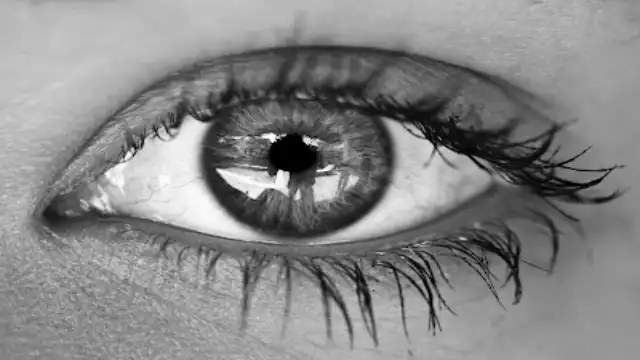
Here is a wild evolutionary fact. Humans are the only primates with highly visible white scleras (the white part of the eye surrounding the colored iris).
Think about a gorilla or a dog. Usually, their eyes are mostly dark. Their scleras are camouflaged to hide where they are looking. Why? Because in the wild, hiding your gaze gives you a tactical advantage over prey or rivals.
Humans, on the other hand, evolved to be ultra cooperative. We needed to communicate silently during hunts. Therefore, our bright white scleras evolved as giant billboards, broadcasting exactly where our attention is focused. Unfortunately, this evolutionary superpower comes with a downside. Because we are so incredibly good at detecting eyes, our brains sometimes sound the alarm even when no eyes are present.
The Amygdala’s Role in Threat Detection
Your amygdala is the brain’s emotional fire alarm. It processes fear, stress, and anxiety. If you hear a twig snap in the dark, your amygdala floods your body with adrenaline. It asks questions later.
When you feel like someone is watching you, it is usually just your amygdala being slightly too protective. It prefers to be safe rather than sorry. After all, from a survival standpoint, falsely believing a tiger is watching you is harmless. But failing to notice a real tiger? That is deadly. Thus, your brain prefers to throw false alarms.
Psychological Causes
Ok, so biology explains the hardware. But what if you feel watched all the time? If the sensation is frequent and distressing, psychology is usually the culprit.

Anxiety and Hypervigilance
If you deal with Generalized Anxiety Disorder (GAD) or Social Anxiety Disorder, your nervous system runs incredibly hot. You live in a constant state of hypervigilance.
When you are hypervigilant, your brain is aggressively scanning the environment for threats. Consequently, your senses dial up to eleven. You hear every floorboard squeak. You notice every shifting shadow. Naturally, your brain starts misinterpreting completely neutral things as dangerous.
For instance, you might walk into a grocery store and feel the heavy weight of a dozen invisible eyes judging you. In truth, the other shoppers are just looking for cheap cereal. Yet, your hyperactive amygdala screams that you are in danger.
Trauma and PTSD
Trauma literally rewires the brain. If you have experienced severe stress, abuse, or Post Traumatic Stress Disorder (PTSD), your sense of safety is shattered.
According to mental health experts, feeling stalked or watched is a classic trauma defense mechanism. The brain suffered a terrible shock in the past. Therefore, it vows to never, ever be caught off guard again. It keeps you on high alert, creating phantom threats to ensure your guard stays up.
The Paranoia Factor vs. Normal Worry
We need to clear something up immediately. Feeling watched every now and then is 100% normal. However, there is a distinct line between everyday anxiety and clinical paranoia.
Anxiety is a fear response. You feel scared that someone might be watching, but deep down, your logical brain knows it is probably just your nerves playing tricks.
Paranoia, conversely, is a fixed, irrational belief. A paranoid individual does not just wonder if they are being watched; they absolutely know they are. They might believe their neighbors are running a conspiracy or that the TV is spying on them. If the feeling becomes an unshakable delusion that ruins your life, it could indicate a more severe condition, like schizophrenia. If your experience leans toward extreme paranoia, chatting with a psychiatrist is absolutely the right move.
Everyday Triggers That Make You Feel Watched
Beyond clinical anxiety, several sneaky, everyday habits can trigger scopaesthesia.

- Sleep Deprivation: Lack of sleep wreaks absolute havoc on your brain’s reality testing centers. When you are exhausted, your brain struggles to process sensory data. Shadows twist into human figures. The wind sounds like breathing. Unsurprisingly, your tired mind jumps straight to spooky conclusions.
- True Crime Binges: Did you just watch a four hour serial killer documentary? Your brain absorbed that terror. Consequently, it primes your senses to expect a masked intruder hiding in your closet. Stop torturing yourself before bedtime!
- Environmental Ambiguity: Humans absolutely hate uncertainty. If you sit in a perfectly quiet, empty house, your brain gets bored. It desperately starts seeking patterns in the static. This is linked to pareidolia the phenomenon where we see faces in clouds or burnt toast. Similarly, we can “feel” a human presence simply because our brain is trying to fill a sensory void.
How to Stop the Feeling of Being Watched
Alright, the science is fascinating, but how do you actually make the creepy feeling stop? If you are tired of constantly checking over your shoulder, here are some proven, actionable steps to regain your peace of mind.
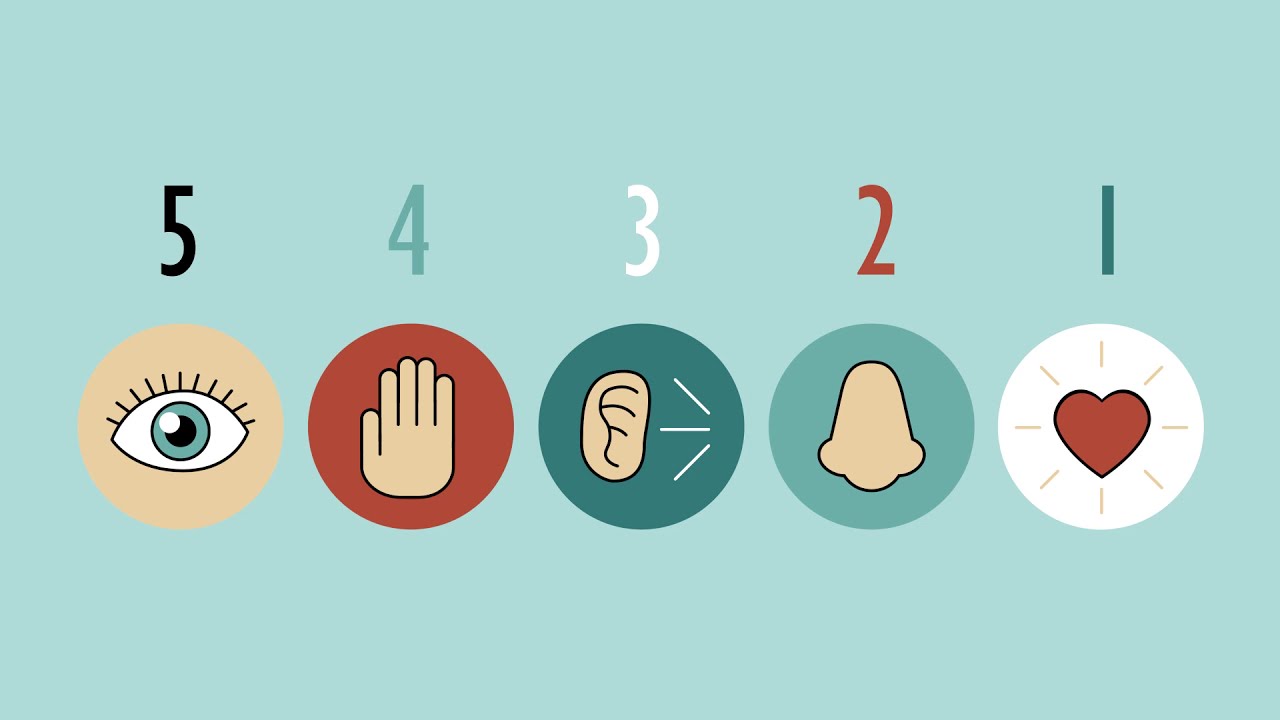
1. Try the 5, 4, 3, 2, 1 Grounding Method
Hypervigilance violently pulls you out of the present moment. It traps you in hypothetical, future danger. To stop this, you must forcefully anchor yourself back to reality using your physical senses.
Next time panic hits, pause and do this:
- Acknowledge 5 things you can see right now.
- Touch 4 things around you (feel the cold wall or your soft shirt).
- Listen for 3 distinct sounds.
- Identify 2 things you can smell.
- Notice 1 thing you can taste.
This heavily researched psychological tool aggressively interrupts your brain’s anxiety loop. It forces your logical brain to take the steering wheel away from your panicking amygdala.
2. Practice Reality Testing
When the hairs on your neck stand up, do not immediately surrender to the fear. Instead, act like a detective. Look around logically. Are you alone in a locked apartment on the third floor? Yes. Is there any physical evidence of an intruder? No.
Say it out loud: “I am safe. My brain is just playing a trick on me.” Putting words to the fear helps shrink it down to a manageable size.
3. Cut the Caffeine and Creepy Media
If your bucket of stress is already overflowing, a single drop of coffee will cause a spill. Caffeine chemically mimics the physical symptoms of a panic attack (racing heart, sweaty palms). If you are prone to paranoia, switch to decaf.
Furthermore, guard your media intake. If you frequently feel watched at night, stop listening to true crime podcasts while walking alone in the dark. Instead, watch a comedy. Signal to your brain that the environment is joyful and safe.
4. Talk to a Mental Health Pro
If the sensation of being watched stops you from sleeping, leaving the house, or enjoying life, it is time to call in a professional. Cognitive Behavioral Therapy (CBT) is an incredibly effective tool for treating generalized anxiety. Likewise, if you are dealing with OCD related intrusive thoughts, Exposure and Response Prevention (ERP) therapy is the absolute gold standard. A licensed therapist will help you untangle your hypervigilance safely and without judgment.
You Are Safe (And Probably Alone)
At the end of the day, feeling like someone is watching you is a perfectly normal quirk of human biology. Your ancient ancestors needed a hyper sensitive gaze detection system to survive the wild. Today, however, that same system just makes you look over your shoulder while brushing your teeth.
Therefore, the next time that eerie prickle crawls up your spine, smile. Thank your brain for trying to keep you safe, do a quick reality check, and go about your day. You are safe. You are grounded. And unless you have a very sneaky cat, you are completely alone.
What about you? Do you ever get that sudden, creepy feeling that unseen eyes are on you? What helps you shake it off? Drop a comment below and let’s talk about it because you are definitely not alone in feeling this way!
Sources help:
- https://www.researchgate.net/publication/233632394_The_Sense_of_Being_Stared_At_–_Part_1_Is_it_Real_or_Illusory
- https://www.sheldrake.org/research/sense-of-being-stared-at
- https://noetic.org/blog/scopaesthesia-is-directional/
- https://en.wikipedia.org/wiki/Psychic_staring_effect

