

Is your sudden streak of bad luck just a coincidence, or is something darker at play?
You’ve just landed a promotion, posted a stunning vacation selfie, or bought a new car. Suddenly, a migraine hits, your car breaks down, or you feel an inexplicable wave of fatigue. If you were raised in a Mediterranean, Latin, or South Asian household, one phrase probably jumps to mind immediately: The Evil Eye.
This isn’t just a spooky campfire story; it is one of the oldest and most pervasive superstitions in human history, spanning from the courts of Ancient Rome to the streets of modern-day Istanbul.
Whether you call it Mal de Ojo, Nazar, or Malocchio, the concept is the same: a look of envy that can cause real harm. But how do you know if you’ve been hit? And more importantly, how do you block it?
Let’s strip away the fluff and dive deep into the history, psychology, and 12 powerful ways to protect yourself from the glare that glares back.
What Is the Evil Eye? (The Meaning Behind the Gaze)
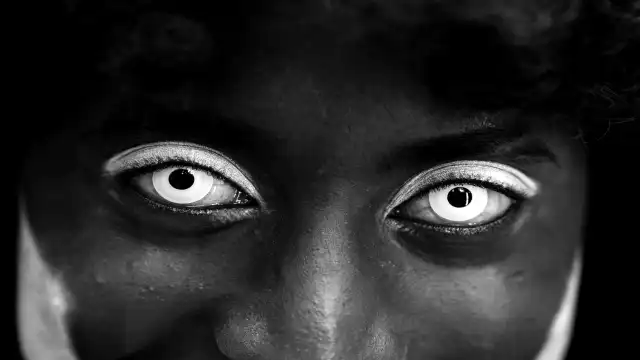
At its core, the Evil Eye is a curse believed to be cast by a malevolent glare usually given to a person when they aren’t looking.
it’s not always intentional.
While some believe it comes from a place of pure hatred, many cultures believe the Evil Eye stems from envy. Even a compliment like “Your baby is so beautiful!” can carry a hidden weight of jealousy that unknowingly strikes the child with negative energy.
The Psychological Twist: Why We Believe
Psychologists suggest the belief in the Evil Eye serves a social function. It discourages bragging and encourages humility. If you believe your success invites a curse, you’re less likely to flaunt it, keeping social harmony intact. It’s an ancient “checks and balances” system for the ego.
Origins: A Curse as Old as Civilization
The belief isn’t a modern trend it’s older than the Bible.

- Ancient Mesopotamia (3000 BC): Clay tablets from Sumeria explicitly mention the danger of the “eye.”
- Ancient Egypt: The Eye of Horus was painted on ships and tombs to reflect malevolent gazes.
- Ancient Greece & Rome: Philosophers like Plutarch tried to explain it scientifically, suggesting that the human eye could shoot “rays” of energy like invisible darts. The Romans even used phallic charms called fascinum to distract the envious eye (yes, really).
Global Variants: Same Curse, Different Names

The “Eye” travels under many passports. Recognizing these variants can help you identify which specific protection you might need.
1. Mal de Ojo (Latin America & Spain)
In Mexico and widely across Latino cultures, this is a serious affliction, especially for babies. A strong stare from an adult even an admiring one can make a child sick with fever and incessant crying.
- Cure: The Limpia con Huevo (Egg Cleanse).
2. Nazar (Turkey, Middle East, India)
In Turkey, the Nazar is an ever-present force. In India, it’s often called Nazar Dosh or Drishti. The concept is deeply woven into daily language. You’ll hear “Mashallah” (God has willed it) constantly to deflect potential envy after a compliment.
- Ritual: Nazar Dökme (Lead Pouring) in Turkey.
3. Malocchio (Italy)
Italians take the Malocchio personal. It’s often associated with a splitting headache (the kind painkillers can’t touch).
- Cure: The Oil and Water test.
12 Ways to Protect Yourself (Rituals, Amulets & Mantras)
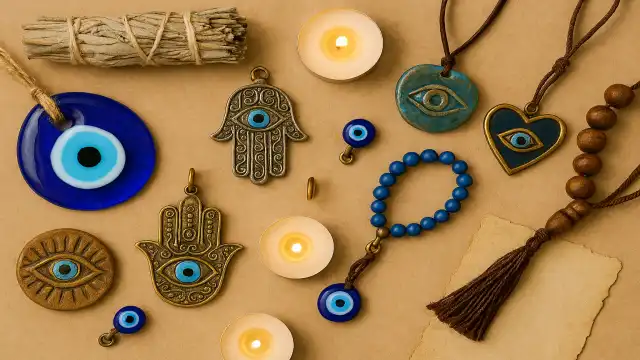
From ancient talismans to kitchen rituals, here is your ultimate toolkit for blocking negative vibes.
1. The Nazar Boncuğu (The Blue Glass Eye)
You’ve seen this blue glass bead with a white and blue eye in the center. Originating in Turkey, it doesn’t cast the evil eye; it stares back at it. It’s a mirror. When it cracks, it has done its job it took the bullet for you. Replace it immediately.
2. The Hamsa Hand
Popular in Jewish and Islamic traditions, this palm-shaped amulet often features an eye in the center. It symbolizes the Hand of God (or Hand of Fatima/Miriam) pushing back against evil.
- Tip: Hang it facing down for blessings, or up for protection.
3. The Red String (Kabbalah & Latino Traditions)
In Kabbalah, a red wool string worn on the left wrist seals protective energy. In Latin cultures, babies wear a red bracelet (often with a seed called Huayruro or a jet stone) to distract the envious eye. The bright color grabs the “gaze” so the child doesn’t have to.
4. Malocchio Oil & Water Ritual (Italy)
Think you’re cursed? Here’s the test.
- How to: Fill a bowl with water. Drip three drops of olive oil into it.
- The Verdict: If the oil forms a perfect circle, you’re safe. If the oil disperses or forms “eyes,” you’ve got Malocchio.
- The Cure: Traditionally, a healer recites a secret prayer and cuts the oil shapes with scissors to “cut” the envy.
5. Salt & Chili Cleanse (India)
A classic Nazar removal for kids in South Asia.
- The Ritual: Take a handful of rock salt and dried red chilies. Circle your hand over the afflicted person’s head 7 times.
- The Finish: Throw the mix into a fire. If the chilies burn without making you cough, the Evil Eye was real (and is now gone).
6. The Cornicello (Italian Horn)
A twisted red horn (often looks like a chili pepper) worn as a necklace. It mimics the shape of an animal horn a symbol of strength and potency used to fight off the weak, jealous energy of the eye.
7. Limpia con Huevo (Egg Cleanse)
The go-to cure for Mal de Ojo.
- How to: Rub a raw, room-temperature egg over the victim’s entire body while praying. Crack the egg into a glass of water.
- Reading it: If the egg white forms spikes, needles, or looks “cooked,” it has absorbed the negative energy. Flush it down the toilet immediately.
8. Azabache (Jet Stone)
In Puerto Rico, Cuba, and the Dominican Republic, newborns are gifted a black jet stone hand (often a fist) or bead. This black stone is believed to absorb negative energy to the point of shattering.
9. Spitting (The “Thu Thu Thu”)
It sounds gross, but it’s global. In Greece, if someone compliments your beauty, they might lightly spit (or make the sound ftou ftou ftou) three times. This symbolically “spoils” the beauty just enough to keep the gods or envious neighbors from getting jealous.
10. Nazar Dua (Prayer for Protection)
For Muslims, reciting specific verses is the most powerful shield.
- The Dua: “A’udhu bi kalimatillahi at-tammati min kulli shaytanin wa hammah wa min kulli ‘aynin lammah.”
- Translation: “I seek refuge in the perfect words of Allah from every devil and poisonous reptile, and from every envious evil eye.”
11. The Black Dot (Kajal/Kohl)
In India and Pakistan, mothers apply a small black dot of kajal behind a baby’s ear or on the sole of their foot. This intentional “flaw” distracts the eye. Perfection invites envy; a flaw repels it.
12. Lead Pouring (Nazar Dökme)
A traditional Turkish ritual where a healer melts lead and pours it into cold water over the victim’s head (covered by a cloth). The shapes the lead forms reveal who cast the eye, and the act itself breaks the curse.
Signs You Might Have the Evil Eye
How do you differentiate between a bad day and a curse? Look for these sudden, unexplained symptoms:
- Physical: Sudden intense headache, yawning uncontrollably (even when not tired), stomach aches.
- Emotional: Sudden brain fog, lethargy, or feeling “heavy.”
- Environmental: Objects breaking in your house (glass, mirrors), plants dying suddenly, or a streak of bad luck where nothing goes right.
Intention is Everything
Whether you view the Evil Eye as a genuine spiritual threat or a cultural metaphor for negative vibes, the remedy is the same: mindfulness.

Protecting yourself isn’t just about wearing a bracelet; it’s about being conscious of the energy you project and the energy you allow into your circle.
Frequently Asked Questions (FAQs)
1. My Evil Eye bracelet broke suddenly. Does this mean I’m cursed?
Short Answer: No, it means the exact opposite you were saved.
When a Nazar amulet cracks, shatters, or falls off your wrist without physical force, it has fulfilled its purpose. It absorbed a heavy hit of negative energy or “Mal de Ojo” that was meant for you. Do not try to glue it back together. A broken amulet is a “full” sponge; it cannot hold any more negativity.
What to do next: You must dispose of it immediately (see the next question) and purchase a new one to reset your protection.
2. How do I properly dispose of a broken Evil Eye amulet?
Short Answer: Don’t just throw it in the trash bin.
Because the object is now holding concentrated negative energy, you want to return it to the earth or cleanse it.
Method A (The Earth): Bury the broken pieces in the ground (outside your home) to let the earth neutralize the energy.
Method B (The Water): If you are near a river or ocean, throw the pieces into running water.
Method C (The Trash): If you must use the trash, wrap the pieces in a black cloth or paper first to “seal” the energy before discarding it.
3. Can I buy an Evil Eye for myself, or must it be gifted?
Short Answer: You can buy it for yourself.
There is a common myth that an Evil Eye only works if gifted. While a gift carries the added protection of the giver’s love, buying your own is perfectly effective. It is about your intention. If you buy it with the mindset of shielding your aura, it works. However, if you lose it, it is often said you should wait for a replacement to find you (or be gifted one), but in modern practice, restocking your own shield is standard.
4. Is wearing the Evil Eye a sin in Christianity or Islam?
Short Answer: It depends on your intent and denomination.
In Islam: Belief that an object itself has power independent of God is considered Shirk (idolatry). However, using the Nazar symbol as a cultural reminder of God’s protection is accepted by many, though strict interpretations forbid it. The Nazar Dua (prayer) is the preferred religious protection.
In Christianity: The Bible mentions the “evil eye” (Mark 7:22) mostly as a metaphor for envy/greed. Wearing the amulet is often discouraged by strict clergy as superstition, but many Mediterranean and Latin Christians wear it alongside a Cross or Virgin Mary medal (syncretism) without feeling a spiritual conflict.
5. Where should I hang an Evil Eye in my house for the best protection?
Short Answer: The main entrance.
The concept is to “intercept” the energy before it settles in your living space.
The Entryway: Hang it on the wall facing the front door, or on the door itself. It acts as a security guard for vibes.
The “Social” Room: Place one in your living room or wherever guests gather.
Avoid: Do not place Evil Eye amulets in the bathroom or on the floor. It is considered disrespectful to the symbol and lowers its vibration.
6. Why do I see Red, Black, and White Evil Eyes? Do colors matter?
Short Answer: Yes, different colors target different threats.
While the classic Blue is for general protection and karma:
Red: Used for courage and protection against fear/anxiety (popular in Kabbalah).
Black: Power and prosperity; prepares you for the unknown.
White: Purity and focus; often used to clear mental “brain fog” caused by the evil eye.
Yellow: Protects health and aids in concentration.
7. How can I tell if a baby has ‘Mal de Ojo’ and what is the fastest cure?
Short Answer: Incessant crying and one warm ear.
In Latino culture, if a baby is fussy without a medical reason, check their temperature. If one ear or cheek is hot and the other is cold, it is often diagnosed as Mal de Ojo.
The Quick Fix: If you know who admired the baby (gave them the eye), ask them to come back and touch the baby. This breaks the connection. If that’s not possible, perform the Limpia con Huevo (Egg Cleanse) immediately to draw the fever out.
Ready to shield your energy? Start simple. Grab a red string, hang a Hamsa by your door, or just be mindful of who you share your good news with. Stay protected.

