

Ancient Rituals to Summon Jinn: Fact, Folklore, and Modern Belief
Let’s dive into a topic that lives in the shadows of folklore and religion. The Jinn. Not the cartoon genie in a bottle, but the powerful, intelligent, and famously neutral entities of pre-Islamic and Islamic lore. People have sought to contact them for millennia—for knowledge, for power, for treasure, or simply to prove they exist.
But how? What are the actual rituals described in the old texts?
This is a no-nonsense exploration of that very question. We’re going to unpack the historical context, break down the anatomy of a summoning ritual based on the grimoires, and look at how these beliefs are interpreted today. This isn’t a Hollywood script. It’s a look at a complex system of esoteric practice, steeped in history and considered profoundly dangerous even by those who believed in it.
First, What Exactly Are Jinn?
Before we get to the rituals, we need to know who we’re talking about. According to Islamic theology, and the Qur’an itself (specifically Surah Al-Jinn and others), Jinn are a race of beings created by God from a “smokeless fire.”
Here’s what you need to know:
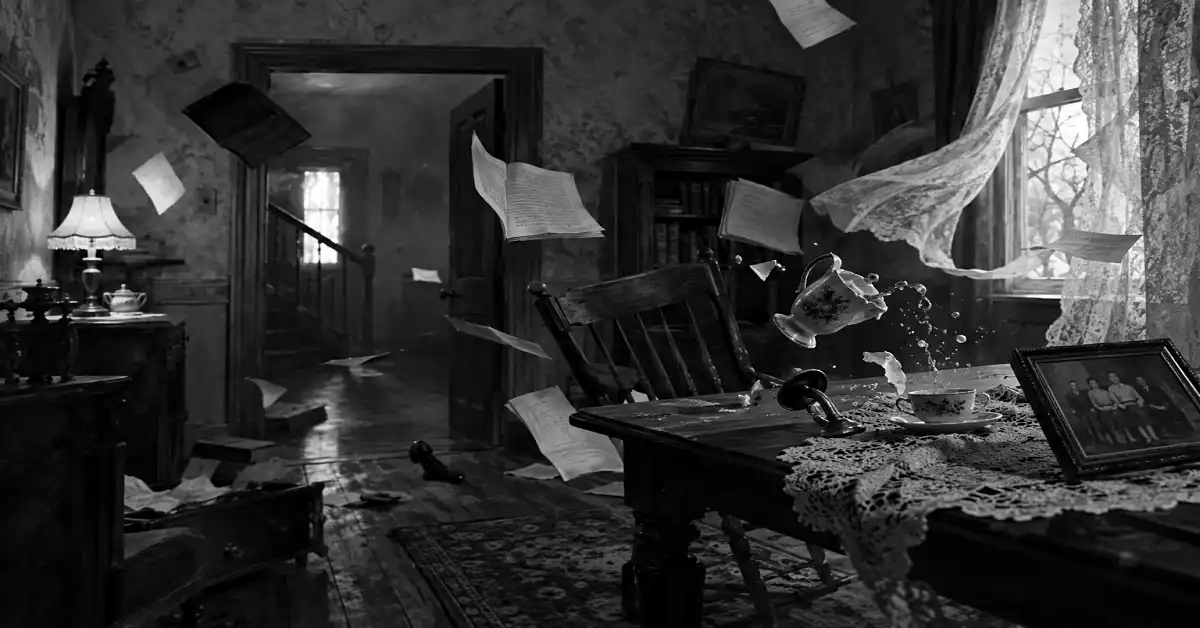
- They exist in a parallel reality, an unseen world called Al-Ghaib.
- They have free will. Just like humans, they can be good, evil, or somewhere in between. They can be believers (Muslims, Christians, Jews) or non-believers.
- They are not all-powerful. They are bound by certain divine laws, but their abilities—like speed, influence over the material world, and knowledge of hidden things—are said to vastly exceed our own.
Forget the idea of a simple servant. The lore describes them as a proud, ancient race with their own societies, kings, tribes, and laws. Approaching them is considered less like calling a dog and more like trying to get an audience with a foreign and unpredictable king.
The Source Code: Where Do These Rituals Come From?
While tales of Jinn are ancient, the most detailed instructions for contacting them come from medieval Arabic grimoires. These aren’t just collections of spooky spells; they are complex works of esoteric science that blend astrology, numerology, angelic and Jinn names, and religious piety.
The undisputed heavyweight champion of these texts is the Shams al-Ma’arif (The Sun of Gnosis), written in the 13th century by Sheikh Ahmad al-Buni. This book is to Islamic occultism what Agrippa’s Three Books of Occult Philosophy is to the West. Al-Buni wasn’t seen as a “black magician” but as a respected Sufi mystic exploring the hidden properties of the divine names, Quranic verses, and the cosmos.

Most of the “Jinn summoning” rituals that have been passed down through history are either directly from or heavily inspired by the methods detailed in the Shams al-Ma’arif.
The Anatomy of a Summoning Ritual (According to the Grimoires)
So, what does it actually take? It’s not about chanting a name three times in a mirror. The process described by al-Buni and others is an intense, multi-stage operation requiring immense discipline and spiritual preparation. Breaking it down, the core components are almost always the same.
1. The Prerequisite: Purity and Seclusion (Khalwa)
This is the non-negotiable first step. The practitioner, or murid (seeker), must undertake a period of intense spiritual retreat, known as khalwa.
- Duration: Often 40 days.
- Location: A dark, isolated room or cave where no sunlight can enter.
- Diet: A strict fast, abstaining from all meat and animal products. The diet is usually limited to bread, raisins, and water.
- Purity: The practitioner must maintain a constant state of ritual purity (taharah), performing ablutions (wudu) before all recitations.
- Purpose: To cleanse the body and soul, heighten spiritual sensitivity, and demonstrate worthiness to the spiritual entities. Skipping this is, according to the texts, suicidal.
2. The Time and Place: Astrological Calculation
You don’t just decide to do this on a Tuesday night. The rituals are tied to cosmic timings. The practitioner must have knowledge of astrology to determine the correct planetary hour. For example, a working related to knowledge might be performed during an hour governed by Mercury, while one for power might be tied to Mars or the Sun. The location must be clean, private, and consecrated.

3. The Protection: Casting the Mandal
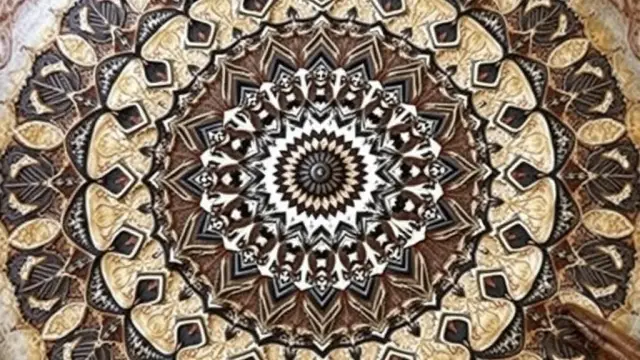
Before any summons, a protective circle, known as a mandal or mandala, is drawn. This isn’t just a chalk line. It’s an intricate diagram, often inscribed with divine names of God, Quranic verses (like the Throne Verse, Ayat al-Kursi), and names of powerful angels like Gabriel, Michael, Israfil, and Azrael at the four corners. The purpose is twofold: to keep unwanted entities out and to compel the summoned entity to appear within a designated space, preventing it from harming the practitioner.
4. The Summons: Incantations and Divine Names
This is the engine of the ritual. It involves the continuous, high-speed recitation of specific phrases for hours, days, or even weeks.
- Azimah: The specific summons or command being recited. This is often a long passage calling upon God to compel one of His Jinn subjects to appear.
- Asma al-Husna: The 99 Beautiful Names of God are used extensively, as it is believed that God’s power is what compels the Jinn, not the practitioner’s own will.
- Ayat: Specific Quranic verses are used for their inherent spiritual power (barakah).
The recitation must be flawless. A single mispronunciation is said to break the ritual’s power and leave the practitioner exposed.
5. The Medium: Incense (Bakhoor) and Talismans
- Bakhoor: Specific types of incense are burned continuously during the ritual. These are chosen based on the entity or purpose of the working (e.g., benzoin, frankincense, sandalwood). The smoke is believed to be a medium through which the ethereal Jinn can manifest or communicate.
- Talisman: Often, a talisman or magical square (wafq) corresponding to the goal is drawn on paper or engraved on metal and held by the practitioner.
6. The Manifestation and Communication

If the ritual is successful, the texts say the Jinn will appear. This can range from a disembodied voice to a pillar of smoke to a full physical manifestation, often in a terrifying form initially to test the practitioner’s courage. The practitioner must not show fear. They then state their command or ask their question clearly and respectfully. Bargaining is central; the Jinn will often demand a pact or a promise in exchange for its service.
7. The Dismissal: The License to Depart
Just as important as the summoning is the dismissal. The practitioner must give the Jinn a formal “license to depart,” reciting another set of verses that commands it to return to its place without causing any harm to the operator or their family. Failure to do this means the entity might linger, causing chaos and misfortune.
Modern Interpretations: Fact, Folklore, or Psychology?
So, is this real? Here’s where the conversation gets interesting.

The Historian’s View (The “Expert”)
Academics and historians of religion view these rituals as a fascinating product of their time. They see the Shams al-Ma’arif not as a book of evil, but as part of a rich intellectual tradition of Islamic esotericism that sought to understand and influence the hidden realities of a cosmos seen as deeply interconnected. The rituals are a form of theurgy—an attempt to command lower spirits through the authority of higher divine power. They argue that the intense discipline, fasting, and chanting are psychologically potent, capable of inducing altered states of consciousness where profound visionary experiences are possible.
The Practitioner’s View (The “Modern Belief”)
In modern occult and esoteric circles, these practices are approached in a few ways:
- The Spirit Model: Some practitioners take the texts literally. They believe Jinn are objective, non-physical beings that can be contacted through these methods. They treat the rituals with extreme caution, fully aware of the dangers described in the lore.
- The Psychological Model: Others interpret the Jinn as archetypes of the human subconscious. The ritual, in this view, is a powerful psychodrama designed to unlock parts of one’s own mind. “Summoning a Jinn of knowledge” is a way of accessing one’s own deep intuition. The danger here is psychological—obsession or psychosis if not handled with care.
The In-Built Warning Label
One thing is consistent across all sources, from the ancient grimoires to modern forums: this is not a game. The texts themselves are filled with dire warnings about the consequences of failure, which include:
- Madness or obsession (majnun, literally “Jinn-possessed”).
- Being tricked, lied to, or led to ruin by a malevolent entity.
- Physical illness, financial ruin, or harm coming to one’s family.
- Death.
These aren’t my warnings. These are the warnings from the very people who wrote the instructions. They believed they were handling cosmic fire, and a mistake meant getting burned.
Conclusion: Understanding, Not Endorsing
The rituals for summoning Jinn are a deep and complex part of human history and belief. They represent a fascinating attempt to map out the unseen world and interact with it directly. It’s a system built on piety, discipline, courage, and an encyclopedic knowledge of theology and astrology.
To study these rituals is to understand a worldview where the physical and spiritual were not separate, but deeply intertwined. It’s a door into a different reality, but according to the lore itself, it’s a door that, once opened, can be very difficult to close.
Does learning about the structured, disciplined system behind these rituals change your perception of “magic”? Let me know your thoughts below.

