

Did you just finish watching Robert Eggers’ The Lighthouse? If your brain feels like it was put through a 19th century meat grinder, you certainly are not alone. Unquestionably, Willem Dafoe and Robert Pattinson deliver absolute masterclasses in acting. However, the final 20 minutes of this claustrophobic maritime nightmare throw so many chaotic symbols at the wall that it is incredibly easy to get lost at sea.
Specifically, you are probably asking yourself a few frantic questions right now. What exactly did Ephraim Winslow see inside that lantern room? Furthermore, why did he fall down the stairs screaming? Ultimately, what is the deal with those terrifying seagulls eating his organs on the rocks?
Grab a cup of coffee, because we are about to decode this cinematic puzzle. Naturally, we are sailing straight into major spoiler territory. Therefore, if you have not finished the movie yet, turn back now!
What Actually Happens at the End of The Lighthouse?
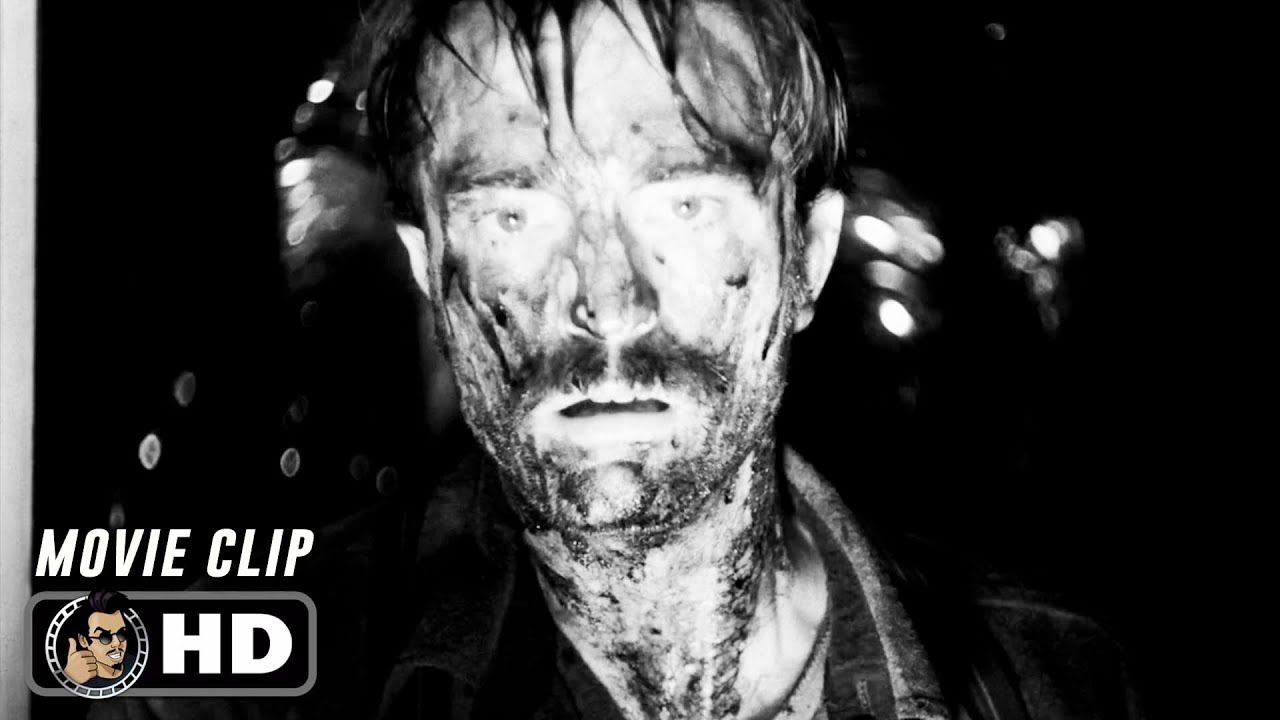
Before we dive into the ancient Greek mythology, let’s quickly establish the literal events of the climax. Throughout the film, veteran wickie Thomas Wake (Dafoe) aggressively forbids his junior assistant, Ephraim Winslow (Pattinson), from entering the top floor of the lighthouse. Consequently, the lantern room becomes an obsession for Winslow.
Eventually, the isolation and toxic alcohol utterly destroy their sanity. The two men brutally turn on each other. During the climax, Winslow (whose real name is actually Thomas Howard) violently beats Wake. Subsequently, he buries the old man alive in the dirt. Finally holding the keys to the kingdom, Howard climbs the spiral staircase.
He opens the glass lens. He stares directly into the blinding light. Instantly, his face contorts into a horrific mix of absolute ecstasy and agonizing pain. The light physically scorches him. Consequently, he plummets backward down the massive iron staircase.
In the film’s final, unforgettable shot, we see Howard lying completely naked on the jagged rocks. He is still alive. Meanwhile, a flock of seagulls violently pecks at his exposed intestines. Roll credits.
What does this mean? Basically, it is not just a random, gory horror ending. Instead, it is a brilliant, direct translation of classical Greek mythology.
The Mythology Connection: A Tale of Two Gods
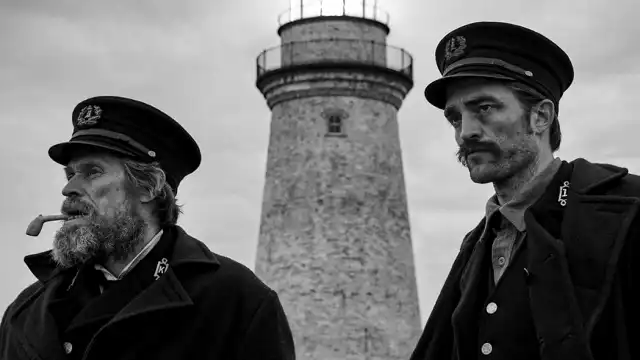
Director Robert Eggers did not try to hide his influences. In fact, he confirmed in multiple interviews that The Lighthouse is a deliberate collision of two specific ancient myths. Specifically, Eggers wondered what would happen if two iconic mythological figures were trapped in a room together.
To understand the movie, you must understand these two figures. Let’s break them down.
Thomas Wake as Proteus (The Old Man of the Sea)
Willem Dafoe’s character, Thomas Wake, represents Proteus. According to ancient texts like Homer’s Odyssey, Proteus was an early prophetic sea god. He served Poseidon and was literally known as the “Old Man of the Sea.”
- He is a Shape Shifter: Proteus could magically change his physical form to avoid answering questions. Likewise, Wake constantly shifts his personality. One minute, he is a loving father figure cooking lobster. The next minute, he is a cruel, gaslighting tyrant. Furthermore, Howard literally hallucinates Wake turning into a terrifying, tentacled sea monster.
- He Hoards Knowledge: In myth, Proteus possessed vast knowledge of the past, present, and future. However, he absolutely hated sharing it. Similarly, Wake obsessively guards the light and refuses to let Howard learn its secrets. He keeps the ultimate truth selfishly locked away.
Thomas Howard as Prometheus (The Fire Bringer)
Robert Pattinson’s character represents Prometheus. If you remember your history class, Prometheus was the daring Greek Titan who stole fire from the gods. He gave this divine spark to humanity.
Naturally, the king of the gods, Zeus, was furious. Therefore, Zeus condemned Prometheus to a horrific, eternal punishment. He chained the Titan to a rock. Every single day, an eagle would fly down and eat his liver. Because Prometheus was immortal, his liver would regenerate overnight. Consequently, the brutal torture repeated endlessly.
Let’s look at how perfectly this maps onto the movie:
- The Stolen Fire: The actual lighthouse beam represents the divine fire. Howard desperately wants to take it for himself.
- The Rebellion: Howard violently overthrows his master (Wake/the gods) to seize the forbidden power.
- The Punishment: The final shot is a literal, visual recreation of the Prometheus myth. Howard is trapped on the rocks. The seagulls (acting as Zeus’s eagle) eat his liver. Ultimately, he is punished for seeking knowledge that belonged to the gods.
What is the True Meaning of the Light?
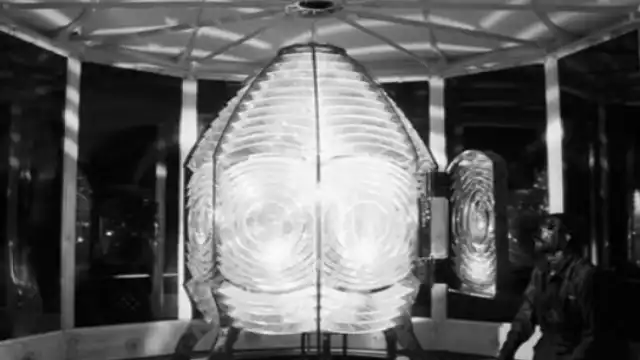
So, if the light represents mythological fire, what does it actually mean in the context of the story? Why did looking at it cause Howard to scream and fall? There are three main, heavily researched interpretations.
1. The Sublime and Forbidden Knowledge
In literature, the concept of the “sublime” refers to something so overwhelmingly beautiful and powerful that it absolutely destroys the human mind. The light is forbidden knowledge. It is a divine, cosmic truth that mortal brains simply cannot process.
When Howard finally opens the lens, he sees the raw, unfiltered universe. Thus, it physically burns his eyes. He wanted the power of a god, but he possessed the fragile mind of a human. The sheer magnitude of the truth broke him entirely.
2. The Jungian Shadow
According to a psychological analysis published by the University of Iowa, The Lighthouse deeply explores Carl Jung’s concept of the “Shadow.” Essentially, the Shadow represents the repressed, dark, and evil parts of our personality.
Both men are running from their dark pasts. Howard literally murdered his former foreman. Meanwhile, Wake likely murdered his previous assistant. The light forces Howard to look at his own soul. Therefore, the blinding beam isn’t an alien force; it is a mirror. Looking at his absolute, unforgivable guilt is what truly destroys him.
3. Pure, Unfiltered Madness
Conversely, you can view the light through a realistic, grounded lens. Keep in mind, these men have been drinking toxic turpentine mixed with honey for weeks. They are severely malnourished. They are suffering from extreme cabin fever.
From a medical standpoint, there is no magical deity inside the lantern. Howard is just a severely mentally ill man staring directly into a massive, blindingly hot industrial lamp. The intense heat fries his retinas, he loses his footing, and he tragically breaks his back falling down the stairs.
The Curse of the Seagull
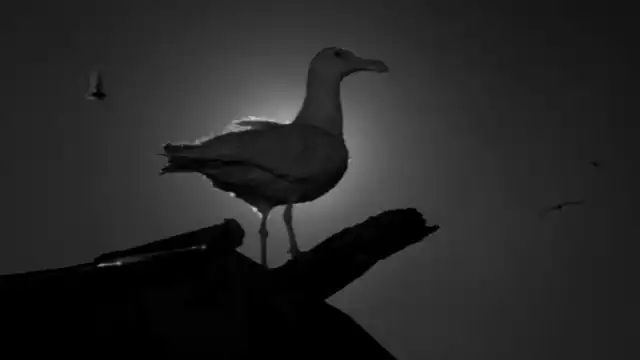
Beyond Greek mythology, the movie heavily borrows from classic nautical superstitions. Early in the film, Wake violently warns Howard never to kill a seabird. According to sailor lore, seagulls carry the reincarnated souls of dead sailors.
This is a direct, brilliant nod to Samuel Taylor Coleridge’s famous 1798 poem, The Rime of the Ancient Mariner. In that epic poem, a sailor foolishly kills an albatross. Consequently, this single violent act curses his entire ship, bringing upon a horrific storm and death.
Predictably, Howard loses his temper. He violently beats a one eyed seagull to death against a rock.
Immediately after this brutal act, the wind shifts. A massive, apocalyptic storm hits the island. The relief ferry never arrives. By killing the bird, Howard definitively cursed the island. Thus, it is incredibly fitting that his ultimate mythological punishment is delivered by the exact same species of bird he abused. Karma, as they say, is a flock of hungry gulls.
Was Any of It Actually Real?
This is the question that keeps fans awake at night. Did Wake actually have tentacles? Did Howard truly find a washed up mermaid?
Most film scholars agree that the supernatural elements are strictly hallucinations. Director Robert Eggers painstakingly researched 1890s New England to make the environment hyper realistic. For instance, he used actual period accurate lumber and vintage camera lenses. Therefore, the setting is grounded in brutal reality.
However, the perspective of the film is completely untrustworthy. We are viewing the world through Howard’s incredibly drunk, guilty, and paranoid eyes.
When Wake tells Howard that they have actually been on the island for weeks longer than Howard thought, time loses all meaning. The movie becomes a subjective nightmare. Ultimately, the mermaids and sea monsters are physical manifestations of Howard’s repressed trauma and sexual frustration. The monsters aren’t real, but the madness absolutely is.
The Real Life Tragedy That Inspired the Film
Surprisingly, the core setup of The Lighthouse isn’t pure fiction. Eggers was heavily inspired by the real life “Smalls Lighthouse Tragedy” of 1801.
According to historical records, two Welsh lighthouse keepers, both coincidentally named Thomas, were stranded on an isolated rock during a brutal storm. Thomas Howell and Thomas Griffith absolutely hated each other.
Tragically, Griffith died in a freak accident. Howell knew that if he threw the body into the ocean, authorities would accuse him of murder. Therefore, he built a makeshift coffin and tied his dead partner to the outside railing of the lighthouse.
The wind eventually ripped the coffin apart. For weeks, Howell was trapped inside the dark lighthouse while the decaying arm of his dead partner slapped against the glass window in the wind. When a rescue boat finally arrived, Howell was completely unrecognizable. The intense psychological trauma had permanently shattered his mind.
Knowing this historical fact makes Eggers’ movie even more terrifying. The supernatural myths are fun to analyze, but the true horror of The Lighthouse is the devastating fragility of the human mind.
Masterpiece of Dread
Ultimately, The Lighthouse isn’t a movie you fully understand on the first viewing. It is an atmospheric experience meant to make you uncomfortable. It explores what happens when men are stripped of civilization, leaving only ego, guilt, and paranoia behind.
Thomas Howard thought he could steal the fire of the gods. He believed he was entitled to the light. Consequently, the universe reminded him of his exact place on the food chain. He was nothing but meat on a rock.
Frequently Asked Questions
What did Thomas Howard see in the light?
The film deliberately never shows the audience what is inside the lantern. Metaphorically, Howard sees “forbidden knowledge” or divine truth that mortal minds cannot handle. Psychologically, he sees the absolute, terrifying reflection of his own guilt and sins.
Are the two men in The Lighthouse the same person?
While some fan theories suggest Howard and Wake are two halves of the same fractured mind, director Robert Eggers has stated they are two distinct characters. However, they definitely act as Jungian mirrors for each other, reflecting their respective failures and toxic masculinity.
Why did Robert Pattinson’s character fall down the stairs?
Because the light represents the myth of Prometheus’s stolen fire, Howard is instantly punished for obtaining it. Physically, the intense light and heat likely blinded him, causing him to lose his balance and plummet down the heavy iron spiral staircase.
Was the mermaid real in The Lighthouse?
No. The mermaid is heavily implied to be a hallucination. She represents Howard’s intense sexual frustration, his crushing loneliness, and the seductive, dangerous lure of the ocean itself.
What is the significance of the one eyed seagull?
The one eyed seagull represents the reincarnated soul of Wake’s former assistant, who allegedly died on the island. By violently killing the bird, Howard invokes a classic maritime curse, directly causing the massive storm that traps them on the rock.
What is your personal theory about the ending? Do you think Howard actually saw a divine entity, or was he simply a victim of toxic moonshine and extreme isolation? Drop your wildly creative theories in the comments below, and don’t forget to share this deep dive with your movie loving friends!
Sources help:
- https://bijou.uiowa.edu/bijou-blog/2024/05/lighthouse-contemporary-view-myth
- https://lawliberty.org/the-lighthouse-new-england-dread-meets-greek-myth/
- https://en.wikipedia.org/wiki/The_Lighthouse_(2019_film)

