

It happened over a decade ago, yet we are still collectively agonizing over it. Specifically, the final moments of Christopher Nolan’s 2010 masterpiece, Inception, left millions of viewers staring at a black screen in utter disbelief. Dom Cobb (Leonardo DiCaprio) finally reunites with his beloved kids. He spins his metal top on the table to check if he is dreaming. However, before we can see if the totem topples over, the movie abruptly cuts to black.
Cue the collective groans.
Naturally, you want a definitive answer. Is Cobb awake, or is he trapped inside his own subconscious forever? Consequently, fans have spent years dissecting every single frame, looking for hidden clues. Furthermore, countless Reddit threads have spawned absurdly complex conspiracy theories.
Today, we are putting this debate to rest. Ultimately, the answer is far more profound than a simple “yes” or “no.” Grab your totems, because we are breaking down the hard facts, cast confessions, and Christopher Nolan’s exact philosophy regarding cinema’s most frustrating cliffhanger.
The Literal Answer: Is Cobb in Reality?
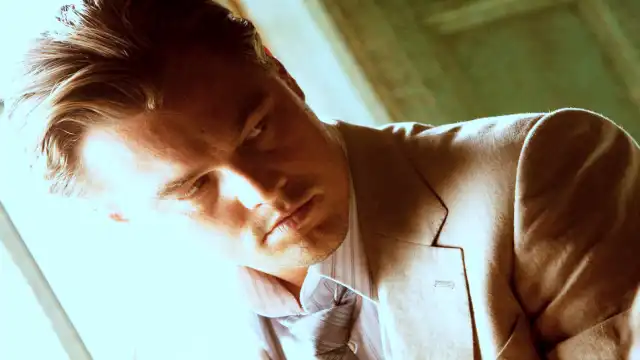
First, let’s tackle the burning logistical question. Yes, Cobb is absolutely awake in the final scene. Interestingly, you do not need to rely on mere guesswork to prove this. Over the years, concrete evidence has surfaced confirming that Cobb successfully returned to the real world.
1. The Michael Caine “Reality Rule”
If you want the truth, you should ask the man who literally played Cobb’s mentor and father in law, Professor Stephen Miles. During a 2018 Film4 Summer Screen event at London’s Somerset House, legendary actor Sir Michael Caine dropped a massive bombshell.
According to Caine, he was initially terribly confused by Nolan’s complex script. Therefore, he asked the director for clarification.
“I said, ‘When is it the dream and when is it reality?'” Caine explained to the live audience. “He (Nolan) said, ‘Well, when you’re in the scene, it’s reality.’ So get that, if I’m in it, it’s reality. If I’m not in it, it’s a dream.”
Crucially, Michael Caine is standing right there in the final scene. He guides Cobb through the house and points him toward the children playing in the garden. Based on Nolan’s own explicit direction to his actor, Cobb is unquestionably in the real world.
2. The Wedding Ring Theory (Cobb’s True Totem)
Surprisingly, the spinning top was never actually Cobb’s totem. Originally, that little metal top belonged to his deceased wife, Mal (Marion Cotillard). If you pay close attention to the rules of the movie, borrowing someone else’s totem defeats the entire purpose of the security measure. Instead, eagle eyed fans noticed a far more reliable indicator of reality.
Cobb’s real totem is his wedding band.
Let’s look at the visual evidence:
- In the Dream World: Cobb constantly wears his silver wedding ring. Obviously, he is still heavily projecting his grief and his attachment to Mal into his subconscious.
- In the Real World: Cobb’s left hand is totally bare. He does not wear the ring when he is awake.
When Cobb hands his passport to the immigration officer at the airport, you can clearly see his left hand. There is no ring. Later, when he spins the top on his dining room table, his hand is entirely bare again. Consequently, this wardrobe detail proves he is not dreaming.
3. The Children and Their Clothes
Another stubborn myth claims that Cobb’s children, James and Philippa, have not aged a day. Moreover, critics argue they are wearing the exact same clothes from Cobb’s memories, proving he is trapped in Limbo.
Actually, this is factually incorrect. The movie’s official end credits clearly list two completely different sets of child actors.
- Memory Kids: Played by 3 year old Magnus Nolan and 3 year old Taylor Geare.
- Ending Kids: Played by 5 year old Johnathan Geare and 5 year old Claire Geare.
Additionally, the film’s costume designer, Jeffrey Kurland, confirmed he designed two distinct sets of clothing for the children. Although the outfits look incredibly similar at first glance, the final scene features different shirts and different shoes. Therefore, time has actually passed. The kids have clearly grown up.
Why the Spinning Top Doesn’t Actually Matter

Despite all the physical evidence proving Cobb is awake, focusing entirely on the physics of the top completely misses the point of the movie. Inception isn’t a mechanical puzzle box meant to be solved. Ultimately, it is a deeply emotional story about a broken man learning to forgive himself.
Christopher Nolan himself has frequently addressed the controversy. Specifically, he discussed the ending during a celebrated 2015 commencement speech at Princeton University.
Nolan’s Masterclass in Subjectivity
During his speech, Nolan urged the graduating class to “chase their reality” rather than their dreams. He then directly referenced his most famous movie to illustrate his point.
“The way the end of that film worked, Leonardo DiCaprio’s character, Cobb, he was off with his kids, he was in his own subjective reality,” Nolan explained. “He didn’t really care anymore, and that makes a statement: perhaps, all levels of reality are valid.”
Read that again. He didn’t really care anymore.
Throughout the entire two and a half hour runtime, Cobb is obsessively paranoid. He constantly spins that top. He stares at it with severe anxiety, desperately needing validation that his surroundings are real.
However, in the final minute, something magical happens. Cobb spins the top, but he hears his children laughing outside. Instantly, he turns his back on the table. He walks away. He does not stay to watch the top fall.
The Emotional Breakthrough
This single action is the true climax of Inception. For the first time since his wife died, Cobb chooses human connection over his own paranoid obsessions. He chooses to live in the present moment.
Does the top stop? Who cares. Cobb certainly doesn’t.
Whether he is awake in Los Angeles or dreaming in a comatose state on a Boeing 747, those children represent his subjective truth. He has finally let go of his crippling guilt regarding Mal. Consequently, he has found profound peace.
By cutting to black, Nolan forces the audience to experience the exact opposite of Cobb’s enlightenment. We are left staring at the screen, agonizing over the top, desperately demanding objective proof. We care about the spinning piece of metal. Meanwhile, Cobb only cares about his family.
The Illusion of Cinematic Reality
Furthermore, Nolan was making a meta commentary on the nature of film itself. When you go to a movie theater, you willingly enter a shared dream. You sit in a dark room, watch projected images, and emotionally invest in fake people.
When the screen cuts to black, the director wakes you up. The dream is over.
Nolan elaborated on this concept during an insightful Guardian interview. He noted that audiences groaned because they felt cheated out of a definitive conclusion. “It matters to people because that’s the point about reality,” Nolan observed. “Reality matters.”
Yet, the irony is thick. We are begging for “reality” regarding a fictional character who does not actually exist. Thus, Nolan brilliantly plays with our innate human desire for closure. He traps us in his own conceptual maze.
The Legacy of Cinema’s Best Cliffhanger
It is incredibly rare for a blockbuster action movie to leave such a lasting intellectual footprint. Usually, Hollywood spoon feeds us neat, tidy resolutions. The bad guy goes to jail. The hero gets the girl. The bomb is defused with one second left on the clock.
Inception refused to play by those boring rules.
Instead, it gave us a deeply flawed protagonist fighting through layers of trauma. It weaponized architecture, gravity, and time. Ultimately, it asked a profound philosophical question: If a dream feels perfectly real, what makes it inferior to waking life?
If you are still desperately clinging to the need for a factual answer, rest easy. The ring was missing. Michael Caine was present. The kids were older. Cobb is undeniably awake.
However, if you want to truly appreciate the genius of the film, you must embrace the ambiguity. The wobbling top is not a puzzle waiting for a solution. It is a mirror reflecting our own desperate need for control. Let it go. Walk out into the garden.
Frequently Asked Questions
Was the entirety of Inception just a dream?
No. While many fan theories suggest the entire movie takes place inside Cobb’s head, the narrative structure and Christopher Nolan’s own explanations confirm that a baseline reality exists. The real world frames the beginning and the end of the narrative.
What was Dom Cobb’s actual totem?
Although he frequently uses Mal’s spinning metal top, his true totem is his silver wedding band. He exclusively wears it while inside the dream world. When he is in reality, his left ring finger is completely bare.
Why does the spinning top wobble at the very end?
Visually, the top begins to lose momentum and wobble just before the screen cuts to black. This subtle physical movement strongly implies that gravity is taking over and the top is about to fall, signifying that Cobb is in the real world.
What did Michael Caine say about the Inception ending?
During a 2018 film screening, Sir Michael Caine revealed that director Christopher Nolan gave him a simple rule to understand the script: “If you’re in the scene, it’s reality.” Because Caine’s character appears in the final scene, it canonically takes place in the real world.
Why did Mal think they were still dreaming?
When Cobb and Mal were trapped in Limbo, Cobb performed “inception” on her by planting the idea that their world wasn’t real so she would finally wake up. Tragically, that aggressive idea carried over into the real world. Consequently, she falsely believed she still needed to die to “wake up,” leading to her suicide.
What is your verdict? Do you think Cobb really made it back to reality, or do you prefer the idea that he surrendered to a happy dream? Did you notice the wedding ring detail the first time you watched it? Drop your thoughts and wild theories in the comments below, and don’t forget to share this article with that one friend who is still utterly confused!
Sources help:
- https://www.the-independent.com/arts-entertainment/films/news/michael-caine-inception-christopher-nolan-ending-real-dream-leonardo-dicaprio-tenet-a9619596.html
- https://www.theguardian.com/film/2015/jun/05/christopher-nolan-finally-explains-inceptions-ending
- https://www.ign.com/articles/2015/06/02/inception-director-christopher-nolan-tells-princeton-grads-to-chase-reality-not-dreams

