

How Many Calories Would Bigfoot Need? – Estimating Daily Intake for an 800-lb Sasquatch
Ever find yourself deep in the woods, hearing a strange twig snap, and wondering what exactly is out there? Naturally, the mind drifts to Bigfoot. We all know the local legends. People constantly claim to see a massive, hairy ape man roaming the dense Pacific Northwest. But let’s pause and ask a real science question. How on earth would a creature that large actually feed itself?
Seriously, think about it. If an 800-pound Sasquatch is stomping through the forest, it needs fuel. A lot of fuel. Consequently, we can use actual biology to figure out its daily meal plan. We aren’t just guessing here. Instead, we will apply real biological principles. For instance, we will use a famous scientific rule called Kleiber’s Law to crunch the numbers. By the end of this deep dive, you will know exactly how much grub Bigfoot needs to survive.
The Science of Metabolism: Kleiber’s Law
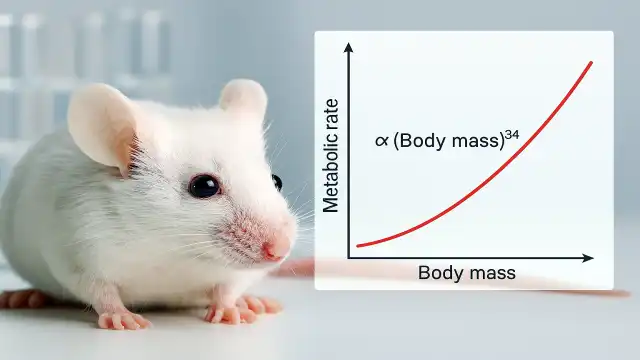
Before we calculate Bigfoot’s breakfast, we need to understand how animal metabolism works. This brings us to Kleiber’s Law. Back in the early 1930s, a biologist named Max Kleiber noticed a fascinating pattern in nature. He figured out that an animal’s resting energy needs don’t just multiply directly with its weight. In fact, if you double an animal’s size, it doesn’t need twice as much food.
Instead, metabolism scales at a three quarters power of the animal’s mass. To clarify, smaller animals burn calories incredibly fast. Larger animals, on the other hand, are much more energy efficient. A massive elephant burns fewer calories per pound than a tiny mouse.
Therefore, scientists use a specific formula to find a creature’s Basal Metabolic Rate (BMR). BMR is basically the number of calories your body burns just staying alive in bed all day. No running. No hunting. Just breathing and keeping your organs working. The formula looks like this:
BMR = 70 × (Mass in kg)^0.75
Undeniably, this rule works for mice, dogs, humans, and whales. So, why wouldn’t it work for a mythical 800-pound ape?

Crunching the Numbers for an 800-lb Sasquatch
Let’s do the math. First, we need to convert Bigfoot’s weight into kilograms. An 800-pound Sasquatch weighs roughly 363 kilograms.
Next, we plug that hefty number into Kleiber’s equation. We take 363 to the power of 0.75, which gives us about 83.25. Then, we multiply that by 70.
The result? Our furry friend has a BMR of roughly 5,828 calories per day.
However, remember what BMR actually means. That is just the bare minimum to keep his heart beating while taking a nap in a cave. Bigfoot isn’t sleeping all day. He is hiking through steep mountains, avoiding trail cameras, and actively hunting for food. Thus, we must account for physical activity.
The Activity Multiplier
In the scientific community, we use a Physical Activity Level (PAL) to find total daily energy expenditure. According to the World Health Organization (WHO), a typical active human has a PAL of about 1.5 to 1.7. Similarly, wild primates like gorillas and chimpanzees fall into this moderate to high activity range.
If Bigfoot is moderately active, we multiply his BMR (5,828) by 1.5. This brings us to around 8,742 calories a day.
Moreover, if it’s a harsh winter and he is constantly on the move, that multiplier jumps to 2.0. Consequently, a highly active Sasquatch burns a whopping 11,656 calories daily.
Let that sink in. A typical human eats about 2,000 to 2,500 calories. Bigfoot needs the equivalent of about 21 McDonald’s Big Macs every single day just to survive.

What Would an 800-lb Sasquatch Actually Eat? (Diet Breakdown)
Now we know the amount of food. But what exactly is on the menu? To figure this out, we can look at his closest real world relatives and neighbors: the silverback gorilla and the grizzly bear.
Wild silverback gorillas weigh between 350 and 450 pounds. They eat roughly 5,000 to 9,000 calories a day. Interestingly, their diet is almost entirely plant based. Gorillas munch on leaves, stems, and bamboo. Because plants are so low in calories, a silverback spends up to 14 hours a day just chewing.
Conversely, grizzly bears are opportunistic omnivores. They eat whatever they can get their heavy paws on. Could Bigfoot survive on just leaves like a gorilla? Probably not. The Pacific Northwest doesn’t have the same dense, year round vegetation as an African rainforest. As a result, Bigfoot would likely have to eat like a bear.
Here is a highly probable breakdown of a Sasquatch’s diet:
- Protein (Meat and Fish): Salmon would be an absolute goldmine. A single fresh sockeye salmon packs about 4,500 calories. If Bigfoot caught just three salmon, his daily calorie needs would be met. Deer, elk, and small rodents would also provide crucial fats.
- Foliage and Foraging: Berries are nature’s candy. During late summer, black bears and grizzlies consume tens of thousands of wild berries a day. Bigfoot would definitely raid wild blackberry and huckleberry bushes.
- Insects and Grubs: Don’t laugh. Termites and ants are incredibly protein dense. Bears routinely flip massive logs to eat the insects underneath. A smart primate would do the exact same thing.
Bigfoot vs. The Wild (Comparative Table)
How does our mythical ape stack up against real heavyweights? Let’s check the biological stats.
| Animal | Estimated Weight | Normal Daily Calories | Max Calories (Hyperphagia) | Primary Diet Type |
| Bigfoot | 800 lbs (363 kg) | 9,000 – 12,000 kcal | Unknown (Likely 30k+) | Omnivore (Plants, Fish, Meat) |
| Grizzly Bear | 600 – 800 lbs | 5,000 – 8,000 kcal | 20,000 – 100,000 kcal | Omnivore (Berries, Fish, Elk) |
| Silverback Gorilla | 350 – 450 lbs | 5,000 – 9,000 kcal | N/A (Year-round foraging) | Herbivore (Leaves, Bamboo) |
| Human (Adult Male) | 180 – 200 lbs | 2,000 – 2,500 kcal | N/A | Omnivore (Highly varied) |
Notice something crazy? Grizzly bears usually eat fewer baseline calories than our Bigfoot estimate. However, during the fall, bears enter a intense phase called hyperphagia. They eat non stop to prepare for winter, consuming up to 100,000 calories of salmon a day! If Bigfoot faces freezing winters, he would need to gorge just like a grizzly.
Foraging Strategies: The Heavy Lifting of Survival
Finding 10,000 calories in the wild is no walk in the park. It requires massive amounts of time and energy. Consequently, Bigfoot would need a brilliant foraging strategy to avoid starving.
- Following the Seasons: Just like indigenous hunter gatherers and local wildlife, Bigfoot would have to move constantly. Spring means fresh green shoots and roots. Summer brings berries. Fall is all about the massive salmon run and hunting deer.
- Energy Efficiency: Remember, chasing an elk burns a ton of calories. If Bigfoot sprints for an hour but misses the catch, he operates at a severe caloric deficit. Therefore, he would likely rely on ambush tactics or scavenging predator kills. Why hunt when you can easily scare a pack of wolves away from their meal?
- Nocturnal Advantage: Most Bigfoot sightings happen at night. From a biological standpoint, this makes perfect sense. Hunting at night helps avoid human detection. Furthermore, it allows a massive predator to catch sleeping prey completely off guard.
The Gut Biome: Digestion is the Real Hero
If Bigfoot leans heavily on plant matter during lean winter months, his gut biome must be extraordinary. Gorillas have a massive hindgut. Indeed, this specialized digestive system ferments tough plant fibers into usable fatty acids. This is exactly why silverbacks have large, barrel shaped bellies. Consequently, if Bigfoot survives on pine needles and tough roots during winter, he wouldn’t look like a ripped bodybuilder. He would likely have a massive, round gut designed purely for fermentation.

Hyperphagia: Preparing for the Freeze
We previously mentioned grizzly bears entering hyperphagia. Fascinatingly, this is a biological drive to gorge before winter scarcity. During this phase, bears can pack on four pounds of body weight per day. If Bigfoot lives in snowy, mountainous climates, he must do the exact same thing. Therefore, his late autumn caloric intake could easily skyrocket from 10,000 to well over 30,000 calories. He would be hunting non stop, storing thick layers of fat to insulate his body and fuel him through the freezing months.
Could the Woods Actually Support Him?
This is the ultimate million dollar question. Can the forests of North America support a breeding population of 800-pound, 10,000-calorie a day apes?
Truthfully, it is a massive biological stretch. Apex predators require huge territories. A single grizzly bear needs up to 600 square miles just to find enough food. Moreover, a population of giant apes would leave behind massive, undeniable ecological footprints. We would see decimated berry patches, thousands of half eaten salmon skeletons, and enormous amounts of scat. Yet, the forest remains relatively undisturbed.
Still, the Pacific Northwest is incredibly vast and rich in natural resources. If any environment on Earth could realistically hide a handful of elusive giants, it would be the dense, rainy, food rich coastal forests of Washington and British Columbia.
Biological Bottom Line
Science takes the magic out of things sometimes. Nevertheless, it makes hypothetical questions incredibly fun to answer. By applying Kleiber’s Law, we learned that an 800-pound Bigfoot would need a baseline BMR of roughly 5,800 calories. Factor in the heavy lifting of hiking through the rugged woods, and that number jumps to between 9,000 and 12,000 calories daily.
To survive, Sasquatch couldn’t just casually chew on leaves. He would have to be an aggressive apex omnivore. Ultimately, his days would revolve entirely around finding his next meal, whether that means catching salmon, raiding berry bushes, or scavenging deer.
What do you think? Could a creature this massive truly stay hidden while eating 10,000 calories a day? Drop your thoughts in the comments below! If you loved this deep dive into crypto biology, share this article with your favorite science geek or Bigfoot believer. Don’t forget to subscribe to our newsletter for more mind bending science breakdowns!
Sources help:
- wikipedia.org
- https://www.reddit.com/r/bears/comments/psngea/how_much_food_could_a_fully_grown_grizzly_bear/
- https://www.vitalground.org/fat-bear-week-science/

