

Have you ever invested hours into a gripping television mystery, only to have the rug entirely pulled out from under you? Honestly, that phrase perfectly describes the dizzying experience of watching 1899. Created by Jantje Friese and Baran bo Odar, the brilliant German showrunners behind the critically acclaimed time travel puzzle Dark, this series promised a remarkably wild ride. Initially, it delivered exactly that. Fans tuned in by the millions when the sci-fi thriller dropped on November 17, 2022. However, barely two months later, Netflix swung the executioner’s axe.
Undeniably, this abrupt cancellation left millions of dedicated viewers completely stranded. What exactly was happening on that gloomy, ocean bound steamship? Furthermore, what did that mind bending, futuristic finale actually mean for the characters? Finally, why would a dominant streaming giant scrap a massive show that racked up nearly 80 million viewing hours in its very first week? We are sailing straight into heavy spoiler territory.
What Was 1899 Actually About?
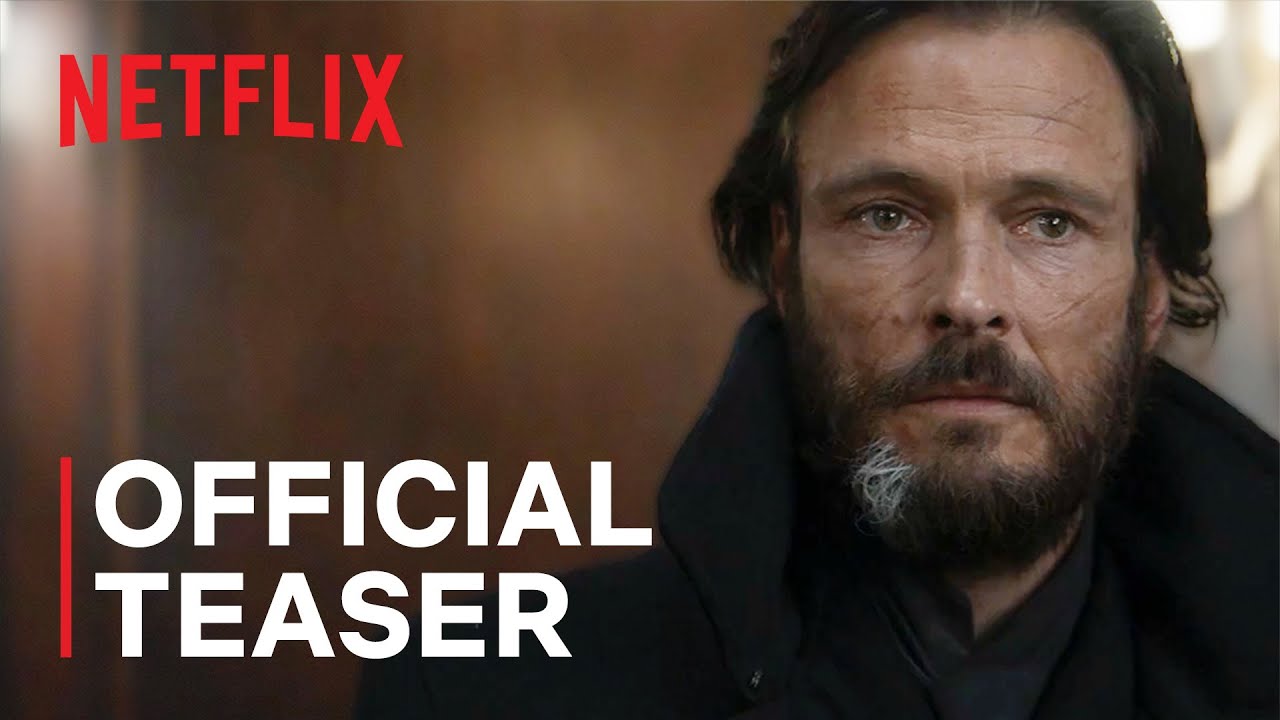
At first glance, 1899 looked like a standard, high budget historical drama. Specifically, it followed a massive steamship called the Kerberos, packed with diverse European migrants leaving London for New York City at the turn of the century. Naturally, every single passenger on board harbored a dark, haunting secret. Instead of a smooth, hopeful journey toward the American Dream, things got terrifyingly weird fast.
Suddenly, the crew received a mysterious distress signal from the Prometheus. Interestingly, this was another massive vessel from the exact same shipping company that had been missing for over four months. Captain Eyk (played masterfully by Andreas Pietschmann) made the controversial decision to investigate. Consequently, the waking nightmare officially began for everyone aboard.
Upon boarding the decaying ghost ship, the rescue team found absolutely no adult passengers. Strangely, the only living survivor was a traumatized, silent boy clutching a bizarre black pyramid. From there, the show escalated rapidly into pure psychological sci-fi horror.
The Weird Phenomena on the Kerberos
As the series progressed, the strange occurrences multiplied exponentially. Clearly, normal physics no longer applied.
- Bizarre phenomena: Passengers started dying inexplicably, dropping dead with strange, frozen facial expressions.
- Weird technology: Metallic, scarab like beetles possessed the ability to unlock impenetrable doors, while glowing, futuristic trapdoors appeared hidden beneath ordinary cabin beds.
- Shared trauma: Diverse characters suffered vivid, overlapping flashbacks of their darkest, most deeply buried memories.
Essentially, the show asked viewers to ponder a fundamental, philosophical question: Is any of this actually real? Maura Franklin (Emily Beecham), a pioneering neurologist desperately searching for her missing brother, seemed to hold the vital key. Gradually, observant viewers realized the ship was not physically navigating the Atlantic Ocean. Rather, it was navigating the labyrinth of the human mind.
The Clues We Missed Along the Way
In retrospect, the brilliant creators hid massive clues in plain sight from episode one. For instance, passengers constantly repeated the hypnotic phrase, “Wake up.” Additionally, the exact same mysterious triangular symbol appeared on letters, trapdoors, clothing, and even jewelry.
Moreover, the linguistic barriers were a massive hint. The show featured characters speaking English, German, Spanish, French, Polish, Danish, and Cantonese. Surprisingly, despite not understanding each other’s spoken words, they often perfectly understood each other’s emotional intentions. Subconsciously, their minds were linked.
Another glaring clue was the erratic nature of the ocean itself. The water never looked entirely natural. Sometimes, the distant horizon glitched like a buffering computer monitor. Ultimately, these subtle details cleverly foreshadowed the colossal twist waiting at the end of the voyage.
Decoding the Shocking Ending of 1899
Did your jaw completely hit the floor during the frantic final episode? Unquestionably, you were not alone in your utter confusion. Basically, the creators abandoned the gritty 19th century setting entirely during the last ten minutes. Instead, they thrust the audience down the rabbit hole into a cold, futuristic reality.
It Was All a Computer Simulation
Ultimately, the Kerberos was never a physical ship. In reality, the entire harrowing voyage was a highly advanced, meticulously coded computer simulation. The terrified passengers were trapped inside a continuous, inescapable eight day loop. Whenever the simulation inevitably failed or degraded, the hidden program simply reset everyone’s memories and started the voyage over.
Originally, Maura firmly believed her cruel father, Henry Singleton, created this digital prison to sadistically study human behavior under extreme stress. However, the finale completely flipped the script. Maura herself originally built the simulation architecture. Specifically, she designed it to cope with the immense, crushing pain of losing her dying son, Elliot. Tragically, she wanted to keep his fading consciousness alive forever in a controlled digital world.
Unfortunately, her private grief project was maliciously hijacked. Her actual husband, Daniel (Aneurin Barnard), spent the entire excruciating season trying to wake her up from the inside. Eventually, he successfully managed to hack and rewrite the simulation’s core code. Therefore, Maura could finally break the torturous loop.
Waking Up in the Year 2099
Eventually, Maura inserted the awakening “key”, a small pyramid and a matching ring, into a hidden socket. Instantly, the dreary 1899 world dissolved into blackness. She slowly opened her eyes to a completely different, terrifying reality.
Strikingly, Maura awoke strapped tightly to a mechanical chair. She was inside a sleek, dimly lit, futuristic spaceship. Curiously, the other surviving passengers from the Kerberos were asleep in high tech pods situated right next to her. She unbuckled herself and anxiously looked out the nearest window. There, endless stars and distant galaxies replaced the ocean water.
Shockingly, a blinking computer terminal displayed the current date: October 19, 2099. Additionally, the glowing text revealed the massive spaceship’s actual name was the Prometheus. Literally, they had been on the Prometheus the entire time, just not the 1899 nautical version.
The Ultimate Betrayal: Enter Ciaran
Just when Maura thought she was finally free from the digital prison, a chilling message appeared on the screen. Cruelly, it read: “Hello Maura. Welcome to reality.” The arrogant sender? Her elusive brother, Ciaran.
Apparently, Ciaran had forcefully taken complete control of the entire simulation infrastructure. While Maura was hopelessly trapped inside the 1899 loop, he was running the massive operation out in 2099. Consequently, this begged a terrifying question. Was the 2099 spaceship actual reality, or was it just another layered level of the simulation? Frankly, because of the cancellation, devastated fans will never definitively know for sure.
Why Did Netflix Cancel 1899?
So, why on earth did Netflix pull the plug on such an ambitious project? Undoubtedly, the show boasted a massive built in audience carrying over from Dark. Moreover, it instantly hit Number 2 on the global streaming charts, accumulating nearly 80 million hours viewed in its debut week. Despite these seemingly massive early wins, on January 2, 2023, the creators posted a heartbreaking joint statement on Instagram. Sadly, they formally announced the show would absolutely not return to finish its planned three season story.
Why did a theoretically successful show get the dreaded axe? Truthfully, it boils down to the cold, unforgiving reality of corporate streaming data.
The “Completion Rate” Curse
In the modern streaming era, total viewership hours only tell half the financial story. Instead, Netflix executives care deeply about a hidden, secretive metric known as the completion rate. Simply put, this specific metric tracks exactly how many people actually finish an entire season after starting the first episode.
According to data analytics verified by prominent industry trackers like Inverse, 1899 suffered a dismal, abysmal completion rate. Specifically, only about 32% of curious viewers made it to the finale. Comparatively, shows that successfully earn renewals usually boast completion rates well above the 50% threshold. For example, global phenomenon hits like Squid Game held a staggering 87% completion rate.
Clearly, the deliberate, moody pacing was a massive problem for casual, second screen viewers. 1899 was dense, incredibly slow burning, and required absolute, undivided attention to grasp the multilingual dialogue. Therefore, many impatient people simply tuned out by episode three or four. Ultimately, the Netflix algorithm mathematically viewed this steep drop off as a massive red flag, indicating fans would not reliably return for a second season.
The Staggering €60 Million Budget
Furthermore, the sci-fi epic was astronomically expensive to produce. 1899 officially holds the title of the most expensive German television series ever manufactured. In total, the sweeping production budget hovered around an incredible €60 million (roughly $62.2 million USD).

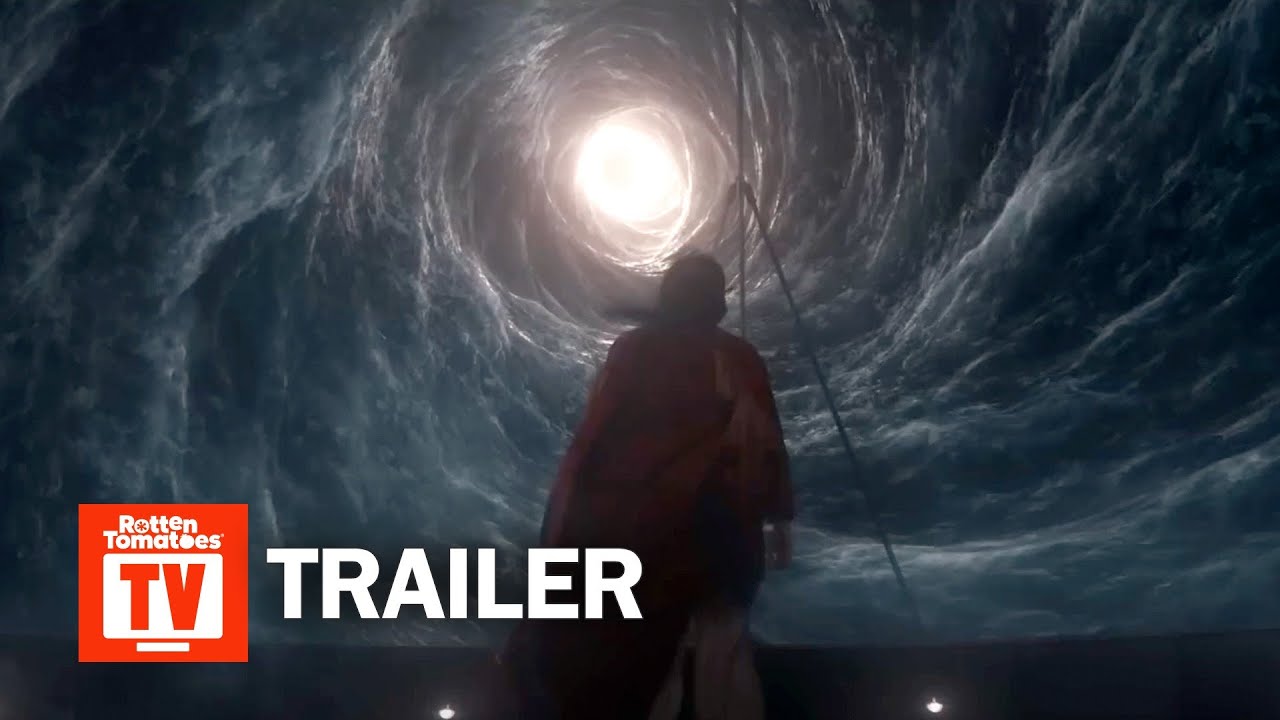
Notably, Netflix directly invested €48 million of their own capital into the monumental project. To shoot the complex series safely during the COVID-19 pandemic, the innovative creators built a state of the art virtual production stage at Studio Babelsberg in Germany. Similar to the groundbreaking Volume technology famously utilized in Disney’s The Mandalorian, this massive, 360 degree LED screen allowed them to simulate realistic oceanic environments without stepping near actual water. While undeniably visually stunning and technically revolutionary, running this technology costs an absolute fortune daily.
Economically, such an immense budget forcefully demands a massive, dedicated, and completing audience to justify future spending. Since the crucial completion rate hovered around a mere 32%, the financial return on investment simply wasn’t there for the executives. Consequently, the brutal corporate math permanently sealed the show’s dark fate.
Could the Show Ever Come Back?
Naturally, passionate fans were deeply outraged by the sudden news. Immediately, aggressive campaigns and petitions sprouted up across Change.org, quickly gathering well over 100,000 angry signatures. Desperate viewers practically begged competitor platforms like Prime Video, Apple TV+, or HBO to step in and save the narrative.
However, the realistic odds of a miraculous revival are practically zero. Netflix legally owns a massive controlling stake in the original intellectual property. Generally, streaming platforms rarely, if ever, sell their expensive original concepts to direct competitors. Financially, a tough pill to swallow is that it makes no business sense for them to hand a rival a pre established fanbase.
Additionally, Friese and bo Odar have already pragmatically moved on to greener pastures. They recently signed a lucrative new overall deal with Netflix to produce a live action adaptation of the popular comic book Something Is Killing the Children. Therefore, the lingering mysteries of the Prometheus spaceship and Ciaran’s ultimate master plan will unfortunately remain permanently unsolved.
Final Thoughts on a Brilliant, Doomed Experiment
Was 1899 a complete failure? Not exactly. Aesthetically, it fearlessly pushed the absolute boundaries of modern virtual production techniques. Narratively, it successfully delivered one of the best, most complex plot twists in recent television history. Unfortunately, it fell tragic victim to the ruthless, unsentimental modern streaming algorithm.
Today, the global TV industry is ruthlessly, exclusively data driven. A television show cannot just be creatively good; it must be aggressively bingeable from minute one. Consequently, dense, complex narratives often get sacrificed for easily digestible, fast paced content. 1899 demanded immense patience, intelligence, and a willingness to feel confused. Sadly, patience is increasingly a rare commodity in 2026.
In retrospect, true sci-fi lovers can still appreciate the spectacular eight episodes we actually received. They boldly stand alone as a beautifully crafted, mind bending puzzle that dared to be totally different.
Have you watched 1899 yet? Are you still harboring anger about the unfair cancellation, or do you honestly think the slow pacing ruined its long term chances? Drop a detailed comment below and let us know your favorite wild theory about Ciaran and the 2099 spaceship! If you deeply loved this analytical deep dive, please share it with your fellow sci-fi nerds to keep the conversation going!

