

Shamrock Meaning & History: The True Story Behind Ireland’s Three-Leaf Symbol
Have you ever stopped mid sip of your perfectly dyed green beer to wonder why we obsess over a tiny three leaf plant every March? You pull out your best emerald sweater, pin a little clover to your lapel, and hope you do not get pinched. But why?
Therefore, it is time to dig into the truth. Interestingly, the story behind the shamrock is packed with rebellion, botanical mysteries, and historical mix ups. Furthermore, the legendary St. Patrick might have hated the color green.
Are you ready to separate the myth from the magic? Let’s dive right in.
Key Takeaways
- The Original Color: St. Patrick was historically linked to blue, not green.
- The Botanical Reality: There is no single “true” shamrock plant. Usually, it is a white clover or lesser clover.
- The Trinity Connection: Legend claims St. Patrick used the three leaves to explain the Holy Trinity to early pagans.
- The Pinch: Wearing green supposedly makes you invisible to mischievous leprechauns.
- The Rebellion: Green became the official color due to Irish nationalism and fierce political resistance in the 1700s.
The Real History of the Shamrock

First, we must ask: what exactly is a shamrock? Unquestionably, it is the most famous emblem of Ireland. However, its origins are a bit murky.
The word itself comes from the Irish Gaelic word seamróg. Consequently, this translates simply to “young clover” or “little clover”. Back in the 5th century, Ireland was a land of Celtic druids and rich pagan traditions. Enter St. Patrick.
St. Patrick and the Holy Trinity (Myth vs. Fact)
Did you know St. Patrick was not actually born in Ireland? In fact, he was born in Roman ruled Britain. Captured by pirates as a teenager, he was brought to the Emerald Isle as an enslaved worker. Eventually, he escaped. Later on, he returned as an ordained Christian missionary.
According to popular legend, Patrick had a brilliant teaching strategy. He needed a simple, relatable way to explain the complex Christian concept of the Holy Trinity to the locals. So, he picked up a common shamrock from the dirt. He pointed to the three distinct leaves attached to a single stem. “Look,” he likely explained, “Father, Son, and Holy Spirit. Three entities, one whole.”
Naturally, this visual aid worked wonders. The Irish people grasped the concept immediately. Thus, the tiny plant became forever linked to the saint. However, historians love to debate whether this actually happened. The first written record linking St. Patrick to the clover did not appear until the 17th century. Still, the powerful story stuck.
The Botanical Truth: What Plant is the Shamrock?
Hold onto your hats, because botanists have some wild news to spill. There is no unique, distinct plant officially classified as a “shamrock.” In reality, several different species claim the title.
Back in 1988, an Irish botanist named E. Charles Nelson decided to settle the debate once and for all. Therefore, he asked people across Ireland to mail him their shamrocks. He planted the living samples, let them grow, and identified them botanically.
The results were totally fascinating:
- 46% were lesser trefoil (Trifolium dubium).
- 35% were white clover (Trifolium repens).
- 7% were black medic (Medicago lupulina).
- 5% were wood sorrel (Oxalis acetosella).
Clearly, the “real” shamrock is mostly in the eye of the beholder. Ultimately, if it has three leaves and grows in the Irish soil, locals happily accept it.
Why Do We Actually Wear Green on St. Patrick’s Day?
March 17 hits, and suddenly the whole world looks like a giant bottle of lime soda. Cities literally dye their rivers. Bakeries churn out mint colored bagels. Friends aggressively pinch anyone wearing neutral tones.
But why green? You might assume it is simply because Ireland is incredibly lush. Unsurprisingly, they do not call it the Emerald Isle for nothing. Yet, the real reason is intensely political and deeply rebellious.
Plot Twist: St. Patrick Wore Blue
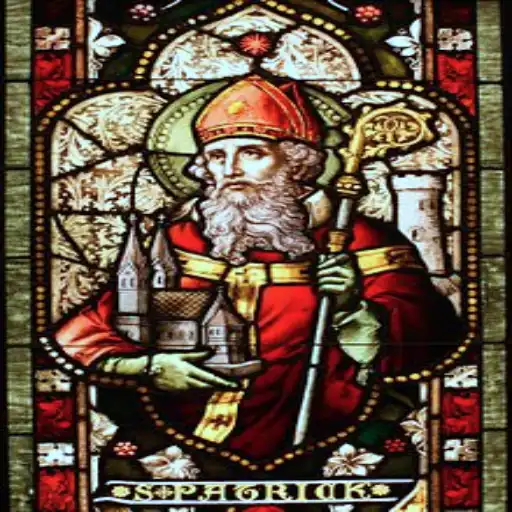
Here is the ultimate historical irony. The man of the hour, St. Patrick, was historically associated with a specific shade of light blue.
For centuries, early religious depictions of the saint showed him draped in stately blue robes. In fact, King George III even created a royal order of knights called the “Order of St. Patrick,” and their official ceremonial color was a hue known as “St. Patrick’s Blue”.
So, when did the massive wardrobe change happen?
Rebellion, Politics, and “The Wearing of the Green”
The shift from blue to green ignited in the 1640s. During this turbulent era, Irish Catholics were actively displaced by the Protestant English Crown. Naturally, the Irish pushed back hard.
Irish rebels flew a bold green flag featuring a golden harp during the Great Irish Rebellion of 1641. Later, during the massive 1798 rebellion against British rule, the color morphed into an undeniable symbol of resistance.
Soldiers and everyday citizens sang a famous, heartbreaking ballad called “The Wearing of the Green”. This song lamented the grim reality that the British were hanging people simply for wearing green garments or shamrock sprigs. Consequently, wearing green transformed into a dangerous, defiant statement of Irish nationalism. Over time, as Irish immigrants moved to America, they brought this fierce pride with them. They wore green to honor their roots, and the aesthetic tradition exploded worldwide.

The Leprechaun Loophole
Now, let’s talk about the dreaded pinching. Why do your coworkers assault your arms if you forget your green shirt?
This quirky, slightly annoying tradition traces back to ancient folklore. According to Irish myth, wearing green makes you completely invisible to leprechauns. These mischievous, fairy like creatures love to cause absolute chaos. If they see you, they will immediately pinch you. Therefore, by wearing green, you hide safely from their radar.
Today, people pinch non green wearers as a friendly warning. Essentially, they are saying, “Hey, a leprechaun is going to get you!” It is a fun, superstitious game that kids absolutely adore.

The Famine, Emigration, and Globalizing the Shamrock
How did an obscure island tradition become a massive global phenomenon? For that, we have to examine one of the darkest periods in human history.
During the mid 1800s, the Great Potato Famine devastated the island. A horrific fungus wiped out the primary food source for millions. Tragically, over a million people perished from starvation and disease. Meanwhile, another million fled the country to seek survival elsewhere.
These desperate immigrants boarded cramped “coffin ships” and sailed to North America, Australia, and the United Kingdom. When they arrived in booming cities like Boston, New York, and Chicago, they faced intense, cruel discrimination.
To maintain their identity and build community strength, they clung tightly to their cultural symbols. The shamrock became an emotional emblem of their beloved homeland. Wearing it was a badge of honor. It proved they survived. As the Irish-American population grew in political and social power, their niche traditions spilled over into mainstream culture. Ultimately, St. Patrick’s Day evolved from a quiet religious feast in Ireland into a loud, proud celebration of immigrant resilience worldwide.
Did the Irish Really Eat Shamrocks?
Surprisingly, historical records suggest that early Irish people did eat something closely resembling the shamrock. During the 1500s, English writers documented that the “wild Irish” consumed shamrocks during times of extreme hardship.
For example, an Elizabethan writer named Edmund Spenser claimed the Irish ate them for pure survival. Another botanist, Matthias L’Obel, noted in 1571 that starving populations ground up meadow trefoil to bake into flatbread.
However, modern historians believe this was a massive linguistic misunderstanding. The English likely confused the Irish word seamróg (clover) with seamsóg, which actually means wood sorrel. Wood sorrel is highly edible, packed with vitamin C, and has a pleasant, sour apple taste. Clover, on the other hand, is tough and terrible to digest. Therefore, they were definitely eating sorrel, not actual clovers!
Shamrock vs. Four-Leaf Clover: Spot the Difference
Wait a minute. Is a four-leaf clover the exact same thing as a shamrock? Absolutely not.
People constantly mix them up. However, the distinction is crucial. A shamrock explicitly has three leaves. This perfectly aligns with the Holy Trinity story St. Patrick told.
Meanwhile, a four-leaf clover is a literal freak of nature. Botanically speaking, it is a rare genetic mutation of the white clover plant (Trifolium repens). According to scientists from Penn State University, your odds of finding one in the wild are roughly 1 in 10,000.
Because they are so incredibly rare, finding one is considered a massive stroke of luck. In Celtic folklore, each leaf holds a very specific meaning:
- Faith
- Hope
- Love
- Luck
So, if you see a St. Patrick’s Day decoration featuring a four-leaf clover, feel free to correct the store manager. Technically, it is historically inaccurate. The true symbol of the holiday only has three leaves.

How to Keep Your Houseplant Shamrock Alive
Right around March, grocery stores start selling cute little potted “shamrock plants.” You buy one, set it on your desk, and two weeks later, it is completely dead. Sound familiar?
Typically, these commercial plants are not actually clovers at all. Instead, they are a species called Oxalis triangularis (false shamrock). Originally native to South America, this stunning plant features beautiful, dark purple or bright green triangular leaves.
Fortunately, taking care of them is relatively easy if you know the secret rules. Here is a quick guide to keeping your Oxalis thriving:
- Let there be light: They crave bright, indirect sunlight.
- Watch the water: Allow the top layer of soil to dry out completely before watering. Overwatering causes root rot, which is an instant killer.
- Embrace the dramatic drop: Interestingly, these plants fold their leaves up at night. They go to sleep just like we do. Do not panic if they look droopy after dark.
- Respect the dormancy: Sometimes, the plant will completely die back and look dead. Actually, it is just resting. Stop watering it, put it in a dark closet for a month, and then bring it back out into the light. It will magically resurrect!
Keep these tips in mind, and your lucky charm will survive long past March 17.
“Drowning the Shamrock” Tradition
Have you ever heard the phrase “drowning the shamrock”? Traditionally, in Ireland, the March festivities concluded with a very specific, quirky drinking ritual.
At the end of the night, a literal sprig of shamrock was placed into the bottom of a glass. Next, the bartender filled the glass to the brim with Irish whiskey or stout beer. The drinker would offer a warm toast to St. Patrick, down the beverage, and then either swallow the shamrock whole or toss it over their left shoulder for good luck.
Admittedly, swallowing a raw weed soaked in whiskey is not for the faint of heart. Yet, it perfectly captures the bold, celebratory spirit of the culture.
More Than Just a Plant
Let’s quickly recap what we have learned today. The shamrock is not a single botanical species. St. Patrick originally preferred the color blue. Wearing green started as an act of fierce political defiance. And leprechauns are apparently entirely colorblind to emerald hues.
Next time you pin a clover to your shirt, you will know the real story. You are not just celebrating a catchy, beer soaked holiday. Instead, you are honoring centuries of complex history, a bit of clever religious marketing, and the unbreakable spirit of the Irish people.
So, go ahead and wear your green proudly. Raise a glass to the fascinating history of the humble shamrock. And whatever you do, keep a sharp eye out for those sneaky leprechauns.
Did this historical deep dive surprise you? Share this article with a friend who always forgets to wear green! Also, let us know in the comments below: Have you ever found a real four-leaf clover in the wild?
Sources help:
- https://en.wikipedia.org/wiki/Shamrock
- https://extension.psu.edu/the-botany-behind-the-shamrock
- https://www.britannica.com/plant/shamrock

