

King George IV & Caroline of Brunswick: History’s Most Disastrous Royal Marriage
The 1795 union between King George IV and his cousin, Caroline of Brunswick, makes today’s tabloids look like a bedtime story.
We are talking about a groom who passed out in a fireplace on his wedding night. We have a bride who allegedly rarely washed her clothes. Throw in a secret illegal marriage, a wildly expensive coronation, and a scandalous public trial, and you get the ultimate recipe for a historic disaster.
At a glance
- A Financial Trap: George (the Prince of Wales) only agreed to marry Caroline because he was drowning in debt. Parliament promised to pay off his massive bills if he tied the knot.
- Hate at First Sight: Upon meeting Caroline, George was so repulsed he immediately demanded a glass of brandy. Caroline thought he looked fat.
- The Fireplace Incident: George spent his wedding night blackout drunk, sleeping on the floor under the bedroom grate.
- The Trial of the Century: When George became King in 1820, he tried to divorce Caroline publicly through Parliament. The public sided with her, forcing him to drop the case.
- Locked Out: Caroline was physically barred from entering Westminster Abbey for George’s lavish coronation in 1821. She died weeks later.
A Match Made for Money, Not Love
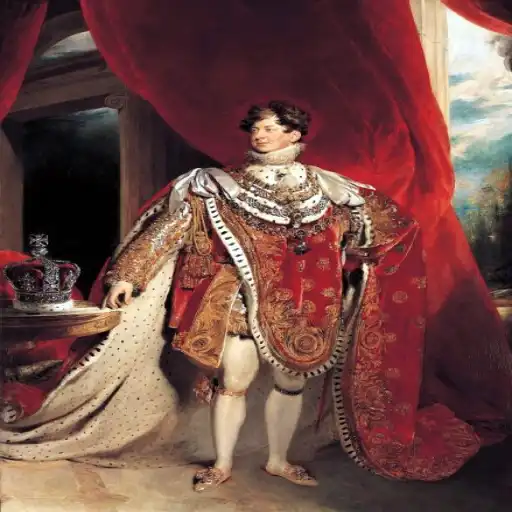
Before he became King George IV, he was just “Prinny” — the Prince of Wales. He lived large, partied hard, and spent money like it grew on trees.
By the time he was in his early 30s, George had racked up an eye-watering debt of £630,000. In today’s money, that translates to tens of millions of dollars. He spent fortunes on gambling, elaborate architecture, and fine art.
There was just one massive problem. George was already married. Sort of.
When he was 23, he fell head over heels for a woman named Maria Fitzherbert. She was beautiful, twice-widowed, and Catholic. British law strictly forbade the heir to the throne from marrying a Catholic without the King’s permission. George didn’t care. He secretly married Maria in her living room in 1785.
Because the marriage broke the Royal Marriages Act, the government viewed it as totally illegal. When George’s creditors finally came knocking, his father (King George III) and Parliament offered him a bailout. They would clear his massive debts on one condition. He had to dump Maria and marry an eligible Protestant princess.
Trapped and broke, George agreed. His arranged bride was his first cousin: Princess Caroline of Brunswick.
The Disastrous First Meeting

Neither bride nor groom wanted this setup. They had never even met.
The British government sent an envoy, Lord Malmesbury, to Germany to fetch the princess. Malmesbury kept a detailed diary, and his notes on Caroline were brutal. He described her as having a pretty face but lacking grace. He bluntly noted her teeth were decaying. Worse, she didn’t seem to care much about personal hygiene. She rarely changed her undergarments and possessed a rather strong body odor.
Malmesbury spent the carriage ride back to England desperately trying to teach Caroline how to wash properly. His lessons clearly failed.
April 1795 finally arrived. The couple met in London. It was a disaster from the second they locked eyes.
George approached his bride, embraced her briefly, and quickly backed away to the corner of the room. He turned to Lord Malmesbury and uttered his famous line: “Harris, I am not well; pray get me a glass of brandy.”

Caroline wasn’t exactly swooning, either. Once George left the room, she turned to Malmesbury and complained that the prince was incredibly fat. He looked nothing like the handsome portraits she had been shown.
The Drunken Wedding Night

Somehow, the royal handlers pushed them toward the altar. The wedding took place on April 8, 1795, at St. James’s Palace.
George treated the three days leading up to the ceremony as a massive drinking binge. By the time he arrived at the chapel, he was barely standing. His groomsmen had to physically prop him up just to get him through the vows.
Things did not improve after the party. The newlyweds retired to their bedchamber. George was so heavily intoxicated that he collapsed on the floor, passing out directly under the fireplace grate. He stayed there until dawn.
Despite the sheer disgust they held for one another, they managed to do their royal duty. Princess Charlotte was conceived shortly after the wedding. She would be their only child.
Separate Lives and The “Delicate Investigation”
Having secured an heir, George decided he was entirely done with his wife. A year after the wedding, he wrote her a blunt letter. He stated they would never share a bed again, effectively separating them permanently.
Caroline took this rejection as a free pass. She moved to Blackheath in London and started living life on her own terms.
Society gossips loved her. She threw wild parties, sat on the floor eating raw onions, and entertained a parade of male visitors. She even kept a clockwork Chinese toy in her room that performed inappropriate movements.
Her lifestyle eventually caught the attention of the crown. Caroline had a habit of adopting orphaned children. In 1802, she took in a baby boy named William Austin. Rumors exploded. People whispered that William was actually Caroline’s illegitimate son by one of her servants.
George seized the opportunity to destroy her. In 1806, he launched a secret government inquiry called the Delicate Investigation.
Investigators interviewed servants and dug into Caroline’s private life. Ultimately, they cleared her of having a child out of wedlock. The baby was proven to be the son of a local sailmaker. However, the report heavily criticized Caroline for her wild behavior. George restricted her access to their daughter, Charlotte, leaving Caroline heartbroken.
Exile and The Italian Courier
Fed up with England, Caroline left the country in 1814. She decided to tour Europe, causing chaos wherever she went.
She attended a high-society ball in Geneva completely naked to the waist. She traveled through Italy, Greece, and the Mediterranean, living wildly. Along the way, she hired a handsome Italian soldier named Bartolomeo Pergami (sometimes spelled Bergami).

Pergami started as a courier. He quickly became her closest companion. Soon, it was an open secret that the two were romantically involved. Witnesses later claimed they shared a small tent on the deck of a ship and took baths together in full view of the staff.
George, stuck back in London, hired spies to follow her. He gathered a massive pile of evidence detailing her relationship with Pergami, waiting for the right moment to strike.
The Trial of the Century (1820)
King George III died in January 1820. After years of acting as Prince Regent, George finally took the throne as King George IV. This meant Caroline was officially the Queen Consort.
George absolutely refused to let her wear a crown. He commanded British ambassadors to ensure foreign courts ignored her royal status. The British government offered Caroline £50,000 a year (a massive fortune) just to stay out of the country.
Caroline refused. She marched straight back to London to claim her rightful title.
The King retaliated by bringing a bill to Parliament. It was called the Pains and Penalties Bill 1820. Under British law, George couldn’t get a standard divorce through the church courts because his own hands weren’t clean; he was a known adulterer. Instead, he used Parliament to pass a law that would strip Caroline of her title and dissolve the marriage on the grounds of her adultery with Pergami.
What followed was essentially a highly publicized trial in the House of Lords.
The Public Backs the Queen
The trial gripped the nation. The government brought in dozens of Italian servants to testify against Caroline. They recounted her sleeping arrangements and shipboard romances.
But George severely miscalculated the public’s mood. He was deeply unpopular. Ordinary citizens hated his lavish spending, heavy drinking, and arrogance. They viewed Caroline as a victim of a cruel, hypocritical husband.
Huge crowds gathered outside Parliament every day. The London mob cheered for Caroline’s carriage and booed the King’s allies. Political reformers used her case as a symbol to attack the corrupt monarchy.
Caroline had a brilliant lawyer named Henry Brougham. Brougham tore the King’s witnesses apart on the stand. He pointed out the sheer hypocrisy of a King who had mistresses everywhere trying to ruin his wife for doing the exact same thing.
The bill barely passed the House of Lords. The margin was so razor-thin, and the threat of public riots was so high, that the government completely dropped the case before it ever reached the House of Commons.
Caroline won. The streets of London erupted in celebrations, bonfires, and dances.
The Ultimate Humiliation: The 1821 Coronation
George was furious. He might have lost the trial, but he was still the King, and he controlled the big events.

His coronation was scheduled for July 19, 1821. George wanted to outshine Napoleon. He threw the most expensive party in British history, commissioning a custom crown loaded with 12,000 diamonds.
He explicitly banned Caroline from attending.
Caroline refused to take no for an answer. On the morning of the coronation, she showed up at Westminster Abbey in her carriage. She marched right up to the heavy wooden doors and demanded entry.
“I am the Queen of England,” she shouted.
The guards refused to let her in. As she frantically ran from door to door trying to find an open entrance, the King’s officials slammed them in her face. The crowd, sensing the awkwardness, began to hiss and jeer. Defeated and humiliated, Caroline climbed back into her carriage and rode away.
A Tragic End
The stress of the public rejection broke her. Caroline fell severely ill just days after the coronation.
She died on August 7, 1821, a mere 19 days after being locked out of Westminster Abbey. Medical historians suspect she suffered from a bowel obstruction, though rumors of poisoning swirled heavily at the time.
Even in death, she got one last dig at her terrible husband. She demanded her body be returned to Germany. Before they buried her, her supporters engraved a final, biting message on her coffin plate:
“Caroline, the Injured Queen of England.”
George IV ruled for another nine years. He died in 1830, heavily obese, mocked by the press, and largely unmourned by the public he had exploited.
The Legacy of a Royal Disaster
When we look back at the marriage of George IV and Caroline of Brunswick, it stands as a glaring example of royal dysfunction. It highlights the brutal double standards of the 19th century. A King could carry on with countless mistresses, but a Queen was publicly dragged through the mud for seeking her own happiness.
Their story isn’t just about a bad date or a terrible wedding night. It’s a fascinating window into how public opinion can challenge absolute power. The people of England used a messy royal divorce to show a detached, greedy King that he couldn’t do whatever he wanted without facing the mob.
What did you think of this chaotic royal romance? Drop a comment below and share this article with your fellow history buffs! Want more royal scandals? Check out our other historical deep dives.

