
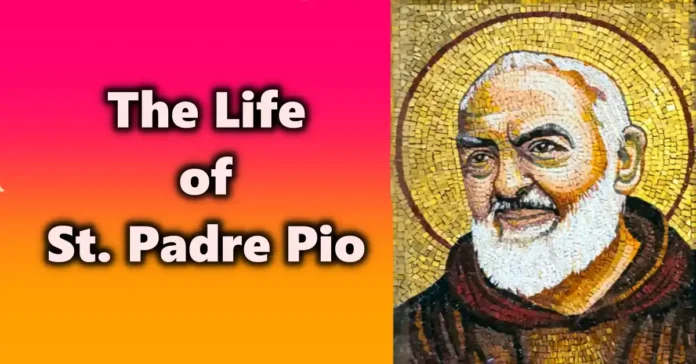
St. Padre Pio’s Biography: The History, Stigmata, and Miracles
The life of Francesco Forgione, widely known as St. Padre Pio. This isn’t just another dusty historical biography. The man practically walked between two worlds. He bore the bleeding wounds of Christ, reportedly appeared in two places at once, and spearheaded a hospital that still operates today.
People flocked to his tiny Italian town by the millions. Doctors tried to disprove him. Skeptics demanded answers. Yet, decades after his death, his legacy remains massive. Who exactly was this bearded Capuchin friar? Why did people wait in line for days just to speak with him?
At a glance
- Humble Beginnings: Born Francesco Forgione in 1887, he came from a deeply religious farming family in southern Italy.
- The Stigmata: In 1918, he manifested the five wounds of Christ. Doctors repeatedly examined them but could never find a natural or chemical explanation.
- Documented Miracles: Witnesses credited him with bilocation, reading souls in confession, and astonishing physical healings.
- Lasting Legacy: Pope John Paul II canonized him in 2002, cementing his place as one of the most beloved modern saints.
The Early Years
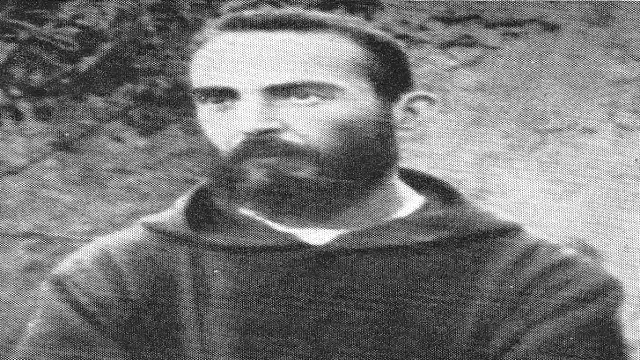
Francesco Forgione was born on May 25, 1887. His hometown of Pietrelcina sat quietly in the rural hills of southern Italy. Life was tough. His parents, Grazio and Maria Giuseppa, were poor peasant farmers. They worked relentlessly just to put food on the table.
Faith was everything to the Forgione family. Locals even nicknamed them the “God-is-everything-people.” Daily Mass and evening rosaries anchored their schedule. Francesco absorbed this intense piety like a sponge.
By age five, the boy was already experiencing strange things. He later recounted having regular conversations with Jesus, the Virgin Mary, and his guardian angel. He assumed everyone saw them. Sadly, he also reported terrifying attacks from demonic forces, a struggle that would haunt him for the rest of his life.
At ten years old, Francesco knew his exact path. He wanted to become a Capuchin friar. Why? Because he saw a bearded monk begging for alms and thought it was the coolest thing ever. His father actually traveled to America to find work just to pay for the private tutoring his son needed to enter the seminary. Grazio’s sacrifice paid off. In 1903, at age fifteen, Francesco entered the Capuchin novitiate. He took the Franciscan habit and a brand new name: Brother Pio.
The Weight of the Habit
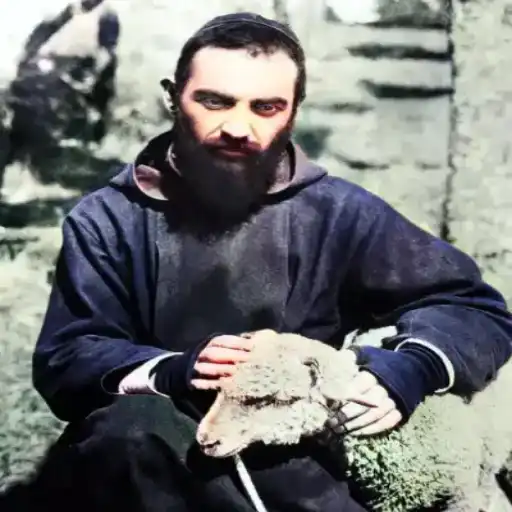
Seminary life tested him severely. Friars fasted constantly, woke up in the middle of the night to pray, and lived in stark poverty. Pio thrived spiritually but physically broke down. His health was a constant nightmare. Undiagnosed stomach issues, unexplained fevers, and intense chest pains kept him bedridden for long stretches.
Superiors actually sent him home to Pietrelcina multiple times, hoping the fresh country air would cure him. Nothing worked completely. Even while resting at home, his spiritual intensity grew. He spent hours deep in prayer. Sometimes his masses lasted for hours because he would freeze in silent contemplation. When asked to speed up, he simply admitted he could not.
Despite the grueling physical setbacks, he was ordained a priest on August 10, 1910. He officially became Padre Pio. He had no idea his physical suffering was just getting started.
The Stigmata: A Medical Mystery
Let’s talk about the phenomenon that made him globally famous. It happened on September 20, 1918.
Padre Pio was praying alone in the choir loft of his friary in San Giovanni Rotondo. Suddenly, he experienced a profound vision. When it ended, he looked down at his hands. They were pierced and bleeding. He checked his feet and found identical wounds. A deep, inverted cross-shaped gash marked his side.
These were the stigmata — the crucifixion wounds of Jesus.
He was terrified. The friar actually prayed for God to take the visible marks away, hoping to avoid the public spectacle. The pain could stay, he reasoned, but the bloody holes were utterly embarrassing. Heaven apparently said no. The wounds remained open, bleeding, and fresh for the next fifty years.
The Doctors Step In
You might be thinking this was a hoax. Surely, someone investigated, right? The Catholic Church is historically incredibly skeptical of mystical claims. They dispatched top-tier medical professionals to figure out what was happening.
Enter Dr. Luigi Romanelli, chief surgeon from a nearby hospital. He examined Padre Pio five different times between 1919 and 1920. Romanelli was baffled. The wounds never festered. They never healed. They showed zero signs of standard biological infection. Even more bizarre, they smelled sweet. Typical open wounds smell foul. Padre Pio’s hands often smelled like fresh roses or violets — a phenomenon believers call the “odor of sanctity.”
The Vatican wanted a harsher critic. They sent Dr. Amico Bignami, a brilliant pathology professor from the University of Rome. Bignami was a strict atheist and a logical positivist. He assumed the priest was using carbolic acid to burn his own flesh.
Bignami sealed the friar’s hands in strict, air-tight bandages. He mandated that no one could give Pio any chemicals. The doctor waited, expecting the wounds to heal up nicely. They did not. The bleeding continued completely unchanged. Bignami left stumped. No human science could explain how a man lived for decades with constant, uninfected, bleeding punctures.
Mind-Bending Miracles and Bilocation
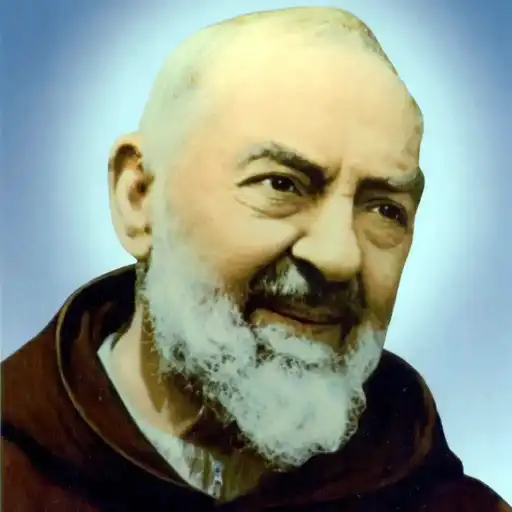
The stigmata brought throngs of people to the isolated mountain town of San Giovanni Rotondo. Everyone wanted to see the bleeding friar. As the crowds grew, so did the reports of mind-bending phenomena.
Padre Pio became famous for reading souls. People would wait in line for days to confess their sins to him. If someone lied or forgot a sin, he would calmly remind them of exactly what they did, where they did it, and who they were with. It terrified some and completely converted others.
Then there was the bilocation. Multiple eyewitnesses swore they saw him in different cities, or even different countries, while he was physically locked inside his Italian friary.
During World War II, American pilots claimed they saw a flying monk in the sky. Allied bombers were ordered to destroy a munitions dump near San Giovanni Rotondo. As the planes approached, pilots reported seeing a massive, bearded friar hovering in the clouds, holding his hands out to stop them. Their planes mysteriously malfunctioned just enough to force them to drop their payloads in empty fields. After the war, a commanding officer visited the friary. He immediately recognized Padre Pio as the man in the clouds.
The Astonishing Case of Gemma Di Giorgi
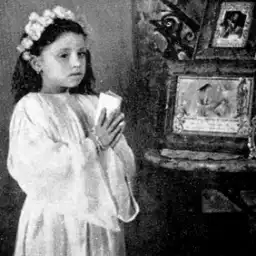
Of all the healings tied to Padre Pio, the story of Gemma Di Giorgi hits the hardest.
Born on Christmas Day in 1939 in Sicily, little Gemma had a severe congenital defect. She was completely blind. Doctors examined her and delivered crushing news. The girl possessed no pupils. Surgery was useless. Her condition was entirely inoperable.
Her grandmother refused to accept this grim reality. In 1947, she packed up the seven-year-old girl and started the long journey to San Giovanni Rotondo. Midway through the train ride, something crazy happened. Gemma pointed out the window and said she could see a steamship on the water. Her grandmother started praying frantically.
When they finally arrived at the crowded friary, Padre Pio called Gemma out by name. He heard her confession. He gently touched her eyes with his wounded hand and traced the sign of the cross.
“The child must not weep and neither must you for the child sees, and you know she sees,” the friar told her grandmother.
They rushed back to Sicily to see an ophthalmologist. The doctor was absolutely stunned. He held up objects; Gemma named them perfectly. She could count fingers from sixteen feet away. Science said it was impossible. She still lacked physical pupils, yet her brain was processing visual light flawlessly.
Countless doctors examined Gemma over the years. Nobody could explain it. She grew up, went to school, and lived a completely normal life, traveling the world to share her impossible story.
The Heavy Cross of Fame
You would think the Vatican loved having a living saint. The truth is quite the opposite.
Church officials hated the circus surrounding him. They feared mass hysteria. During the 1920s and 1930s, the Holy Office heavily restricted his ministry. They banned him from saying Mass in public. They forbade him from hearing confessions. He was essentially kept on lockdown.
How did he react? He obeyed. Padre Pio didn’t throw a tantrum or run to the press. He accepted the restrictions with quiet humility. He often said, “I only want to be a poor friar who prays.” His total obedience eventually convinced the Vatican of his authenticity. By 1933, they lifted the bans, and the crowds came roaring back.
He didn’t just pray for people. He built things. Seeing the brutal poverty and lack of medical care in southern Italy, he launched a massive project. In 1956, he opened the Casa Sollievo della Sofferenza (Home for the Relief of Suffering). It started as a solid regional clinic. Today, it stands as one of the most advanced and respected research hospitals in all of Europe.
A Legacy Written in Blood and Faith
The famous friar carried his heavy, painful cross until the very end. By September 1968, his body was failing. The stigmata, which had bled every single day for half a century, finally began to heal and disappear. He passed away on September 23, 1968, at the age of 81.
His funeral drew over a hundred thousand people. The poor farmers, the cured patients, and the spiritual children he guided all came to say goodbye.
Decades later, the Catholic Church formally recognized his heroic virtue. On June 16, 2002, Pope John Paul II officially canonized him before a record-breaking crowd in Rome. St. Padre Pio remains a powerhouse figure in modern spirituality.
His famous motto still echoes around the globe: “Pray, hope, and don’t worry. Worrying is useless. God is merciful and will hear your prayer.”
Whether you view him as a genuine conduit of divine power or a fascinating historical enigma, Francesco Forgione’s impact is undeniable. He challenged the limits of science, revolutionized a poor Italian village, and brought hope to millions of desperate souls.
What Do You Think?
Do the medical records of the stigmata surprise you? Have you ever heard a wild story of bilocation or unexplainable healing? Drop your thoughts, questions, or your own spiritual experiences in the comments below! Let’s keep the conversation going.
A Blind Girl’s Sight Restored, Discover more about the astonishing Gemma di Giorgi miracle where a young girl born without pupils was completely healed after an encounter with the famous friar.

