

Should Christians Celebrate Christmas? Biblical Facts & 2026 Reflections
Every December, the internet turns into a battlefield.
On one side, you have the “Keep Christ in Christmas” crowd, posting Nativity scenes and singing Silent Night with genuine reverence. On the other side, you have the “Christmas is Pagan” squad, armed with memes about Saturnalia, Nimrod, and the winter solstice.
If you are a Christian in 2026, it can feel confusing. You just want to drink hot cocoa and celebrate Jesus, but suddenly you’re wondering if your Christmas tree is actually an ancient idol.
So, who is right?
Is Christmas a holy celebration of the Incarnation? Or is it a recycled pagan party that Christians should avoid like the plague?
The answer isn’t a simple “yes” or “no.” It is a messy, fascinating mix of history, theology, and personal liberty. Let’s cut through the noise, look at the cold hard facts, and figure out how to navigate this holiday without losing your mind.
The Elephant in the Room: Is Christmas Pagan?
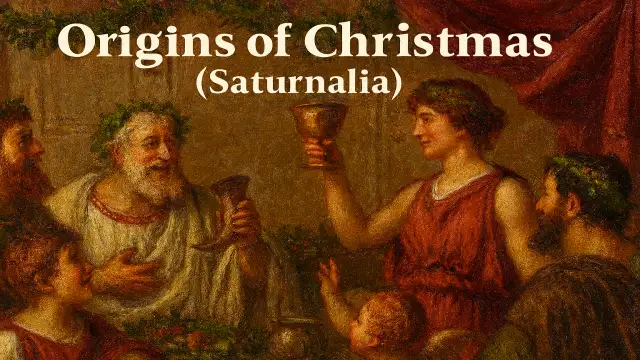
Let’s rip the bandage off immediately. Many traditions we associate with Christmas did not start in the Bible. They started in the forests of Northern Europe and the temples of Rome.
If you Google “origins of Christmas,” you will inevitably hit Saturnalia.
Saturnalia was an ancient Roman festival honoring the god Saturn. It ran from December 17th to the 23rd. It was a time of lawlessness, feasting, gift-giving, and partying. When Christianity became the dominant religion in Rome, the argument goes that the church simply “slapped a Jesus sticker” on Saturnalia to make the transition easier for pagans.
The Yule Connection
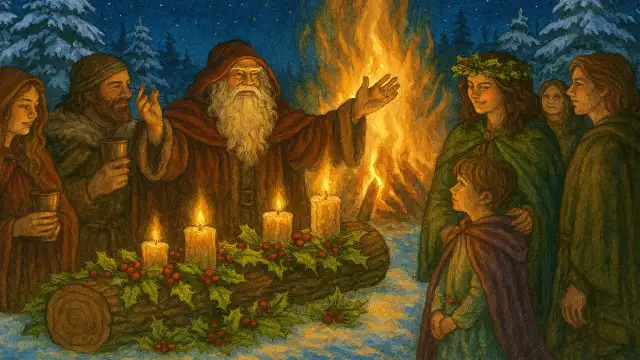
Then there is Yule, a winter festival celebrated by Germanic peoples. They brought evergreen trees indoors to celebrate the persistence of life during the dead of winter. Does that sound familiar?
Consequently, critics argue: If the roots are pagan, the fruit is rotten.
However, historical nuance is important here. Just because a culture did something similar doesn’t mean it’s the same thing. Sharing a meal (feasting) or giving a gift isn’t inherently pagan; it’s human.

Furthermore, the “pagan copycat” theory is often overstated. Many scholars now believe the date of December 25th wasn’t just chosen to hijack a pagan holiday, but was calculated based on strange ancient Jewish theology regarding the “completeness” of a prophet’s life (more on that in a minute).
What Does the Bible Actually Say? (Spoiler: Not Much)
If you are looking for a verse that says, “Thou shalt celebrate the birth of Jesus on the 25th of December,” you are going to be searching for a long time.
The Bible is surprisingly silent on when Jesus was born.
- No Date: The Gospels (Matthew, Mark, Luke, John) give zero specific dates.
- No Command: Jesus commanded us to remember His death (Communion/The Lord’s Supper). He never commanded us to remember His birth.
- The Shepherd Clue: Luke 2:8 mentions shepherds “keeping watch over their flock by night.”
Meteorologically speaking, December in Judea is cold and rainy. Shepherds typically didn’t keep sheep out in the open fields at night during mid-winter; they kept them corrupted in caves or shelters. This suggests Jesus was likely born in the spring (lambing season) or autumn (during the Feast of Tabernacles), not winter.
So, if the Bible doesn’t say “celebrate Christmas,” does that mean we shouldn’t?
Not necessarily. The Bible also doesn’t command us to use microphones, drive cars to church, or celebrate wedding anniversaries. The absence of a command is not the same as a prohibition. This leads to a major theological divide known as the Regulative Principle vs. the Normative Principle.
- Regulative Principle: If Scripture doesn’t command it, we cannot do it in worship. (Strict).
- Normative Principle: If Scripture doesn’t forbid it, we can do it. (Flexible).
Most modern Christians operate under the Normative Principle. They believe we have the freedom to create holidays that honor God, provided they don’t contradict His law.
The Great Date Debate: Why December 25th?
If Jesus wasn’t born in December, why do we have this date?
There are two main theories. We already covered the “Pagan Replacement” theory (hijacking Sol Invictus/Saturnalia). But there is a second, more “math-nerd” theory called the Integral Age.
Early Christians (around 200 AD, long before Constantine) believed that great prophets died on the same date they were conceived.
Here is the ancient math:
- They calculated that Jesus was crucified on March 25th (Passover).
- Therefore, He must have been conceived on March 25th (The Annunciation).
- Add exactly nine months to a March 25th conception.
- Result: December 25th.
Whether this math is historically accurate is irrelevant. What matters is intent. It shows that early Christians might have chosen the date in a sincere attempt to honor biblical prophecy, not just to copy their pagan neighbors.
The Puritans Hated Christmas (Yes, Really)
If you think the “War on Christmas” is a modern invention by cable news, think again. The original “War on Christmas” was started by Christians.

In the 17th century, the Puritans the super-strict Protestants who settled America banned Christmas.
- 1647: The English Parliament officially abolished Christmas.
- 1659: The Massachusetts Bay Colony made it a crime to celebrate Christmas. If you were caught feasting or skipping work, you were fined 5 shillings.
Why?
They agreed with the “it’s pagan” crowd. They despised the drunkenness and disorder that accompanied the holiday in England (think less “Silent Night” and more “frat party”). They also hated it because it was “Popish” (too Catholic).
For the Puritans, true worship was spiritual and disciplined. They viewed the December rituals as man-made distractions. It wasn’t until the mid-19th century—thanks partly to Queen Victoria and Charles Dickens that Christmas became the cozy, family-centered holiday we know today.
The 2026 Perspective: Commercialism vs. The Incarnation
Fast forward to 2026. The problem today usually isn’t about Saturn worship. Nobody is accidentally accidentally worshiping a Roman agriculture god when they buy a PlayStation 6.
The modern idol is Mammon (money/materialism).
The argument against Christmas today is often less about paganism and more about distraction.
- Are we celebrating Jesus?
- Or are we celebrating debt, stress, and obligation?
If your Christmas involves trampling someone at Walmart to get a deal, you have probably missed the point. However, this doesn’t make the holiday evil; it makes us easily distracted.
The beauty of Christmas, when stripped of the fluff, is the Incarnation. It is the staggering theological truth that the Creator of the universe became a microscopic embryo. He entered the mess of humanity to save it.
That is worth celebrating. Whether you do it in December, September, or July.
The Verdict: Romans 14 and Christian Liberty
So, should you celebrate it?
The Bible actually gives us a direct answer for disputes like this. It is found in Romans 14.
The early church was fighting about special days, too. Some Jewish Christians wanted to keep the Sabbath and holy feast days. Gentile Christians didn’t see the point. Paul didn’t shut either side down. instead, he wrote this:
“One person esteems one day as better than another, while another esteems all days alike. Each one should be fully convinced in his own mind. The one who observes the day, observes it in honor of the Lord.” — Romans 14:5-6
This is the “Get Out of Jail Free” card for the Christmas debate.
The “Conscience” Rule
- If your conscience bothers you: If you feel that a Christmas tree is an idol or that the date is too pagan, do not celebrate it. To go against your conscience is sin (Romans 14:23). You are free to treat December 25th like any other Tuesday.
- If you celebrate with gratitude: If you use the day to focus on Jesus, read Scripture, and love your family, you are “observing it to the Lord.” God knows your heart. He knows you aren’t worshipping Saturn.
Don’t Be a Jerk
The second part of Romans 14 is just as important: Don’t judge the other side.
- If you celebrate, don’t look down on those who abstain as “legalistic buzzkills.”
- If you abstain, don’t judge those who celebrate as “pagan compromisers.”
Unity in Christ is more important than agreement on a calendar date.
How to “Redeem” the Day
If you choose to celebrate in 2026, how do you do it without getting sucked into the commercial void?
- Read the Text: Before the presents are ripped open, read Luke 2. Center the morning on the why.
- The “Jesus Gift”: Some families bake a birthday cake for Jesus or give a donation to charity equal to what they spent on gifts.
- Cut the Stress: If the decorations and the cooking make you angry or anxious, stop doing them. You don’t need a “perfect” aesthetic to honor God.
- Truth Over Tradition: Teach your kids the difference. “Santa is a fun game we play, but Jesus is the real King who saved us.”
Conclusion
Is Christmas pagan? Historically, parts of it are.
Is Christmas biblical? The event (birth) is, but the date is not.
Should Christians celebrate it? That is between you and the Holy Spirit.
You have the liberty to reject the holiday if it stumbles you. You also have the liberty to reclaim the day, plundering the “Egyptian gold” of secular tradition to build a celebration for the King of Kings.
God isn’t checking your calendar. He is checking your heart.
What Do You Think?
Does your family go “all out” for Christmas, or do you keep it low-key to avoid the pagan roots?
Drop a comment below and let us know how you handle the “Christmas Debate” in your home!

