
The Unsolved Murder of Sir Edmund Berry Godfrey: Popish Plot Conspiracy and England’s Anti-Catholic Hysteria
It was the 17th-century equivalent of a “fake news” viral sensation, but with way more beheadings.
Imagine a conspiracy theory so potent it paralyzes a government, executes innocent people, and turns a neighbor against neighbor. No, we aren’t talking about a modern X.com thread this is London, 1678. The spark? The brutal, mysterious murder of a magistrate named Sir Edmund Berry Godfrey.
His death is one of history’s greatest cold cases. Was it a Catholic hit job? A staged suicide? Or a political false flag operation that would make Machiavelli blush? Let’s crack open the files on the murder that drove England mad.
The Body on Primrose Hill

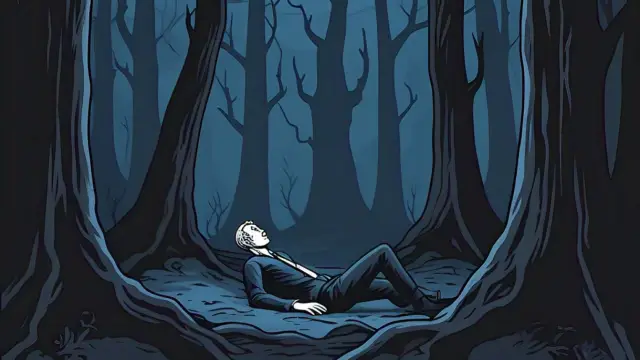
On October 12, 1678, Sir Edmund Berry Godfrey a serious, well-respected magistrate known for his “melancholic” nature stepped out of his home near Charing Cross and vanished into the London fog.
For five days, the city held its breath. Rumors swirled. Then, on October 17, a couple of men stumbling through the brambles of Primrose Hill found him.
The scene was gruesome and bizarre:
- Godfrey was lying face down in a ditch.
- He was impaled with his own sword, the blade sticking out of his back.
- But here’s the kicker: There was almost no blood at the wound site.
Forensic science didn’t exist yet, but even 17th-century examiners knew that dead men don’t bleed. This meant he had been stabbed after he died. Further examination revealed his neck was broken and covered in bruises. He had been strangled, his neck snapped, and then clumsily staged to look like a suicide or perhaps a ritual killing.
His money and rings were still in his pockets. This wasn’t a robbery. It was a message.

The Spark: Titus Oates and the “Popish Plot”
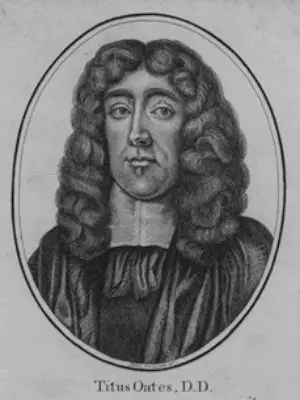
To understand why a magistrate’s death caused a national meltdown, you have to meet Titus Oates.
Think of the most toxic, lying, manipulative person you’ve ever met, then multiply that by ten. Oates was a disgraced clergyman with a chin like a anvil and a soul to match. Along with his sidekick, the paranoid Israel Tonge, Oates concocted a wild story: The “Popish Plot.”
They claimed there was a secret Jesuit cabal planning to:
- Assassinate the Protestant King Charles II.
- Install his Catholic brother, James, Duke of York, on the throne.
- Massacre Protestants across England.
It was total hogwash. But Oates needed someone to make it official. He took his depositions to a magistrate Sir Edmund Berry Godfrey.
Godfrey was known for being fair, even to Catholics, which was rare for the time. He took Oates’s deposition but was reportedly terrified by what he read. He was overheard saying he felt he would be “the first martyr” of this crisis.
When Godfrey turned up dead weeks later, Oates didn’t mourn; he capitalized. He pointed a shaking finger at the Catholics. “See?” he essentially screamed. “They killed the magistrate to hide their plot!”
London exploded.
Hysteria and the “Green Berry Hill” Executions
Panic is a hell of a drug. In the weeks following the discovery, England descended into anti-Catholic hysteria. The King, who knew Oates was a liar but couldn’t stop the tidal wave of public fear, was powerless.

Authorities needed a scapegoat. They found one in a Catholic silversmith named Miles Prance. Under brutal interrogation (and likely torture) in Newgate Prison, Prance cracked. He confessed to a conspiracy he likely knew nothing about and named three innocent men:
- Robert Green
- Henry Berry
- Lawrence Hill
The trio was tried in a kangaroo court where hearsay was treated as gospel. Despite zero physical evidence, they were convicted. On February 26, 1679, they were hanged at Primrose Hill.
In a grim twist of irony that sounds like a bad joke, the execution site was nicknamed “Greenberry Hill” after the three victims. But their deaths didn’t solve the mystery; they only fed the beast. The “Popish Plot” would eventually lead to the execution of over 20 innocent people before Oates was finally exposed as a fraud.
The Suspects: Who Actually Did It?
If Green, Berry, and Hill were innocent patsies, who actually broke Godfrey’s neck? Historians have spent 350 years arguing about it. Here are the leading theories:
1. The Earl of Pembroke (The Revenge Theory)
This is the “Old Hollywood” favorite, championed by mystery writer John Dickson Carr.
- The Motive: Philip Herbert, the 7th Earl of Pembroke, was a violent, alcoholic aristocrat. Godfrey had previously prosecuted him for murder.
- The Evidence: Pembroke had threatened Godfrey. The theory goes that Pembroke and his goons jumped Godfrey, beat him to death in a drunken rage, and then panicked, dumping the body days later.
- Verdict: Plausible. Pembroke was definitely unhinged enough to do it.
2. The Suicide Cover-Up
Historian Alan Marshall (1999) used Ockham’s Razor to suggest a simpler, albeit darker, solution.
- The Theory: Godfrey was known to be depressed (“melancholic”). He committed suicide.
- The Twist: Suicide was considered a felony and a sin. If ruled a suicide, his estate would be forfeited to the Crown, leaving his family destitute. His brothers, finding the body, might have staged the scene (impaling him, moving the body) to make it look like murder, saving the family fortune.
- Verdict: Strong. It explains the lack of blood (he hanged himself first?) and the weird staging.
3. The “Peyton Gang” (The Republican Plot)
This is the spicy political thriller angle.
- The Theory: Godfrey wasn’t just a boring magistrate; he was secretly a member of the “Peyton Gang,” a radical republican group plotting to overthrow the King.
- The Twist: He was killed not by Catholics, but by his own co-conspirators either because he got cold feet or because they needed a martyr to incite hatred against the Catholics.
- Verdict: Intriguing, but relies heavily on speculation.
The Modern Solution: A 2022 Breakthrough?
Just when you think a 300-year-old cold case is dead, along comes a fresh lead. In her 2022 book, Conspiracy Culture: The Mysterious Death of Sir Edmund Berry Godfrey, historian Andrea McKenzie blew the dust off the files.
She argues against the suicide theory, pointing out that the injuries were too brutal. Instead, she points to a complex web of “great men.”
McKenzie’s Conclusion:
Godfrey was a moderate man caught in the crossfire of titans. He was mediating between dangerous political factions and had likely seen secret papers he shouldn’t have specifically involving the Duke of Buckingham (a powerful, scheming noble).
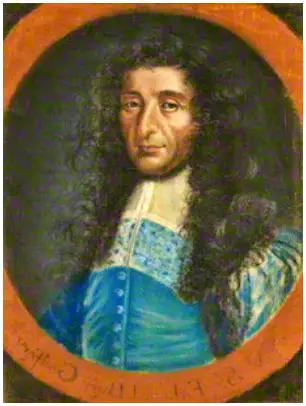
McKenzie identifies the likely killer as Colonel John Scott, a professional intelligencer and scoundrel employed by the Duke’s faction. Godfrey wasn’t killed for religion; he was killed because he knew too much about the dirty dealings of the Protestant elite who were trying to destabilize the King.
It wasn’t a “Popish Plot.” It was a Whig conspiracy to manufacture a crisis.
Why It Still Matters
The murder of Sir Edmund Berry Godfrey is more than just an old whodunit. It’s a terrifying case study in disinformation.
- Fake News: Titus Oates used the murder to validate a lie. The public didn’t care about facts; they cared about the narrative.
- Confirmation Bias: People wanted to believe the Catholics were guilty, so they ignored the lack of evidence.
- Political Weaponization: A tragic death was used as a tool to pass laws (like the Exclusion Bill) and execute political enemies.
In an era of deepfakes and algorithmic rage, the “Popish Plot” feels uncomfortably modern.
The Verdict?
We may never have a signed confession, but the evidence points away from the poor sods hanged on Greenberry Hill and toward the ruthless political machine of 17th-century London. Godfrey was a man who tried to walk the middle of the road and got run over by history.
Want to Dig Deeper?
- Read: Conspiracy Culture: The Mysterious Death of Sir Edmund Berry Godfrey by Andrea McKenzie (2022) for the deep dive.
- Visit: Primrose Hill in London. The view is beautiful, but the history is dark.
- Check: The National Archives for original depositions from the Oates affair.
Got a theory on who killed Godfrey? Drop a comment below or share this with your true-crime obsessed friends!
Sources help:
- https://en.wikipedia.org/wiki/Popish_Plot
- https://search-library.ucsd.edu/permalink/01UCS_SDI/1iecivl/alma991023842736906535
- https://www.cambridge.org/core/journals/journal-of-british-studies/article/abs/andrea-mckenzie-conspiracy-culture-in-stuart-england-the-mysterious-death-of-sir-edmund-berry-godfrey-studies-in-early-modern-cultural-political-and-social-history-48-woodbridge-boydell-press-2022-pp-284-11500-cloth/3A765B0921F7422928686EC32D991771
- https://www.encyclopedia.com/history/encyclopedias-almanacs-transcripts-and-maps/godfrey-sir-edmund-berry

