

You’ve probably seen the movie. Maybe you watched it through your fingers, hiding behind a pillow. The Exorcist isn’t just a film; it is a cultural phenomenon that terrified a generation. But here is the thing that makes it truly nightmare-inducing: it was based on a true story.
Hollywood added the spinning heads and the green vomit, sure. However, the core of the narrative a young child tormented by unexplainable forces and saved by Jesuit priests actually happened. This wasn’t a script written in a studio; it was a terrifying ordeal documented in 1949.
So, who was the real boy? What actually went down in that hospital room in St. Louis? And most importantly, can science explain it, or was it truly the devil? Let’s dig into the cold, hard facts of the exorcism of Roland Doe.
Who Was Roland Doe?

First off, “Roland Doe” is a pseudonym. The church and authors used it to protect the boy’s identity. In some accounts, he is referred to as “Robbie Mannheim.” For the sake of clarity, we will call him Roland.
Born around 1935, Roland was an ordinary kid living in Cottage City, Maryland. He was the only child in a family of German descent. By all accounts, he was a quiet, somewhat solitary boy who liked drawing and playing games. He was close to his Aunt Harriet.
This relationship is key. Aunt Harriet was a spiritualist. She introduced young Roland to the Ouija board. While many see it as a toy, Harriet taught him it was a way to contact the other side.
The Door Opens
In January 1949, Aunt Harriet passed away. Roland was devastated. In his grief, he reportedly turned back to the Ouija board, perhaps trying to say one last goodbye.
That is when the house started going crazy.
It started small. Scratching sounds in the walls. You know, the kind you blame on rats. But then, it escalated. The family reported:
- Objects flying across the room.
- Water dripping from pipes that weren’t leaking.
- The sound of squeaky shoes walking in empty hallways.
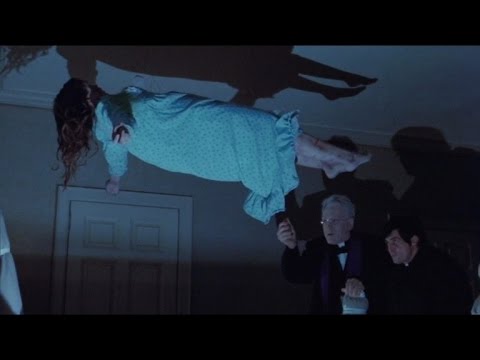
But the scariest activity centered on Roland’s bed. At night, his mattress would shake violently. Scratches began appearing on his body. It wasn’t just a few red marks; deep claws seemed to rake across his skin.
Medicine to Religion: seeking Help
Naturally, his parents didn’t jump straight to “demons.” They were worried parents, not ghost hunters. They took Roland to doctors. They visited psychiatrists.
The medical consensus? Nothing.
Physically, the boy was healthy. Mentally, he seemed distressed but not psychotic. One doctor, bafflingly, suggested it might be “hyperactivity” (a term not really used back then). Desperate and terrified, the family turned to their Lutheran pastor, Rev. Luther Miles Schulze.

Schulze decided to observe the boy overnight. What he saw changed everything.
“The chair in which the boy sat moved with him in it… the bed shook… the boy was thrown on the floor.” — Reports from Rev. Schulze.
Schulze told the family, essentially: “This is beyond my pay grade. You need a Catholic priest.”
The Move to St. Louis
The exorcism didn’t happen in one night. It was a grueling, months-long battle. After a failed attempt in Maryland (where Roland allegedly slashed a priest’s arm with a bedspring), the family moved to St. Louis, Missouri. They had relatives there and hoped a change of scenery would stop the chaos.
It didn’t.
In St. Louis, the case was handed over to the Jesuits. The Archbishop authorized an exorcism. The man chosen to lead this spiritual war was Father William S. Bowdern, a strict, pious academic. He was assisted by Father Walter Halloran and Father William Van Roo.
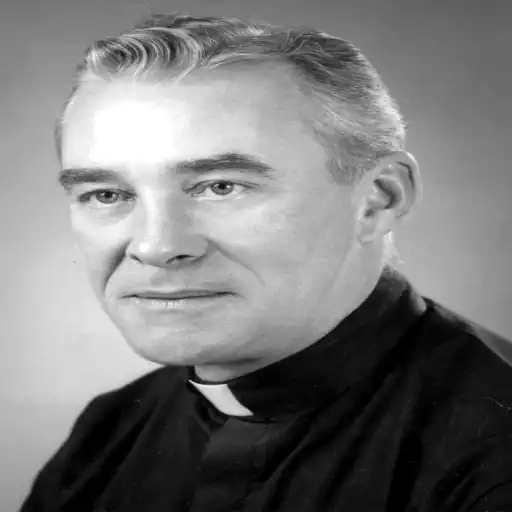
This is where we get the most credible evidence: The Diary.
Father Raymond Bishop, another priest involved, kept a daily diary of the events. This isn’t folklore passed down by whispers; it is a written log kept by educated men in 1949. You can even find copies of it in university archives today.
Inside the Exorcism Room
The ritual took place in multiple locations, but largely at the Alexian Brothers Hospital in St. Louis. It began in March 1949 and lasted until mid-April.
The diary describes scenes that would make a grown man cry.
The Physical Manifestations
According to the priests and witnesses (which included hospital staff), the phenomena were violent.
- The Markings: Words would appear on Roland’s skin as if carved by an invisible knife. Witnesses reported seeing the word “HELL” appear on his chest. Other times, an image of the devil’s face allegedly appeared on his leg.
- The Strength: Roland, a 14-year-old boy, required multiple grown men to hold him down. He broke Father Halloran’s nose during one session.
- The Voice: A guttural voice, dripping with hate, would scream obscenities. It taunted the priests, revealing their personal sins things the boy couldn’t possibly know.
- The Reaction to the Sacred: Roland would react violently to holy water and the Eucharist. Interestingly, in a blind test, he supposedly didn’t react to plain tap water, only the blessed stuff.
Can you imagine the stress in that room? Night after night, shouting Latin prayers while a child thrashed and screamed.
The Climax: Easter 1949
The battle raged for weeks. Roland was exhausted. The priests were drained. On April 18, the Monday after Easter, things reached a breaking point.
Father Bowdern demanded the demon identify itself and leave. According to the diary, a new voice emerged loud and booming. It shouted: “Satan! I am Satan!”

But then, a shift occurred. Roland suddenly cried out that he saw St. Michael the Archangel (the warrior angel). The boy spoke a clear command: “Satan! I am St. Michael! I command you to leave my body now!”
A violent spasm shook Roland’s body. A loud sound, like a gunshot or a sonic boom, echoed through the hospital wing.
Then? Silence.
Roland opened his eyes. He looked around, confused but calm. He said, “He’s gone.” The scratches on his body reportedly faded instantly.
The Aftermath: A Normal Life?
You might expect a kid who went through that to end up institutionalized. Surprisingly, Roland Doe went on to live a completely normal life.
- He got married.
- He had children and grandchildren.
- He reportedly had a long, successful career as an engineer at NASA.
- He never spoke publicly about the event.
He passed away in 2020, taking his side of the story to the grave. The fact that he lived a functional, high-level professional life is often used by believers as proof that the exorcism worked. If it were severe mental illness, wouldn’t it have resurfaced?
Skepticism: The Counter-Argument
We have to look at this through a modern lens. Not everyone buys the “demon” theory. In the late 1990s, author Mark Opsasnick tracked down neighbors and childhood friends of Roland.
Here is what the skeptics say:
- The Aunt’s Influence: Aunt Harriet was a huge influence. Could Roland have been acting out to process his grief over her death?
- Trickery: Some witnesses claimed Roland was adept at manipulating his environment. The “flying objects” were often seen only when backs were turned.
- The Scratching: Skeptics argue the scratches could have been self-inflicted using fingernails, which is a known behavior in hysterical neurosis.
- The “Words”: Words like “HELL” appearing on skin are rare in demonic lore but common in psychosomatic dermatographia (a skin condition where scratches welt up easily).
The biggest counter-point? Roland hated school. He was having behavioral issues. Some psychologists suggest this was an elaborate, subconscious performance to get attention or avoid responsibility, which spiraled out of control when the adults started validating it with exorcisms.
St. Louis to Hollywood
So, how did this turn into a movie?
In 1949, The Washington Post ran a headline: “Priest Frees Mt. Rainier Boy Reported Held in Devil’s Grip.”
A Georgetown University student named William Peter Blatty read that article. The story stuck with him for decades. Years later, he wrote the novel The Exorcist. He changed the boy to a girl (Regan), changed the location to Georgetown, and added the famous head-spin. But the core the Ouija board, the scratching, the bed shaking that came straight from Roland’s life.
What Do You Believe?
The story of Roland Doe remains one of the most well-documented cases of paranormal activity in American history. You have a daily diary from Jesuit priests. You have 48 witnesses. You have a boy who went on to be a NASA engineer.

Was it a true battle between Good and Evil? Or was it a tragic case of a disturbed child whose mental health crisis was misinterpreted by a superstitious era?
Perhaps the scariest part isn’t the answer, but the fact that we still don’t know for sure.
Q&As
Who Was Roland Doe, and What Was His Real Name?
Roland Doe was the pseudonym given to Ronald Edwin Hunkeler, a 13-year-old boy from Cottage City, Maryland, born on June 1, 1935. He became the center of one of the most documented exorcism cases in U.S. history in 1949. Raised in a Lutheran family, Hunkeler’s story began after the death of his aunt Harriet, a spiritualist who introduced him to Ouija boards. Strange phenomena, like scratching sounds and moving furniture, escalated into alleged demonic possession. His real identity was revealed in 2021 by The Skeptical Inquirer, long after he lived a normal life, working as a NASA engineer until retiring in 2001. He passed away on May 10, 2020, at age 84, maintaining privacy about the events.
Is ‘The Exorcist’ Based on a True Story?
Yes, The Exorcist is inspired by the real exorcism of Roland Doe (Ronald Hunkeler). Author William Peter Blatty, a Georgetown University student, heard rumors of the 1949 case from Jesuit priests and based his 1971 novel on Father Raymond J. Bishop’s diary and eyewitness accounts. The film adaptation amplified the horror, changing the possessed child from a boy to a girl (Regan) for dramatic effect. Real events included over 30 exorcisms performed by priests like William Bowdern and Walter Halloran in locations from Maryland to St. Louis. While Hollywood added elements like head-spinning and green vomit, core details such as bed-shaking, Latin-speaking, and demonic voices stem from documented reports.
What Really Happened During Roland Doe’s Possession?
The possession of Roland Doe reportedly started in January 1949 after he used a Ouija board to contact his deceased aunt. Symptoms included hearing scratching behind walls, furniture moving on its own, and red welts spelling words like “LOUIS” on his skin. He exhibited superhuman strength, spoke in unknown languages (including Latin), and vomited or urinated during rituals. His family sought help from Lutheran ministers before turning to Catholic priests. Exorcisms began in March at Georgetown University Hospital and continued at Alexian Brothers Hospital in St. Louis, involving violent outbursts, levitation claims, and demonic taunts. The final rite on April 18, 1949, ended when Doe declared, “He’s gone,” invoking St. Michael. Skeptics attribute it to mental health issues like dissociative identity disorder.
How Did the Real Exorcism Differ from ‘The Exorcist’ Movie?
The biggest difference? Roland Doe was a teenage boy, not a girl like Regan. The real story involved a Maryland family dealing with subtle hauntings scratching sounds, shaking beds, and skin marks rather than dramatic effects like projectile vomiting or crab-walking. Over 30 exorcisms occurred across multiple sites, including a St. Louis hospital, with priests like Bowdern and Halloran (who broke his nose during one ritual) enduring weeks of torment. No single dramatic confrontation like the film’s climax; instead, it ended quietly. Blatty fictionalized details for suspense, but drew from Bishop’s diary, which described 48 witnesses, including Jesuits. The movie’s curse rumors? Unrelated to the real events.
Was Roland Doe’s Exorcism a Hoax or Real Demonic Possession?
The debate rages: Believers point to eyewitness accounts from 48 people, including priests who documented levitation, multilingual outbursts, and physical marks defying explanation. Father Bowdern’s diary details supernatural strength and voices. However, skeptics like investigator Joe Nickell suggest it was a hoax or psychological issue possibly triggered by grief, puberty, or abuse amplified by suggestible family dynamics. No concrete evidence like photos exists, and Hunkeler’s later normal life (NASA career, family) supports mental health theories. The Catholic Church classified it as genuine possession, but modern views lean toward epilepsy or dissociative disorders. What do you think supernatural or science?
What Happened to Roland Doe After the Exorcism?
After the final exorcism in April 1949, Roland Doe (Ronald Hunkeler) reportedly returned to normal life, with no further incidents. He moved back to Maryland, finished school, and led a remarkably ordinary existence. Hunkeler graduated college, married, had children, and worked at NASA for nearly 40 years, contributing to Apollo missions. He avoided publicity, denying interviews and living quietly in suburban Maryland until his death in 2020 at 84. Friends described him as intelligent and kind, with no signs of lingering trauma. His story only resurfaced posthumously, fueling ongoing fascination with the true Exorcist events.
Who Performed the Exorcisms on Roland Doe?
The primary exorcists were Jesuit priests: Father William S. Bowdern led most rituals, assisted by Father Raymond J. Bishop (who kept the detailed diary) and Father Walter H. Halloran (who restrained Doe and suffered a broken nose). Initial attempts involved Father Edward Hughes in Maryland, but the bulk occurred in St. Louis after approval from Archbishop Joseph Ritter. They conducted rites in Latin, using holy water and relics, enduring Doe’s violent reactions. Bowdern, a WWII veteran, later consulted with Blatty for The Exorcist. Halloran remained skeptical, attributing some events to hysteria, but confirmed physical anomalies like skin words.
Is Roland Doe’s House Still Haunted Today?
The original Cottage City, Maryland home where symptoms began is no longer standing demolished in the 1970s. However, the St. Louis house at 8435 Roanoke Drive, where key exorcisms occurred, stands and is rumored haunted. Visitors report eerie feelings, but no confirmed activity. The Alexian Brothers Hospital wing was razed in 1978, allegedly due to lingering evil, with rubble buried on-site. Paranormal tours in St. Louis highlight these spots, but skeptics dismiss hauntings as urban legends. If you’re brave, check local ghost tours for the full chilling history.
How Did a Ouija Board Start Roland Doe’s Possession?
According to accounts, Roland Doe’s aunt Harriet, a spiritualist, taught him to use a Ouija board before her death in 1949. Grieving, he tried contacting her spirit, which allegedly opened a demonic portal. Phenomena began soon after: dripping sounds, moving objects, and possession signs. This mirrors warnings in paranormal lore about Ouija boards inviting entities. While believers see it as the trigger, skeptics view it as coincidence fueling hysteria. The detail inspired The Exorcist’s warnings proceed with caution if experimenting!
Why Does Roland Doe’s Story Still Terrify People Today?
Roland Doe’s exorcism blends true crime, horror, and mystery, inspiring endless debates on possession vs. psychology. With eyewitness testimonies, a detailed diary, and ties to The Exorcist one of the scariest films ever it taps into fears of the unknown. Modern interest spikes with podcasts, documentaries, and sequels like The Exorcist: Believer. Searches for “Roland Doe true story” surge around Halloween, proving its evergreen appeal. Whether fact or folklore, it questions reality’s boundaries perfect for thrill-seekers.
What do you think? Was Roland truly possessed, or was it the power of suggestion? Drop a comment below or share this with a friend who loves a good scare.
References:
- Thomas B. Allen, “Possessed: The True Story of an Exorcism” (Based on Father Bishop’s diary).
- The Washington Post archives, August 1949.
- St. Louis University Archives (Jesuit history).

