

Al-Lat, Al-Uzza & Manat: Daughters of Allah in Ancient Mythology
Before the call to prayer echoed across the Arabian Peninsula, the religious landscape looked wildly different.
Imagine a world teeming with deities, spirits, and powerful female entities. This wasn’t a spiritual desert; it was a teeming pantheon, a polytheistic hotbed where gods and goddesses ruled the fortunes of tribes, controlled the rain, and decided who lived or died.
At the very top of this chaotic hierarchy was a High God, a creator deity widely known as Allah (meaning The God). However, to speak to Allah, you needed powerful intermediaries the spiritual heavyweights who ran the show on Earth.
Among these were three supreme goddesses, revered, feared, and worshiped more actively than Allah himself: Al-Lat, Al-Uzza, and Manat. They were widely known as the “Daughters of Allah.”
Why is understanding them crucial? Because their story isn’t just pre-history. It is the defining backstory that sets the stage for the rise of Islam.
Unpacking the Ancient Arabian Pantheon
To grasp the power of these goddesses, you must first understand the spiritual ecosystem of 6th-century Arabia. It wasn’t a unified system. It was a regional, decentralized religion based on tribe, location, and trade.
The Spiritual Layout
- The High God (Allah): He was the distant, creator deity. Think of him as the CEO of the cosmos. He was too grand for daily requests.
- The Intermediaries: This is where Al-Lat, Al-Uzza, and Manat came in. They were the Vice Presidents. They dealt with the day-to-day chaos, providing fertility, victory, and protection.
- The Idols: Unlike later Abrahamic faith, physical idols were not just symbolic; they were believed to be the actual dwelling place of the deity’s spirit. Consequently, destroying an idol wasn’t just a political act; it was a spiritual war.
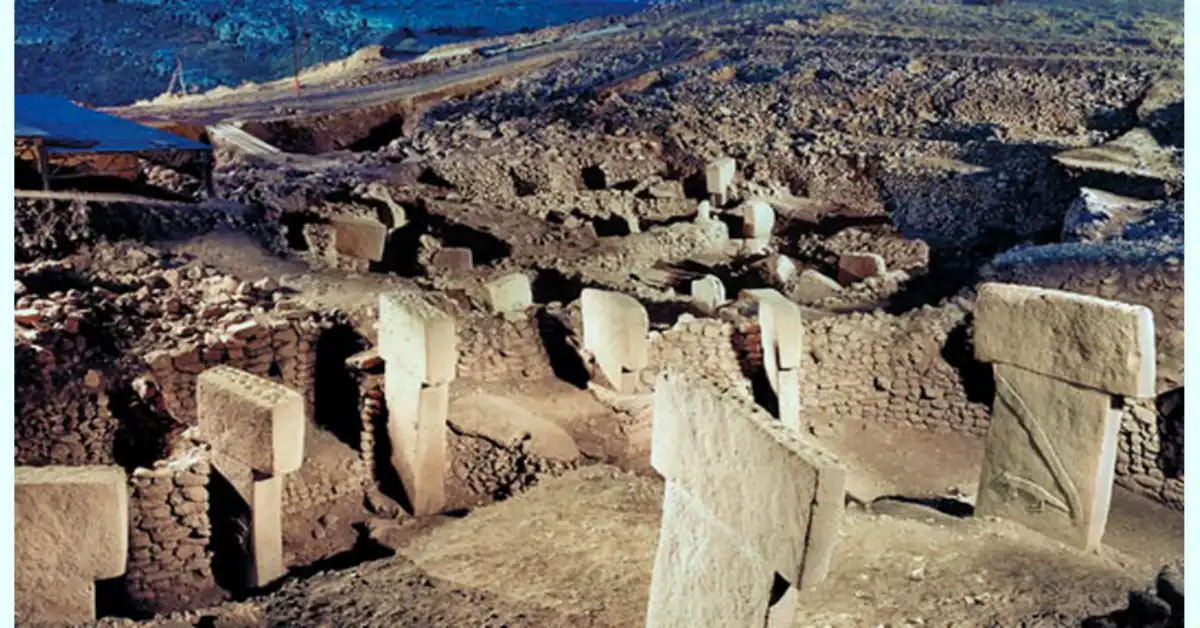
The primary mode of worship centered on stones, or anṣāb. These weren’t elaborate statues, but often just rough-hewn rectangular stones or pillars symbols of the goddess’s presence.
Who Were the Three Daughters of Allah?
These three female deities formed a triad of immense power across the Hijaz region (the western Arabian coast). Each had a distinct personality, a specific domain, and a powerful, localized temple complex.
They represented the three major spheres of human concern: Earth/Fertility, Power/War, and Fate/Destiny.

Al-Lat: The Mother, The Goddess of Ta’if

Al-Lat (Arabic: اللات), whose name simply means “The Goddess,” was perhaps the most geographically widespread of the three. Her cult was ancient and robust, stretching north into the Nabataean kingdom (Petra) and even as far as Palmyra.
The Cult of Prosperity
- The Persona: She was the divine mother figure the goddess of fertility, abundance, and earth. She guaranteed a good harvest and stable wealth. In some regions, she was associated with the sun.
- The Sanctuary: Her primary cult center was the city of Ta’if, a lush, green oasis located high in the mountains, southeast of Mecca. This location perfectly matched her domain as the patron of agriculture and prosperity.
- The Icon: Her symbol at Ta’if was a sacred, massive white granite block, housed in a temple that made the city rich from pilgrims.
Furthermore, evidence shows that the Nabataeans, who built Petra, viewed Al-Lat as a version of the Greek goddess Athena or the Roman goddess Minerva. This cultural syncretism shows that these Arabian deities weren’t isolated; they were spiritual heavyweights on the Silk Road of faith.
Therefore, for the ancient Arab, praying to Al-Lat was like asking for a promotion and a bumper crop. She handled the necessities of life.
Al-Uzza: The Mighty One, The Warrior Goddess

If Al-Lat was the nurturing mother, Al-Uzza (Arabic: العزى) was the fierce, terrifying warrior. Her name means “The Mighty One” or “The Strongest.”
The Power Broker of Mecca
- The Persona: Al-Uzza was the goddess of power, protection, and the morning star (Venus). She controlled victory in battle and offered fierce security to those who paid tribute.
- The Sanctuary: Her main shrine was located in the Nakhla Valley, a sacred area on the road east of Mecca. The Quraish the ruling tribe of Mecca and Muhammad’s own clan revered her above all others.
- The Icon: Her sacred object was a cluster of three acacia trees or stones. Her devotion often included human or animal sacrifice, reflecting her violent, protective nature.
Consequently, any merchant caravan or raiding party leaving Mecca would make an offering to Al-Uzza first. She was the spiritual general you absolutely needed on your side. The Quraish were deeply invested in her power, believing their wealth and dominance were directly tied to her favor.
She was the chief political deity of the Mecca region.
Manat: Fate, Destiny, and The Grim Reaper

Manat (Arabic: منات) was arguably the most ancient and the most profoundly feared of the three. She was not concerned with commerce or combat. Her domain was something far deeper and more chilling: Time, Fate, and Death.
The Cosmic Fate Counter
- The Persona: Manat was the goddess of destiny and fate the ancient equivalent of the Greek Moirae (Fates). Her name is linguistically related to the Arabic word maniyya, meaning “fate, death, or doom.”
- The Sanctuary: Her main shrine was situated on the coast near Qudayd, between Mecca and the rival city of Yathrib (later Medina).
- The Ritual: Pilgrims from the Aws and Khazraj tribes (who would later become the core supporters of Islam in Medina) would not shave their heads to complete their annual pilgrimage (Hajj) until they visited Manat’s sacred stone. She was the one who signed off on your life’s narrative.
Manat’s worship highlights the fatalistic view common in ancient Semitic cultures. You couldn’t fight destiny; you could only pay homage to the goddess who controlled it. Therefore, she was the ultimate authority the one who set the clock on everything.
The Indian Connection: Trade Routes & Spiritual Highways
How do we get from the sands of Mecca to the jungles of India? The Spice Route.
For over a millennium before Islam, Arab dhows were riding the monsoon winds to the Malabar Coast (modern-day Kerala) and Gujarat. They didn’t just trade frankincense for black pepper; they traded stories, myths, and gods. The Indian Ocean wasn’t a barrier; it was a bridge.
Scholars and historians have long noted that ancient religious ideas didn’t exist in a vacuum. When an Arab merchant saw a Hindu worshipping a fierce goddess on a lion, he didn’t see a stranger; he likely saw a reflection of his own Al-Lat.
The Missing Link: Kotravai
While everyone talks about Durga and Kali, the real “smoking gun” might be Kotravai, the ancient Dravidian war goddess of the Tamil Sangam landscape (300 BCE – 300 CE).
- The Land: Kotravai ruled the Palai the dry, arid, desert-like landscapes. Sound familiar?
- The Vibe: Victory in war (“Korram” means victory).
- The Look: She stands on a lion or tiger, fierce and independent.The parallels between the desert-dwelling Al-Lat/Al-Uzza and the arid-land warrior Kotravai suggest a shared archetype of the “Desert Warrior Mother” that spanned the Indian Ocean.
A Comparative Breakdown
Let’s strip away the geography and look at the raw iconography. The similarities are too loud to ignore.
| Feature | Arabian Goddesses | South Asian (Hindu) Goddesses |
| The Lion Rider | Al-Lat is famously depicted in the “Lion of Al-Lat” statue (Palmyra) seated with a lion. | Durga (and Kotravai) rides a lion/tiger (Simhavahini), symbolizing mastery over raw power. |
| The Dark Destroyer | Manat is the goddess of Death/Time (Maniya), worshipped as a black stone. | Kali is the goddess of Time/Death (Kala), dark-skinned, associated with the void. |
| The Warrior Star | Al-Uzza is the Morning Star (Venus), associated with war and blood. | Chamundi or fierce aspects of Parvati represent the warrior energy that destroys evil. |
| The Rituals | Pilgrims shaved their heads at Manat’s shrine. | Head-shaving (Mundan/Mottai) is a standard offering to deities like Mariamman in South India. |
| The Trinity | The Three Daughters form a triad (Maiden/Mother/Crone). | Hinduism reveres the Tridevi (Saraswati, Lakshmi, Parvati) or the three forms of Shakti. |
The Controversy of the “Satanic Verses” Explained
The goddesses would have remained a footnote of history if not for their mention in the Qur’an.
In Surah An-Najm (The Star), verses 19-23, the divine revelation directly challenges the very existence of this powerful triad.
“Have you considered al-Lāt and al-ʿUzzá / And Manāt, the third, the last one? / Are you to have the males and He the females? / That, then, would be an unfair division! / They are but names which you have named—you and your forefathers—for which Allāh has sent down no authority.” — Qur’an 53:19-23 (Abridged)
This is a direct, absolute rejection. Allah has no partners, and these goddesses are “mere names.” This forms the foundation of Tawhid (the absolute oneness of God).
The Historical Debate
However, this is where the controversy known as the “Satanic Verses” arises.
Historical accounts (often from early, non-canonical Islamic biographies, such as those by Ibn Ishaq) suggest that early in his prophethood, Muhammad was momentarily tempted to compromise with the Quraish, who wanted their goddesses validated.
The story alleges that Muhammad uttered phrases which temporarily validated the goddesses, allowing them to be intercessors: “These are the exalted gharāniq (a high-flying bird or crane), whose intercession is hoped for.” This statement would have been a massive theological concession.
The Rectification: According to the same accounts, Muhammad immediately regretted this, recognizing that he had been tricked by the devil (Satan) to compromise the message of Tawhid. Consequently, the verses were swiftly abrogated (cancelled) and replaced with the firm rejection we see in the final canonical version of the Qur’an (53:19-23).
It is crucial to note that mainstream Islamic scholarship overwhelmingly rejects the historical reliability of the “Satanic Verses” incident. They view the entire story as a later, fabricated narrative designed to discredit the Prophet. Nonetheless, the incident demonstrates just how politically and spiritually powerful these three goddesses were. They were the last, greatest spiritual hurdle to the pure monotheism of Islam.
Why Did These Goddesses Vanish?
The fate of Al-Lat, Al-Uzza, and Manat was sealed by the political and religious success of Islam. The shift from polytheism to Tawhid was a bloody, transformative process.
The eventual conquest of Mecca and the surrounding territories meant the end of the old gods.
- The Idol Destruction: Upon conquering Mecca in 630 CE, Muhammad had the 360 idols inside and around the Kaaba destroyed. Specifically, he sent men to destroy the cult centers of the Daughters:
- Al-Uzza was the first to fall. Her shrine in Nakhla was dismantled.
- Manat’s sacred stone at Qudayd was obliterated.
- Al-Lat’s massive white stone at Ta’if was the last to be destroyed.
- The Monotheistic Merger: The High God of the ancient pantheon (Allah) was retained, but purified. He was stripped of all partners, daughters, and intermediaries. Allah became the singular, unique deity of Islam.
The Legacy in Language
While their worship vanished, the goddesses left traces in the Arabic language. For example, the name of the greatest pagan goddess, Al-Lat (The Goddess), shares the exact root (’l-h) with Allah (The God). This linguistic closeness shows that they weren’t foreign imports; they were intrinsic to the native Arabian concept of the divine.
The final triumph of Islam wasn’t just a political victory; it was a total theological takeover. It wiped the religious slate clean, erasing the goddesses from active worship and transforming them into figures of historical warning.
In the end, Al-Lat, Al-Uzza, and Manat were the original power brokers of Arabia powerful female forces who governed everything from your harvest to your final breath. Understanding their history is essential. It shows that the spiritual vacuum Islam filled wasn’t empty; it was fiercely contested by forces that had ruled the sands for millennia.
Dig Deeper
The story of the Daughters of Allah is the missing link between the polytheistic ancient world and the monotheistic Middle East. It proves that the earliest followers of Islam had to make a profound, fundamental break with their own history.
Did you know the Quraish and Kinanah were the main worshipers of Al-Uzza? Share this article and let us know which goddess you found the most fascinating!

