

Hope Diamond Curse: Did It Really Doom Marie Antoinette?
Think of the most famous cursed object on the planet. Naturally, your mind flies straight to a gleaming, deep-blue rock sitting behind heavy bulletproof glass in Washington, D.C. This mesmerizing gem is known worldwide as the Hope Diamond. For generations, rumors whispered that anyone who owned, touched, or even looked closely at this stone met a gruesome, untimely end.
At the very center of this chilling lore stands the tragic French queen, Marie Antoinette. Schoolyard gossip and viral social media posts confidently claim that her date with the guillotine was bought and paid for by this mystical stone. But does that story actually hold up under the cold light of historical evidence?
At a glance
- The Core Myth: Legend says the Hope Diamond curse Marie Antoinette by orchestrating her downfall during the violent climax of the French Revolution.
- The Reality Check: Historical documents show that the queen likely never wore or even privately possessed the gem, as it belonged strictly to the King’s ceremonial regalia.
- The True Origin: The myth of a supernatural hex was largely cooked up over a century later by a clever jeweler looking to maximize his profit margin.
- Scientific Wonder: The stone’s eerie ability to glow blood-red under ultraviolet light fueled superstitious beliefs for decades.
The Birth of the Blue: From Indian Mines to Versailles
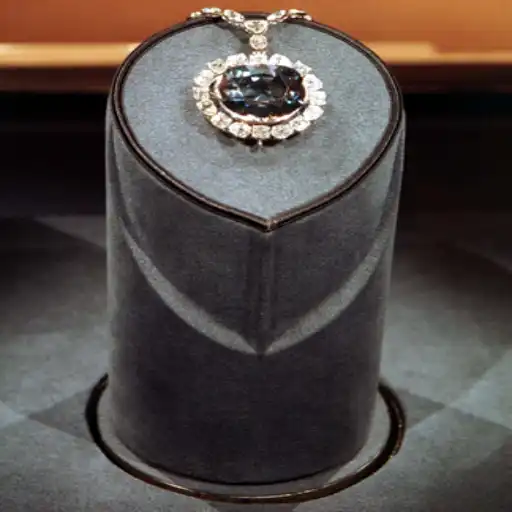
Before it was called the Hope Diamond, this legendary stone was a massive, uncut chunk of geological wonder. It began its recorded journey in the mid-seventeenth century within the rich Kollur mines of Golconda, India. A French gem merchant named Jean-Baptiste Tavernier purchased the rough, triangular stone, which then weighed an astonishing 112 carats. This breathtaking marvel became known across Europe as the Tavernier Blue.
Hoping to catch the eye of royalty, Tavernier sold the spectacular stone to King Louis XIV in 1668. The Sun King was completely enchanted by its unique color. He ordered his master court jeweler to recut the gem into a brilliant, 67-carat heart-shaped masterpiece designed to catch the ballroom light. This new creation was officially cataloged as the “Blue Diamond of the Crown,” or more simply, the French Blue.
For decades, the stone remained a symbol of absolute royal power. Louis XIV wore it around his neck on a long ribbon during formal state ceremonies. Later, his successor, Louis XV, decided to give the gem an even grander showcase. He had the French Blue set into an incredibly complex, ornate emblem representing the Order of the Golden Fleece. This was an exclusive, elite chivalric order meant solely for the reigning monarch.
Did the Hope Diamond Curse Marie Antoinette?
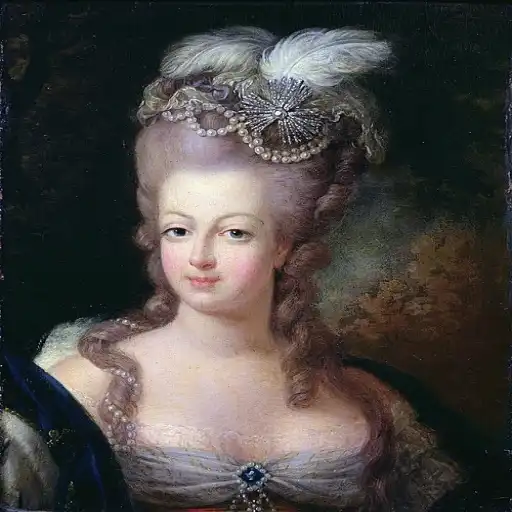
When Louis XVI ascended the throne of a financially crumbling France, he inherited the vast crown jewel collection, including the magnificent Golden Fleece pendant. This is where the French Blue diamond curse myth spins completely out of control. Popular folklore insists that the young king immediately gifted the stunning blue diamond to his stylish, jewelry-loving Austrian wife, Marie Antoinette.
The historical truth is much more grounded in rigid court etiquette. Because the French Blue was permanently fixed into the ceremonial insignia of the Order of the Golden Fleece, it remained a deeply political piece of male state dress. Women of the French court, including the queen consort, did not wear the official badges of these specific brotherhoods.
Did Marie Antoinette look at the stone? Almost certainly. It was a crown jewel stored in the royal collections. Did she wear it as a personal necklace or accessorize her famous, towering hairstyles with it? Absolute fiction. No inventory logs, personal diaries, or contemporary paintings show her wearing the stone. Her ultimate, tragic fate had everything to do with explosive class warfare, widespread famine, and catastrophic political choices. A sparkling blue rock didn’t sign her death warrant; the total collapse of the old French monarchy did.
The Great Heist of 1792: The Diamond Vanishes
As the fires of the French Revolution engulfed Paris, the royal family was stripped of its titles and placed under strict house arrest. The revolutionary government confiscated all crown assets. These priceless treasures were moved to the Garde-Meuble, the royal storehouse, where officials put them on public display once a week.
This layout was practically an open invitation for thieves. In September 1792, amidst chaotic street riots, a band of bold criminals broke through the storehouse windows. Over the course of several consecutive nights, they methodically looted France’s greatest historic treasures. The legendary French Blue completely vanished into the criminal underworld.
The tragic timeline of the diamond and its royal owners highlights how historical events paved the way for the terrifying rumors that followed.
- The Sun King’s Acquisition
- 1668
- Jean-Baptiste Tavernier sells the 112-carat blue diamond to King Louis XIV, who orders it cut into the 67-carat French Blue.
- The Golden Fleece Setting
- 1749
- Louis XV incorporates the French Blue into the ceremonial Order of the Golden Fleece, keeping it as a strictly male royal ornament.
- Fall of the Monarchy
- August 1792
- The revolutionary government officially dethrones Louis XVI and seizes all royal jewels, storing them under loose security.
- The Great Theft
- September 1792
- Looters spend five chaotic nights robbing the Garde-Meuble. The French Blue disappears entirely from mainland Europe.
- Royal Executions
- January & October 1793
- Louis XVI and Marie Antoinette are executed via guillotine. Their deaths provide the ultimate foundation for the future curse narrative.
- The Rebranding in London
- 1812
- A significantly smaller, 45.5-carat blue diamond surfaces in a London gem shop, deliberately recut to hide its stolen French identity.
If the Curse is Fake, Who Actually Invented It?
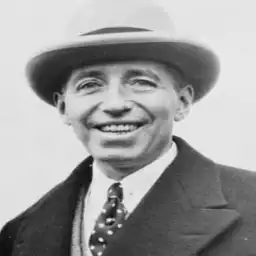
If the history of the Hope Diamond curse isn’t rooted in genuine, ancient magic, where did these wild stories come from? The answer brings us to the early twentieth century and a brilliant, cutthroat world of luxury marketing.
In 1910, the legendary French jeweler Pierre Cartier bought the stone, which had been recut down to 45.52 carats and renamed the Hope Diamond after its previous British owner, Henry Philip Hope. Cartier faced a massive problem. The stone was incredibly expensive, and very few billionaires in the world could afford it. He set his sights on a wealthy, eccentric American heiress named Evalyn Walsh McLean.
When Cartier initially showed her the diamond, she wasn’t impressed by the setting. Realizing he needed a completely different sales pitch, Cartier shifted from focusing on beauty to focusing on mystique. He began weaving an elaborate, highly dramatized tapestry of doom. He told her stories of Indian idols seeking revenge, jewelers going mad, and French queens losing their heads.
Cartier didn’t invent these stories out of thin air; he took half-truths, embellished the casual misfortunes of past owners, and packaged them as a thrilling, supernatural lineage. The strategy worked beautifully. McLean was absolutely fascinated by the idea of owning a dangerous heirloom. She bought the diamond, wore it constantly, and willingly played along with the press to keep the spooky legend alive in the public imagination.
The Ill-Fated Registry: A History of Misfortune
To understand how easily the human mind builds a pattern out of pure coincidence, look at the actual track record of the people who handled the stone over the centuries. When you list their lives side-by-side, it becomes clear why the public was so eager to believe Cartier’s tall tales.

| Owner / Handler | Historical Event or Fate | Real-World Explanation |
| Jean-Baptiste Tavernier | Died at age 84 in Russia during a routine business trip. | Natural old age, despite myths claiming he was torn apart by wild dogs. |
| Nicolas Fouquet | Imprisoned for embezzlement by Louis XIV before the diamond was even cut. | High-level political corruption and royal rivalry. |
| Princesse de Lamballe | Killed by a violent mob during the chaotic September Massacres of 1792. | Extreme anti-aristocratic fury sweeping across revolutionary Paris. |
| King George IV | Died in deep financial debt and failing physical health in 1830. | Extravagant lifestyle spending and chronic, untreated illnesses. |
| Evalyn Walsh McLean | Suffered family tragedies, including the accidental loss of her young son. | Heartbreaking, random real-life accidents common to the era. |
The Glowing Truth: What Modern Science Reveals
Is there anything actually strange about this diamond, or is it completely ordinary? According to researchers at the Smithsonian Institution, where the gem now rests permanently, the Hope Diamond holds a genuine, jaw-dropping scientific secret that has nothing to do with ghosts.
When you expose the diamond to short-wave ultraviolet light, it absorbs the energy. Once you switch the UV light off, the diamond doesn’t just go dark. It suddenly begins to glow with an intense, fiery, blood-red phosphorescence that lasts for several seconds.
UV Light Exposure -> Excites Boron Atoms -> Energy Released -> Fiery Red Afterglow
This spectacular phenomenon is caused by the presence of trace elements of boron mixed deep within the diamond’s carbon structure. The boron atoms interact with the stone’s natural attributes, creating a chemical reaction that looks eerily like burning embers. Imagine a superstitious explorer or a wealthy socialite seeing that demonic red glow in a dark room a century ago. It is incredibly easy to see how people mistook a beautiful quirk of geology for a literal curse from the underworld.
The Verdict
Ultimately, the true story of the Hope Diamond is far more interesting than any manufactured horror movie script. It is a tale of shifting continents, royal vanity, criminal masterminds, and high-stakes advertising. Marie Antoinette met a tragic, unfair end, but her death was a product of human history, not a glittering mineral. The curse didn’t destroy the monarchy; human anger did.
The next time you look at a picture of this gorgeous blue stone, remember that its greatest superpower isn’t a supernatural hex. Its real power is the sheer human fascination that has kept its story alive across multiple centuries.
What do you think about the legendary curse? Do you believe some objects can carry negative energy, or is it all just a clever marketing trick to make old jewelry worth more money? Let us know your favorite historical theories in the comments section below, and share this post with your friends who love a good mystery!

