

The Shug Monkey: Exploring Cambridgeshire’s Bizarre Cryptid
Cold mist clings to the lonely hedgerows of East Anglia, making ordinary paths feel entirely alien. If you walk down Slough Hill Lane past midnight, a strange prickle might crawl up your spine. You are standing right in the hunting grounds of a truly bizarre British monster. Part shaggy black dog and part wide-eyed primate, this legendary phantom is known locally as the Shug Monkey. Oral traditions suggest this creature terrorized small English villages for centuries before vanishing. Let’s dig into the dark history behind Cambridgeshire’s strangest phantom.
At a glance
- The Hybrid Appearance: Witnesses described a creature with a shaggy black dog’s body and a monkey’s face.
- The Infamous Haunt: The phantom primarily claimed Slough Hill Lane, an old trackway between West Wratting and Balsham.
- The Cultural Roots: Its name stems from the Old English word scucca, meaning devil or demon.
What Exactly is the Shug Monkey?
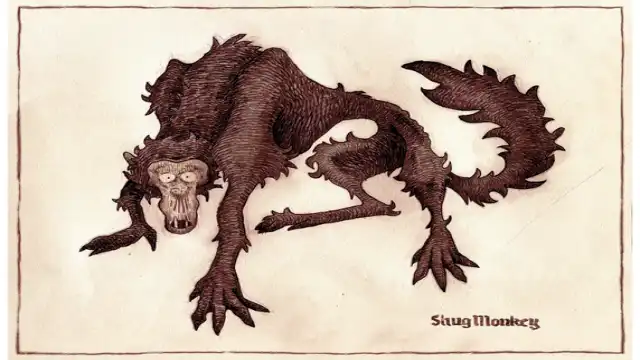
Imagine walking home alone in pitch darkness. Suddenly, a heavy shape leaps from overgrown bushes. It has the muscular body of a massive, jet-black sheepdog but sports the face of an eerie, staring monkey.
Witnesses claim its glowing eyes burn through the night air with supernatural intensity. To make matters weirder, this beast doesn’t just run like an ordinary hound. It can effortlessly stand up and shuffle along on its hind legs. A moment later, the fiend drops back down to whiz past astonished travelers on all fours.
The Haunt: Slough Hill Lane
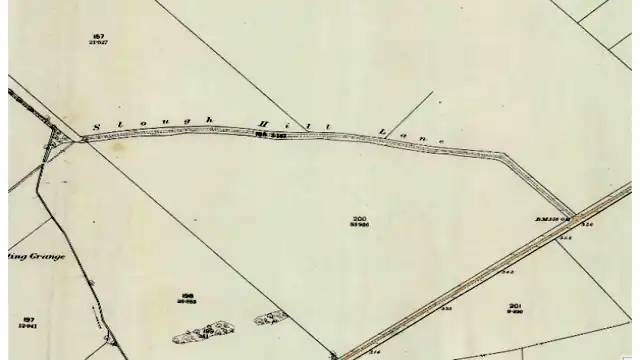
This nightmare specifically claims a single, isolated path inside Cambridgeshire. Slough Hill Lane runs as an old, grassy bridleway linking West Wratting to the village of Balsham.
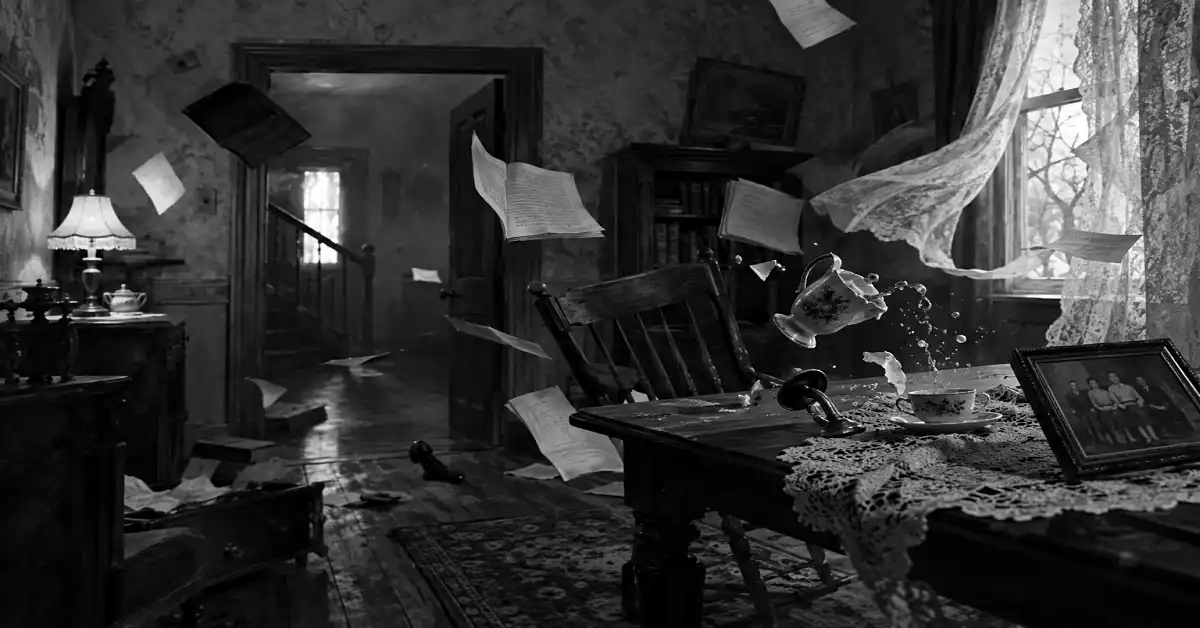
Today, the lane is mostly quiet, visited only by local hikers and horses. Before World War II, however, children refused to wander near this spot after twilight. Dense hedgerows and rolling fenland mists created a claustrophobic trap for anyone walking home late.
Origins: Breaking Down the Name and Myths
Where does such an unusual myth come from? To find answers, we must peel back layers of British history and linguistics.
The Linguistic Roots of “Shug”
The word “Shug” likely shares its heritage with “Shuck,” a famous term used across East Anglia describing phantom black dogs. Etymologists trace this back to the Old English word scucca, which literally translates to “devil” or “demon.” These spectral hounds are a staple of English folklore, often acting as terrifying omens of impending death.
The Link to Norse Mythology
Local folklorist Polly Howat suggested that these legends trace their lineage directly to Norse mythology. When Viking invaders settled East Anglia centuries ago, they brought stories of Odin’s sacred hounds, Geri and Freki. Over generations, Christian influences merged with old Norse pagan beliefs, twisting protective spirit guides into terrifying demonic beasts.
The Famous Accounts: From Police Reports to Forest Encounters
The Shug Monkey was first brought to a wider audience by author James Wentworth Day. In his 1954 book Here Are Ghosts and Witches, he preserved several valuable local accounts. The most compelling source was a Cambridge Police Constable named A. Taylor.
Writing to Wentworth Day in 1953, the officer recalled terrifying encounters from his childhood in West Wratting. Taylor described a creature that would shuffle on its hind legs or suddenly whiz past on all fours. He noted that local children intentionally gave Slough Hill Lane a very wide berth after dark.
While Cambridgeshire sightings faded before the Second World War, the legend found a second life nearby. Decades later, bizarre primate-like beast sightings shifted toward Suffolk’s Rendlesham Forest. In 1956, a traveler reported seeing a massive, ten-foot-long creature resembling a silverback gorilla deep within those woods.
Another dramatic encounter occurred in the summer of 1992. Campers Brian and Felicity McDougall were startled by strange snuffling and grunting noises outside their tent. Peeking out, they spotted a towering, eight-foot-tall hunched figure with long dark hair and a baboon-like face rooting through their kitchen area. When struck by a flashlight beam, the creature reared up, growled fiercely, and vanished into the dense trees.
Mainstream media caught wind of these stories again in 2009 when multiple reports claimed a bear was loose in Suffolk. However, this modern scare was eventually revealed to be an elaborate internet hoax. A local theater group had fabricated the viral videos to generate buzz for their upcoming outdoor performance of Shakespeare’s A Winter’s Tale.

Analyzing the Legend: Why a Monkey-Dog?
Why would rural English farmers imagine a monster that is half-monkey? Most traditional British phantom dogs are simply giant hounds, so adding primate features makes it incredibly unique. To understand this puzzle, look at Britain’s history as a global maritime trading empire during the 18th and 19th centuries.
Sailors frequently brought exotic animals, including real monkeys and apes, back to English ports as wealthy novelty pets or traveling show attractions. An escaped exotic animal roaming the foggy fens could easily transform into a terrifying demon in the minds of superstitious locals. Combine that visual shock with old stories of Black Shuck, and you have the perfect recipe for a brand-new cryptid.
Whether the Shug Monkey was a flesh-and-blood escaped pet or a purely spectral projection, its place in folklore remains secure. It reminds us how human imagination shapes our environment, turning dark, quiet country lanes into stages for the supernatural. Next time you find yourself walking through Cambridgeshire around midnight, keep a close eye on the hedgerows. You might just catch a pair of glowing eyes staring right back at you.
Legends of West Anglia: Exploring the Shug Monkey Mystery offers a detailed look into the local geographical history and spooky atmosphere of the lanes where this creature was supposedly sighted.
Join the Legend Hunt!
Have you ever walked down an old country lane at night and felt like something was watching you? Do you think the Shug Monkey was just an escaped exotic pet, or is there something truly supernatural lurking in the fens? Drop your thoughts and favorite local legends in the comments section below!

