

What Is Stone Man Syndrome? The Rare FOP Disease Explained
Imagine waking up one morning, stretching your arms, and feeling a strange stiffness in your neck. Over the next few weeks, that stiffness hardens into something solid. You try to turn your head, but your neck refuses to move. A new piece of actual bone has grown directly inside your muscle, locking your joints permanently into place.
This scenario describes the reality of living with one of the rarest and most baffling medical conditions known to science. Officially named Fibrodysplasia Ossificans Progressiva (FOP), it is more commonly referred to by its terrifyingly descriptive nickname: Stone Man Syndrome. It forces the human body to build a second, accidental skeleton that slowly encases the original one.
At a glance
- The Core Mechanism: FOP causes soft tissues like muscles, tendons, and ligaments to transform into solid bone, a process called heterotopic ossification (extra bone growth).
- The Genetic Culprit: A tiny, specific mutation in the ACVR1 gene acts like a broken light switch, keeping bone production permanently turned on.
- The Major Risk: Routine bumps, bruises, minor falls, or even medical injections can trigger painful episodes that accelerate bone formation.
- Early Warning Sign: Nearly all individuals born with FOP carry a distinct physical marker at birth: short, inwardly curved big toes.
- Medical Milestone: The medical community achieved its first-ever approved targeted treatment in late 2023, completely transforming the future landscape for patients.
What Exactly is Stone Man Syndrome?
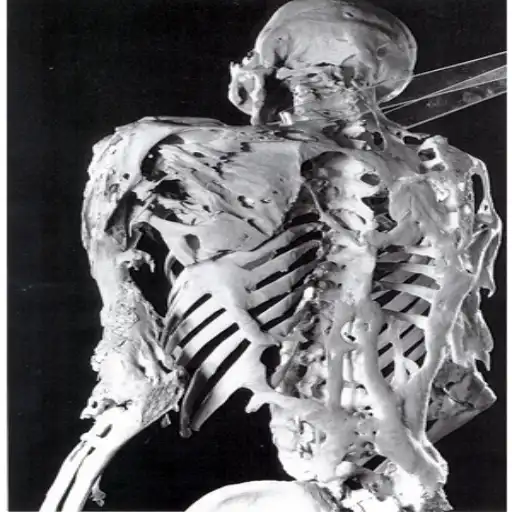
To grasp how FOP functions, we have to look at how our bodies handle normal repair. When an ordinary person pulls a muscle or bruises a shoulder, the body rushes cells to the scene to heal the tear. It builds new muscle fibers, replaces damaged tissue, and restores the area to exactly how it was before the injury.
In a person with FOP, the body completely misinterprets the blueprint for healing. Instead of generating fresh muscle tissue, the immune system mistakenly deploys bone-building cells. The body literally builds a skeletal bridge right through the muscle group. Once this new bone forms, it never goes away. It fuses directly to the existing skeleton, locking the nearby joint into a single, permanent position.
This condition is incredibly rare, affecting roughly one in two million people globally. According to tracking data managed by the International FOP Association, there are only about 900 diagnosed individuals worldwide. Because it is so rare, many doctors spend their entire careers without ever encountering a single case in person.
The ACVR1 Gene Mutation
How does a body make such a massive error? The root of the problem lies hidden inside our DNA. In 2006, researchers discovered that FOP is driven by a single mutation in a gene called ACVR1 located on chromosome 2.
Our genes act like master instruction manuals for our cells. The ACVR1 gene is responsible for producing a specific receptor, which functions like a microscopic gatekeeper on the surface of connective tissue cells. Under normal conditions, this gatekeeper listens for signals from proteins called Bone Morphogenetic Proteins (BMPs). These proteins say, “Hey, it is time to grow a skeleton while you are a baby,” and then they quiet down as we grow up.
The mutation changes a single nucleotide in the gene’s genetic code, swapping a guanine base for an adenine base at position 617.
This tiny mistake completely warps the shape of the receptor. Instead of opening only when it receives a specific signal, the receptor jams wide open. It becomes hyperactive. It constantly sends false alarms to the inside of the cell, screaming that new bone needs to be constructed immediately. When the body experiences any form of mild stress, this broken switch floods the surrounding tissue with bone-building commands.
The Danger of Flare-Ups
The progression of FOP rarely happens in a smooth, continuous line. It moves in unpredictable waves known as flare-ups. A flare-up is an acute inflammatory episode where muscles and soft tissues quickly become swollen, warm, and highly painful.
These episodes can start completely out of nowhere, but they are frequently sparked by specific everyday triggers. Understanding these risks is vital for keeping individuals safe.
- Physical Trauma: A simple stumble, a playground bump, or a minor sports injury can instantly activate the hyperactive ACVR1 receptor.
- Intramuscular Injections: Standard childhood vaccinations or routine dental numbing shots delivered directly into the muscle can cause massive bone growth at the injection site.
- Viral Infections: Catching a common flu or a harsh respiratory virus can send the body’s immune system into overdrive, inadvertently sparking a flare-up.
- Surgical Alterations: Trying to surgically cut away the extra bone is highly dangerous. The body views the surgery as a massive injury and responds by building even more bone than before.
How the Condition Progresses
FOP follows a highly predictable geographical pattern as it moves through the human body over time. It does not strike random muscles all at once. Medical studies compiled by the National Institutes of Health show that the ossification (bone formation) typically advances along a very specific path.
1.The Upper Axial Zone: Early Childhood (Ages 1-10).
The first flare-ups usually emerge in the neck, spine, and shoulders. Parents might notice painful, lump-like swellings that look like tumors but eventually harden into solid bone bridges, restricting head movement.
2.The Upper Limbs and Trunk: Adolescence (Ages 10-20).

The extra bone moves down the torso and out toward the shoulders and elbows. The chest wall can become bound by a rigid cage of extra bone, making it difficult for the lungs to fully expand during deep breaths.
3.The Lower Extremities: Early Adulthood (Ages 20-30).
The process reaches the hips, knees, and ankles. As these massive lower joints fuse, walking becomes difficult, and many individuals begin relying on customized wheelchairs or specialized mobility aids to get around.
4.The Jaw and Final Joints: Mature Progression (Ages 30+).
The jaw joint can become involved, significantly restricting how wide the mouth can open. This stage requires careful dietary management, as eating solid food becomes a major daily challenge.
Crucial Red Flags: The Tell-Tale Big Toes
Because FOP is so exceptionally rare, misdiagnosis is a tragic, widespread problem. When a young child suddenly develops painful lumps on their neck or back, doctors who are unfamiliar with FOP often assume they are looking at aggressive tissue tumors or cancers. They might order a biopsy to test the tissue.
Taking a biopsy means cutting into the muscle. As we learned earlier, cutting into an FOP patient’s muscle causes a catastrophic explosion of new bone growth. A mistaken diagnosis can cause permanent physical harm.
Thankfully, nature leaves a glaring clue right from birth. Nearly 95% of children born with FOP have short, malformed big toes that curve sharply inward. This condition, called hallux valgus, is entirely harmless on its own. However, when it appears alongside sudden, unexplained swellings in a toddler, it acts as an immediate warning sign. Doctors must avoid all needles and scalpels, opting instead for a simple, non-invasive genetic blood test to look for the ACVR1 mutation.

| Characteristic | Normal Skeletal System | FOP Skeletal System |
| Bone Origin | Embryonic development & fracture healing | Continuous, lifelong abnormal growth in soft tissues |
| Big Toe Structure | Straight, fully formed phalanges | Short, monophalangitic, curved inward |
| Response to Injury | Tissue repair, muscle regeneration | Intense inflammation followed by bone formation |
| Surgical Removal | Highly effective for standard bone spurs | Forbidden; causes massive, aggressive recurrence |
Modern Treatment Breakthroughs
For generations, there was very little doctors could do for FOP patients beyond offering basic comfort care. Treatment plans were limited to high-dose corticosteroids during a flare-up to dull the swelling, alongside gentle physical therapies to protect remaining movement. The core disease remained completely unstoppable.
That bleak outlook changed dramatically. In August 2023, the U.S. Food and Drug Administration (FDA) made history by approving the first-ever targeted drug for FOP: a medicine named Palovarotene (sold under the brand name Sohonos).
Palovarotene -> Selective RARγ Agonist -> Suppresses BMP Pathway -> Blocks New Bone Volume by ~54%
This medication works as a highly selective retinoic acid receptor gamma (RARγ) agonist. In plain terms, it targets the specific signaling pathway that the broken ACVR1 receptor uses to order bone production. By putting a molecular brake on that pathway, the drug essentially tells the body to ignore the false alarms. Clinical trials demonstrated that Palovarotene reduces the overall volume of new, abnormal bone growth by over 50%.
As we move through 2026, scientific research continues to accelerate. Clinical teams are actively investigating alternative strategies, such as using specialized antibodies to neutralize the overactive proteins before they ever reach the cell doors. We are moving steadily closer to a future where this condition can be managed effectively from the moment of birth.
Resilience in the Face of Stone
It is easy to look at the clinical statistics of FOP and feel an overwhelming sense of dread. But if you talk to the people living with this diagnosis, you will find a vibrant community defined by unmatched creativity, humor, and relentless determination.
Because their joints can lock in unique positions, individuals with FOP work alongside occupational therapists to customize their entire lives. They invent specialized long-handled tools to brush their hair. They use extended reachers to type on computers and design innovative clothing with Velcro seams to make dressing painless. They adapt, survive, and live incredibly rich lives despite their physical limitations.
The story of Stone Man Syndrome is no longer just a tragic medical mystery. It is a testament to human brilliance. From the geneticists who mapped the ACVR1 mutation to the advocates who raised millions for global research, humanity is systematically rewriting the ending to this story.
What do you think is the most surprising thing about how our bodies build bone? Are you amazed by how a single tiny typo in our genetic code can completely alter human anatomy? Let us know your thoughts in the comments below, and share this article with your science-loving friends to help raise vital awareness for rare diseases!

