

Mind-Control Parasites Explained: The Biology of Zombie Hosts and Eye Worms
Have you ever felt like you weren’t totally in charge of your own decisions? Maybe you blame a lack of sleep. Perhaps you blame stress. What if something microscopic is actually calling the shots?
Welcome to the bizarre reality of neuro-parasitology. This is the scientific study of parasites that hack the nervous systems of their hosts. Nature is absolutely packed with microscopic hitchhikers that manipulate behavior to survive. We aren’t just talking about weird anomalies deep in the jungle. Some of these freeloaders might be sitting inside your own brain right now.
Let’s dive into the biology of zombie hosts, brain-altering pathogens, and the literal eye worms that sound like they crawled out of a horror movie.
Quick read
- The Zombie Ant Fungus doesn’t actually enter the brain. It controls the host’s muscles like a biological mech suit.
- Up to half the human population carries a cat parasite. Toxoplasma gondii can quietly alter human behavior, increasing risk-taking and even influencing career choices.
- Eye worms can live inside you for 17 years. The Loa loa parasite wanders through human fat tissue and occasionally crosses right over the eyeball.
- Scientists are turning parasites into medicine. Researchers are currently hijacking the biology of mind-control parasites to deliver drugs directly into the human brain.
Real-life zombie apocalypse: Ophiocordyceps unilateralis
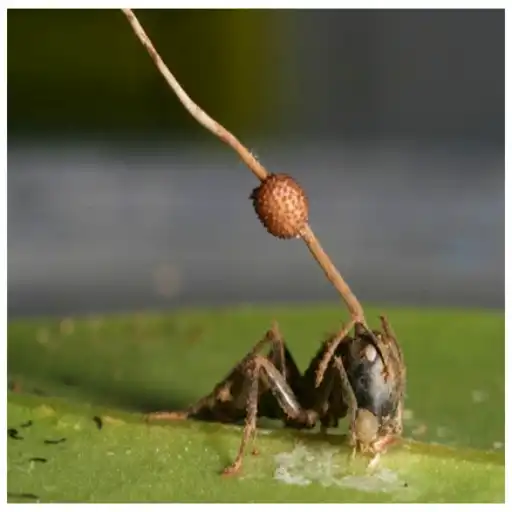
Pop culture loves a good zombie outbreak. Hit shows and video games like The Last of Us have made the Cordyceps fungus famous. But the real biology behind Ophiocordyceps unilateralis is somehow stranger than fiction.
This fungus targets ants, specifically carpenter ants from the tribe Camponotini. A foraging ant steps on a microscopic fungal spore. That spore secretes enzymes to eat right through the ant’s tough exoskeleton. Once inside, the fungus rapidly multiplies.
Here is where things get incredibly sinister.
For decades, scientists assumed the fungus hijacked the ant by invading its brain. Recent research proved that completely wrong. The fungus actually surrounds the ant’s muscle fibers, acting like a puppeteer. Fungal cells communicate with each other to excrete specific metabolites directly into the muscle tissue. The ant’s brain is left entirely intact. It is trapped inside its own body while a fungus drives it like a stolen car.
Death grip
Eventually, the ant is forced to abandon its nest. The parasite makes the insect climb a nearby plant. It seeks out a highly specific microclimate — usually a leaf at a precise height with the perfect temperature and humidity for fungal reproduction.
Once the ant reaches this exact spot, the fungus forces its jaw muscles to clamp down on a leaf vein. This is known as the “death grip.” The ant dies shortly after. Over the next few weeks, a fruiting body bursts out of the back of the insect’s head, raining new spores down onto the forest floor to infect the next generation of victims.
Evolution created a perfectly targeted biological weapon. Each strain of the zombie ant fungus is highly specialized, often evolving to infect just one specific species of ant.

Cat poop, Fearless mice, and Human brains: Toxoplasma gondii
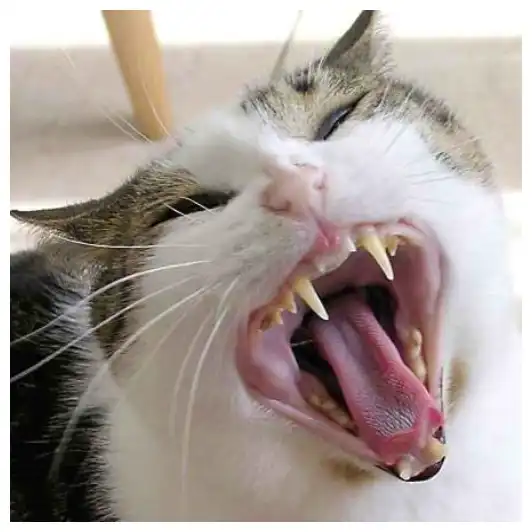
Let’s move away from the jungle and step into your living room.
Toxoplasma gondii is a single-celled parasite with a massive life goal: It really wants to get inside a cat’s intestines. Cats are the definitive host where this parasite can sexually reproduce. But how does a microscopic organism travel from the environment into a feline stomach?
It uses a middleman.
Mice and rats often accidentally ingest T. gondii spores from contaminated soil or water. Rodents are naturally terrified of cats. They are hardwired to flee the second they smell feline urine. The parasite realizes this is a problem. If the mouse hides, the parasite never reaches the cat.
Hacking the rodent mind
To solve this, T. gondii makes its way into the rodent’s brain. It forms cysts in regions responsible for processing fear and decision-making. Researchers discovered that the parasite manipulates dopamine receptors and alters DNA methylation — effectively turning off the mouse’s fear response.
The mouse stops running away. It actually becomes attracted to the smell of cat urine. The fearless rodent walks right out into the open, gets eaten by a cat, and the parasite successfully completes its life cycle.
Are you infected right now?
You might be thinking, Glad I’m not a mouse. Well, hold on a second.
Toxoplasma gondii can infect almost any warm-blooded animal, including humans. You can pick it up from handling dirty kitty litter, eating undercooked meat, or consuming unwashed vegetables. Once inside the human body, the immune system usually traps the parasite, forcing it into a dormant cyst state in our muscle and brain tissue.
Global infection rates are staggering. Studies estimate that between 30% and 50% of the entire human population currently carries T. gondii. That is billions of people sharing their brains with a cat parasite.
Does it affect us? For years, doctors thought latent toxoplasmosis had zero symptoms in healthy adults. Now, evidence suggests the parasite might be subtly tweaking human personalities. Because it tinkers with dopamine, T. gondii has been linked to increased risk-taking behavior.
Check out these wild statistics:

- Infected people are significantly more likely to be involved in traffic accidents due to slower reaction times and aggressive driving.
- Seropositive college students are 1.4 times more likely to major in business.
- Infected business professionals are 1.8 times more likely to start their own companies.
- Multiple studies link the presence of T. gondii antibodies to higher rates of schizophrenia and bipolar disorder.
Blaming a bad crypto investment on a cat parasite sounds like a joke. Science suggests it might actually be a valid excuse.
The Loa loa Eye Worm

While Ophiocordyceps and Toxoplasma hijack behavior, some parasites prefer a more direct route to driving you crazy. Enter the Loa loa worm.
Endemic to the rainforests of Central and West Africa, Loa loa translates literally to “worm worm.”. It is a nematode parasite that causes a disease called loiasis. It doesn’t chemically control your brain, but the sheer psychological terror it induces is a form of torture all its own.
Life cycle of a hitchhiker
You get infected through the bite of a deer fly or mango fly (genus Chrysops). Interestingly, these flies are highly attracted to the smoke of wood fires. When an infected fly bites a human, it drops microscopic larvae into the wound.
These larvae take a few years to mature into adults. Once fully grown, they embark on a slow, agonizing road trip through your subcutaneous fat layer. Adult females can grow up to 70 millimeters long (nearly 3 inches). They just wander around beneath your skin, causing intense, painful swelling known as Calabar swellings.
These worms are highly resilient. A single Loa loa adult can live inside a human host for 15 to 17 years. The female continuously produces thousands of microscopic babies every single day. These babies circulate in your blood during the daytime, waiting for a fly to bite you so they can spread to someone else. At night, they retreat and hide inside your lungs.
Mirror moment
Most of the time, the infection is relatively invisible. The host just feels phantom pains and weird localized swelling.
Then comes the horror movie moment. The worm occasionally wanders too far north. A host will wake up, feel a strange irritation, look in the bathroom mirror, and see a three-inch worm literally wriggling across the white conjunctiva of their eyeball. You can see it. You can feel it.
Removing the worm often requires a brave doctor with a scalpel gently slicing the eye open to pull the squirming parasite out with forceps. Let’s be real. If seeing a worm living inside your own eye doesn’t permanently alter your mind, nothing will.
How do mind-control parasites actually work?
Neuro-parasitology is still a relatively new field, but molecular biology is finally revealing how these hijackings occur. Parasites rely on a “secretome” — a specific blend of secreted proteins and chemicals designed to interfere with a host’s nervous system.
They don’t usually shut the brain down completely. That would kill the host. Instead, they act like biochemical hackers. They flood the host with neurotransmitters like dopamine to alter reward systems. They tweak secondary messengers that regulate gene expression. They surgically modify specific neural circuits while leaving basic motor functions totally intact.

Using parasites for medicine?
What if we could harness this dark biology for good?
The human brain is incredibly difficult to treat medically. We have a biological security checkpoint called the blood-brain barrier. It keeps dangerous toxins out, but it also blocks life-saving neurological drugs from getting in.
Toxoplasma gondii, however, effortlessly glides right through the blood-brain barrier.
A recent study published in Nature Microbiology revealed that scientists are trying to genetically modify this cat parasite. Researchers want to strip away its infectious, disease-causing genes and use it as a biological U-Haul. The goal is to load the harmless, modified parasite with therapeutic proteins and let it smuggle the medicine directly into human brain cells.
If it works, a parasite that evolved to make mice suicidal could eventually be used to cure Alzheimer’s or deliver gene therapy. Nature’s deadliest hackers might just become our greatest doctors.
Why evolution loves a parasite
Looking at these creatures, it is easy to feel a sense of existential dread. They remind us that free will is incredibly fragile. A slight change in dopamine, a few fungal metabolites wrapped around a muscle fiber, and autonomy disappears entirely.
Evolution isn’t about fairness. It doesn’t care about the sanctity of the mind. It only cares about survival and reproduction. If taking over another creature’s central nervous system offers a reproductive advantage, natural selection will ruthlessly refine that process over millions of years.
We like to view ourselves as the undisputed apex predators of this planet. We build skyscrapers, split the atom, and write poetry. Yet, underneath it all, we are just biological machines running on chemical code. If a parasite figures out the password to that code, it can easily take the wheel.
The next time you make a surprisingly bold decision, buy a motorcycle on a whim, or suddenly decide to launch a risky startup… pause for a second. Ask yourself a simple question. Was that really your idea? Or is there a microscopic hitchhiker gently steering the ship?
Are you fascinated by the strange and terrifying wonders of the natural world? Share this article with a friend who loves cats, science, or horror movies — and drop a comment below. Have you ever experienced a behavior you couldn’t quite explain? Let’s chat about it!
References:
- https://pmc.ncbi.nlm.nih.gov/articles/PMC5938628/
- https://pmc.ncbi.nlm.nih.gov/articles/PMC12798844/
- https://www.livescience.com/surprising-toxoplasma-gondii-facts
- https://www.stanleyresearch.org/patient-and-provider-resources/toxoplasmosis-schizophrenia-research/effects-t-gondii-on-behavior-and-psychiatric-symptoms/
- https://en.wikipedia.org/wiki/Loa_loa
- https://study.com/academy/lesson/loa-loa-worm-life-cycle-scientific-name-facts.html
- https://medicine.yale.edu/news-article/the-last-of-us-apocalypse-is-not-realistic-but-rising-threat-of-fungal-pathogens-is/
- https://www.frontiersin.org/journals/microbiology/articles/10.3389/fmicb.2024.1293077/full
- https://www.researchgate.net/publication/365545249_Unravelling_the_diversity_Behind_the_Ophiocordyceps_Unilateralis_Complex_Three_new_species_of_zombie-ant_fungi_from_the_Brazilian_Amazon

