

Gloria Ramirez: The “Toxic Lady” Who Made ER Staff Pass Out
February 19, 1994. A dying woman is rolled into a California emergency room. Minutes later, the highly-trained medical staff starts collapsing to the floor.
Sounds like a script for a sci-fi thriller? It actually happened.
The bizarre death of Gloria Ramirez remains one of the most baffling, hotly debated medical anomalies in modern history. Dubbed the “Toxic Lady” by a sensationalist media, Ramirez’s tragic final moments spawned a scientific puzzle that still frustrates experts today.
Are you a fan of true crime or medical mysteries? Buckle up. We are diving deep into the timeline, the wild scientific theories, and the tragic human element behind this unsolved nightmare.
Key takeaways
- The Patient: 31-year-old Gloria Ramirez arrived at Riverside General Hospital suffering from kidney failure tied to late-stage cervical cancer.
- The Incident: After drawing her blood, 23 hospital workers fell mysteriously ill, experiencing muscle spasms, fainting, and breathing issues.
- The Leading Theory: Scientists suggest she used a topical painkiller called DMSO. Combined with hospital oxygen and defibrillator shocks, it allegedly created a toxic, vaporized nerve gas.
- The Controversy: Toxicologists argue this chemical reaction is almost impossible inside a human body. Ramirez’s family insists hospital negligence caused the tragedy.
A Normal ER shift goes terribly wrong

Picture this. It’s a quiet winter evening. Paramedics rush Gloria Ramirez into the emergency room at Riverside General Hospital. She is only 31 years old, a mother of two, and fighting a brutal battle against terminal cervical cancer. Her kidneys are failing, and her heart is beating erratically.
The ER team springs into action. They administer standard, fast-acting sedatives like Valium, Versed, and Ativan. They inject drugs to stabilize her heart. Nothing works.
Nurses hovering over the bed notice something strange. Gloria’s skin is covered in a weird, oily sheen. Even more alarming, a distinct fruity, garlic-like odor wafts from her mouth.
Then, Registered Nurse Susan Kane inserts a syringe to draw a routine blood sample. Kane instantly recoils. The blood smells heavily of ammonia. She hands the vial to Medical Resident Julie Gorchynski. Gorchynski holds the tube up to the light and spots bizarre, manila-colored crystals floating inside the blood.
Before anyone can process these bizarre clues, all hell breaks loose.

Kane faints, hitting the floor hard. Gorchynski starts feeling dizzy and collapses right after. Respiratory therapist Maureen Welch, who is actively trying to pump oxygen into Gloria’s lungs, goes down next.
Mass evacuation and Terrifying symptoms

Total chaos erupts. The hospital declares an immediate internal emergency. Staff evacuate patients into the parking lot. A skeleton crew bravely stays behind to try and save Gloria. Sadly, despite 45 minutes of CPR and defibrillator shocks, she passes away at 8:50 p.m..
Her tragic death was just the beginning of the nightmare.
Out of 37 staff members working in the ER that night, 23 became violently ill. We aren’t talking about mild nausea. Five workers required intense hospitalization.
Julie Gorchynski suffered the worst. She spent two grueling weeks in the intensive care unit battling severe breathing problems, hepatitis, and avascular necrosis (bone tissue death) in her knees.
What on earth could cause a dying cancer patient’s body to act like a chemical weapon?
Hazmat autopsy and Early theories

How do you perform an autopsy on a body that just took out an entire medical squad? Very carefully.
A week after her death, a specialized team wearing heavy-duty hazmat suits examined Gloria’s remains inside an airtight, isolated container. They desperately searched for answers.
Early media reports suggested mass hysteria. You know the concept — one person panics, their brain tricks their body into feeling sick, and the fear spreads like a psychological virus. But Gorchynski’s rotting bone tissue and failing liver shut that theory down fast. Mass hysteria does not destroy your knees.
Another rumor floated around regarding a sewer gas leak. The hospital had failed previous inspections regarding ventilation. Could toxic gas leaking into the ER have poisoned everyone? Investigators tested the air conditioning and vents. They found zero evidence of hazardous gases.
Toxicology screens looked for pesticides, organophosphates, and illegal drugs. The results came back completely clean.
The DMSO theory explained
Desperate for answers, the Riverside Coroner’s Office brought in heavy hitters: the Forensic Science Center at Lawrence Livermore National Laboratory (LLNL). These scientists tackle the world’s most complex chemical puzzles.
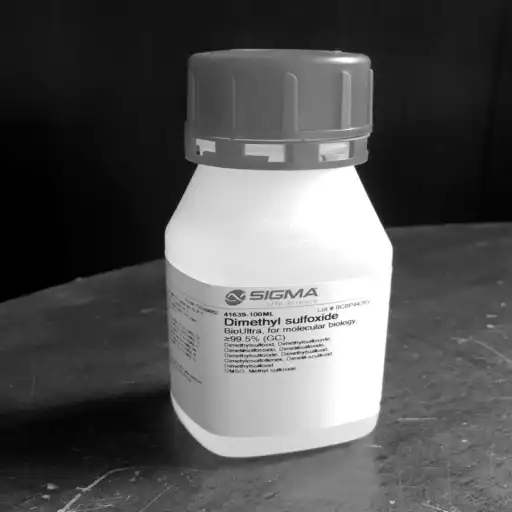
After testing Gloria’s tissues, LLNL scientists found traces of a compound called dimethyl sulfoxide (DMSO).
What is DMSO? It’s an industrial solvent and heavy-duty degreaser. Years ago, desperate patients used it as a DIY topical painkiller for musculoskeletal issues and cancer. People who rub it on their skin frequently report a strong garlic-like taste in their mouth.
Suddenly, the pieces started clicking into place. The oily sheen on her skin? The garlicky breath? DMSO fit the profile perfectly.
The Deadly chain reaction
The scientists drafted a wild, multi-step chemical theory to explain the toxic fumes:
- The Application: Gloria allegedly rubbed DMSO on her skin to fight agonizing cancer pain before calling the ambulance.
- The Oxygen Mask: Paramedics slapped an oxygen mask on her. This massive influx of oxygen mixed with the DMSO in her blood, oxidizing it into dimethyl sulfone (DMSO2).
- The Crystals: Guess what DMSO2 does at room temperature? It crystallizes. This perfectly explains the weird manila-colored particles Resident Gorchynski saw floating in the blood vial.
- The Deadly Spark: In the ER, doctors used a defibrillator to shock Gloria’s failing heart. Scientists theorized those electric shocks, combined with the cold air of the ER, triggered a final mutation. The harmless DMSO2 absorbed more oxygen and transformed into dimethyl sulfate (DMSO4).
Dimethyl sulfate is terrifying. It is a highly corrosive, vaporizing nerve agent. When Nurse Kane drew the blood, that toxic gas allegedly escaped the syringe and instantly poisoned the staff.
Does the science actually hold up?
The coroner’s office loved this explanation. It wrapped a chaotic, legally perilous event into a neat scientific bow. They officially endorsed the LLNL theory and published the findings in Forensic Science International.
Case closed, right? Not exactly.
Many world-class toxicologists called foul. Converting DMSO into a chemical weapon inside a human body using an oxygen mask and a defibrillator sounds cool in a lab report, but it is chemically improbable. No known human metabolism has ever transformed DMSO into dimethyl sulfate under normal conditions. Getting that specific reaction to occur naturally requires extreme laboratory environments, not a frantic hospital room.

A family left without answers
Gloria’s family flat-out rejected the DMSO theory. Her sister, Maggie Ramirez-Garcia, swore Gloria never used the obscure chemical.
The family believed the elaborate “chemical weapon” story was a massive cover-up. They argued that the hospital was hiding gross negligence or a localized environmental hazard. Hoping to uncover the truth, they commissioned an independent autopsy.
Unfortunately, extreme delays ruined their chances. By the time the county released Gloria’s body, it was badly decomposed. Bizarrely, her heart was completely missing. The second autopsy proved entirely inconclusive.
Ten painful weeks after her death, Gloria Ramirez was finally laid to rest at Olivewood Memorial Park on April 20, 1994. Her official cause of death remained natural causes: cardiac dysrhythmia due to kidney failure from cervical cancer.
The legacy of the ‘Toxic Lady’
It has been three decades, yet the medical community still argues over what really happened that fateful night.
Was it a one-in-a-billion chemical anomaly? Was it an institutional cover-up? Or perhaps an entirely different chemical altogether? Popular Mechanics even highlighted alternative theories, including the wild idea that smuggled methylamine accidentally ended up in the hospital’s IV bags.
Labeling her the “Toxic Lady” unfortunately stripped away her basic humanity. Gloria Ramirez was not a comic book villain or a walking biohazard. She was a terrified young mother seeking relief from an unbearable disease. Her tragic passing birthed a scientific puzzle that overshadows her very real, very human struggle.
The exact trigger behind the noxious fumes remains buried with her.
What do you think? Did a freak chemical reaction turn a common painkiller into a deadly gas, or is there a darker hospital secret hiding in the archives? Drop your thoughts in the comments below! If you love deep dives into true crime and bizarre medical history, share this article with your friends.
References:
- https://simple.wikipedia.org/wiki/Death_of_Gloria_Ramirez
- https://en.wikipedia.org/wiki/Death_of_Gloria_Ramirez
- https://www.latimes.com/archives/la-xpm-1994-04-30-mn-52166-story.html
- https://forensicscience.llnl.gov/research/case-studies/mysteries
- https://www.fibonaccimd.com/post/the-toxic-lady

