

Why Is International Women’s Day on March 8? The Real History Behind the Global Women’s Movement
Have you ever wondered why we celebrate women globally on a random date in early March? Seriously, why March 8? Most people happily accept the flowers and corporate discounts. Yet, they never uncover the gritty, rebellious backstory. To be honest, the true origins are way more fascinating than modern marketing campaigns suggest.
Consequently, we need to dig into the past. Actually, this isn’t a story of polite requests. Rather, it is a saga of fed-up textile workers, revolutionary socialists, and massive strikes. Therefore, grab a cup of coffee. Let’s explore the real history behind the global women’s movement.
Sweatshops, Strikes, and a Socialist Dream
First off, let’s clear up a massive historical myth. For decades, rumors circulated claiming the holiday started because of an 1857 garment workers’ strike in New York. Interestingly, historians recently debunked this. In reality, that 1857 protest never happened. Instead, it was a cold-war era fabrication designed to distance the holiday from its socialist roots.
So, when did the actual movement begin? Officially, the earliest recorded “Woman’s Day” took place on February 28, 1909. Back then, the Socialist Party of America organized a rally in New York City. Specifically, they wanted to honor thousands of garment workers who had marched the previous year. Those brave individuals protested against brutal sweatshop conditions. Namely, they demanded fair pay, shorter hours, and the right to vote.
Life in those factories was incredibly grim. Women worked relentlessly in overcrowded, unsafe buildings. Furthermore, they faced constant harassment. Thus, demanding change wasn’t just political; it was a matter of basic survival. As a result, the 1909 event sparked a fire that quickly crossed the Atlantic.
Clara Zetkin
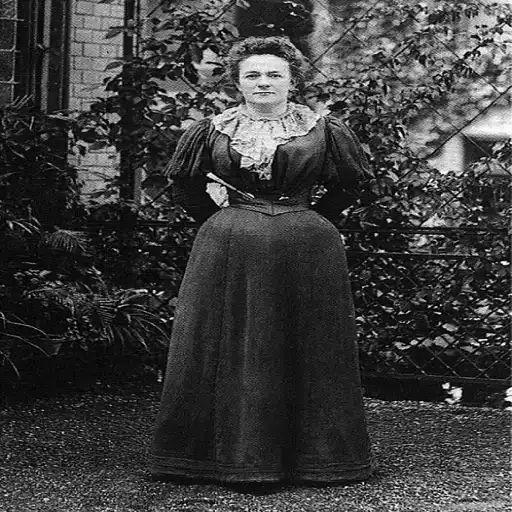
Meanwhile, over in Europe, a fiercely outspoken German activist was watching closely. Her name was Clara Zetkin. She was not someone who accepted the status quo. In fact, Zetkin firmly believed that polite feminism only helped wealthy women. Therefore, she wanted a movement that championed the working class.
Fast forward to August 1910. An International Socialist Women’s Conference was happening in Copenhagen, Denmark. Over 100 delegates from 17 different countries packed into the hall. During this meeting, Zetkin stood up and pitched a radical idea. She proposed an annual, global “Women’s Day” to push for equal rights and female suffrage.
Unsurprisingly, the crowd loved it. They approved the motion unanimously. However, they didn’t pick a specific date right away.
The following year, on March 19, 1911, the very first International Women’s Day (IWD) took place. It was a massive success. More than a million people flooded the streets across Austria, Denmark, Germany, and Switzerland. Protestors held signs demanding voting rights. Moreover, they insisted on an end to workplace discrimination. Ultimately, the momentum was undeniable.
Why March 8? The Russian Revolution Connection

Here is the kicker. You might be thinking, “March 19 isn’t March 8!” You are entirely correct. So, how did the date permanently shift?

For that answer, we must travel to Russia in 1917. World War I was raging, and the Russian empire was collapsing. Millions of soldiers had died. Furthermore, massive food shortages left civilians starving. Naturally, the breaking point arrived.
On March 8, 1917, thousands of female textile workers in Petrograd (now St. Petersburg) decided they had enough. Defying government orders, they walked out of their factories. Their strike had a simple, powerful slogan: “Bread and Peace”.
Gradually, the movement swelled. Within days, massive crowds paralyzed the entire city. The Tsar, Nicholas II, lost control. Consequently, just seven days after the women walked out, the Tsar abdicated his throne. Following this monumental collapse, the provisional government granted Russian women the right to vote.
Now, you might notice a slight calendar quirk. According to the Julian calendar used in Russia at the time, the strike started on February 23. Nevertheless, on the Gregorian calendar used by the rest of the world, that exact day was March 8.
Because of this profound historical shift, Vladimir Lenin officially declared March 8 as Women’s Day in 1922. For decades afterward, communist and socialist countries exclusively celebrated the holiday. Eventually, it became deeply woven into global labor history.
From Soviet Holiday to United Nations Recognition

During the Cold War, Western nations largely ignored the event. Honestly, anything linked to communism was highly taboo. Still, feminist groups in the 1960s began reclaiming the day. They recognized the vital importance of global sisterhood.
Eventually, the United Nations caught up. In 1975, the UN officially celebrated International Women’s Day for the first time. Shortly after, in 1977, the UN General Assembly adopted a resolution. This declaration invited member nations to proclaim March 8 as the UN Day for Women’s Rights and World Peace.
By formalizing the date, the UN helped strip away the political stigma. Consequently, IWD transformed into a universally recognized moment of reflection, advocacy, and celebration.
The Stark Reality of Women’s Rights Today
Currently, we treat IWD as a time to celebrate progress. Indeed, women have achieved incredible milestones over the last century. However, we cannot simply pat ourselves on the back and go home.
If we look at the hard data, the reality remains sobering. According to recent United Nations reports, no nation on earth has entirely closed the legal gap between men and women. Right now, women hold only 64 percent of the legal rights that men enjoy worldwide.
Let that sink in for a second. In fundamental areas like work, property ownership, and safety, the law systematically disadvantages half the global population. Furthermore, experts warn that if progress continues at this sluggish pace, it will take 286 years to achieve full legal equality. Obviously, waiting three centuries is unacceptable.
International Women’s Day 2026: Rights, Justice, and Action
Because the stakes are so high, the UN’s theme for International Women’s Day 2026 hits hard. The official slogan is “Rights. Justice. Action. For ALL Women and Girls”.
This theme is not just a catchy phrase. Rather, it is a direct challenge to global leaders. Specifically, it demands a shift from empty promises to structural accountability. It emphasizes that rights on paper mean absolutely nothing without accessible justice in real life.
Similarly, the World Health Organization (WHO) is using the 2026 event to highlight severe health disparities. Even though women make up 51% of the European region, they spend a greater proportion of their lives in poor health due to gender-based inequities. Violence against women remains an insidious barrier. Shockingly, nearly 1 in 3 women will experience physical or sexual violence in their lifetime.
Therefore, the 2026 campaign is a worldwide call to dismantle discriminatory laws. Moreover, it urges communities to end harmful social norms that erode basic human dignity.
How Different Cultures Celebrate March 8 Today
Fascinatingly, the way people observe March 8 varies wildly across the globe. Because of its complex history, different nations have molded the day to fit their own cultural narratives.
For instance, in countries like Russia, Cambodia, and Nepal, International Women’s Day is an official public holiday. Government offices close, and grand public festivals take place. However, some critics argue that in these regions, the day has lost its political edge. Often, it resembles a hybrid of Mother’s Day and Valentine’s Day. Men typically buy flowers, chocolates, and gifts for the women in their lives. While sweet, this completely ignores the radical origins of the Petrograd textile strikes.
Conversely, in places like Spain and Latin America, March 8 retains its fiery, activist roots. In recent years, millions of Spanish women have staged massive, nationwide strikes on IWD. They walk out of their jobs. Furthermore, they refuse to do unpaid domestic labor for the entire day. Consequently, these strikes brilliantly highlight how much the global economy relies on invisible female labor.
Meanwhile, in the United States and the United Kingdom, IWD is not a public holiday. Instead, it serves as a focal point for corporate initiatives, educational panels, and political lobbying. Schools teach students about historical figures. Corporations host diversity and inclusion seminars. Unfortunately, this corporate adoption sometimes leads to “pink-washing,” where companies preach equality but still pay their female employees less.
The Intersectionality Problem: Leaving No One Behind
As we navigate the modern feminist landscape, we must address a crucial concept: intersectionality. Originally coined by legal scholar Kimberlé Crenshaw, intersectionality explains how different aspects of a person’s identity overlap. Namely, factors like race, class, sexual orientation, and physical ability intersect to create unique modes of discrimination.
Historically, mainstream women’s movements often centered on white, middle-class voices. In fact, Clara Zetkin argued about this very issue back in 1910! She despised “bourgeois feminism” because she felt it ignored the brutal realities of poor, working-class laborers.
Today, the UN’s 2026 theme explicitly states: “For ALL Women and Girls”. This inclusivity is vital. For example, a woman of color faces distinct, compounded barriers that a white woman might never encounter. Furthermore, women with disabilities experience exponentially higher rates of domestic violence and unemployment.
Therefore, true justice requires us to broaden our lens. We cannot advocate for equal pay without also fighting against racial discrimination. We cannot demand reproductive rights without ensuring those services are accessible to rural and low-income communities. Ultimately, if our feminism isn’t intersectional, it isn’t truly fighting for equality.
How We Can Accelerate Progress Right Now
Clearly, the fight is far from over. Yet, everyday people hold massive power to drive change. You don’t need to be a revolutionary leader to make an impact. Instead, you can start small.
Here are a few actionable ways you can honor the true spirit of March 8:
- Educate Yourself and Others: Learn about the legal gaps in your own country. Share this knowledge with friends and family. Awareness is the first step toward justice.
- Support Female-Owned Businesses: Put your money where your values are. Consistently buying from women helps close the economic gap.
- Call Out Bias: Whenever you hear a sexist joke or witness unfair treatment at work, speak up. Silence only protects the oppressor.
- Advocate for Policy Changes: Write to your local representatives. Demand better parental leave, equal pay, and stricter protections against domestic violence.
- Mentor the Next Generation: If you are in a leadership position, guide young women. Sharing your experience can dramatically alter someone’s career path.
Furthermore, the grassroots IWD 2026 movement promotes a secondary campaign called “Give To Gain”. This initiative emphasizes that giving your time, resources, and support naturally multiplies opportunities for everyone. Basically, when women thrive, society as a whole rises.
Honoring the Radicals
Ultimately, International Women’s Day is a testament to resilience. It reminds us of the brave garment makers in New York. It honors Clara Zetkin’s fiery speeches in Copenhagen. Most importantly, it remembers the starving Russian women who brought down an empire for a loaf of bread and a ballot.
These historical figures didn’t politely ask for equality. On the contrary, they demanded it. They marched, they organized, and they sacrificed.
Today, we carry their torch. We must recognize that the fight for equal rights is a continuous journey. Therefore, let’s look beyond the commercialized flowers and hashtags. Let us recommit to the gritty, unyielding pursuit of justice.
What will you do this March 8 to push the needle forward? Don’t just sit on the sidelines. Share this article, spark a conversation, and take action in your local community today!
Sources help:
- https://en.wikipedia.org/wiki/International_Women%27s_Day
- https://www.internationalwomensday.org/history-of-international-womens-day/
- https://www.marx-memorial-library.org.uk/project/centenary-russian-revolution/origins-international-womens-day
- https://www.counterfire.org/article/a-history-of-international-womens-day/
- https://www.generation.org/news/international-womens-day-equipping-women-for-success/

