

James Webb’s 3 Unexplained Discoveries That Are Rewriting the Universe
We sent the James Webb Space Telescope (JWST) into deep space to answer old questions. Instead, that observatory returned completely new mysteries. Astronomers are currently scratching their heads. This machine isn’t just taking pretty pictures. In fact, it is dismantling scientific textbooks entirely. Since its launch, the infrared camera has peered further backward through time than anything prior. Consequently, researchers find cosmic objects defying fundamental astrophysics.
Are you ready for some mind-bending facts? Here are three unexplained JWST discoveries actively rewriting our universe.
Key takeaways
- Galaxies forming too rapidly: Massive stellar structures existing right after the Big Bang challenge standard timelines.
- Heavyweight primordial black holes: Ancient singularities outgrowing their host environments flip evolutionary models upside down.
- Impossible gas giants: Rogue planets and massive worlds orbiting tiny stars break accepted planetary creation rules.
1. “Universe Breaker” Galaxies That Grew Up Too Fast
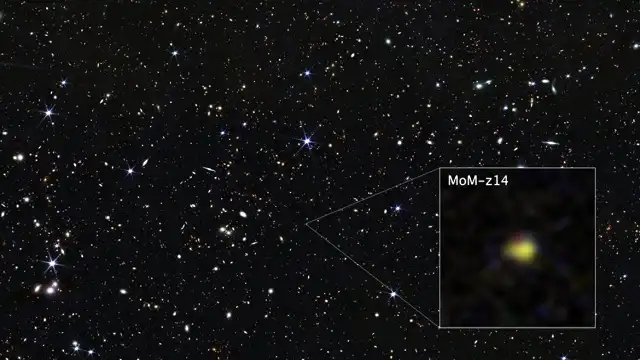
According to standard cosmological models, early space was quite messy. Gravity took hundreds of millions of years pulling gas together. Therefore, fully formed star systems shouldn’t exist near creation’s dawn. Webb completely ignored that established rule.
During early 2026, experts confirmed an unusually bright galaxy named MoM-z14. Astoundingly, this structure appeared just 280 million years following the Big Bang. It holds a staggering redshift measuring 14.44, pushing boundaries regarding observable light.
What exactly does such data mean?
To put things simply, illumination stretches as our universe expands. As a result, further objects appear much redder. Finding that specific redshift resembles digging at some prehistoric archaeological site. Suddenly, you uncover a fully functioning smartphone inside dinosaur dirt. These “universe breaker” anomalies are simply too massive.
Furthermore, the telescope detected high levels involving nitrogen within those ancient structures. Such elements weren’t created during initial cosmic expansion. Instead, they form deep inside stellar cores. Material spreads only after mature stars explode. Consequently, seeing chemical complexity so early suggests multiple generations lived and died already.

How did nature achieve this speed? Currently, nobody really knows.
Why couldn’t older telescopes spot these anomalies?
Older instruments relied primarily upon visible spectrums. Because the cosmos expands continually, ancient light stretches into infrared wavelengths. Therefore, visible-spectrum cameras simply looked right through these distant wonders. Webb’s massive gold-plated mirrors catch those invisible heat signatures. Consequently, humanity finally possesses proper glasses to view our cosmic past.
2. “Little Red Dots” and Heavyweight Black Holes
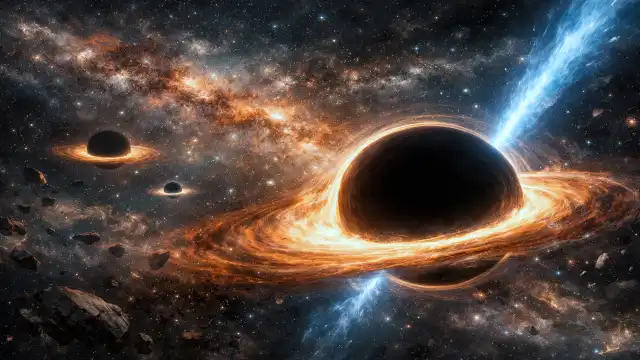
Moving onto another puzzle, we must discuss primordial mysteries. For several years, strange little red dots littered deep-space photography. Initially, professionals assumed those were merely compact galaxies. However, a recent study published by researchers from Copenhagen revealed hidden truths. They are actually supermassive black holes lurking beneath thick gas clouds.
More importantly, these singularities boast entirely wrong proportions. Within our modern neighborhood, gravitational voids usually grow alongside their host environments. Normally, central masses account for about 0.1% regarding total galactic weight. Yet, Webb found primordial giants weighing roughly equivalent amounts compared against surrounding stars.
Take the system QSO1, for instance. Here, that entity’s mass doubles everything else combined. Essentially, the darkness swallowed all available spotlight.
Why does this rewrite scientific history?
Previously, experts believed standard formations spawned central holes later. These recent findings flip that script entirely. Did dense clouds collapse directly, skipping normal stellar phases? Alternatively, maybe those anchors formed first. Without a doubt, existing evolution models look broken.

Let’s unpack mechanics behind typical singularity creation. Normally, massive stars burn through available nuclear fuel before dying. Their catastrophic collapse leaves a tiny footprint behind. Over millennia, that object slowly eats surrounding matter. This slow-drip diet makes these red dots completely baffling. They lacked adequate time eating their way toward supermassive status.
Therefore, astrophysicists are now considering the direct collapse theory. Imagine a pristine, gigantic cloud comprising primordial gas. Instead of fragmenting into thousands of individual suns, the whole mass falls inward simultaneously. Such an event would instantly birth a monstrous void. While mathematically plausible, nobody had found hard evidence supporting extreme shortcuts until now. Thanks to modern instruments, that hypothesis gains serious traction.
3. Impossible Planets and Rogue “JuMBOs”
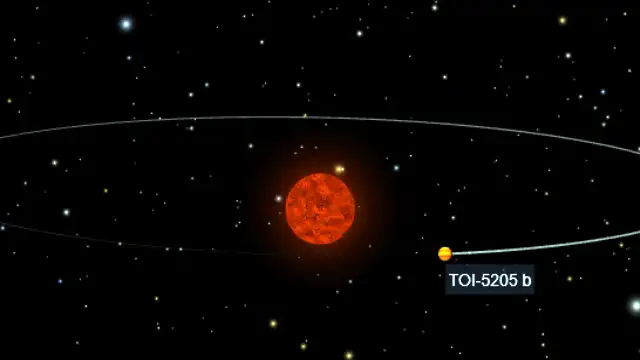
Of course, JWST isn’t just causing trouble near universe edges. It creates chaos closer toward home too. Planetary creation usually follows one accepted theory called core accretion. Basically, newborn suns leave behind swirling dust rings. Eventually, leftover debris clumps into planets over millions of lifetimes. Standard logic dictates tiny stars get smaller planets. Naturally, Webb discovered blatant exceptions shattering such rules.
Giant planets orbiting tiny stars
Enter TOI-5205b, a gas giant currently baffling astronomers everywhere. This specific world resembles Jupiter regarding sheer size. However, it orbits a red dwarf possessing merely 40% solar mass. Based upon mathematical probability, that diminutive star lacked adequate building materials. Yet, an impossible planet exists right there.
To make matters weirder, scientists also pinpointed Jupiter Mass Binary Objects. Known colloquially as JuMBOs, these wanderers float freely through the Orion Nebula. Crucially, they lack any parent star whatsoever. Even stranger, most travel alongside twin companions.
While chaotic solar systems might eject solitary worlds into deep voids, tossing two out simultaneously proves mathematically absurd. Furthermore, keeping both gravitationally bound together defies known orbital dynamics entirely.
To truly appreciate JuMBO discoveries, we must examine stellar nurseries closely. The Orion Nebula acts like a crowded incubator packed full of newborn suns. Using advanced mid-infrared sensors, researchers peered through thick dust obscuring the area. They expected standard planetary systems forming around young stars. Surprisingly, teams spotted dozens of massive objects floating untethered.
Why is the paired aspect so mind-boggling? Orbital ejections happen violently via close gravitational encounters. Such chaotic events act like cosmic billiards scattering worlds randomly. Keeping two expelled planets perfectly bound requires a gentle, synchronized push. Current physics cannot explain how violent forces act delicately. Could these spheres have formed directly from raw nebula gas? If so, boundaries separating failed stars from giant planets just vanished.
What This Means for the Future of Astronomy
Ultimately, being wrong remains the greatest gift science can receive. Every anomaly JWST identifies forces humanity toward better theories. Our cosmos proves far more efficient and bizarre than previously imagined. Whether ancient galaxies speed-run their development or rogue gas giants wander aimlessly, space never disappoints.
Moving forward, astrophysicists must rethink timelines concerning cosmic creation. Unbiased data refuses to lie. Consequently, standard educational textbooks desperately need profound updates.
What strange things do you think hide within uncharted darkness? Drop those thoughts right below inside the comment section. Also, remember to share this article with fellow astronomy enthusiasts today!

