

Understanding Tic-Tac UFO Physics: Inside the Pentagon Radar Data
Let’s ditch the tired “Are we alone?” clichés for a minute. The real question we need to ask is: How exactly is that thing flying?
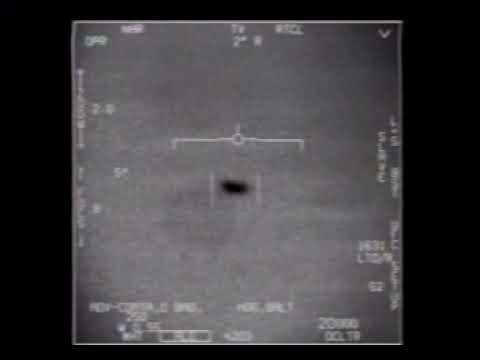
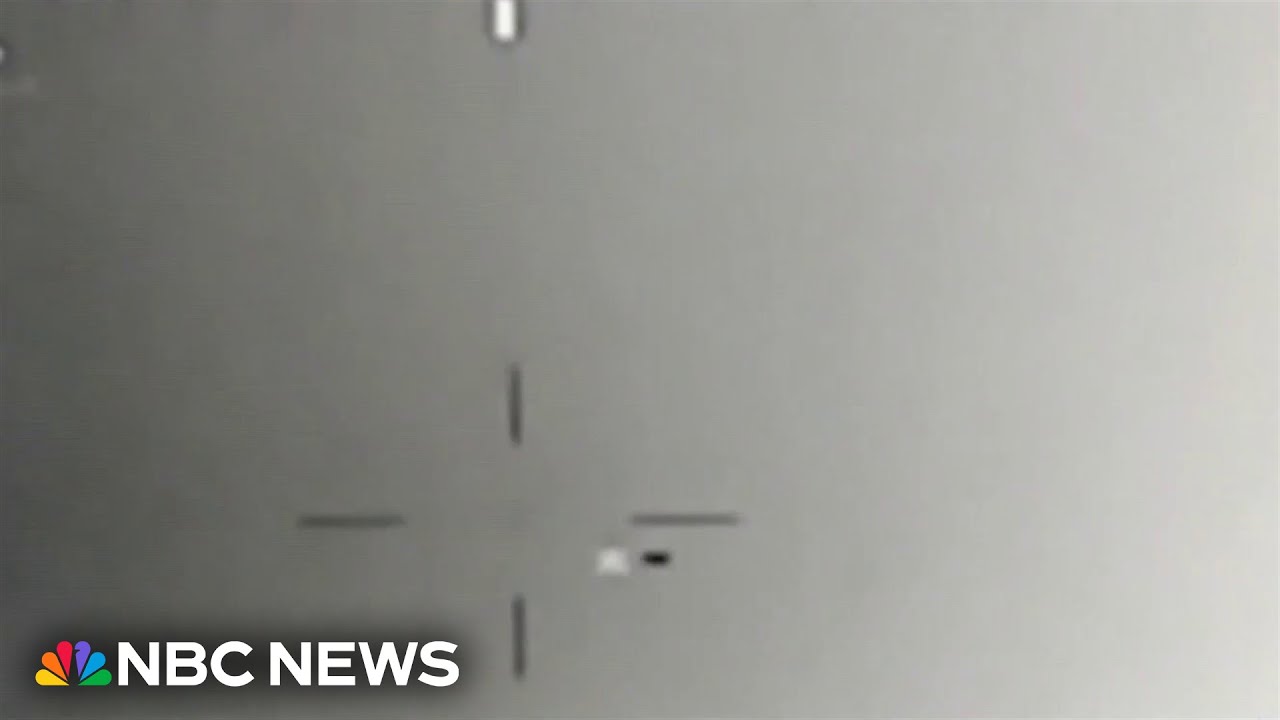
When the Pentagon finally declassified the famous 2004 USS Nimitz UFO videos, the internet predictably lost its collective mind. Most folks fixated on the grainy, black-and-white infrared footage. But while the public stared at a blurry blob on a screen, physicists and aerospace engineers were looking at something far more terrifying. They were looking at the cold, hard radar data.
We aren’t talking about eyewitness accounts or fuzzy memories here. We are talking about raw numbers captured by the most advanced military sensors on the planet. When scientists ran those numbers, the results didn’t just bend the laws of aerodynamics — they shattered them.
So, grab your scientific calculators. We are going to break down the exact physics of the Tic-Tac UFO (now officially called a UAP, or Unidentified Aerial Phenomenon).
Key Takeaways
- The Drop: Radar tracked the object dropping from 28,000 feet to sea level in exactly 0.78 seconds.
- The G-Force: It pulled an estimated 5,000+ Gs. For context, an F-35 fighter jet starts breaking apart at 13.5 Gs.
- The Speed: To cover that distance, the craft hit a midpoint speed of around 45,000 mph (Mach 60).
- The Power: Executing these maneuvers would require roughly 13,000 gigawatts of energy — more than the entire nuclear output of the United States.
- No Signatures: Despite moving at Mach 60 in the lower atmosphere, there was no sonic boom, no fireball, and no thermal exhaust.
Beyond the Blurry Video
Before diving into the math, let’s establish exactly where this data came from. November 14, 2004. Off the coast of Southern California. The USS Nimitz Carrier Strike Group was conducting a routine training exercise.
Protecting the fleet was the USS Princeton, a guided-missile cruiser equipped with the SPY-1 radar system. This isn’t your local airport’s weather tracker. The SPY-1 is the heart of the Aegis Combat System, specifically designed to track ballistic missiles plunging in from low Earth orbit. It is arguably the most sophisticated radar on Earth.
For days, Senior Chief Radar Operator Kevin Day watched anomalous tracks on his screen. Objects were dropping out of the sky from 80,000 feet, hovering at 28,000 feet, and moving erratically. They weren’t birds. Weather balloons don’t drop like stones and suddenly stop.
Eventually, Commander David Fravor and his wingman were vectored in to intercept one of these contacts in their F/A-18F Super Hornets. Fravor famously found a white, 40-foot cylinder hovering just above the churning ocean. He described it as looking exactly like a smooth breath mint. No wings, no rotors, no exhaust pylons.
When Fravor banked his jet to engage, the Tic-Tac mirrored his movement, then vanished. It accelerated so fast it simply disappeared from sight.
Breaking Down the Impossible Math
It’s easy to say something moved “fast.” Science requires us to prove it.
In 2019, a group of scientists, including former NASA researcher Dr. Kevin Knuth, published a peer-reviewed paper in the journal Entropy. Titled “Estimating Flight Characteristics of Anomalous Unidentified Aerial Vehicles,” the study analyzed the Nimitz radar data to figure out exactly what happened up there. The Scientific Coalition for UAP Studies (SCU) also ran a massive forensic analysis on the event.

Here is what the numbers revealed.
The 0.78-Second Plunge
According to the ballistic missile defense radar, the Tic-Tac periodically dropped from its holding altitude of 28,000 feet down to sea level. That is roughly five miles. The craft covered that entire distance in 0.78 seconds.
If you drop a bowling ball from 28,000 feet, gravity takes a long time to pull it down. To cover five miles in under a second requires powered, violent acceleration. Dr. Knuth used conservative kinematic equations to find the lower bounds of this movement. He assumed the object accelerated halfway down, then decelerated at the exact same rate so it wouldn’t smash into the ocean.
At the midpoint of that drop, the Tic-Tac had to be moving at an astonishing 45,000 miles per hour. That equals Mach 60.
What 5,000 Gs Actually Means

Acceleration isn’t just about speed; it’s about the physical force exerted on an object. We measure this in G-forces.
- 1 G: You sitting on the couch right now.
- 9 Gs: A highly trained fighter pilot wearing a pressurized G-suit, clenching every muscle just to keep blood in their brain and avoid passing out.
- 13.5 Gs: The absolute structural limit of an advanced F-35 stealth fighter. Push past this, and the airframe warps. The wings shear off.
- 100 Gs: Electronic components start failing. Solid materials begin to deform.
Dr. Knuth’s calculations showed the Tic-Tac was pulling a minimum of 5,000 Gs. Some data points even suggested closer to 5,370 Gs.
At 5,000 Gs, a human body would be instantly liquefied. A solid block of titanium would crumple under its own microscopic weight. Whatever this craft is made of, it completely ignored the mechanical stresses that govern normal matter.
Where is the Boom?
If you’ve ever watched a space capsule re-enter the atmosphere, you know what happens when things move fast. Air is a fluid. When you push through it at extreme speeds, the air molecules can’t get out of the way fast enough. They compress.
This compression creates immense heat. At Mach 60, a physical object in the lower atmosphere should generate a blinding plasma fireball. The temperature would reach tens of thousands of degrees. Furthermore, pushing through the sound barrier (Mach 1) creates a massive shockwave, resulting in an earth-shattering sonic boom.
Yet, the radar operators heard nothing. The F/A-18 pilots heard nothing.
Even more damning is the FLIR (Forward Looking Infrared) video captured by pilot Chad Underwood moments after Fravor’s encounter. Infrared cameras see heat. If a craft had just dropped from the sky at Mach 60, it should have been glowing white-hot on the thermal display. Instead, the Tic-Tac matched the ambient temperature of the surrounding air. It had no thermal exhaust plume. No heat signature.

How do you push a 40-foot solid object through the air at 45,000 mph without creating a fireball or a sonic boom? Physics usually demands a toll. This object simply refused to pay it.
13,000 Gigawatts
Speed and acceleration require energy. Moving a mass the size of an F-18 fighter jet (roughly 32,000 pounds) through those maneuvers is not cheap.
When the researchers crunched the numbers on the required kinetic energy, the results looked like a typo. To execute the 0.78-second drop, the Tic-Tac would have needed to output approximately 13,000 gigawatts of power.
Let’s put that into perspective. Doc Brown needed 1.21 gigawatts to send the DeLorean back in time. The entire nuclear power output of the United States tops out around 100 gigawatts. This single, 40-foot, smooth white cylinder was casually generating more energy than a hundred nuclear reactors combined.
If it were using conventional chemical rockets or jet turbines to produce that thrust, the energy release would look like a tactical nuclear weapon going off. It would have released the equivalent of 250 Tomahawk cruise missiles exploding simultaneously. But the ocean didn’t boil. The air didn’t burn. The energy was somehow contained entirely within the system.
Trans-Medium Travel
Former Pentagon intelligence officer Luis Elizondo often talks about the “Five Observables” of UAPs. We’ve already covered sudden acceleration, hypersonic velocities without signatures, and lack of visible lift. But the Nimitz data highlighted another mind-bending trait: trans-medium travel.
Aerodynamics and hydrodynamics are completely different beasts. Water is roughly 800 times denser than air. Hitting the ocean at even a fraction of Mach speeds should act like hitting a solid brick wall. The object should shatter into a million pieces.
Radar operators noted these objects could transition from the air to the water without slowing down. Sonar data in other encounters (like the Aguadilla incident) corroborates this ability to move seamlessly between air and water without splashing or losing speed. The medium simply does not affect the craft.
How Are They Doing It? Theoretical Physics Enters the Chat
We have eliminated drones, weather balloons, and secret Russian jets. No nation on Earth possesses materials that can survive 5,000 Gs or engines that produce 13,000 gigawatts without a heat signature. So, what exactly does the math point to?
Mainstream physicists are starting to whisper a phrase that used to belong strictly to science fiction: Metric Engineering.
The Alcubierre Warp Bubble
In 1994, theoretical physicist Miguel Alcubierre proposed a mathematical model showing that faster-than-light travel is possible without violating Einstein’s theory of general relativity. You don’t move the ship through space. Instead, you move space around the ship.
By compressing the spacetime in front of a craft and expanding it behind, you create a “warp bubble.” Inside this bubble, the ship is technically in free-fall. It isn’t moving; the space around it is.

If the Tic-Tac uses a form of metric engineering, it explains every single anomaly.
- Why no G-forces? Because the craft inside the bubble isn’t actually accelerating. The occupants would feel zero Gs.
- Why no sonic boom or fireball? The craft isn’t hitting the air. The spacetime bubble is bending the atmosphere seamlessly around it.
- Why trans-medium travel? Water parts the exact same way air does when spacetime itself is being manipulated.
The Dual Sheet Model & Anti-Gravity
Other theorists propose advanced concepts like the Dual Sheet Model. This involves exciting specific quantum fields to effectively switch gravity off, or even reverse it. By driving the effective gravitational acceleration to zero inside a specific volume, an object completely sheds its inertia. Without inertia, changing direction instantly at Mach 20 requires almost zero conventional thrust.
We can write the math for these theories on a chalkboard today. We just don’t have the technology, the exotic matter, or the unimaginable energy required to engineer them. Whoever — or whatever — built the Tic-Tac clearly does.
Why This Changes Everything
For decades, the topic of UFOs was relegated to tinfoil hats and late-night radio shows. The Nimitz incident fundamentally changed the narrative because we finally acquired hard, verifiable telemetry. The Pentagon confirmed the authenticity of the videos in 2020. Congress is holding hearings under oath. High-ranking intelligence officials are blowing whistles.
The stigma is dying because the math doesn’t lie.
Academia is finally waking up. Scientists like Dr. Kevin Knuth are proving that you can apply rigorous scientific methods to anomalous data. The results force us to admit a deeply uncomfortable truth. There are physical craft flying in our skies that treat our most advanced fighter jets like slow-moving blimps.
They operate with impunity. They routinely monitor military exercises. And they utilize an understanding of physics that we might not achieve for another thousand years.
Bottom Line
When you strip away the hype, the rumors, and the alien conspiracy theories, you are left with the raw physics. A 40-foot object without wings or engines dropped 5 miles in less than a second. It survived 5,000 Gs, generated gigawatts of energy, and didn’t leave a single scratch on the atmosphere.
This isn’t magic. It is highly advanced engineering. The data is real, it is recorded, and it is sitting right in front of us. The only question left is whether humanity is bold enough to reverse-engineer the math and figure out how to build one ourselves.
What do you think is powering these impossible machines? Secret government black projects or something completely out of this world? Drop your theories in the comments below, share this breakdown with your favorite skeptic, and subscribe for more deep dives into the science of the unexplained!
References:
- https://www.meer.com/en/79187-uss-nimitz-tic-tac-ufo-unveiling-inexplicable-physics
- https://en.wikipedia.org/wiki/Pentagon_UFO_videos
- https://pmc.ncbi.nlm.nih.gov/articles/PMC7514271/
- https://www.researchgate.net/publication/337985034_Estimating_Flight_Characteristics_of_Anomalous_Unidentified_Aerial_Vehicles_in_the_2004_Nimitz_Encounter
- https://www.explorescu.org/post/2004-uss-nimitz-strike-navy-group-incident-report
- https://www.altpropulsion.com/uap-flight-characteristics-the-five-observables/

